1. Miguel de Cervantes — "Don Quixote"
Miguel de Cervantes (1547–1616), the great Spanish writer, lived a life full of trials. Born into a simple family, he became a soldier in his youth and received a severe wound at the Battle of Lepanto. Later, Cervantes was captured by pirates and spent several years in captivity. Upon returning to his homeland, he again faced difficulties: debts and accusations led him to prison. It was there that he began work on his masterpiece — the novel "Don Quixote."
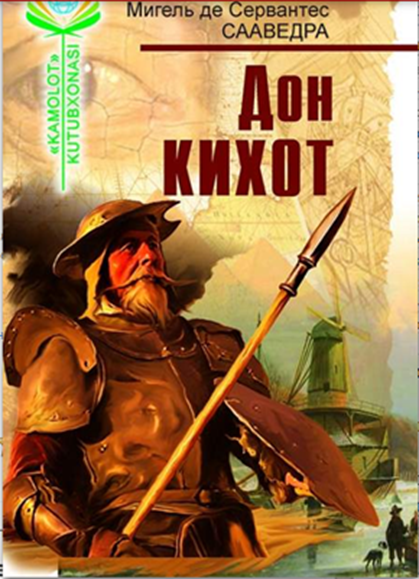
The first part of the book was published in 1605, and the second part in 1615. Interestingly, shortly after the publication of the first part, an unknown author released a "false continuation." In response, Cervantes created the genuine second part, where he ironically mentioned the "false Don Quixote."
The main character of the novel is a peasant who imagines himself a knight and sets off on a journey. In his imagination, windmills turn into giants, an inn into a castle, and every action seems like a feat in the name of justice. An inseparable companion of Don Quixote is Sancho Panza—a witty and pragmatic squire who balances the fantasies of his master. Through these characters, Cervantes raises the eternal theme of the clash between dream and reality, ideal and everyday life.
"Don Quixote" mocked the chivalric romances of its time and laid the foundation for a new genre — the realistic novel. Today, this work is read in two ways: as an ironic adventure and as a philosophical poem about human dreams and their inevitable failures.
Cervantes' masterpiece was translated into Uzbek by Sotiboldi Yuldashev.
2. Gregory David Roberts — "Shantaram"
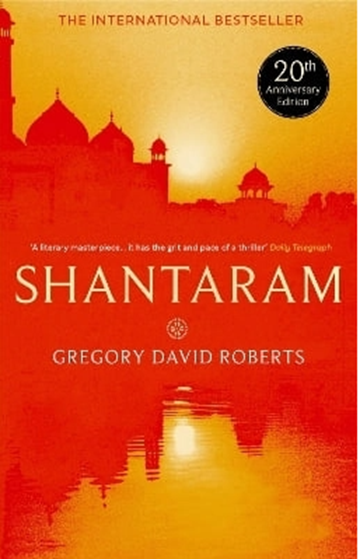
Gregory David Roberts (born 1952) is a writer whose literary journey began on the wrong side of the law. In Australia, he was sentenced to a long prison term for drugs and armed robberies but managed to escape from prison. In search of a new life, Roberts ended up in India — on the narrow and noisy streets of Bombay (now Mumbai). This life, full of anxieties and discoveries, became the basis for his famous novel "Shantaram".
The book, first published in 2003, became a special journey for both the writer and the reader. Begun while still in prison, it was lost and rewritten several times. Only after gaining freedom was Roberts able to restore the manuscript and present it to the world.
The main character of the novel is a fugitive convict named Lin. Finding himself in Bombay, he immerses himself in the lives of ordinary people, discovers friendship, joy, and pain, and encounters the unwritten laws of the mafia. His loyal companion is Prabaker, a sincere, simple-minded, and kind friend. Through their fates, the novel tells not only the story of a criminal but also of how a person is capable of rediscovering himself in a different culture.
Roberts paints India so vividly that the reader is transported to the streets of Bombay: they smell the spices and the hot air, hear the bustle of the tea shops, see the smiles of ordinary people, and sense the invisible presence of the mafia. All of this combines into a living, breathing picture.
"Shantaram" has occupied a special place in contemporary literature due to the scale of its narrative, its lifelike authenticity, and its rich character portrayals. It intertwines adventure and philosophy, crime and love, posing the central question for the reader: can a person escape their past and become a new person?
3. Musa Jalil — "Moabit Notebook"
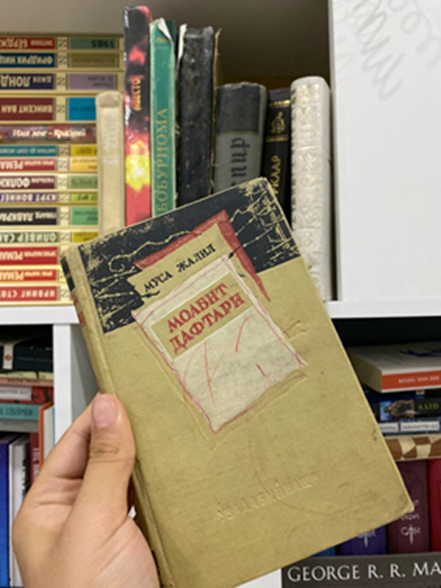
Musa Jalil (1906–1944) was a poet who managed to express the pain, hope, and courage of the Tatar people in his verses. During the Second World War, he was not only a frontline correspondent but also a soldier who took up arms to defend his homeland. Later, Jalil was captured and imprisoned in the notorious Berlin Moabit prison.
It was there that his most famous work, the "Moabit Notebook," was born. The poet wrote verses on scraps of paper, risking his life: any discovered line could cost him his execution. But thanks to his comrades, these notebooks were preserved and handed over to the USSR after the war. First published in 1953, the "Moabit Notebook" became not just a collection of poems, but a symbol of the courage and freedom of an entire people.
At its core lies patriotism, faith in life, and a sense of human dignity. Each of Jalil's poems resounds like the voice of all enslaved peoples; within them is a longing for the homeland, a dream of open space, and an unyielding freedom of spirit.
"The Moabit Notebook" has entered history not only as a monument to wartime poetry but also as part of 20th-century world literature. It reminds us: the spirit of strong people cannot be broken, even behind bars.
For his heroic deed, Musa Jalil was posthumously awarded the title of Hero of the Soviet Union. Today, he is revered not only as a symbol of freedom for the Tatar people but also as an embodiment of human courage for the entire world.
4. Nelson Mandela — "Long Walk to Freedom"
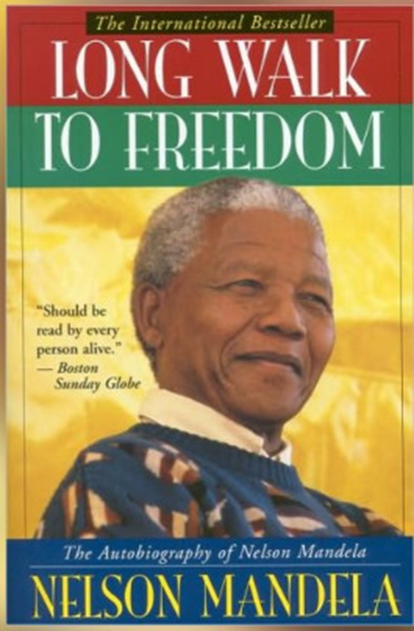
Nelson Mandela (1918–2013) — a symbol of the struggle against apartheid in South Africa, an embodiment of freedom and patience. Starting his career as a lawyer, he soon entered politics, protesting against racial inequality and injustice. In 1962, Mandela was arrested, charged with subversive activities, and sentenced to life imprisonment. He spent 27 years behind bars.
His most famous work is the autobiography "Long Walk to Freedom." Initially, Mandela secretly wrote the manuscript in prison, but it was destroyed for security reasons. After his release, he rewrote his memoirs, and the book was published in 1994. It was received not only as a personal confession but also as a testament to an entire people's struggle for freedom.
In his memoirs, Mandela candidly shares about his childhood, education, the formation of his political views, his struggle against apartheid, and the difficult years of imprisonment. His narrative portrays not a hero, but a man with fears and doubts, yet with unyielding determination and devotion to the ideals of freedom. Through this, the reader feels not only the history of South Africa but also the strength of the human spirit.
"Long Walk to Freedom" is recognized as one of the outstanding examples of modern autobiographical literature. Mandela describes freedom as a difficult process requiring patience and strength of spirit. The work holds broader significance than just a story about a personal life: it has become an eternal lesson in the entire human race's striving for freedom.
5. Fyodor Dostoevsky — "Notes from the House of the Dead"
For Dostoevsky, "Notes from the Dead House" was the fruit of his personal experience. The novel was published in 1860–1862 in the journal "Vremya". In 1849, the writer was arrested and sentenced to execution for his participation in the Petrashevsky Circle, but at the last moment, the death penalty was commuted to eight years of hard labor. Subsequently, Emperor Nicholas I reduced the term to four years, followed by military service as a private. These trials became the spiritual foundation of "Notes from the Dead House".
In the book, the prison appears not only as a place of punishment but also as a reflection of the society of that time. Dostoevsky depicts prisoners from various classes—murderers, thieves, political criminals—with equal depth, revealing both the darkness and the light within their souls. Through the image of the main character, Alexander Goryanchikov, the writer conveys his own experiences and observations.
The work emphasizes that even under unbearable conditions, a person is capable of preserving their humanity and strength of spirit. By describing life in prison, Dostoevsky transforms observations into a profound analysis of human nature. This is precisely why "Notes from the House of the Dead" is considered a work that opened a new stage of realism in Russian literature.
READ ON THE TOPIC: