
When talking about the crafts of Uzbekistan, Kokand often remains in the shadow of cities like Margilan or Rishtan. But this year, it was here in Kokand that masters from different countries and from all corners of our country gathered to showcase how crafts live and thrive, and how diverse their development is. The event became a crossroads of craft traditions, cultural ambitions, and local communities.
Crafts fair this autumn
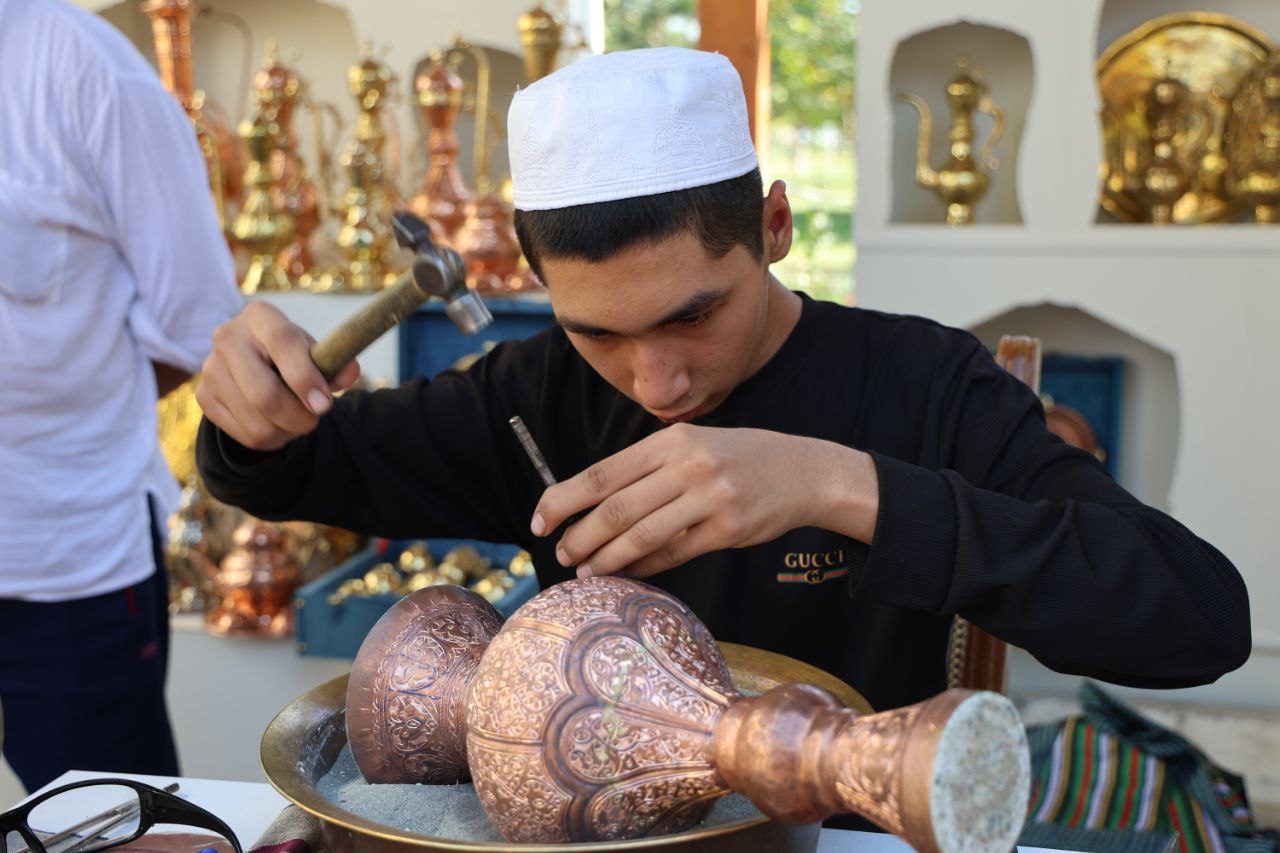
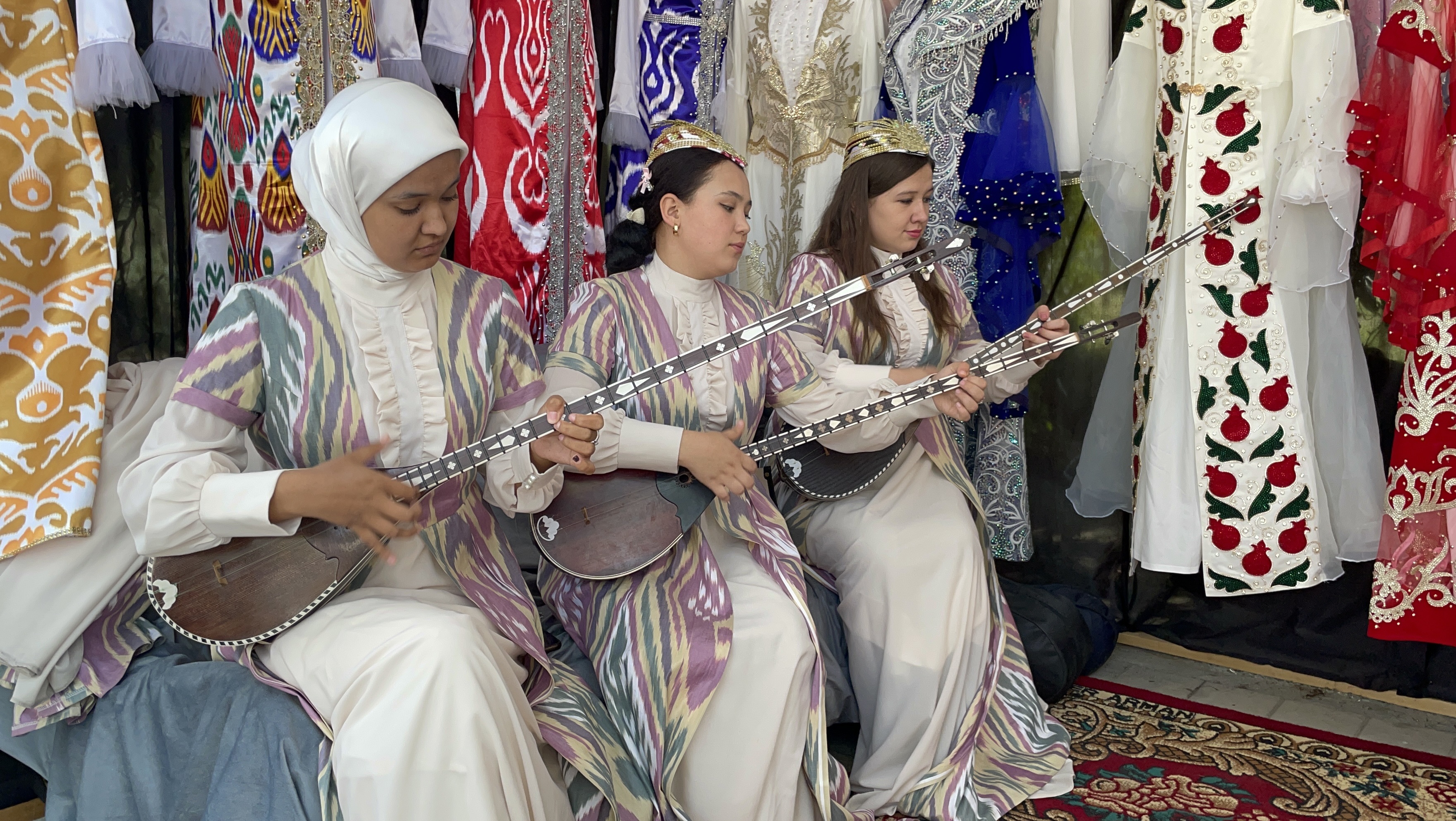
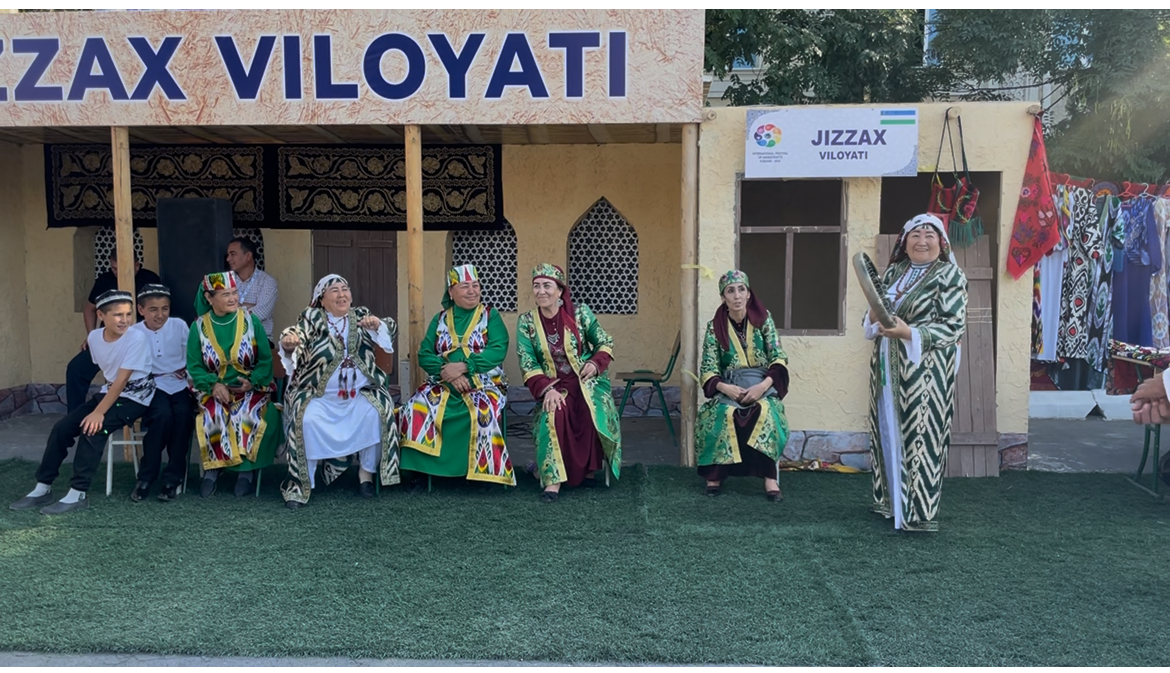
From September 19 to 21, 2025, the III International Crafts Festival was held in Kokand. The city became the main venue for the fair. More than 700 participants from dozens of countries—from Italy and Serbia to Afghanistan and China—set up their tents on the streets of the old city. Our craftsmen from all regions of the country were arranged in separate rows.
The organizers created a real celebration: music, folk dances, festive festivities, — all this complemented the fair itself. The first day ended with a large-scale concert.
During the same days, the II International Ceramics Forum was held in Rishtan, a review of which you can find on our website.
Why this is important for artisans
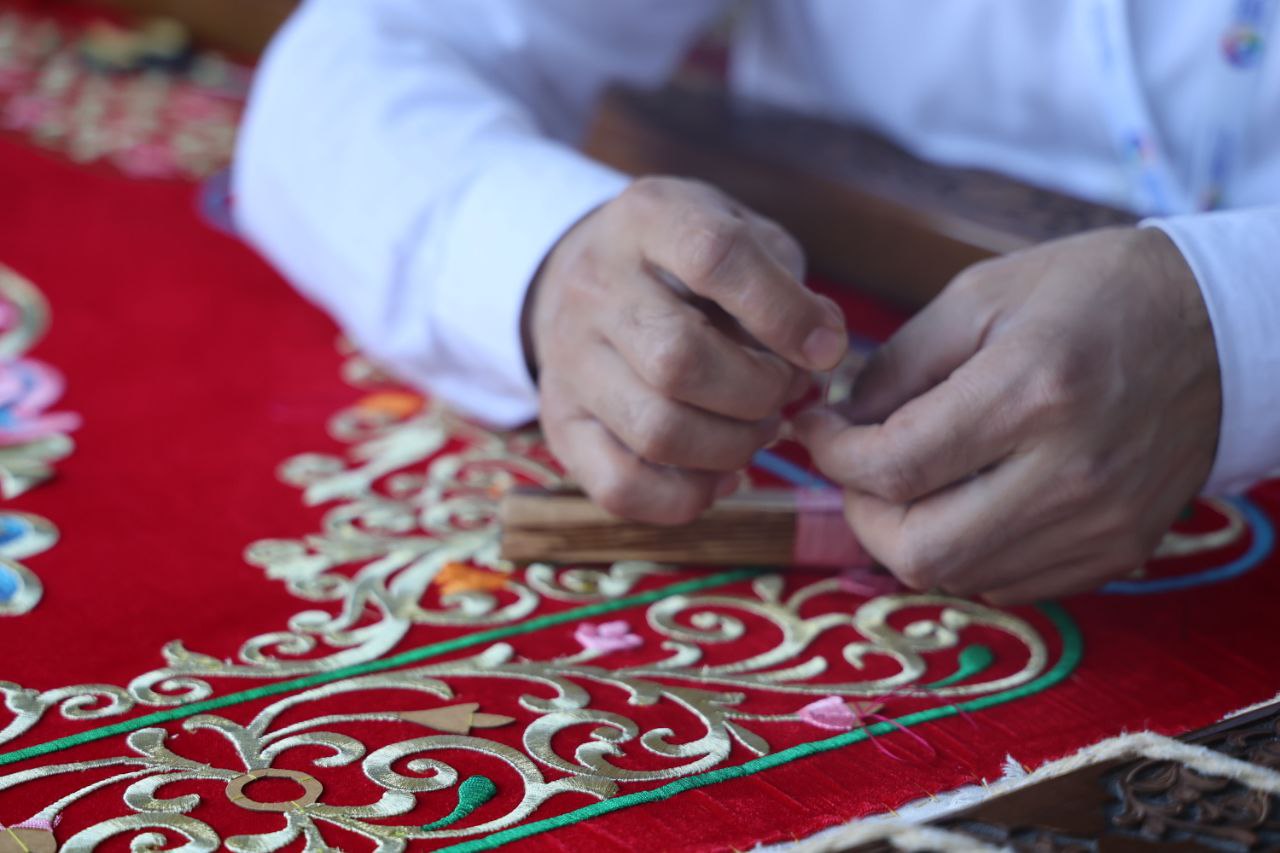
The festival focuses on artisans who preserve traditional techniques and present contemporary applied art of Central Asia. For many of them, this is a rare opportunity to showcase their work to a wide audience and communicate directly with curators and collectors.
Such events make manual labor not only a source of income, but also a means of representing culture: every pattern, material, and color is the visual language of the region.
Craft as the Language of Culture
In the Fergana Valley, for example, where the lush greenery of gardens meets the lines of hills, the craft interprets this landscape: fabrics feature plant ornaments, winding lines of grapevines, shapes that refer to the winding roads of mountain passes.
In Kokand, known for its architecture and domed arches, rhythmic, symmetrical patterns prevail, reflecting the city's harmony. In Rishta — these are deep blue and turquoise tones of ceramics, conveying the sense of sky and water, the source of life in the arid region.
Each item becomes a kind of “card of origin” that tells about the local soil, climate, and how society lives. The hunarmand works with the “voice” of their land, and the festival makes this voice heard. It turns regional styles into a common system and ways to speak about cultural memory and modernity at the same time.
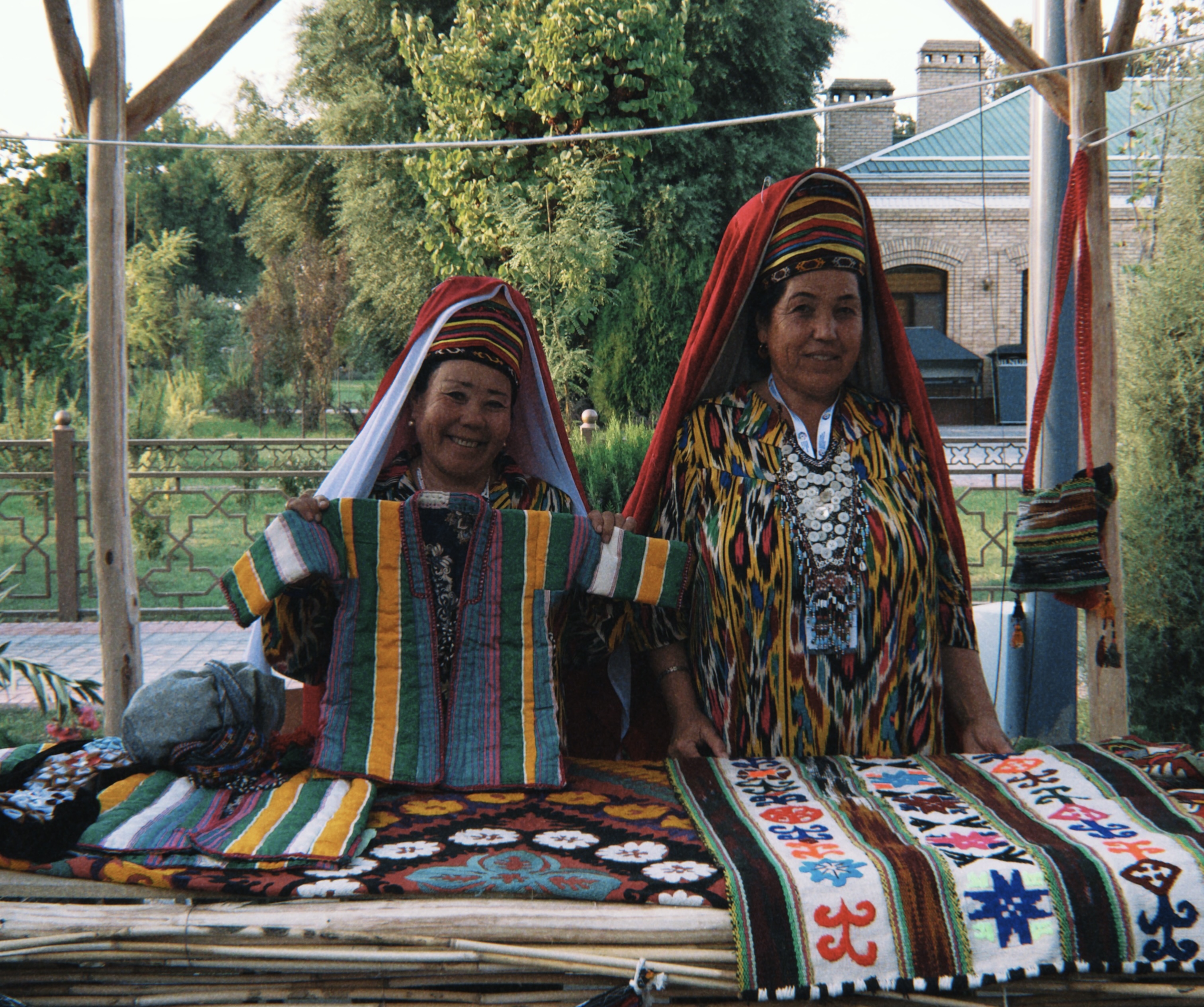
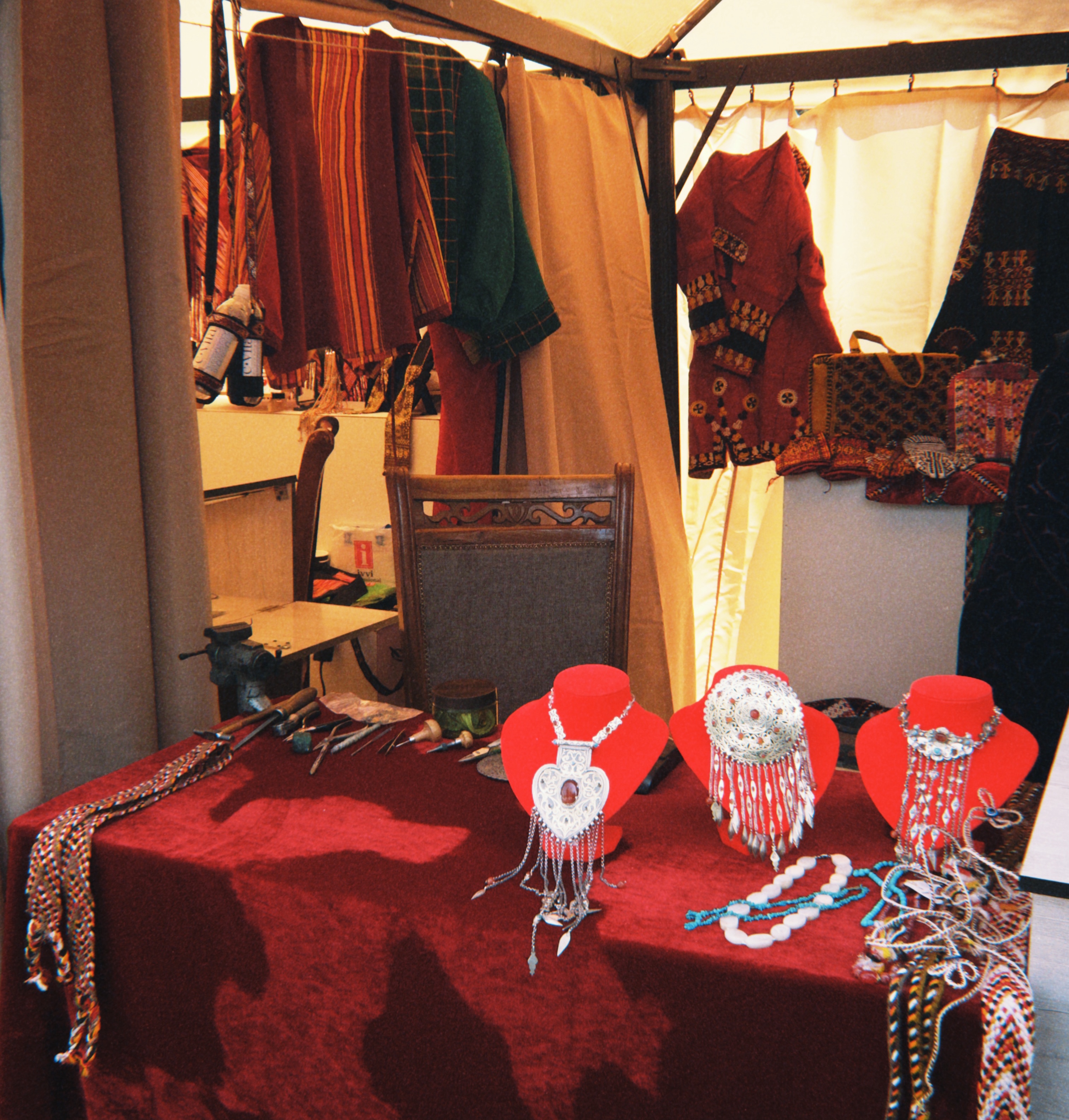
Our editorial team took a small journey through the tents of different countries. We discovered Afghan craftsmanship, known for its carpet weaving, copper embossing, wood and stone carving. We noticed that in Iran, craftsmanship has long become part of cultural policy. The pottery of Kashan, the enamel of Isfahan, the weaving art of Tabriz, — all these are not just industries, but elements of the national brand. Belarusian artisans participating in the Kokand Festival brought linen and wooden products made in a minimalist style, but with an emphasis on the purity of the material.
“We are interested not in ornament, but in texture. The hand should be visible, but not intrusive,” said one of the craftsmen.
Italian craftsmanship, on the contrary, is rich in color. Florentine mosaics, Sicilian ceramics, Venetian glass — examples of how traditional craft becomes part of a global cultural brand.
Inclusion
The issue of inclusion in artistic and cultural events in Uzbekistan remains unresolved and often unachievable. Kokand, on the other hand, has become an example of how cultural initiatives can truly be open to all masters.
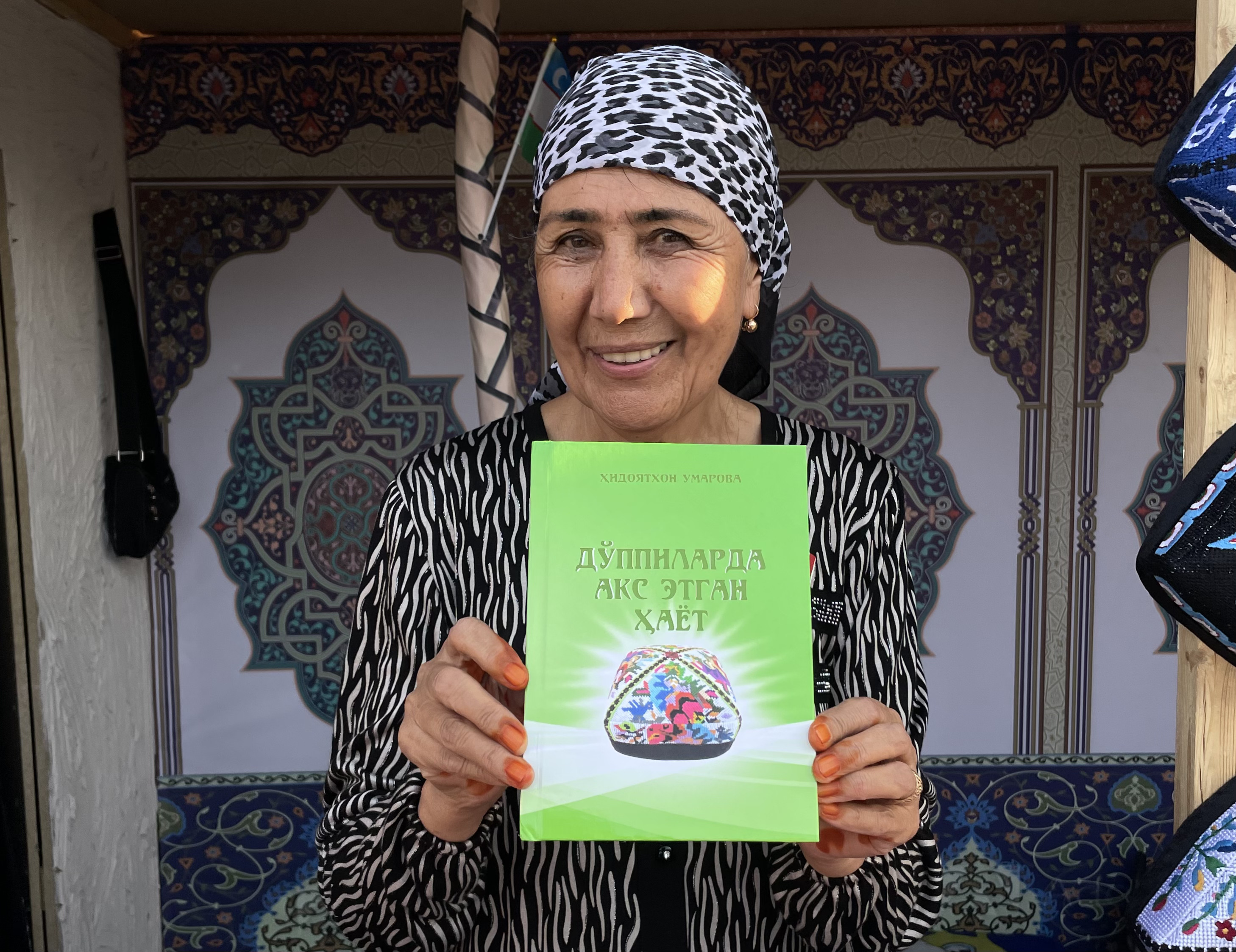
The festival program included masters with disabilities, emphasizing a commitment to diversity and equal participation. However, the organizers' decision to place the artisans in a separate row creates a complex contrast: the gesture of inclusion is formally present, but in the space it turns into separation.
When inclusion is implemented on the principle of a "separate place," it somewhat loses its meaning and, instead of equality, difference is emphasized.
Perhaps the organizers wanted to highlight the participation of special masters, but in the end this raised questions. After all, true equality is when no one needs to be singled out, because everyone is already included in the general context.
Why this is important for the region
For Uzbekistan, the festival has also become a tool of cultural balance. For many years, our country has lived in a model where cultural events are concentrated in Tashkent, and tourism in Samarkand, Bukhara, and Khiva. By this logic, Kokand is the periphery.
The festival is changing its geography: cultural life is shifting to places where continuity still remains. Symbolic value here is higher than economic value. "Production" has long been understood as something mechanical, whereas here human labor is perceived as the work of a creator.
Such festivals become catalysts for recognition: craftsmen receive orders, regions gain tourist traffic, and areas attract the attention of the media and investors.
For the region, the festival becomes a way to bring cultural life out of the niche sector into the public space. In addition to its cultural mission, the festival serves as a tool for territorial branding.
This is the right direction for generating tourist flow: for example, in recent years, hotels have started to be built during the festival and fair. By creating infrastructure in the region, it is possible to attract many more tourists—not only from abroad, but also from all over the country.
International Dimension: Craft as Diplomacy
The Kokand Festival also functions as a form of soft power. The participation of artisans from Europe, the Middle East, China, and the Caucasus creates horizontal connections, but without political declarations—through the exchange of objects and techniques.
Effect durability
It is not entirely clear how long the positive results last after the festival. It is important that after the events are over, the dialogue between artisans does not disappear, but continues to develop: through workshops, schools, cooperatives, and export programs.
Festivals like the Kokand Festival show that craftsmanship is an effective tool for modern development today. It connects the economy, education, diplomacy, issues of national identity, and creativity. It is precisely such events that create sustainable cultural ecosystems, where manual labor ceases to be "archaic" and becomes a relevant language of the country's self-presentation.


