
Ernest Kurtveliev’s photographic journey to the Bakhmal
district of the Jizzakh region evokes a quiet nostalgia even for those who have
never been there. It captures the charm of daily life in its most authentic
form, without staged tourist attractions or festive fireworks. Such a way of
life cannot be preserved like a museum exhibit, but it can be captured in
images. Behind these vivid frames stand the stories of real people, the very
people who make up the nation.
The Bakhmal district is famous for producing some of the
finest apples in Uzbekistan. In the past, fruit from this fertile land was
delivered directly to the tables of Soviet leaders; today it forms the backbone
of the region’s economy. The district earns not only from fruit exports but
increasingly from tourism as well.
Alongside its famed apples, Bakhmal is known for several
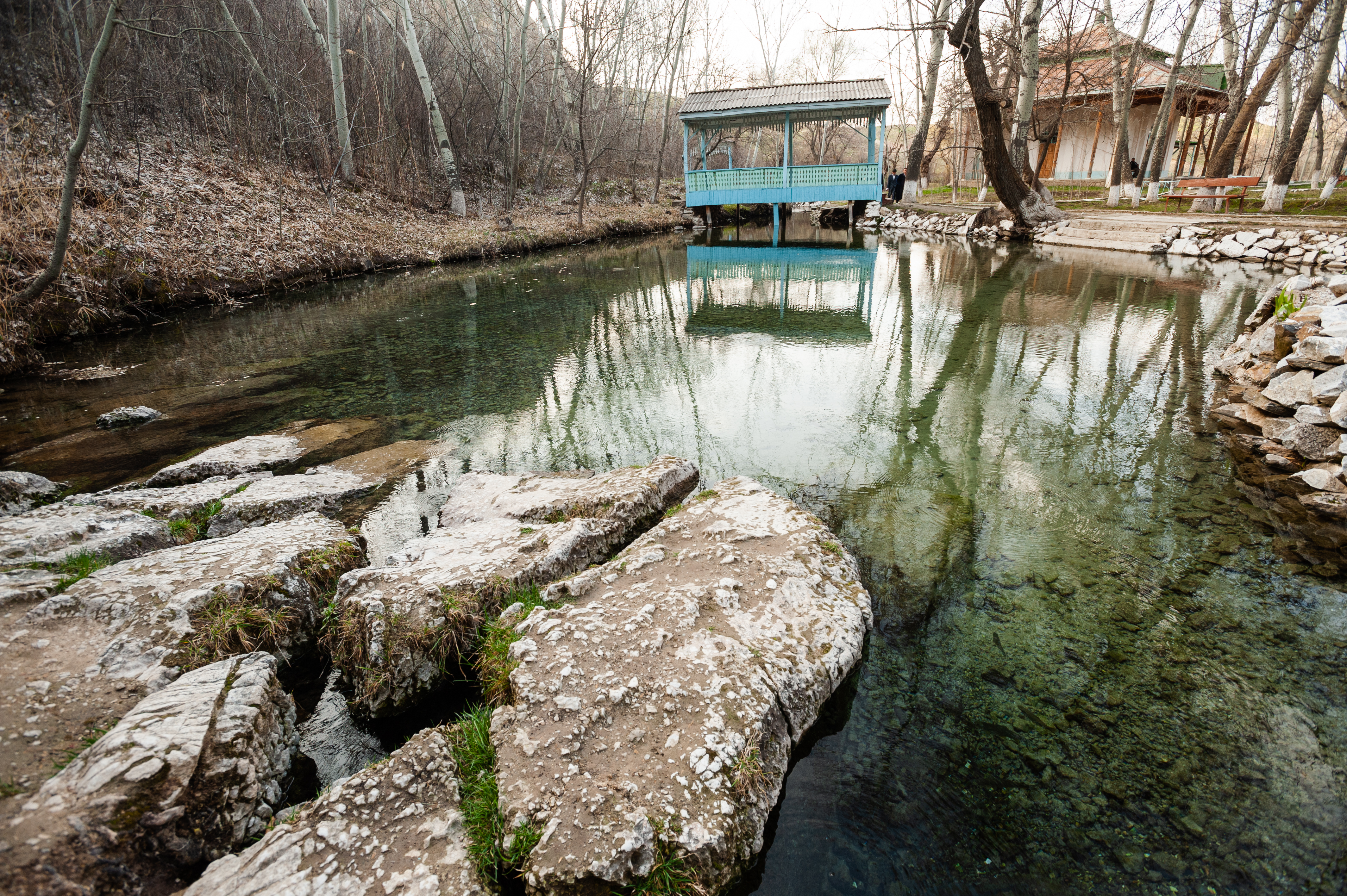
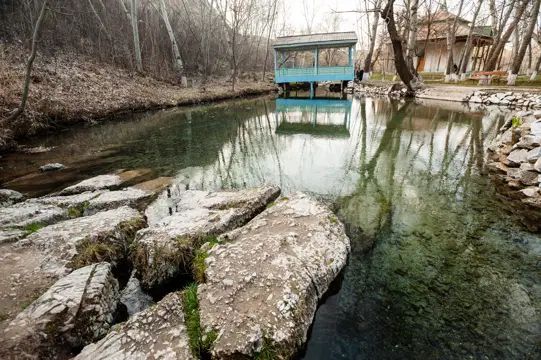
sacred sites, including the shrine of Novkat-Ota and the legendary healing spring Besh Panja. Last autumn the
area hosted an Apple Festival, where farmers and agricultural companies
discussed the introduction of new technologies.
A mountain road now connects Bakhmal with Zaamin, one of
the country’s main resorts. Opened only about five years ago, the road is
already being lined with infrastructure for tourist zones. For the mountain
rams that have long inhabited these slopes, however, the arrival of
civilisation has meant searching for new secluded corners. Yet not so long ago
life here followed a very different rhythm.
This photo essay takes us back to the recent past, when the
mountain sheep still roamed undisturbed, the trees seemed taller, and the land
remained largely untouched.
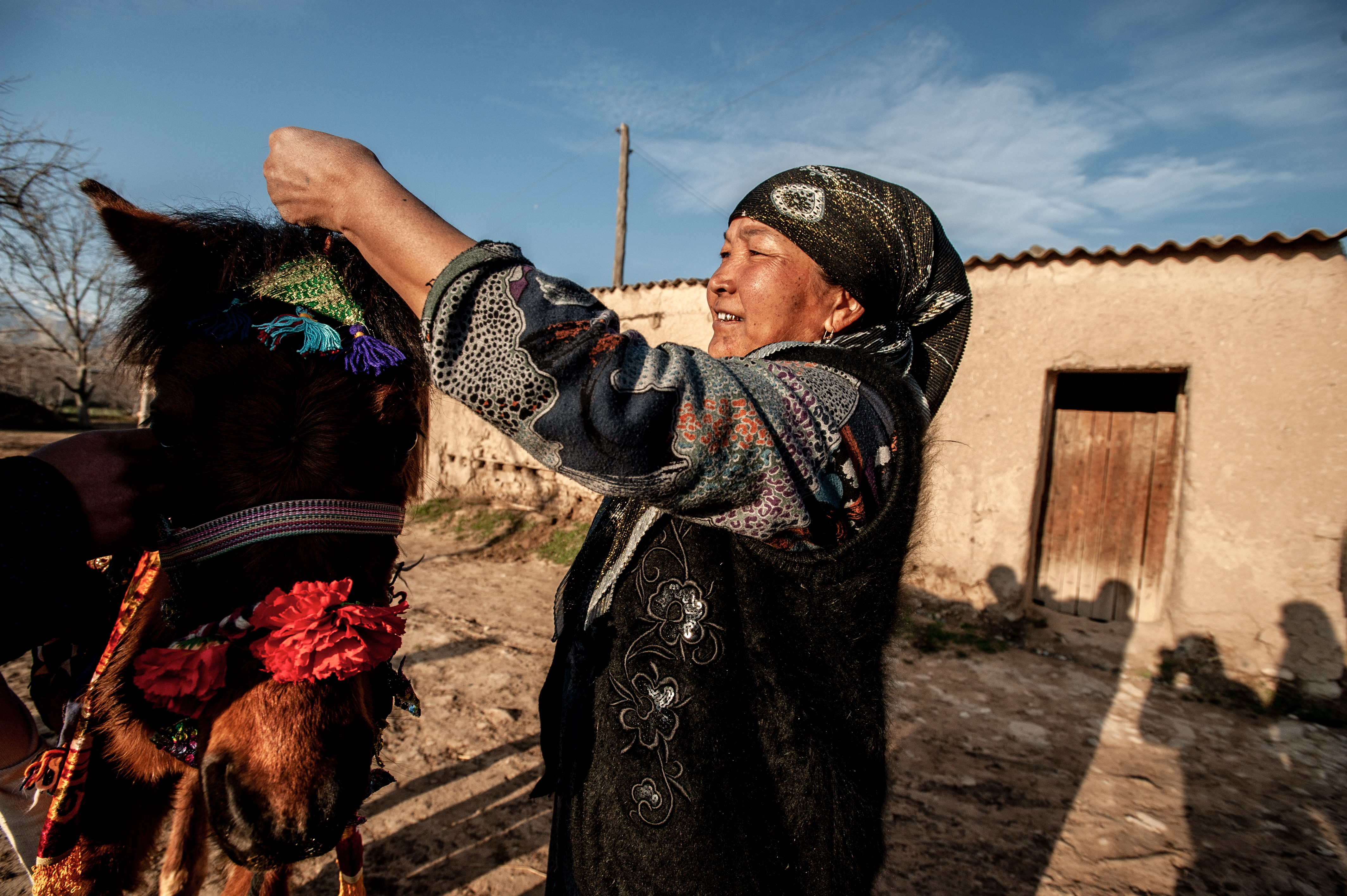
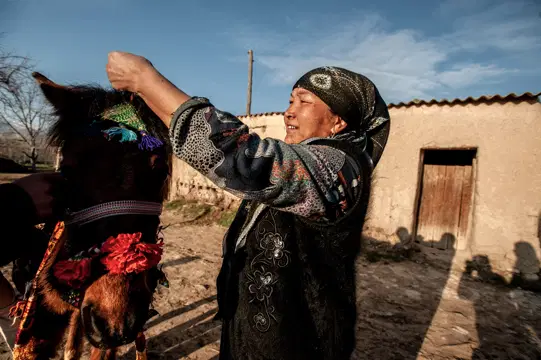
In the spring of 2011 we travelled to the Jizzakh region to photograph kupkari, the traditional equestrian game. A trip to Bakhmal was not part of our plans. But as often happens, we struck up a conversation with one of the guests at the festivities, and he invited us to his native village. It was a mountain kishlak not far from the district centre of Usmat.
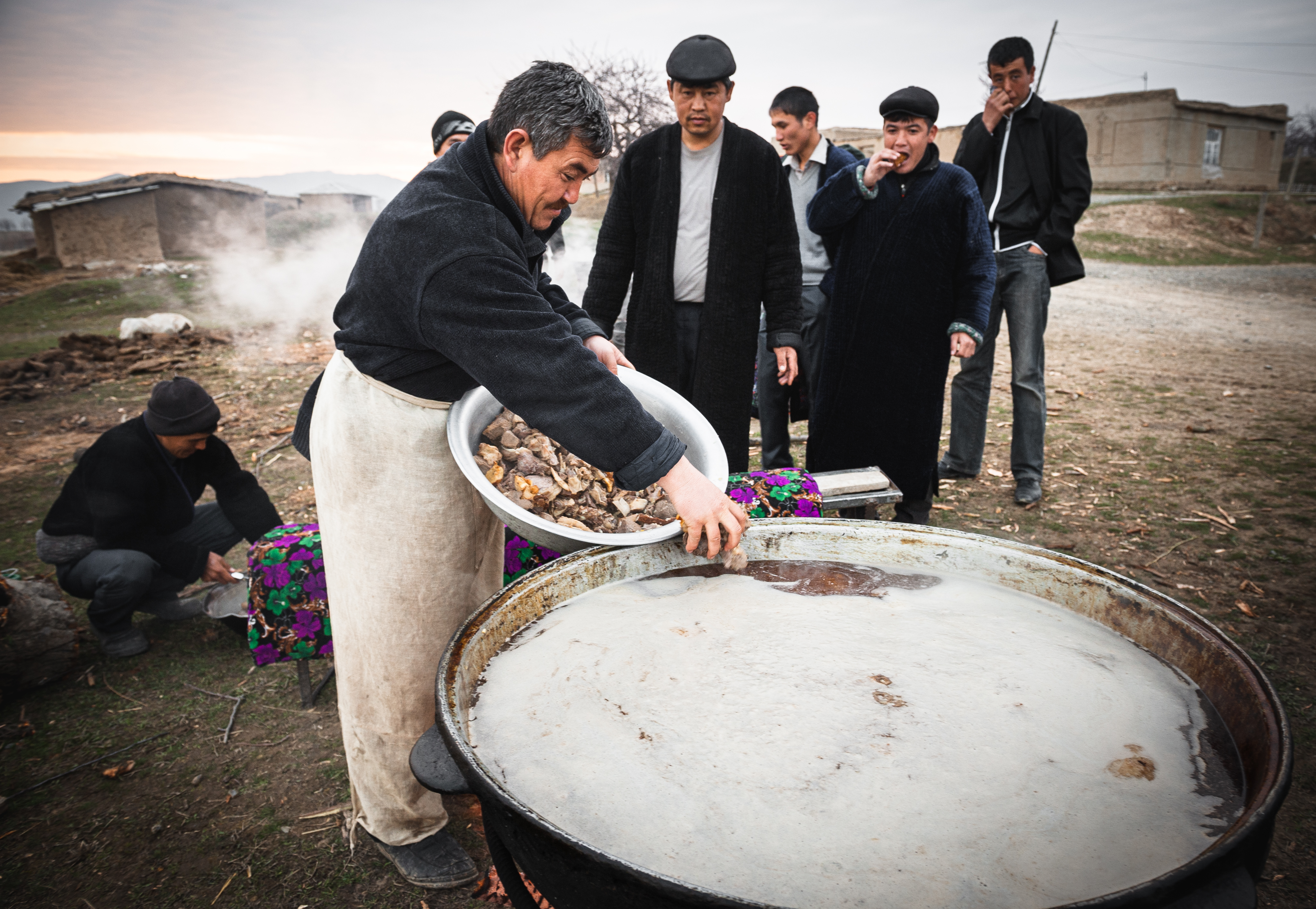
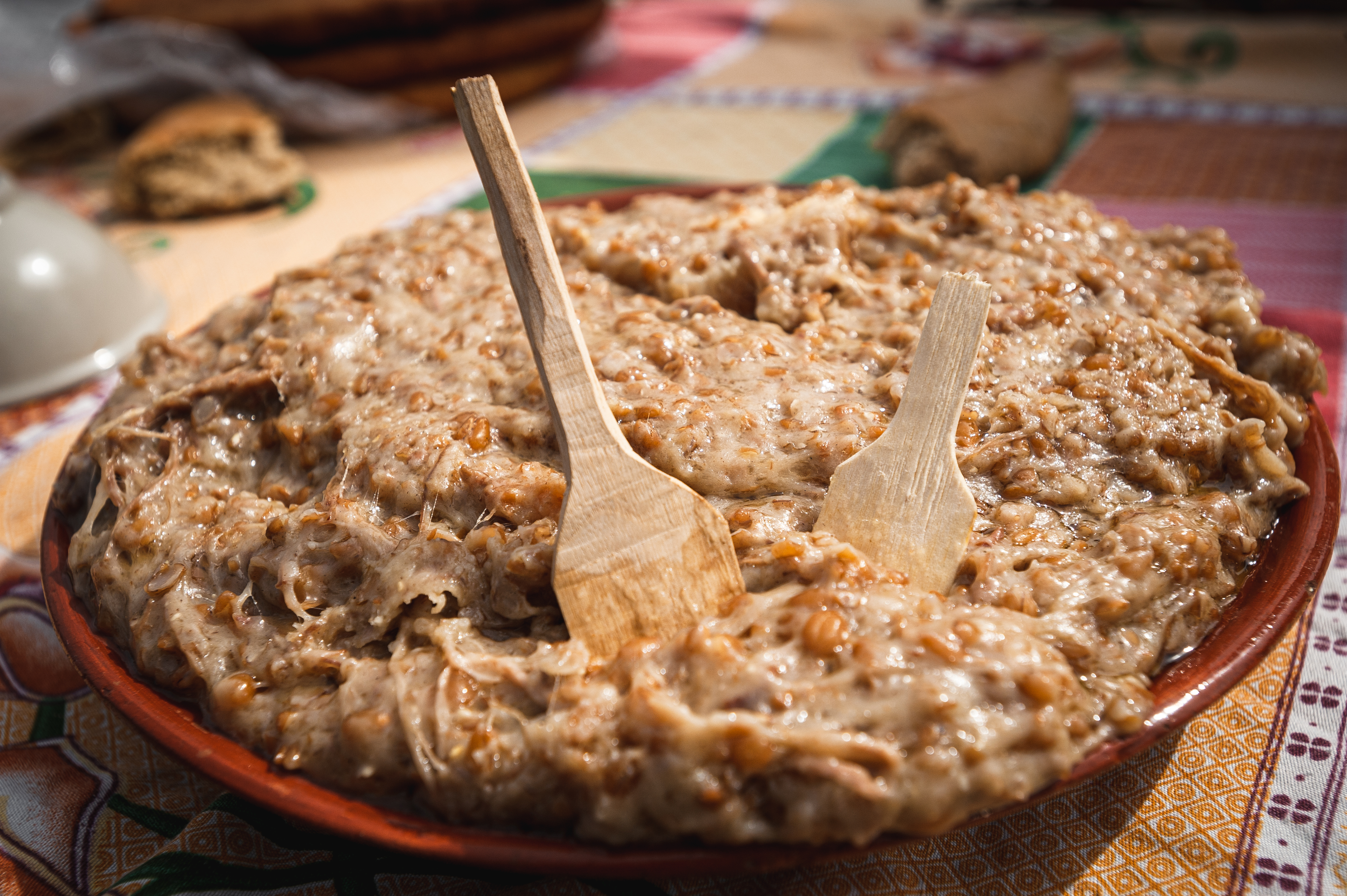
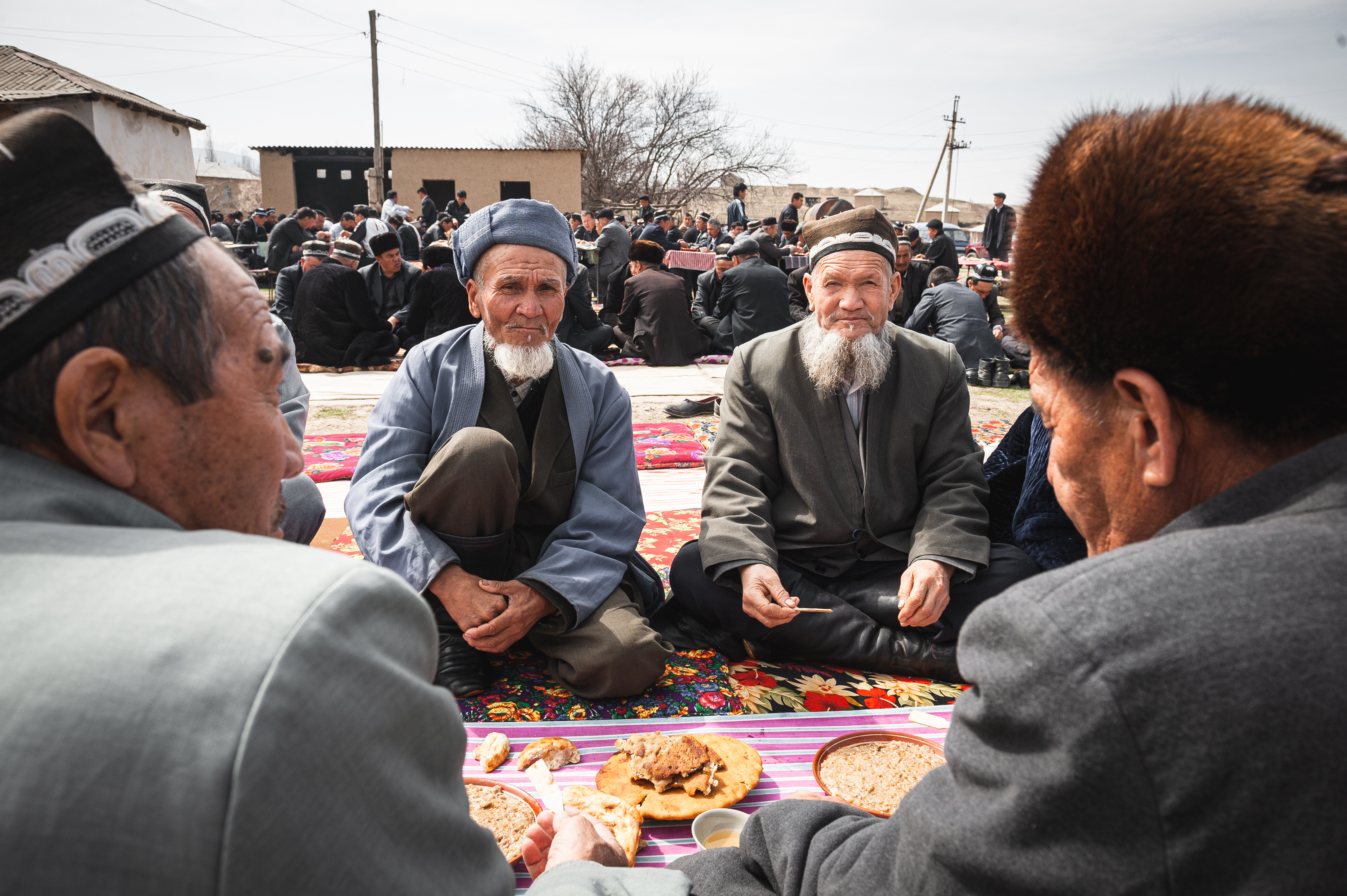
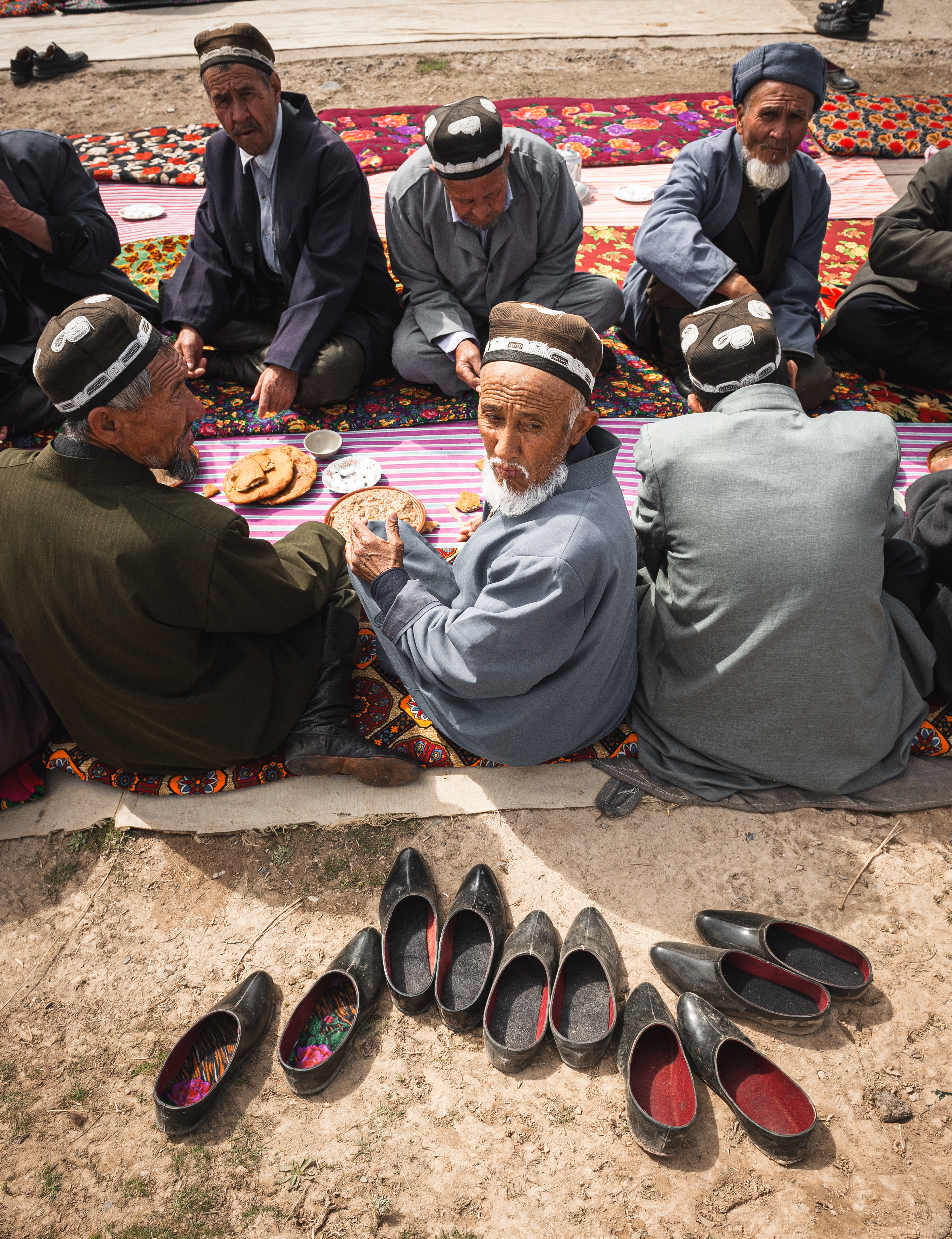
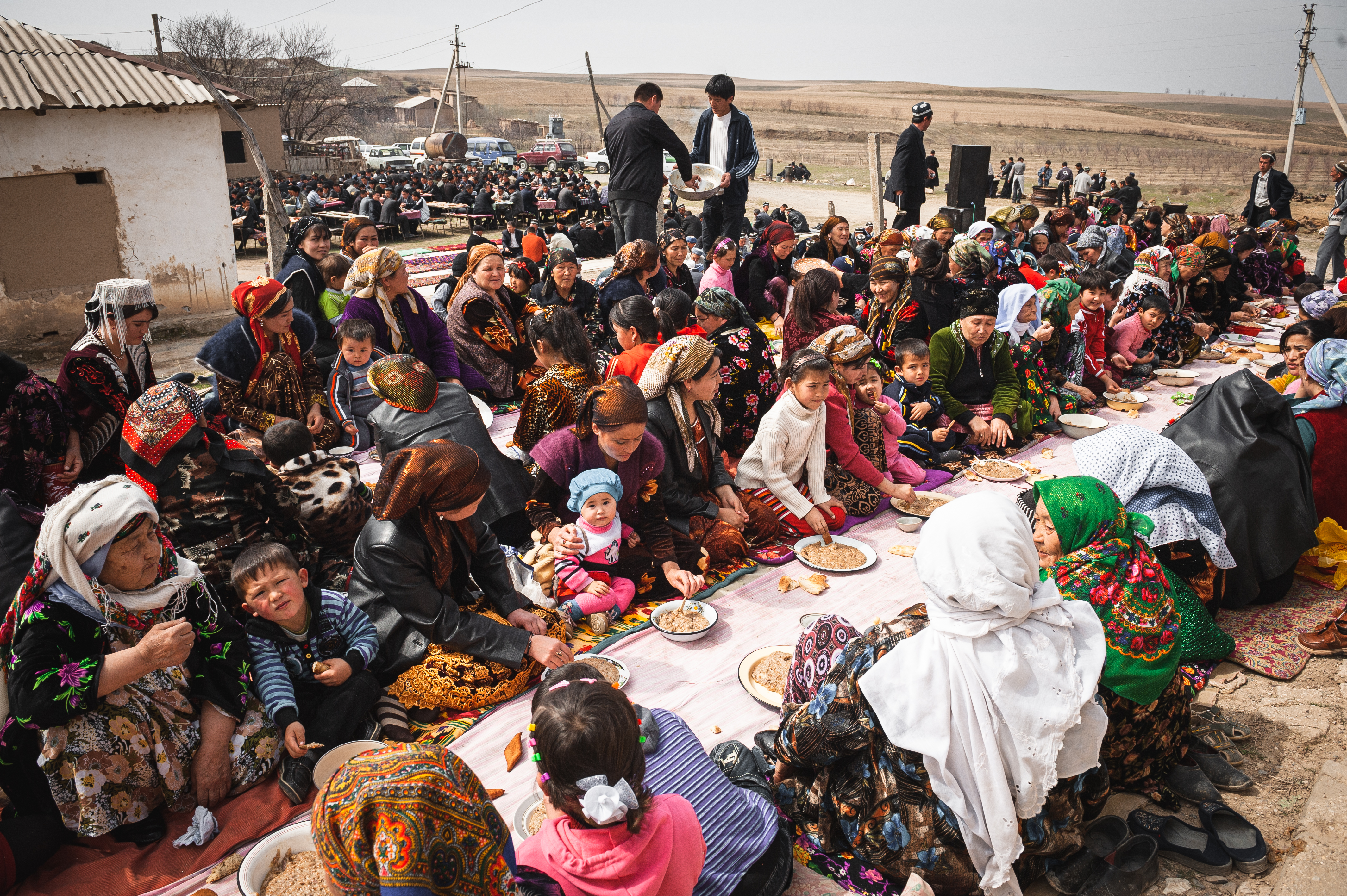
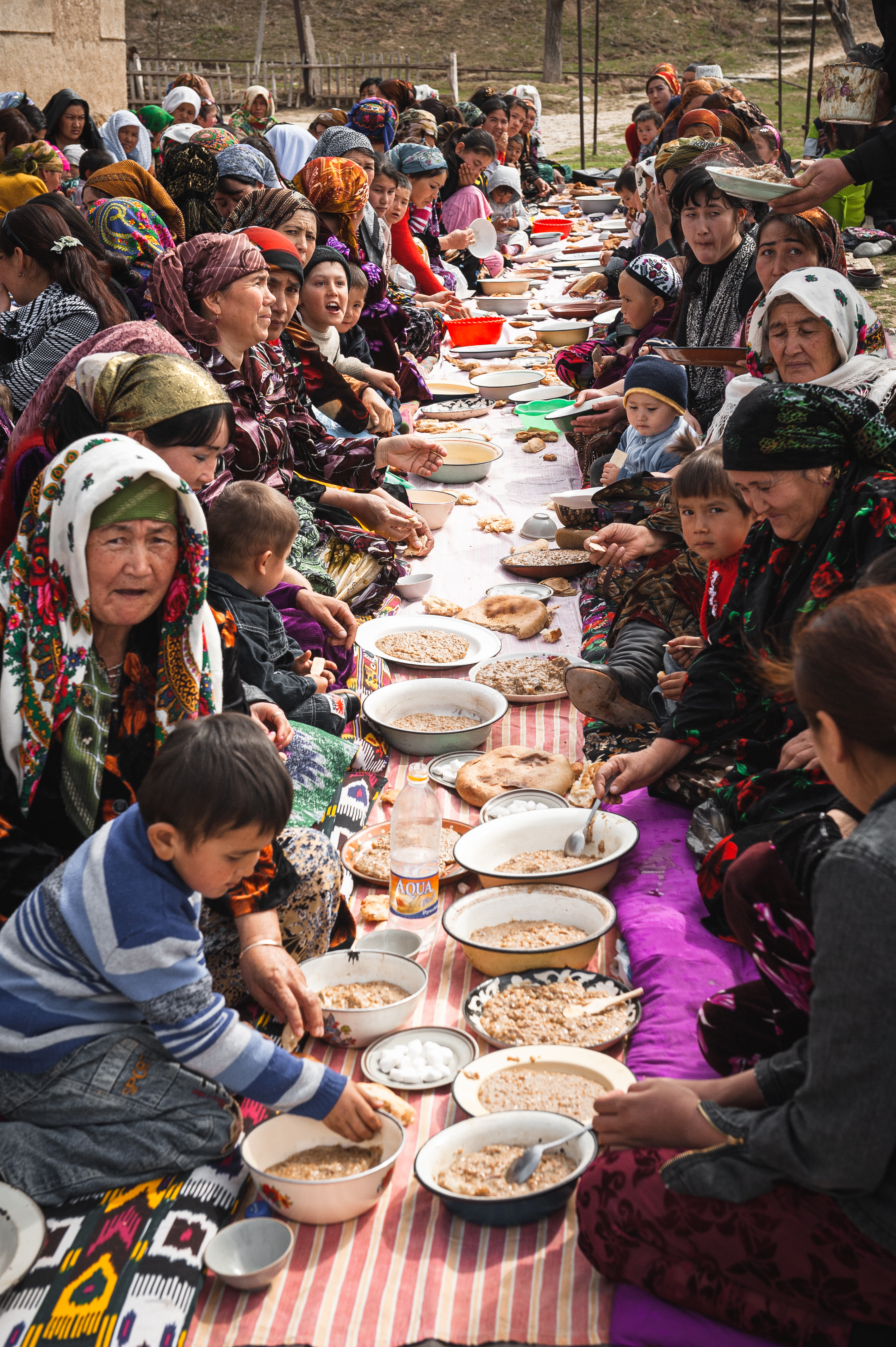
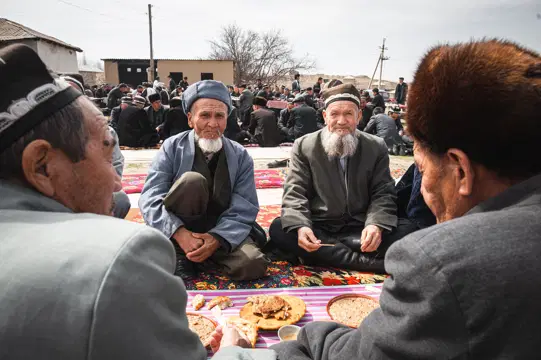
When we arrived, preparations for the Nawruz celebration were already in full swing. One of the main traditions in this village is the preparation of haleem, a highly nutritious and very tasty dish made from meat and wheat.
Ernest Kurtveliev
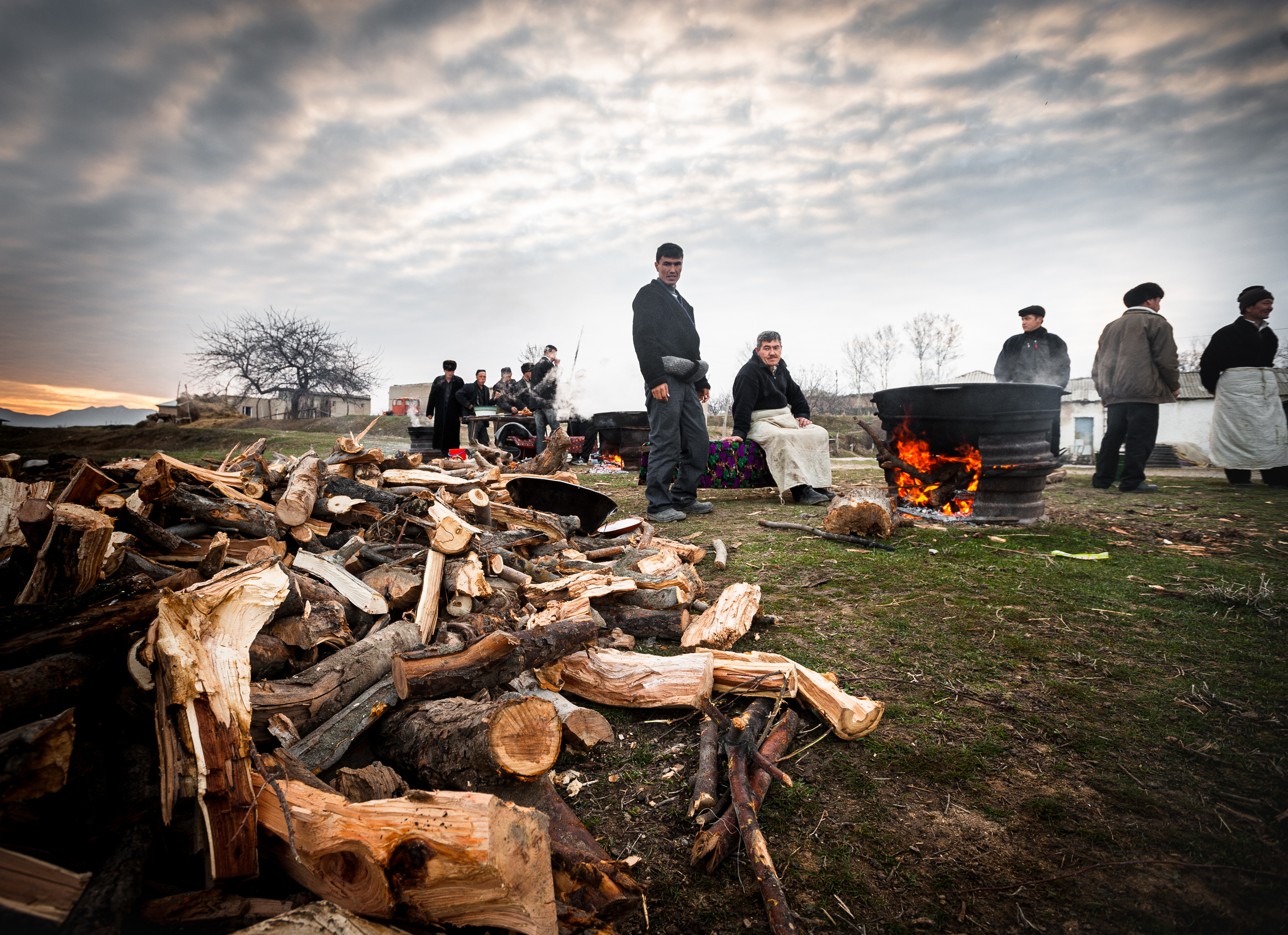
All 1,500 families living in Bakhmal take part in the
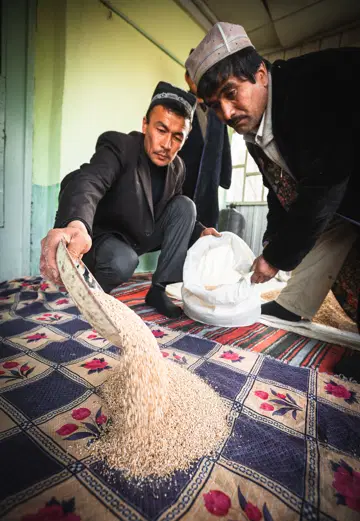
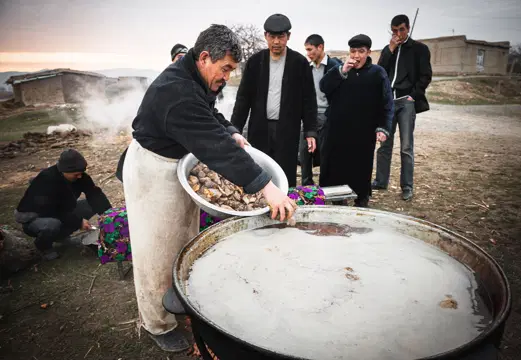
event. The ceremonial nature of the process is impressive. Ingredients are
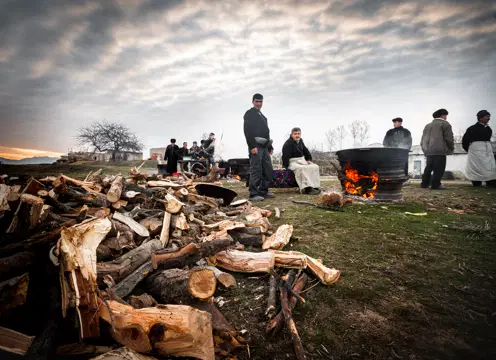
collected jointly from across the village. Cooking haleem begins in the
evening. Only men tend the kazans (large cauldrons) scattered around the
courtyard. The preparation is accompanied by relaxed conversation and folk
festivities.
Haleem is not prepared anywhere else in the vicinity, as it is difficult to make. Many people either do not know the recipe or are too lazy. The difficulty in preparing haleem is that it must be stirred constantly with a long, thick stick for a full 24 hours; otherwise the dish will burn.
Haleem, of course, is also prepared in other regions, for example in Urgut. But there they add chickpeas or lobia beans. In Tashkent they make it as well, but they add milk and serve it cold.
Ravshan-domla Yuldashev, a local resident
In
Bakhmal, festive events take place at ten different locations throughout the surrounding
area. During the Soviet period the holiday was discouraged as a religious
remnant, and locals prepared the traditional dish secretly in only one place
before distributing it to villagers. Nawruz was officially renamed Navbahor,
while the rituals associated with it, dating back to pre-Zoroastrian antiquity,
were to be eliminated. As a result, the tradition of preparing festive haleem
in these places was almost lost.
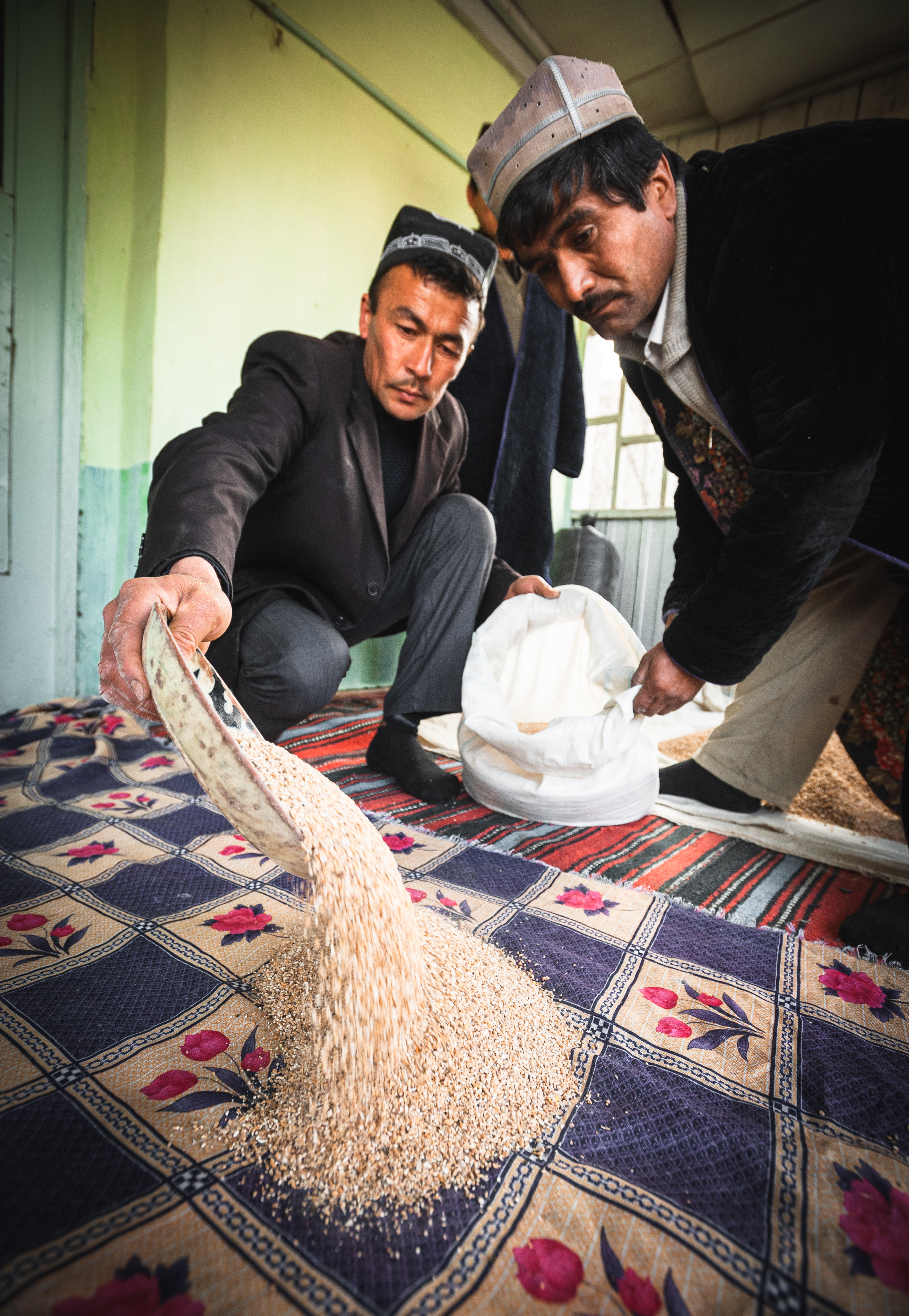
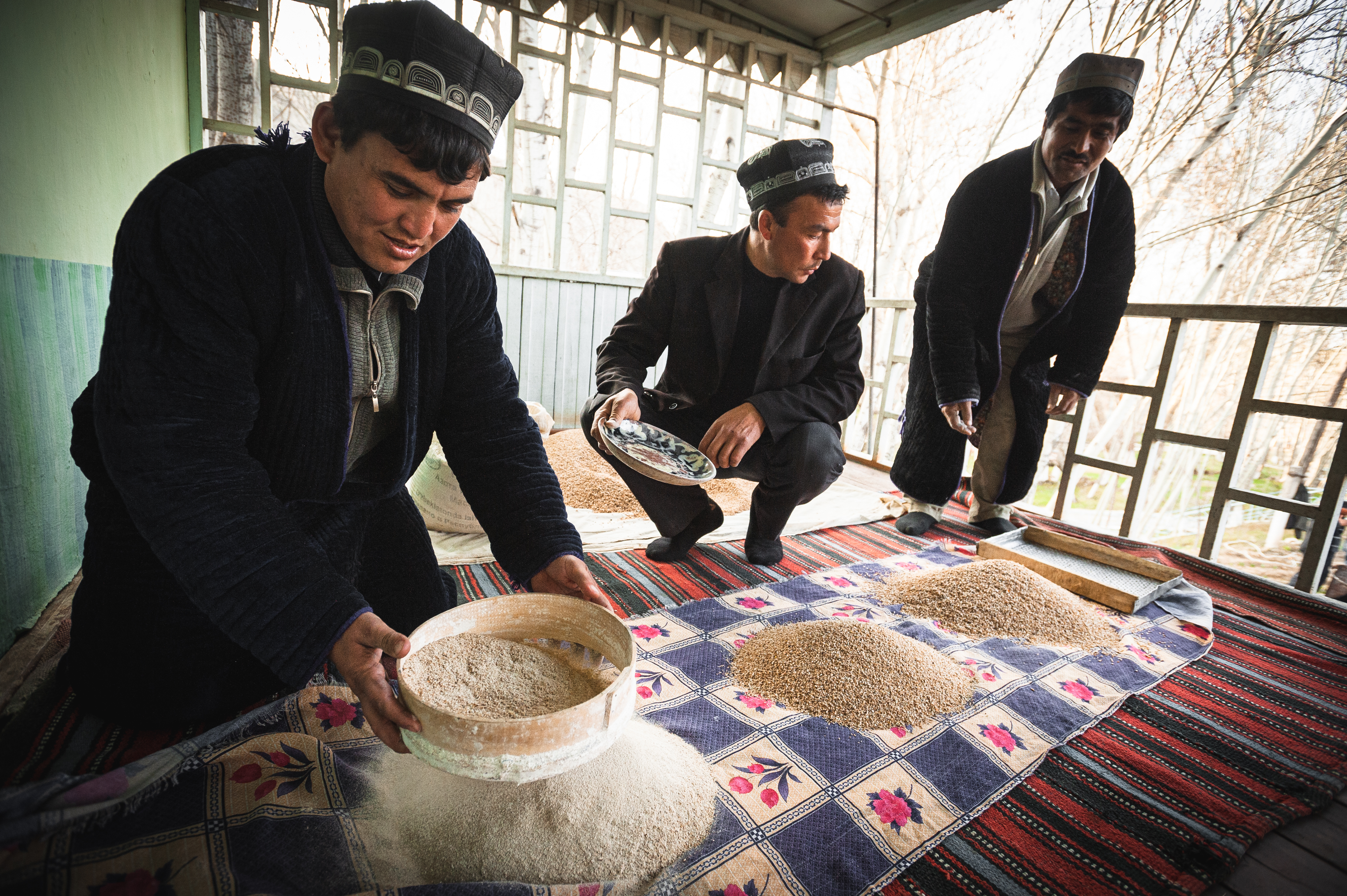
Yet the history of the dish is indeed ancient and closely
connected with the spring celebration itself. The key ingredient is spring
wheat. People once believed that before sowing the grain it had to be cooked in
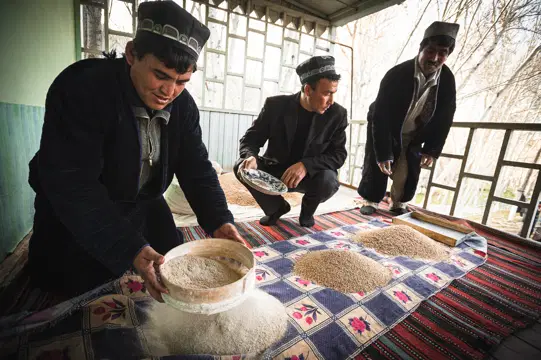
a kazan. After milling, the wheat is divided into three parts: coarse
grain, medium grind, and finely ground flour.
To make haleem truly delicious, the people of Bakhmal
strictly follow the proportions of the traditional recipe: they add meat, three
types of wheat, cottonseed oil, and five parts water. Lamb and beef are placed
in the cauldron in the evening, while coarse wheat is added in the morning.
Once the water comes to a boil, the first portion of coarse wheat softens. Two
or three hours later, medium-ground wheat is added, followed after the same
interval by a similar amount of fine flour to achieve a porridge-like consistency.
Everything is then mixed into a single mass. The dish must cook for a full day,
during which the meat becomes incredibly tender, almost melting on the tongue.
The meditative nature of the process, coupled with
collective responsibility, is reminiscent of preparing sumalak, except
that here men take the lead. Four men stir the contents of a 200-litre kazan.
To fill it to the brim, 125 litres of water are required.
The local water is another source of pride for the people
of Bakhmal. Around 1,500–2,000 households receive water from the hot spring Besh
Panja, which originates in the Bakhmal mountain range and resembles the
shape of a human hand with five fingers. Locals call it a “gift from God”. The
water is pure and transparent and contains many beneficial minerals. According
to local belief, the spring appeared through the blessing of the saint Novkat-Ota
and becomes the last hope for those who are ill or unable to have children.
We never know where barakah (blessing) will come from. People come to the sacred place to leave a stone with a cherished wish. For those who pray sincerely, the Almighty grants a child.
Ravshan-domla Yuldashev
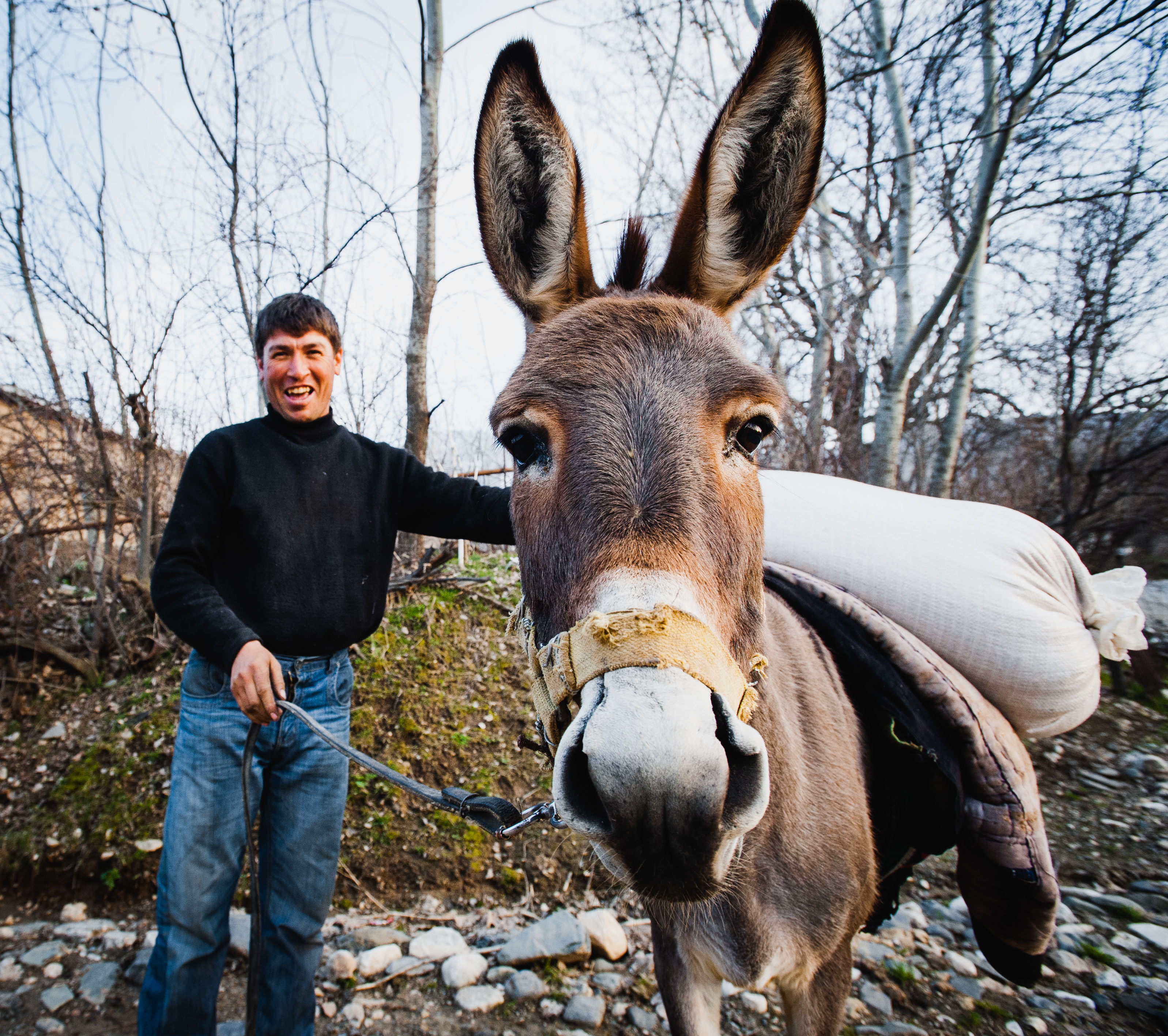
People here mainly live off farming and horticulture. The
mountain climate provides ideal conditions for growing the very apples that
once competed with the famous Almaty Aport, renowned throughout the Soviet
Union. Today locals proudly say that the yellow and red Bakhmal apples are
officially the tastiest in the country. When a son is born into a family, an apple orchard is
planted for him so that in the future he will be able to support his family and
build a livelihood here. This tradition has existed for generations.
But the people of Bakhmal do more than just grow orchards.
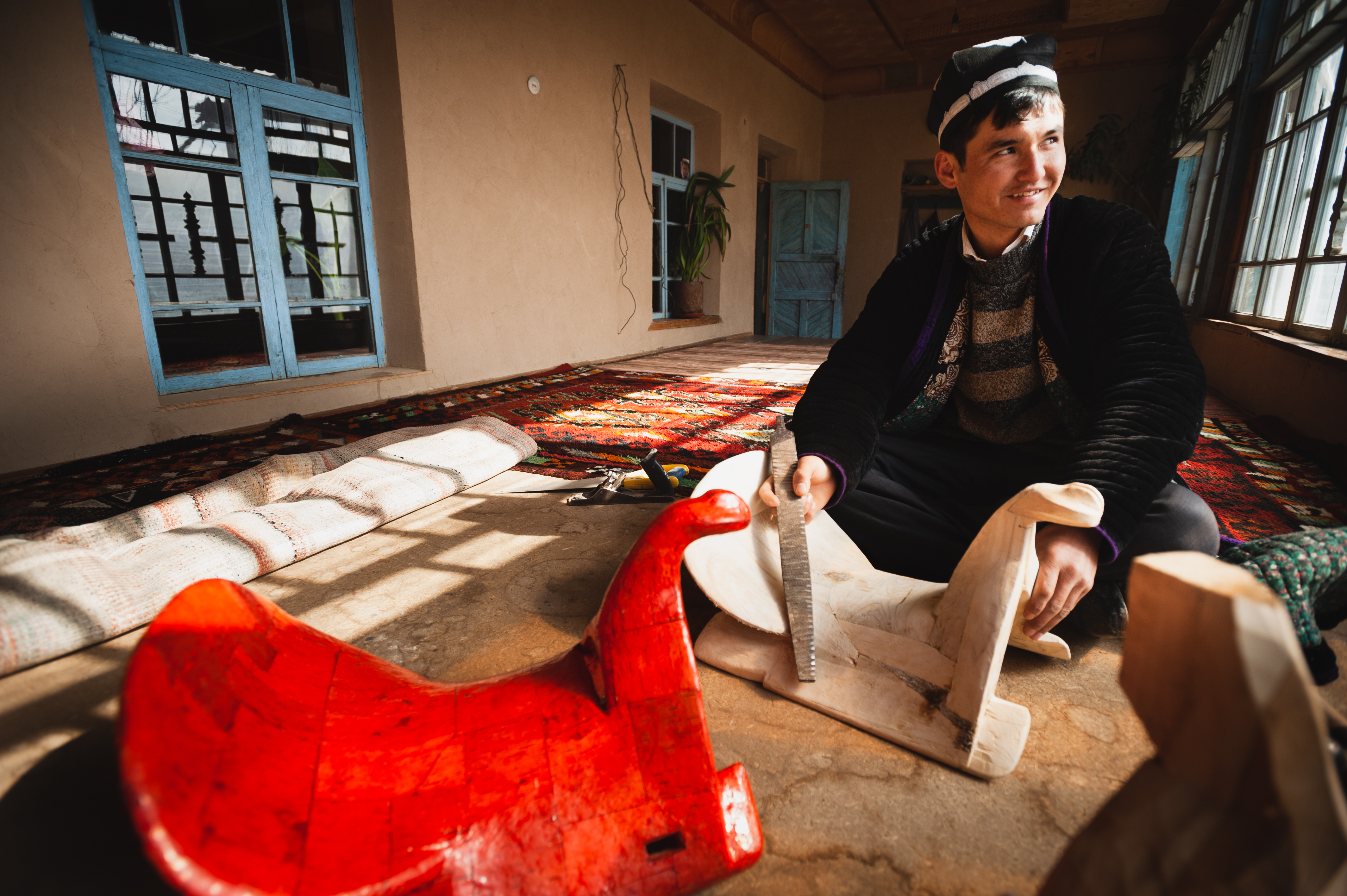
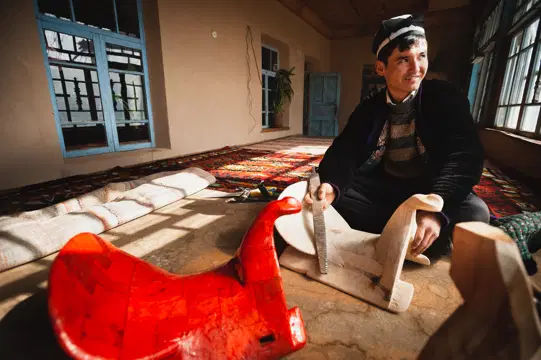
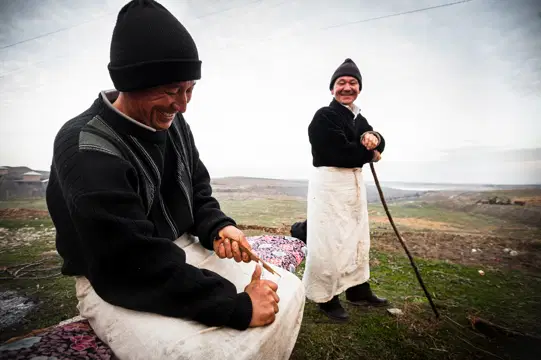
While visiting one household, I was fortunate to observe the process of making a saddle from a single piece of wood. These are sports saddles intended for kupkari, which explains their particular shape designed to absorb shocks during the race.
Ernest Kurtveliev
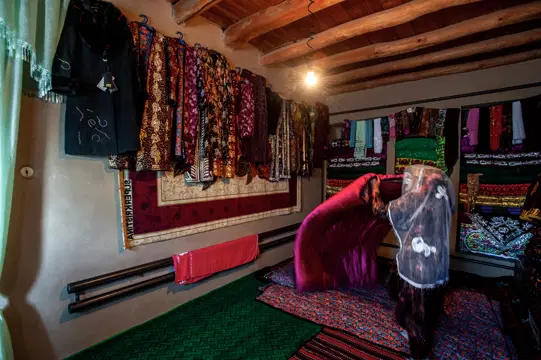
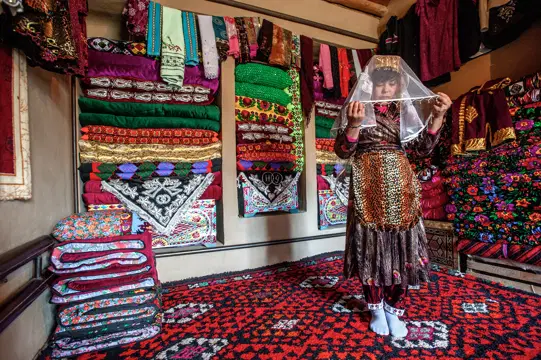
Guests had the opportunity to witness not only the
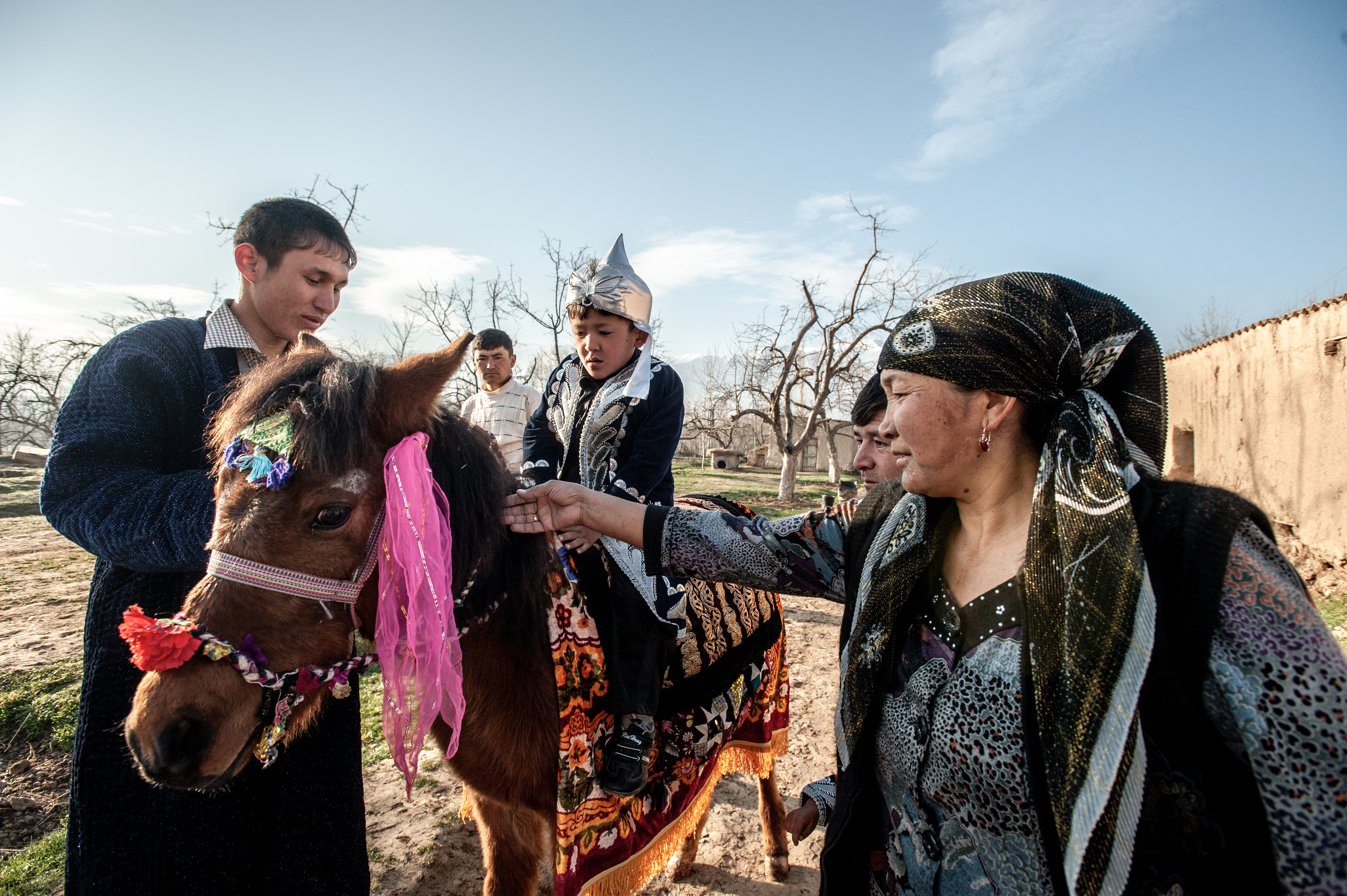
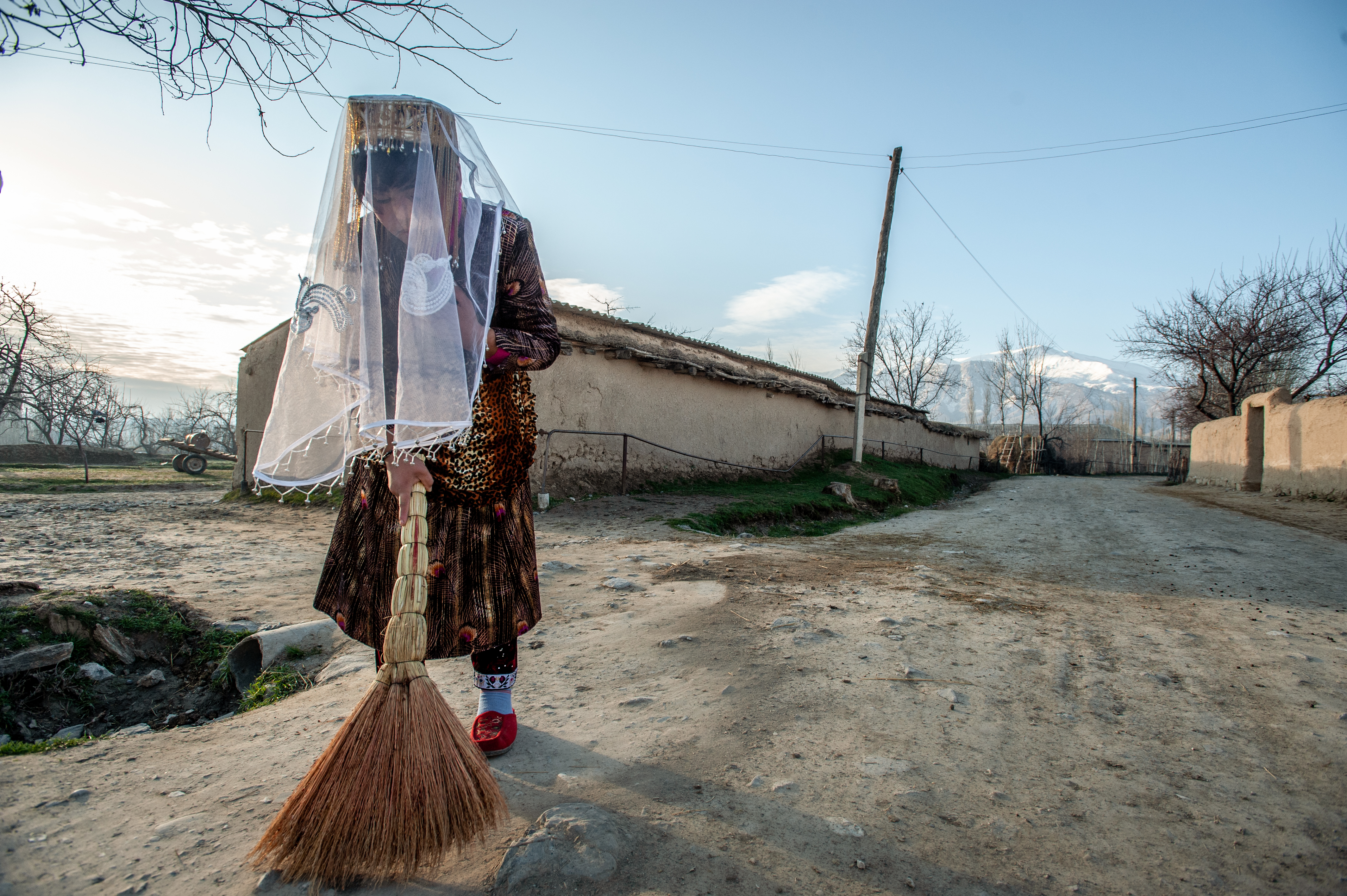
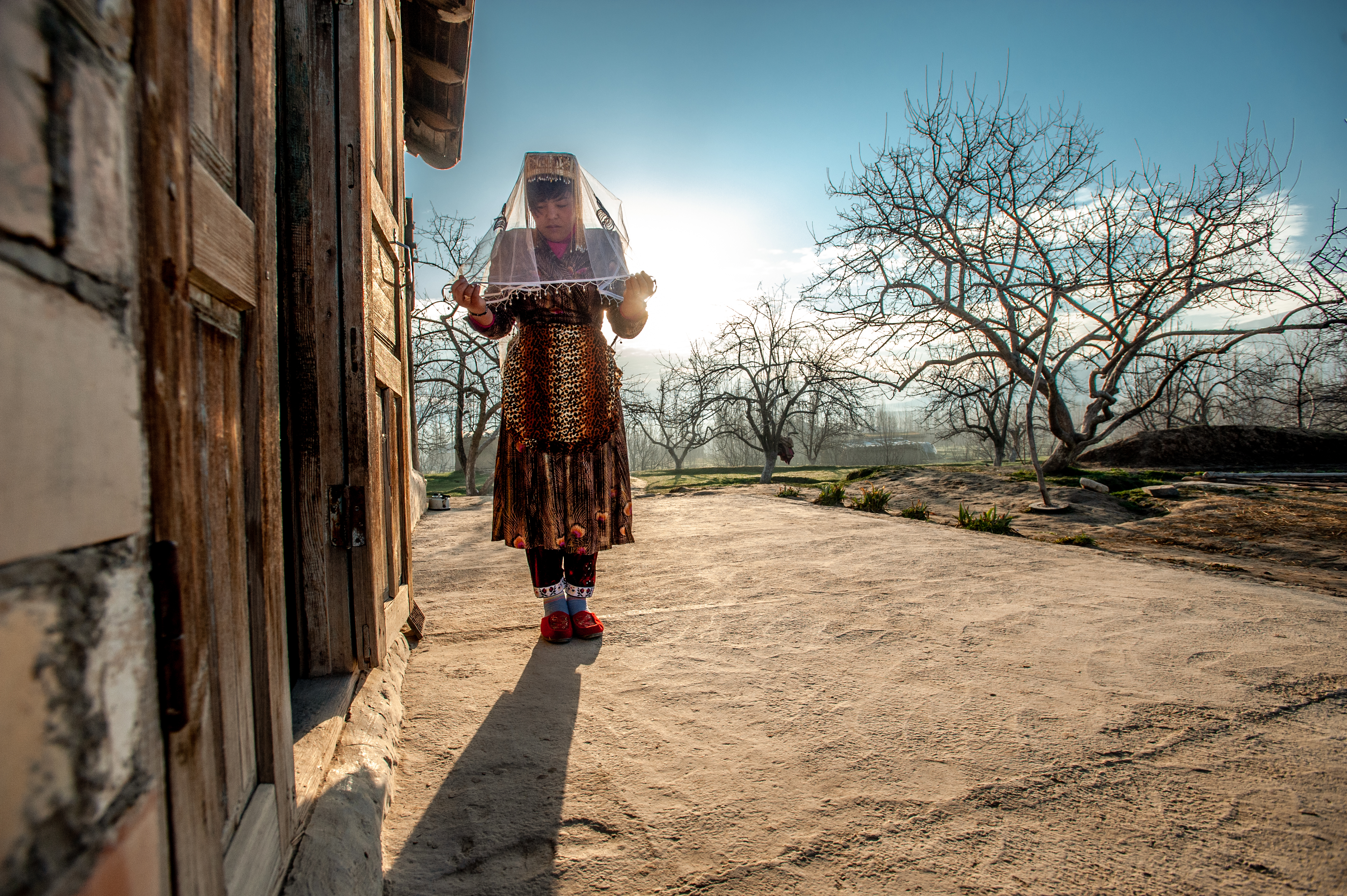
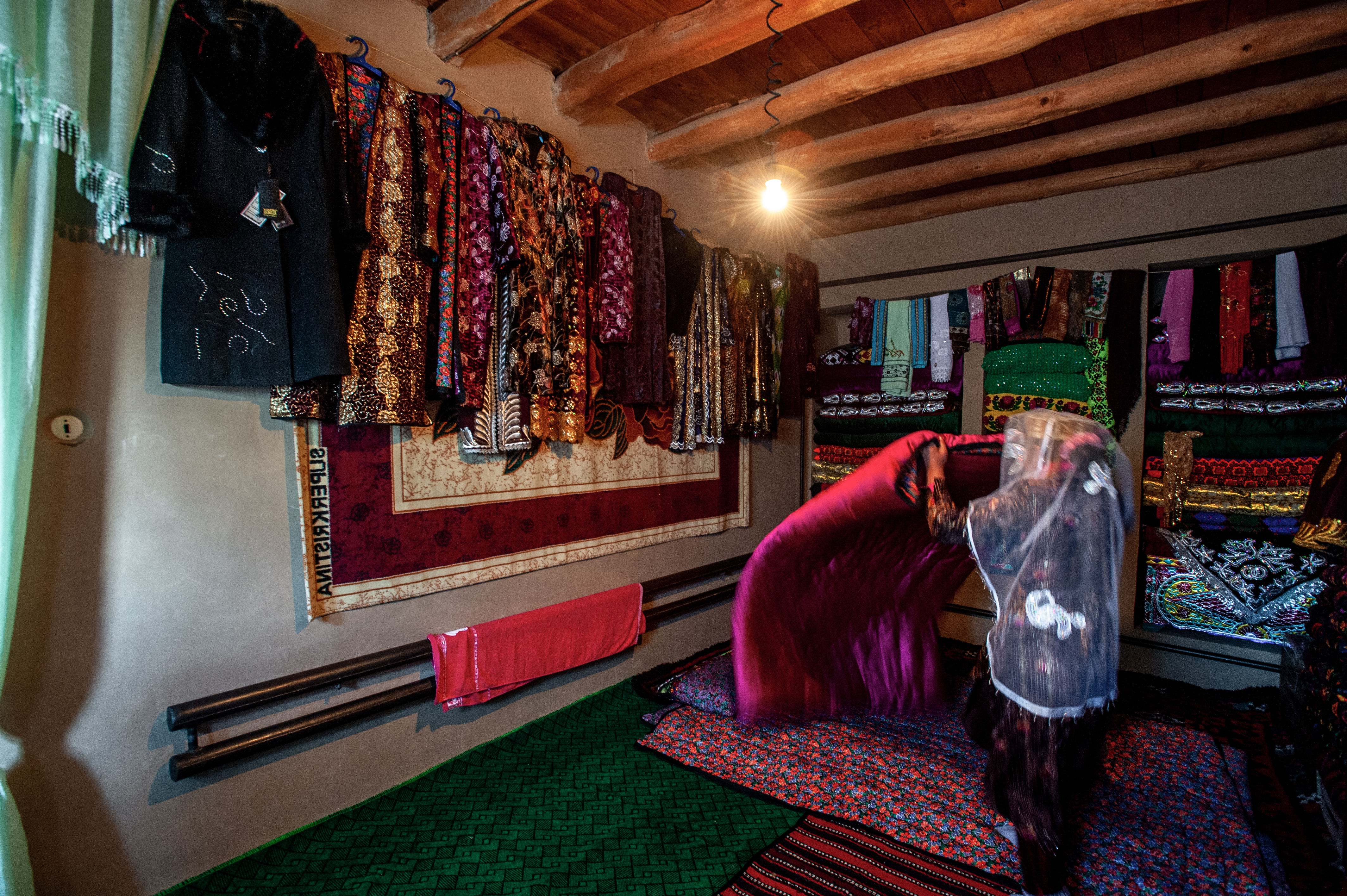
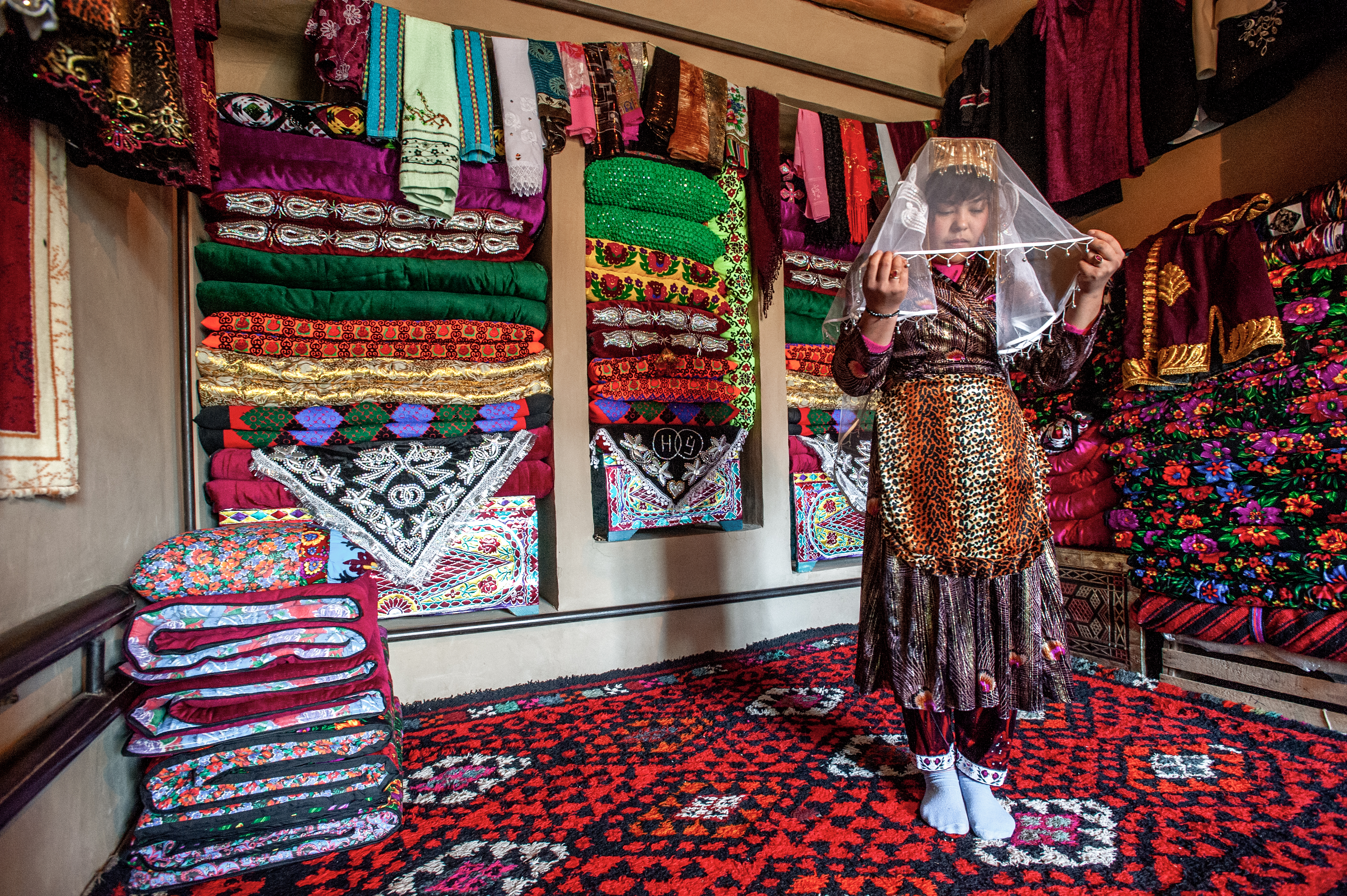
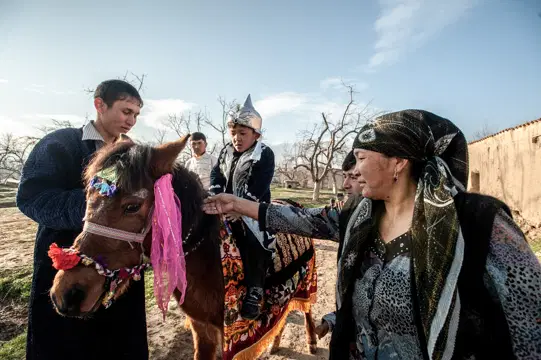
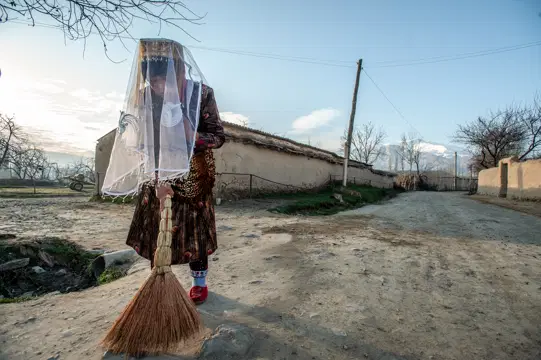
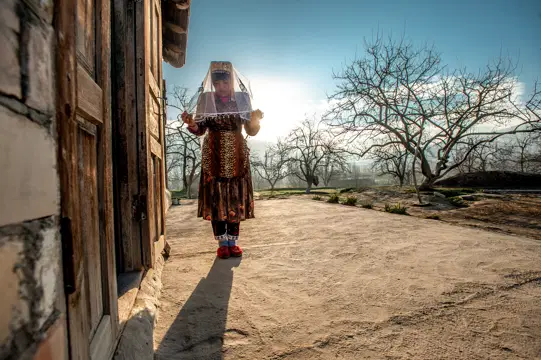
preparation of the Nawruz dish. In spring, villages also host sunnat-toi
ceremonies and honour new daughters-in-law, demonstrating that life continues
as usual.
But let us return to haleem.
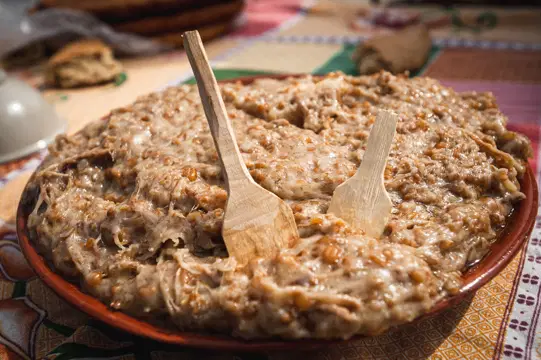
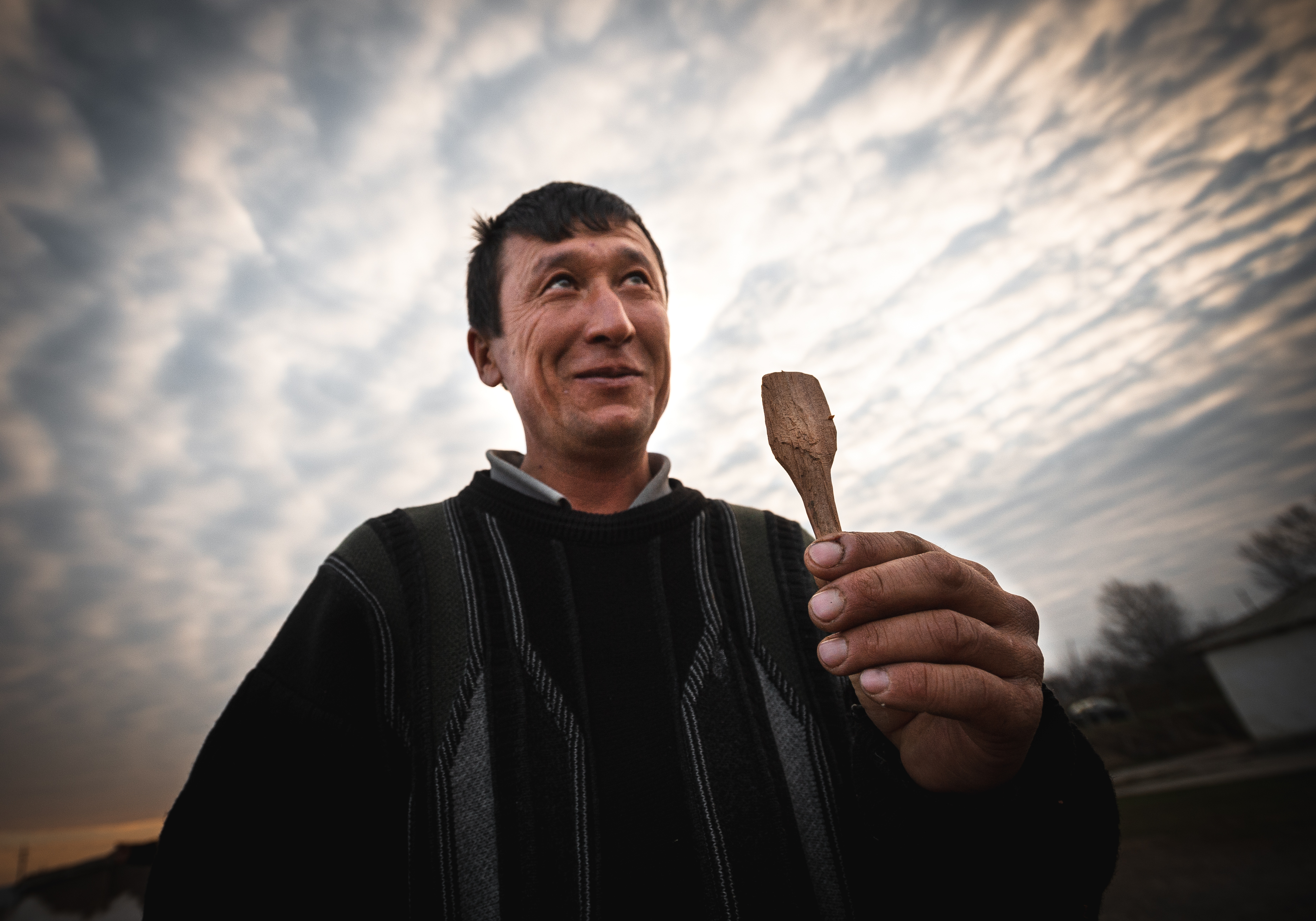
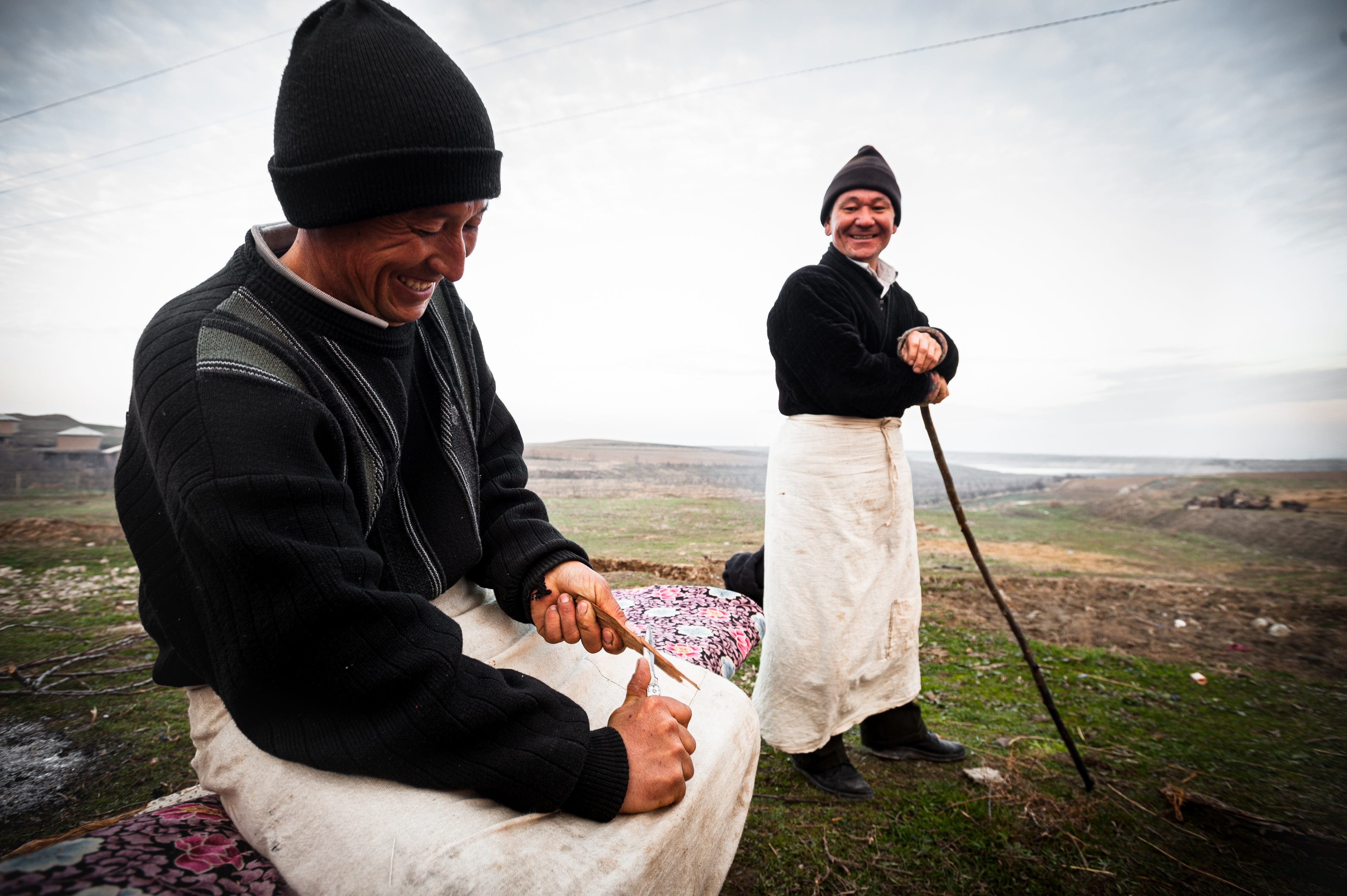
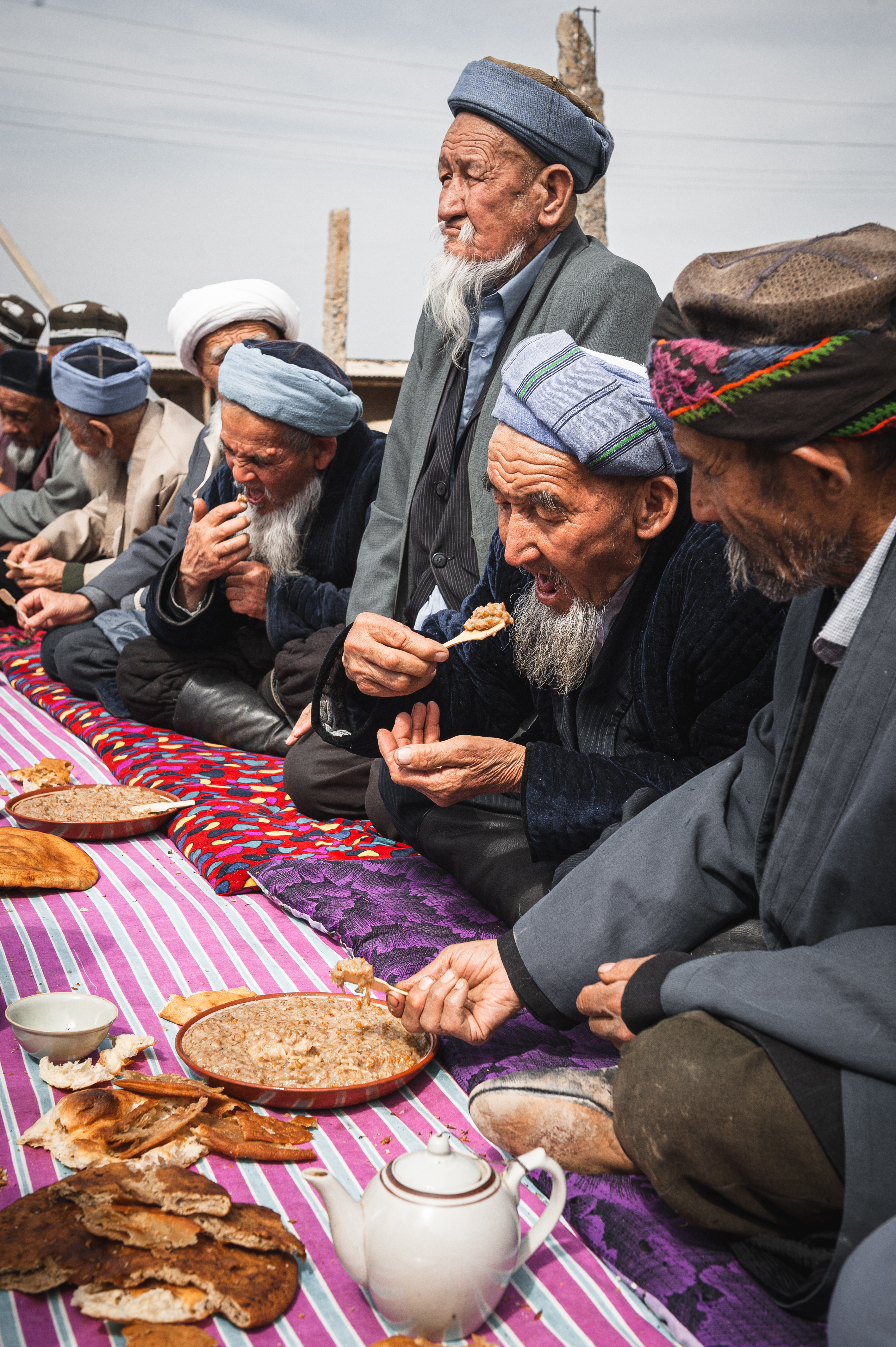
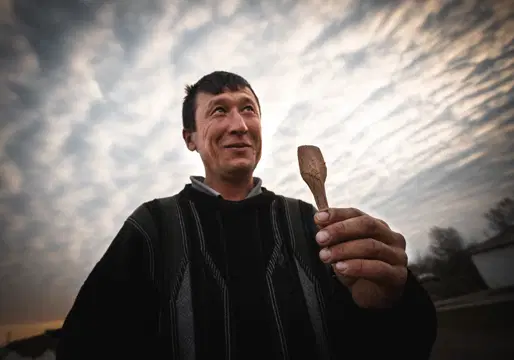
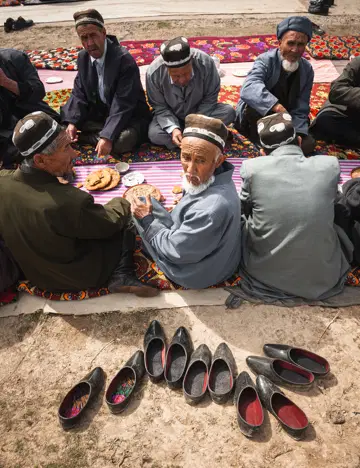
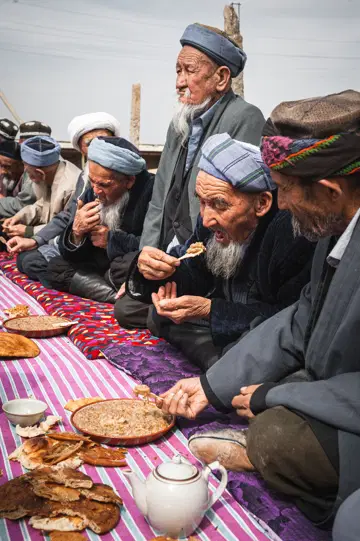
Festive haleem must be eaten only with wooden spoons. This
is an essential element of the traditional celebration. The spoons are carved
right there on the spot from small pieces of wood. The readiness of the dish
can be judged by the rich layer of fat that appears on the surface. This means
that the wheat has absorbed the oil and released excess fat. Haleem is always
eaten hot, straight from the kazan.
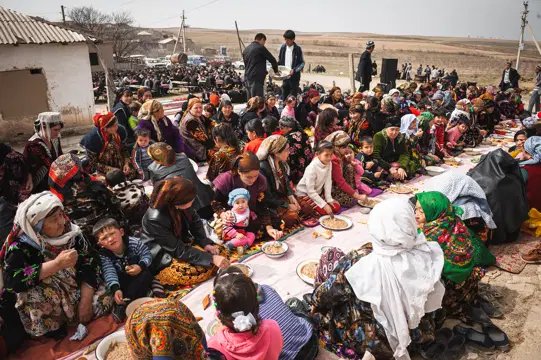
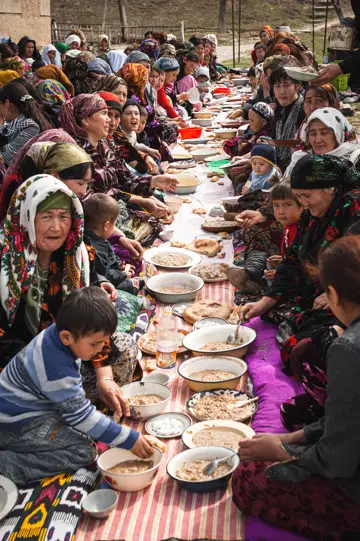
Even though other villages have tried to adopt the skill
and prepare haleem according to the Bakhmal method, it is still the most
delicious here in Bakhmal.
The people of Bakhmal regard their land as blessed. In
cities, we often forget that Nawruz is not only a celebration of the spring
equinox but also the start of the farming season. This marks the cycle of rural
life: livestock are led out to pasture, the land is cultivated, trees are
planted, and children are raised. And the festival… it will come again, as it
always does, when the traditions are remembered.


