
A small village with a non-Uzbek name "Shröder" lies
on both sides of the road
between Fergana and the ancient town of Kuva,
the birthplace of the scholar al-Fergani. It was here that I came across
preparations for welcoming a local resident, an elderly woman. Let us call her Sharofat-opa.
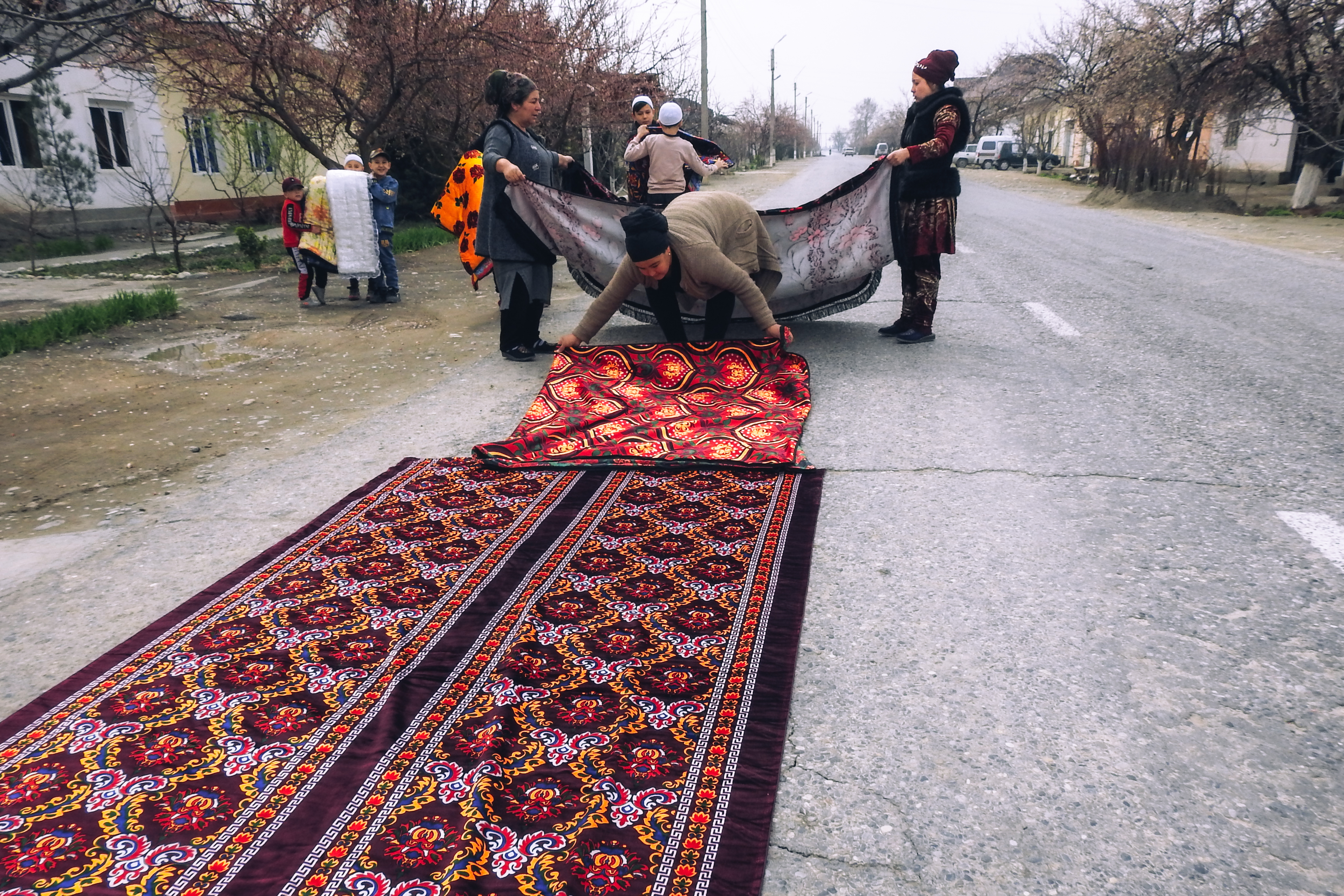 Photo: Ildar Sadykov
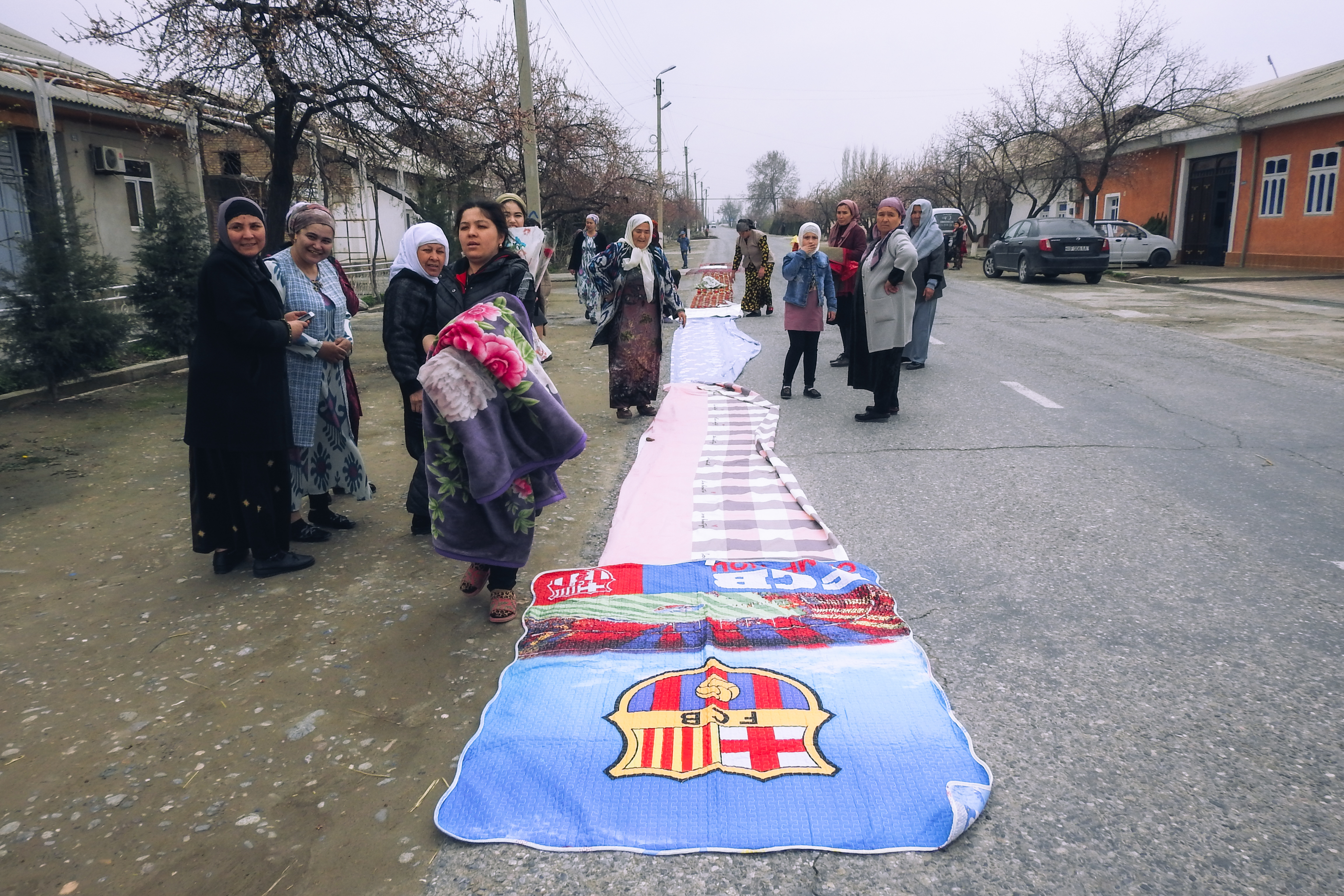 Photo: Ildar Sadykov
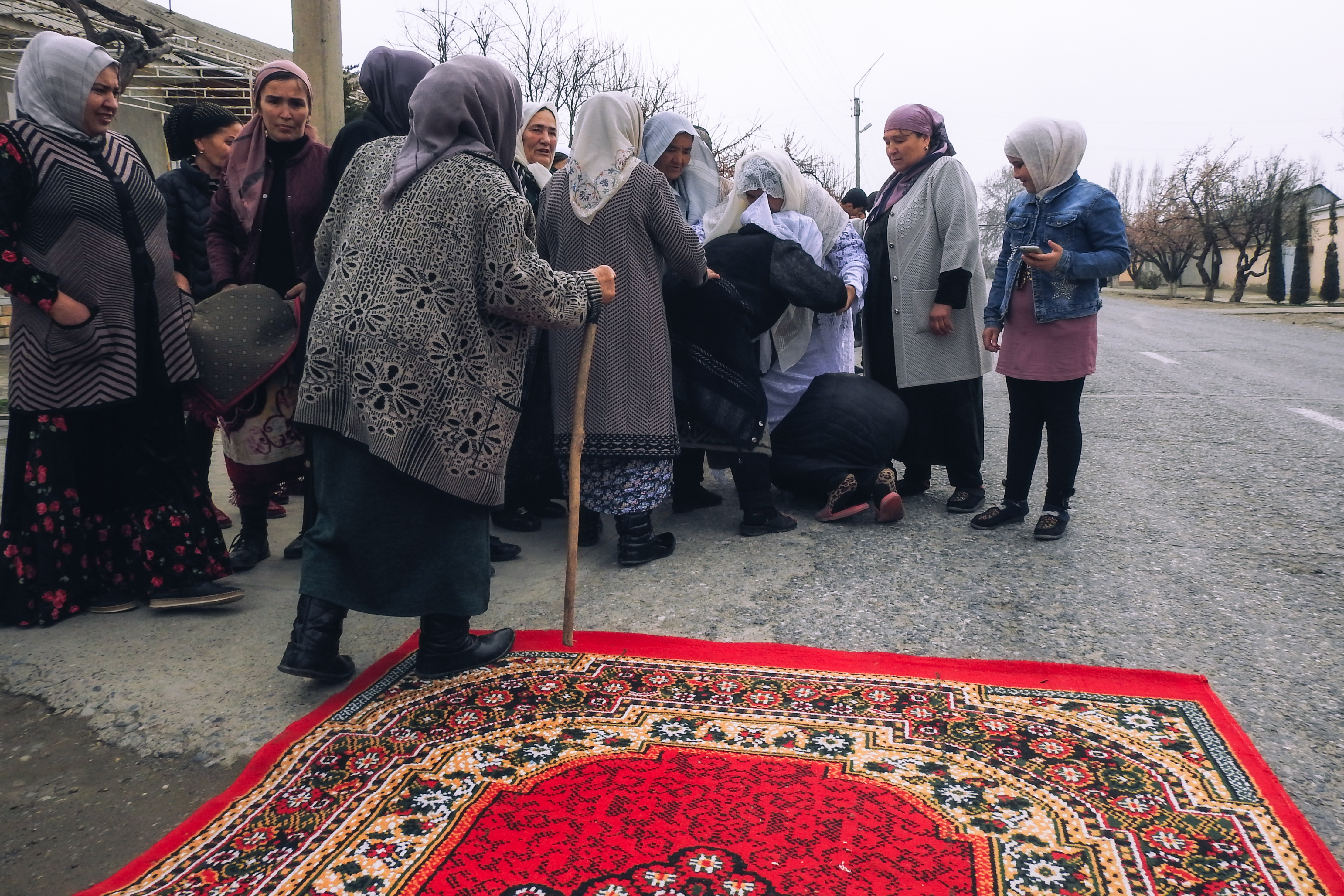 Photo: Ildar Sadykov
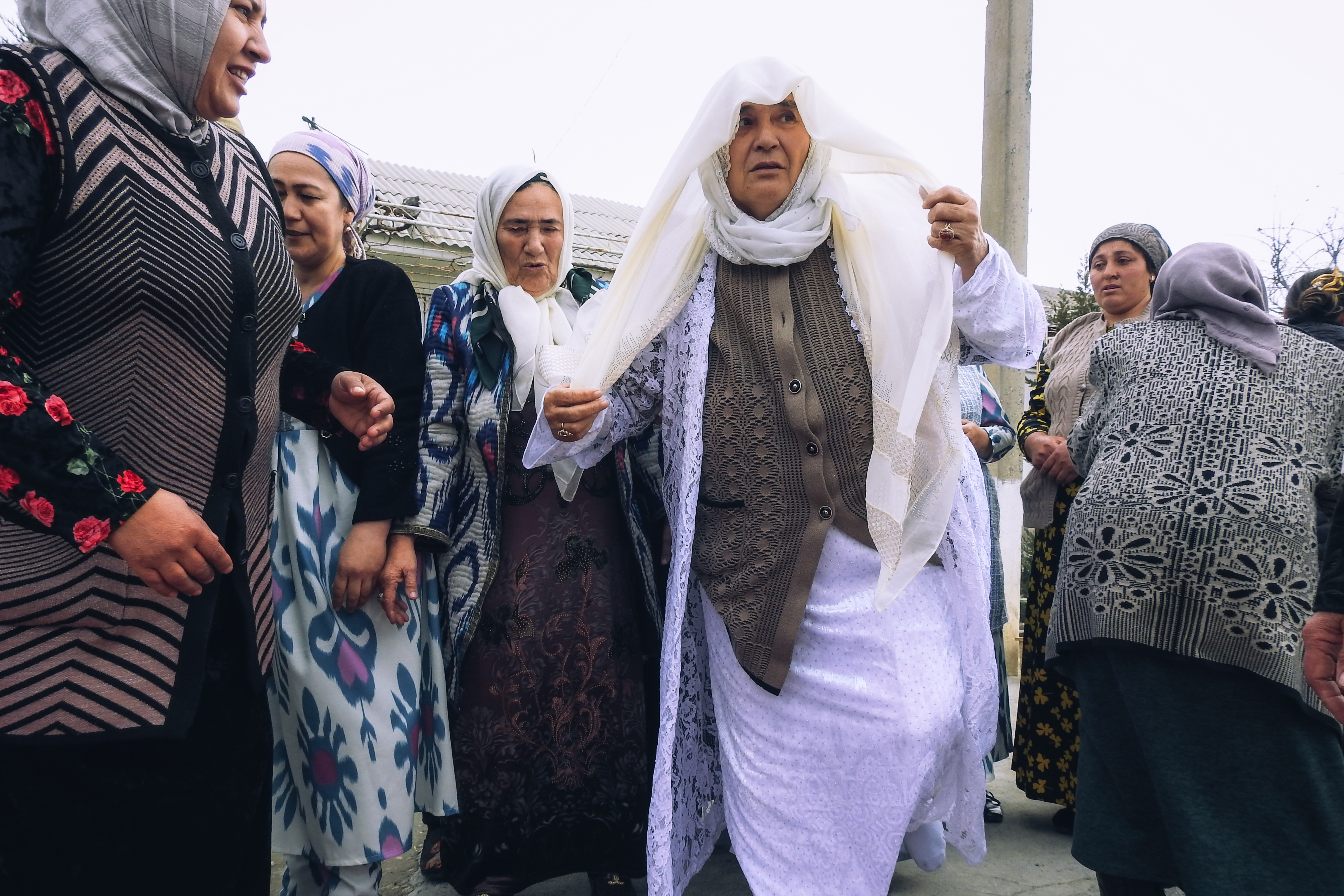 Photo: Ildar Sadykov
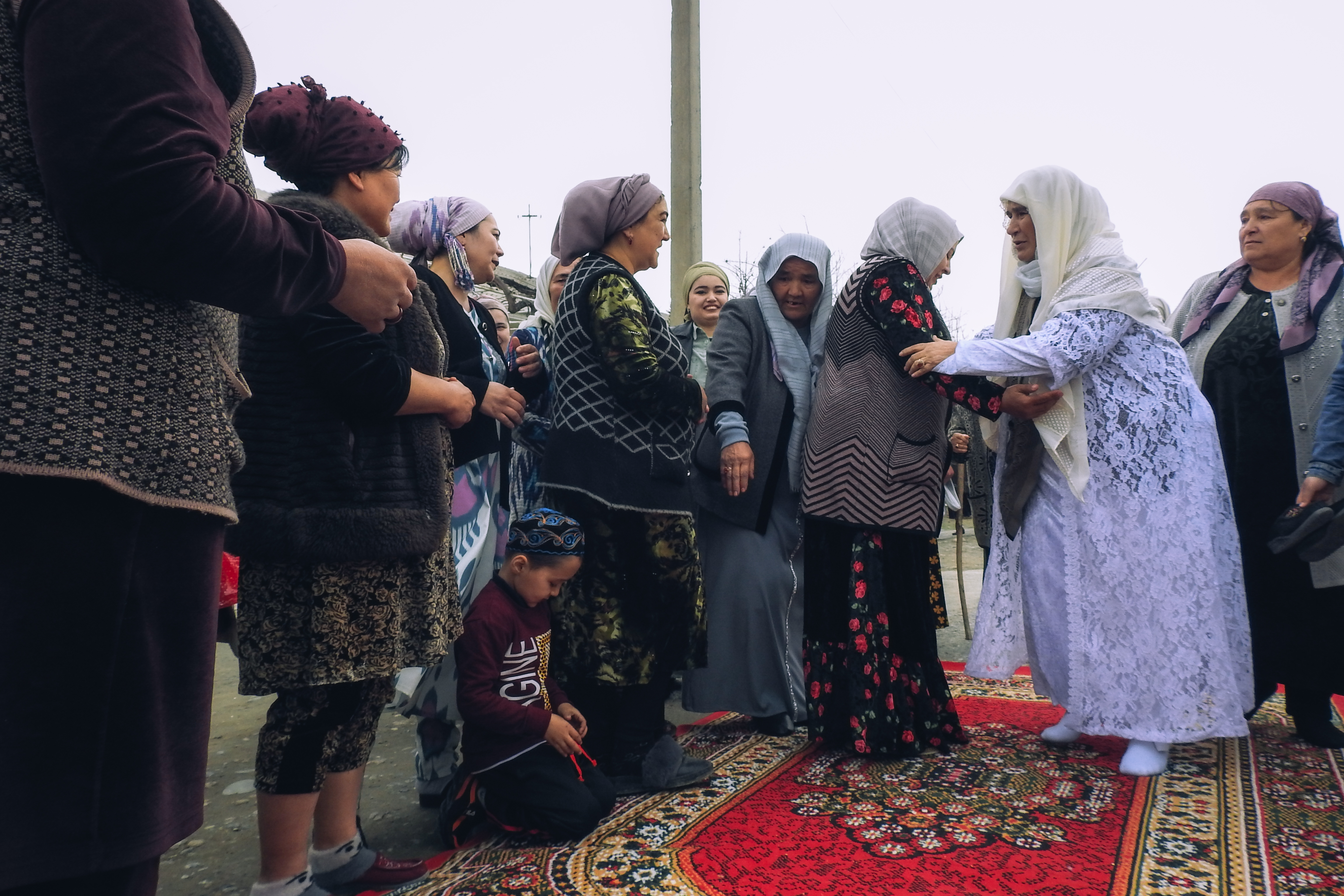 Photo: Ildar Sadykov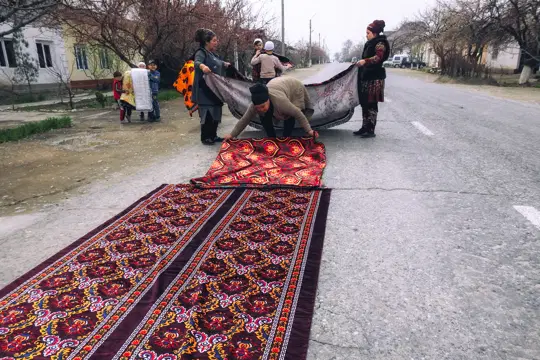
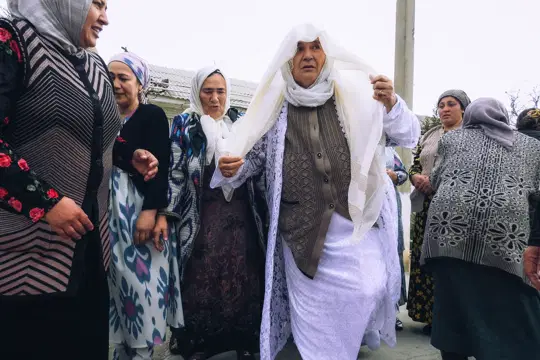
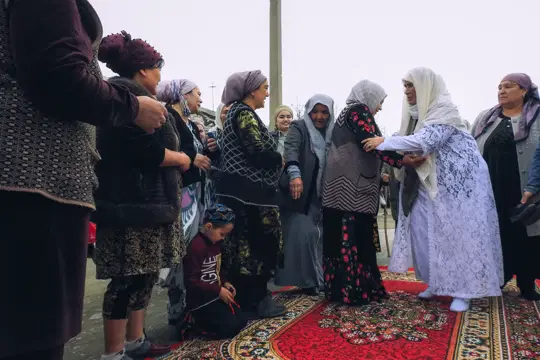
Driving by and becoming an
accidental witness to the ongoing preparations, I was immediately intrigued. I had never seen anything
like it before. I was welcomed very warmly and allowed to photograph the
preparations for the event.
The day begins early in the morning. They are preparing to
welcome a wife, mother, grandmother, sister and neighbour who is deeply
respected by both her family and the entire settlement. For many people here it
is also a day of celebration. Numerous relatives gather in the house of the
newly returned umrah-haji, while neighbours assemble outside.
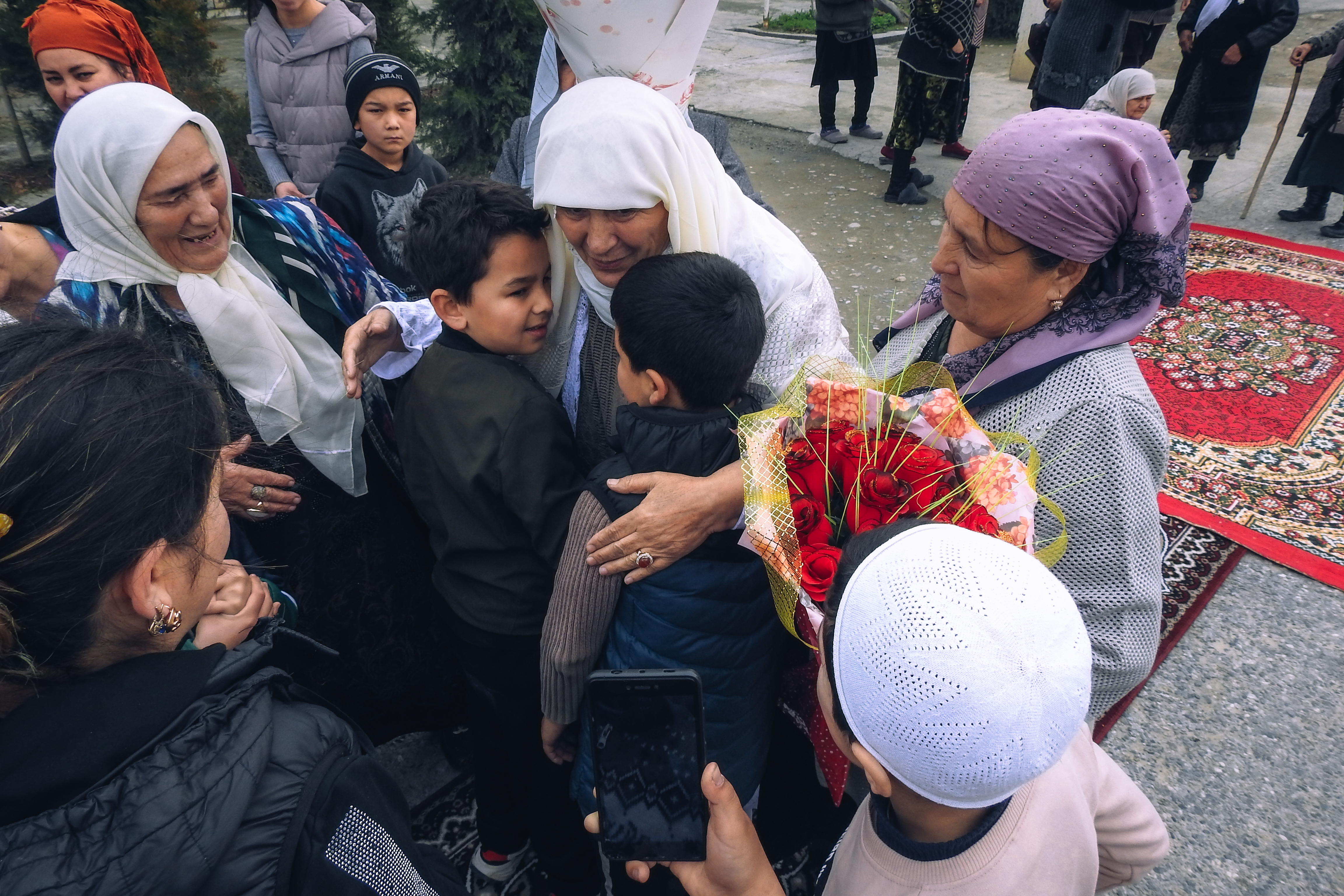 Photo: Ildar Sadykov
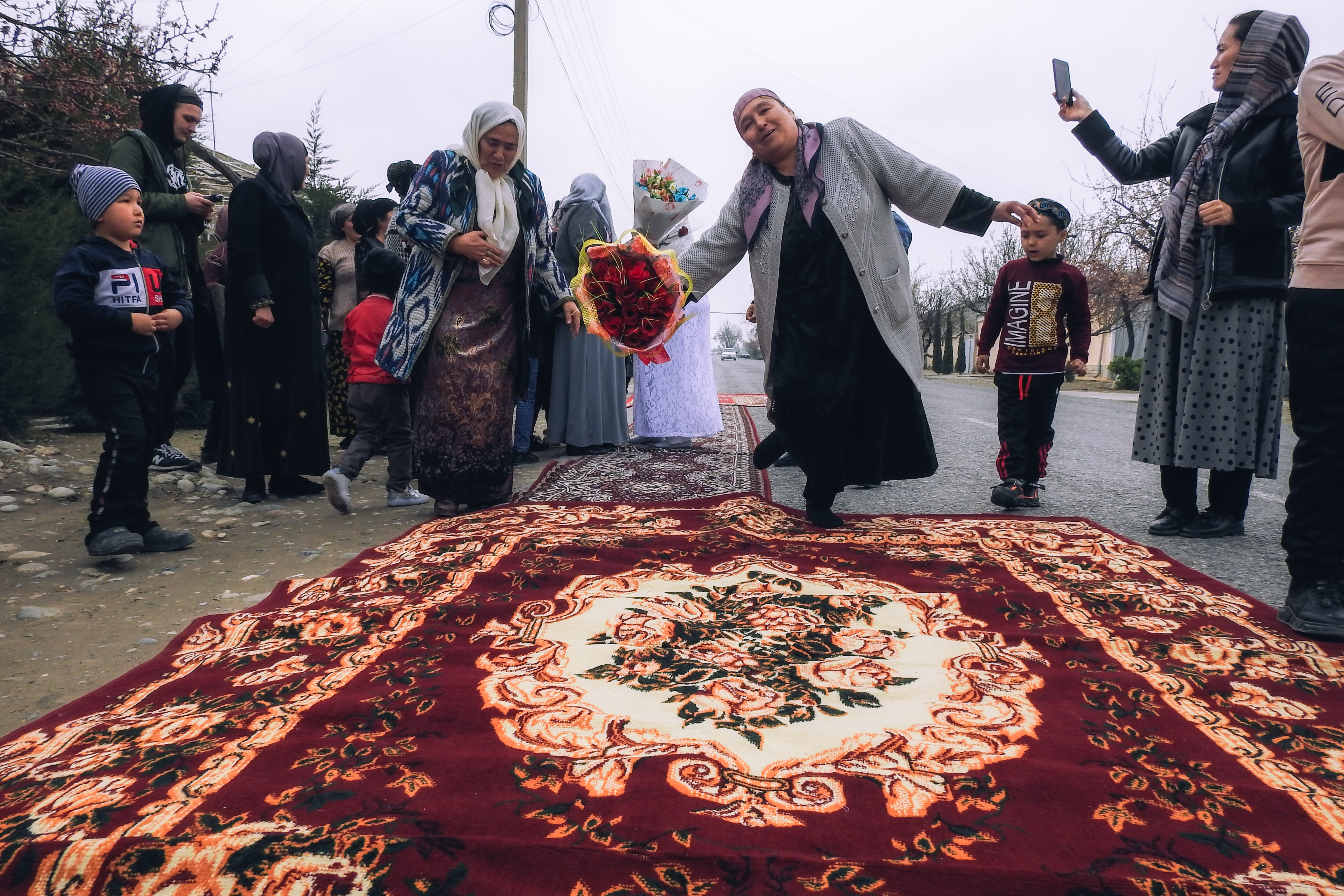 Photo: Ildar Sadykov
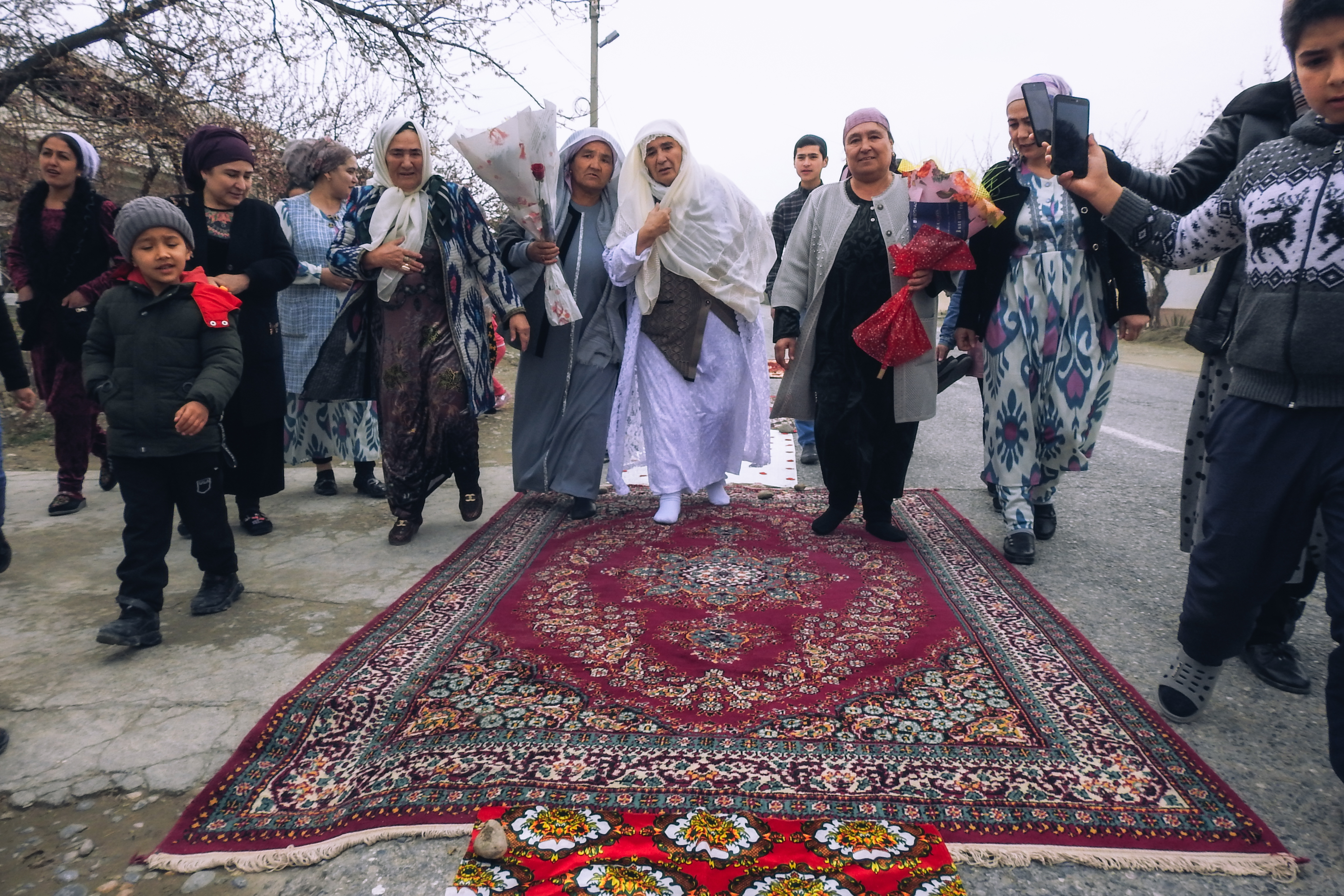 Photo: Ildar Sadykov
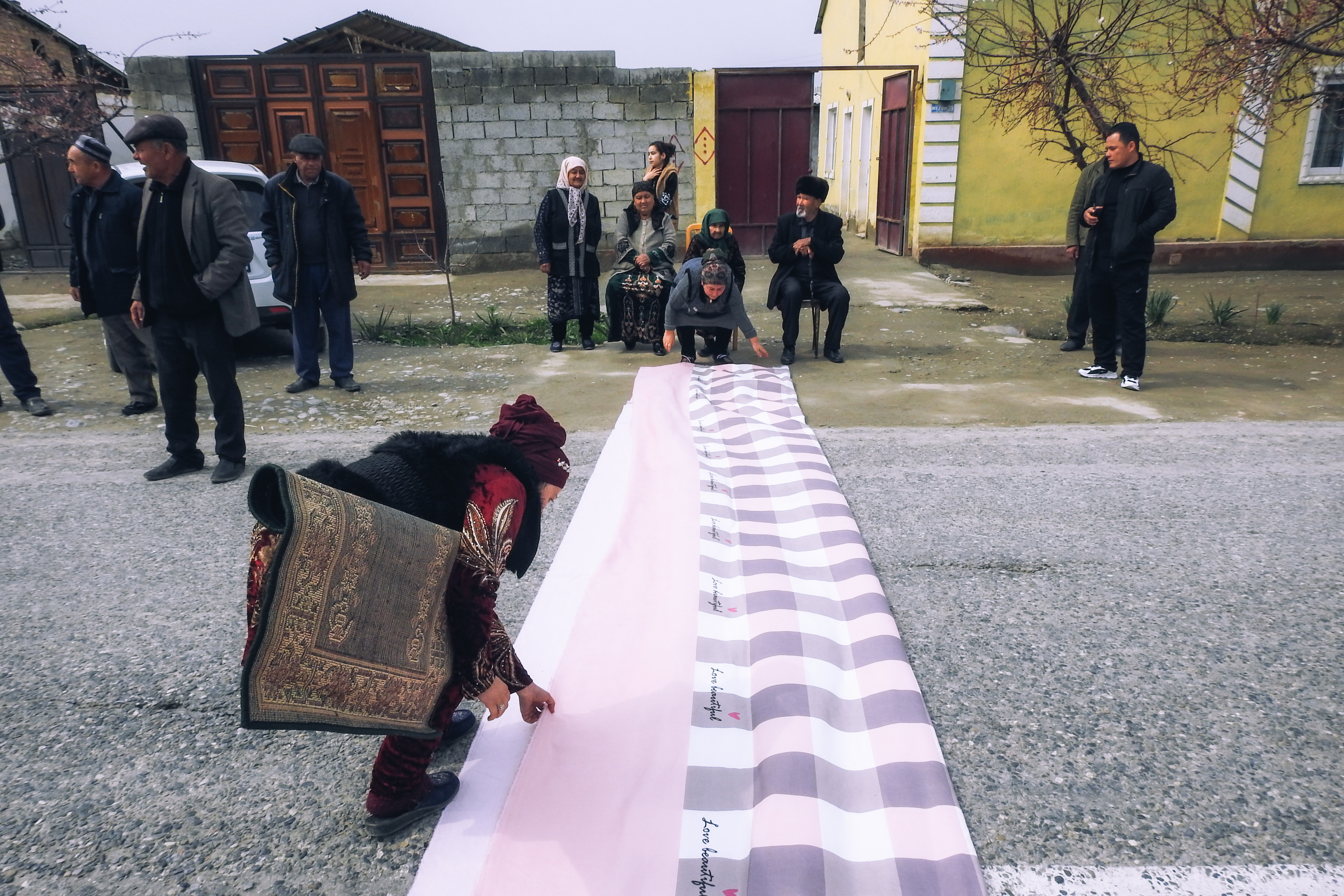 Photo: Ildar Sadykov
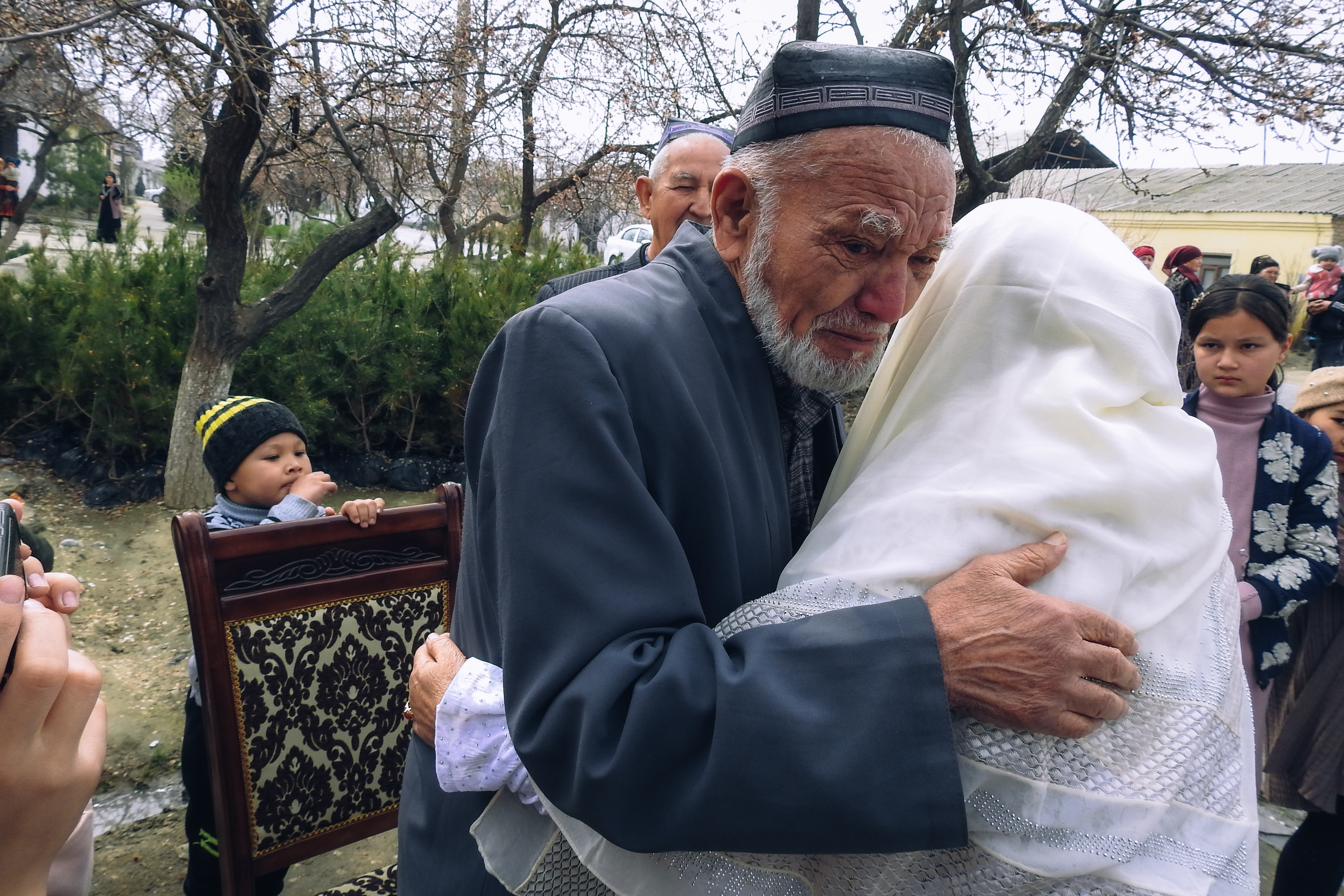 Photo: Ildar Sadykov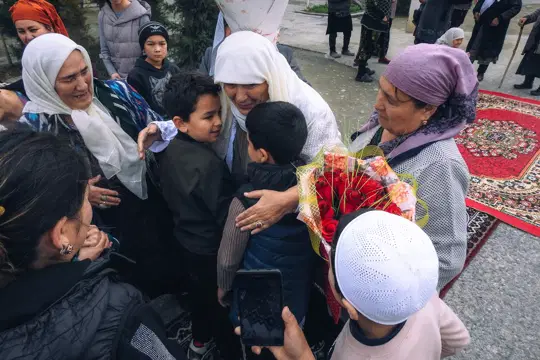
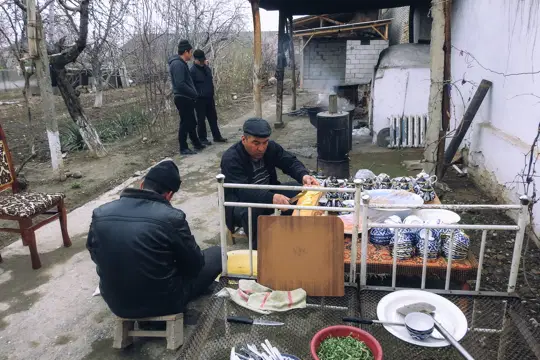
First I am invited into the house. The large courtyard is
buzzing with activity. A separate area has been set aside for cooking shurpa
and plov. The cooking is handled by male cooks, while the women assist them.
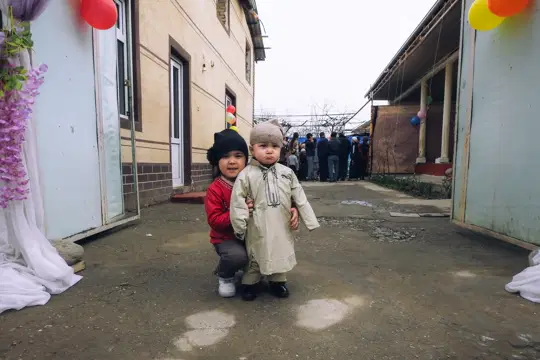
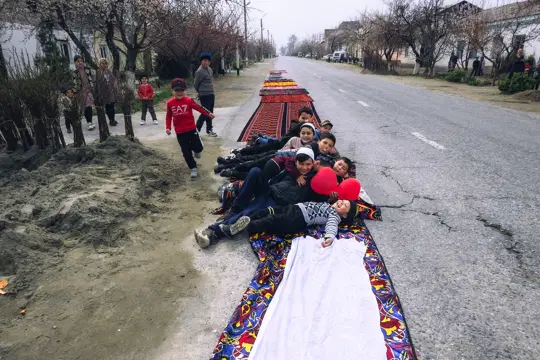
The yard is full of children, as it always is during a family celebration.
On this important day
Sharofat-opa’s son left early for Fergana to meet her at the airport. At the
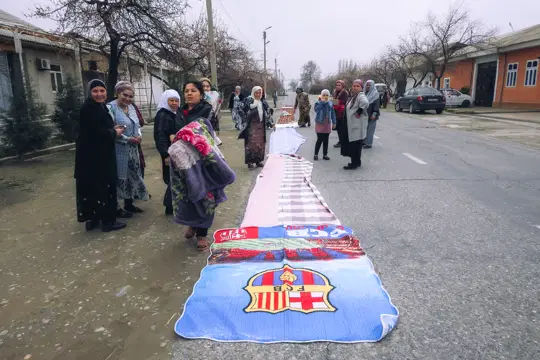
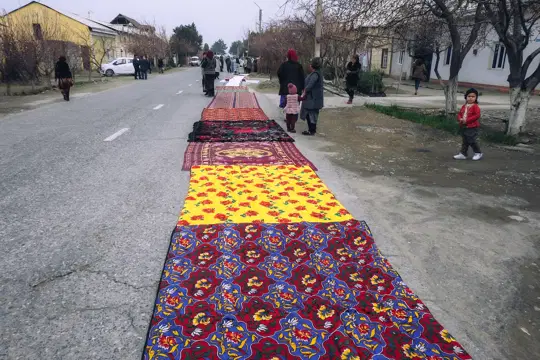
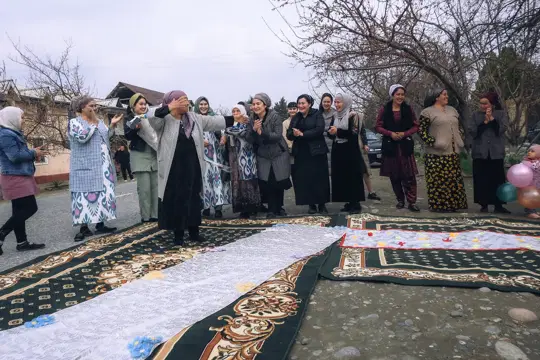
same time, a 1.5-km long path home is being prepared for her return. The sight is remarkably
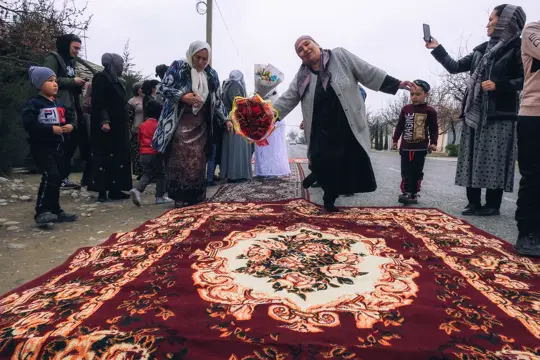
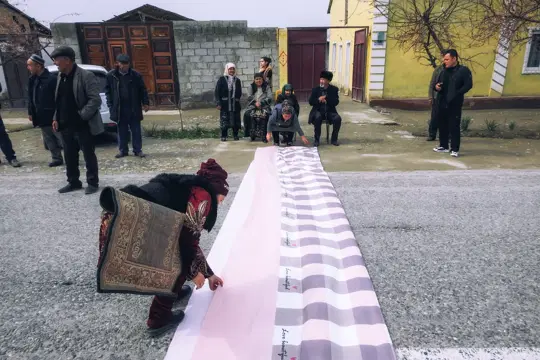
colourful. Neighbours bring out whatever they can, spreading their kurpacha
quilts and blankets along the road and covering them with clean sheets to form a long ceremonial path. Just before the house, where the path ends,
women begin dancing and clapping their hands in rhythm.
When the car arrives, Sharofat-opa is greeted first by the
women of the family, sisters, daughters and granddaughters. The embraces are
especially warm in those first moments. Several younger women repeatedly
attempt to bow down and kiss Sharofat-opa’s feet, but she firmly stops them. At
one point she even raises her voice. Deep respect should not turn into worship,
she reminds them, for one may bow only before Allah.
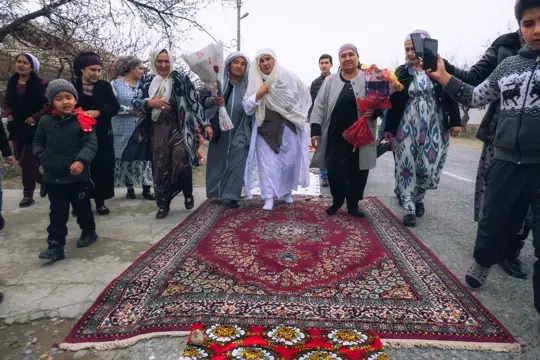
Along the entire “road of honour”, neighbours and children
line both sides. Sharofat-opa and her relatives offer the villagers Zamzam holy
water, while they present her with bouquets of flowers.
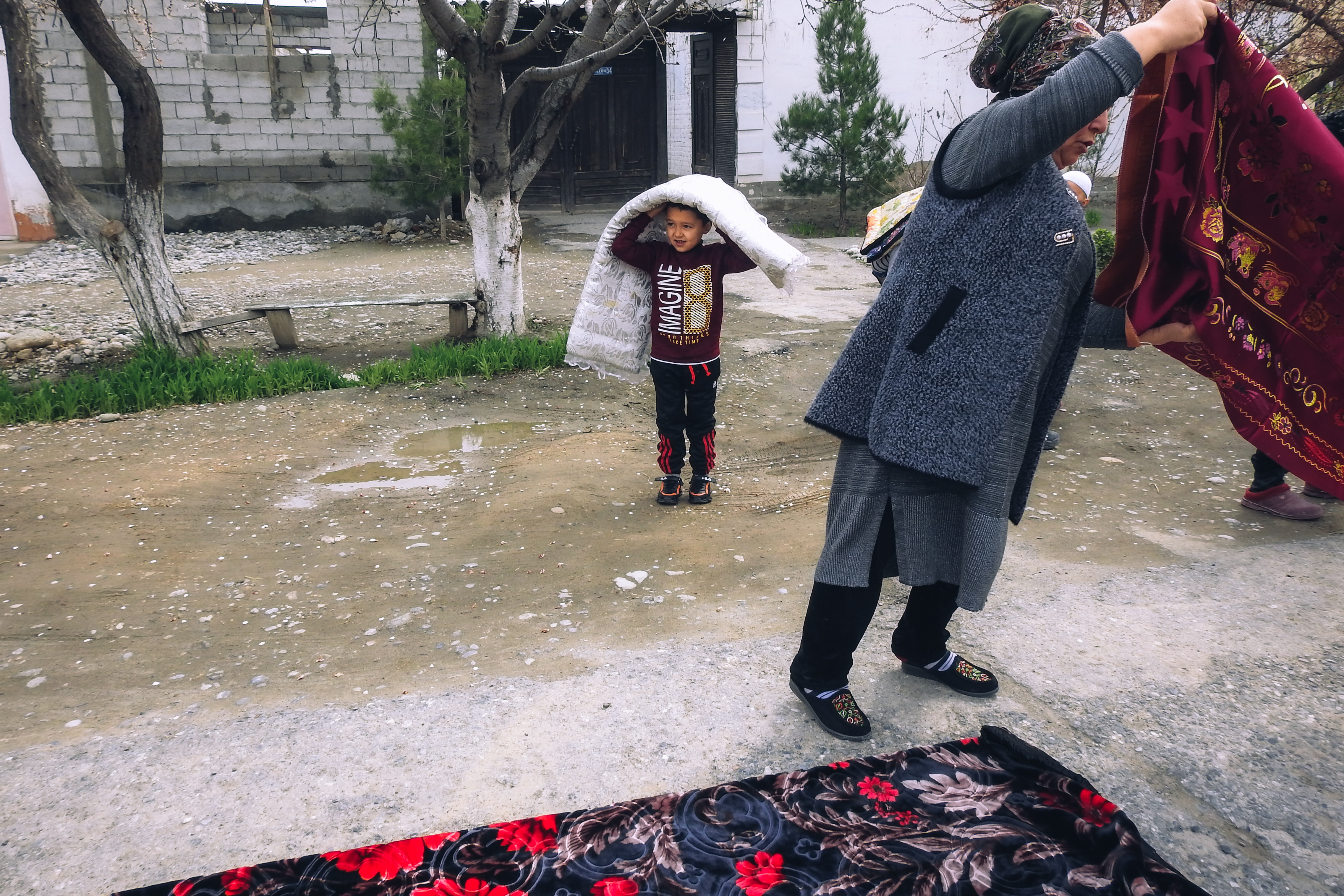 Photo: Ildar Sadykov
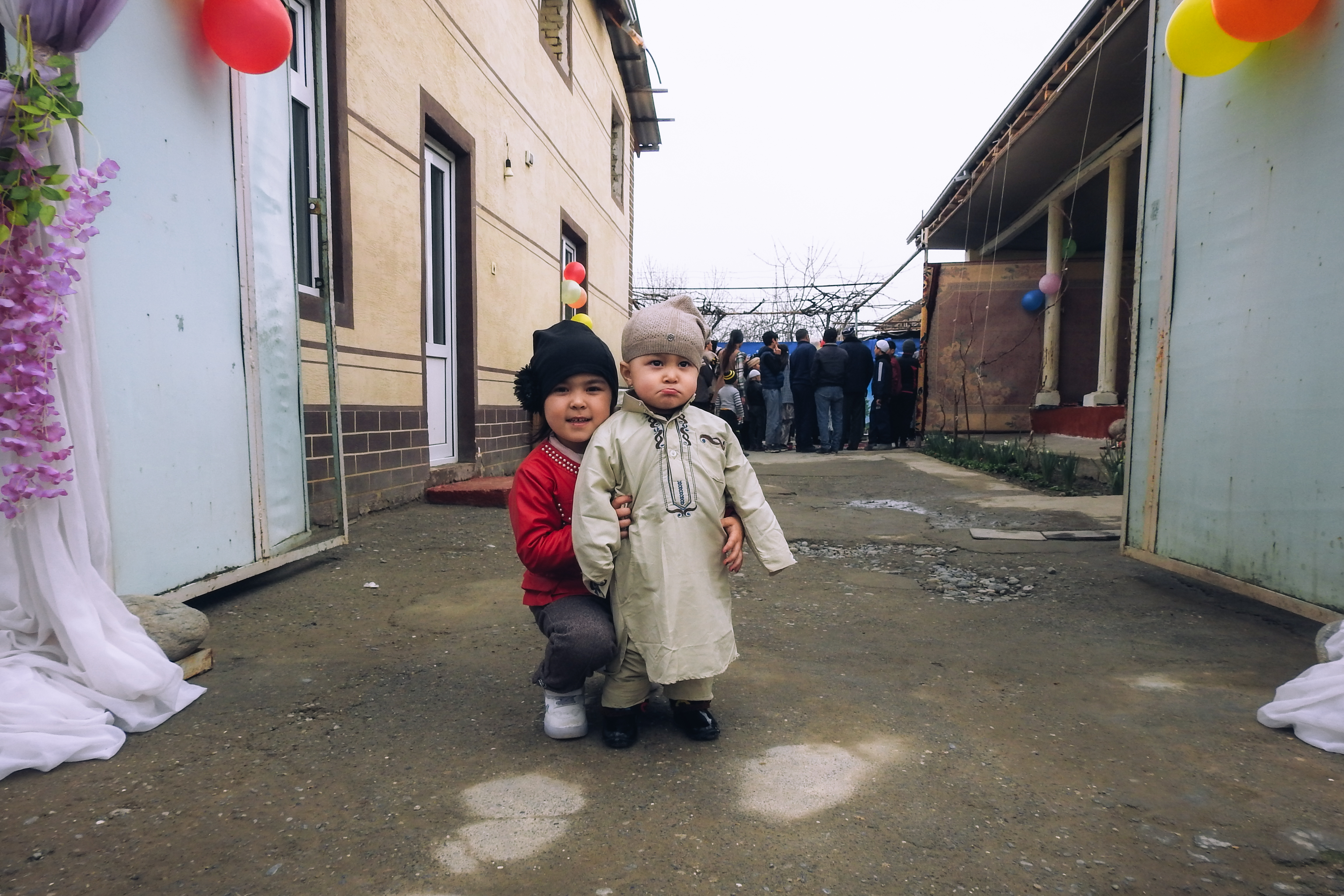 Photo: Ildar Sadykov
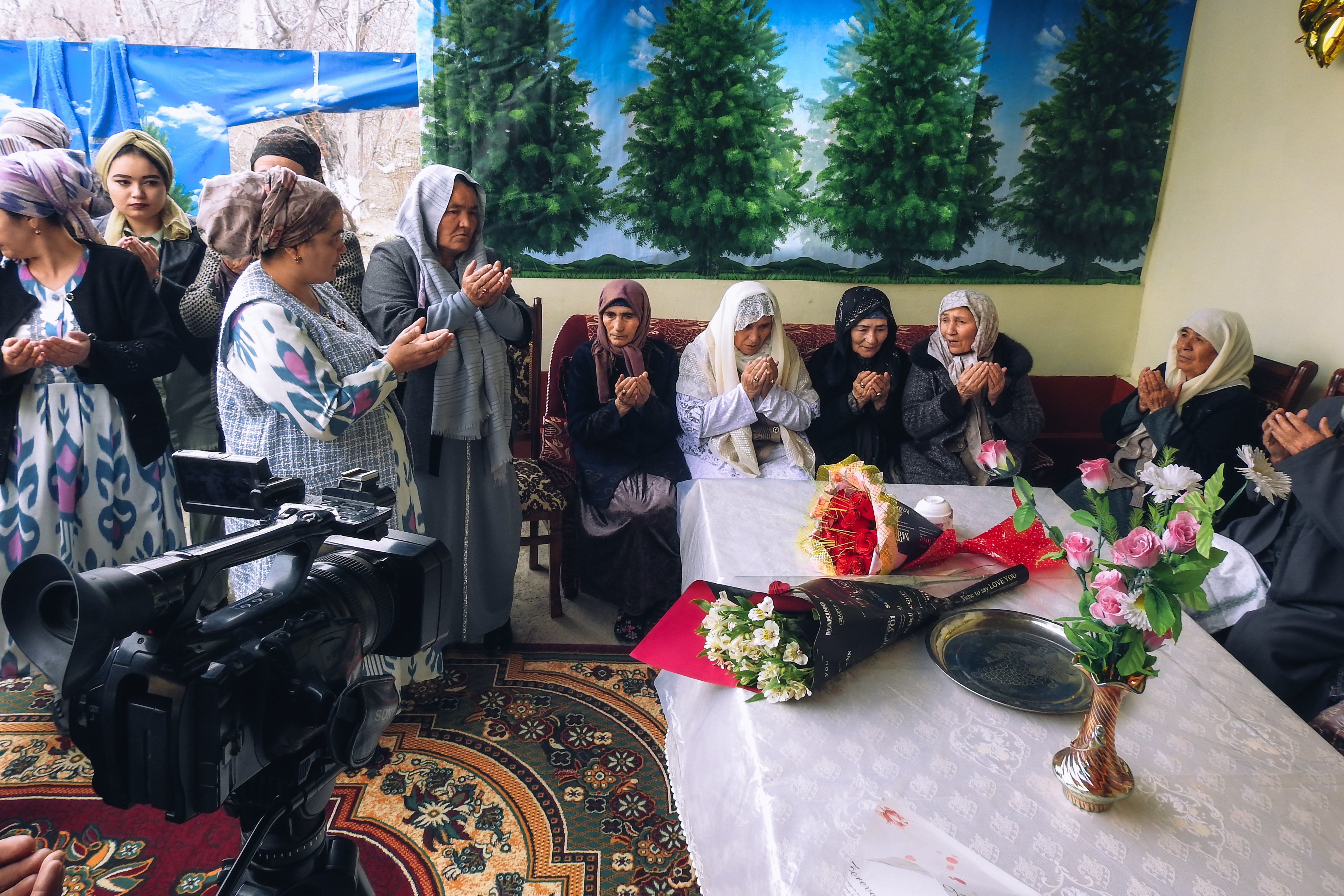 Photo: Ildar Sadykov
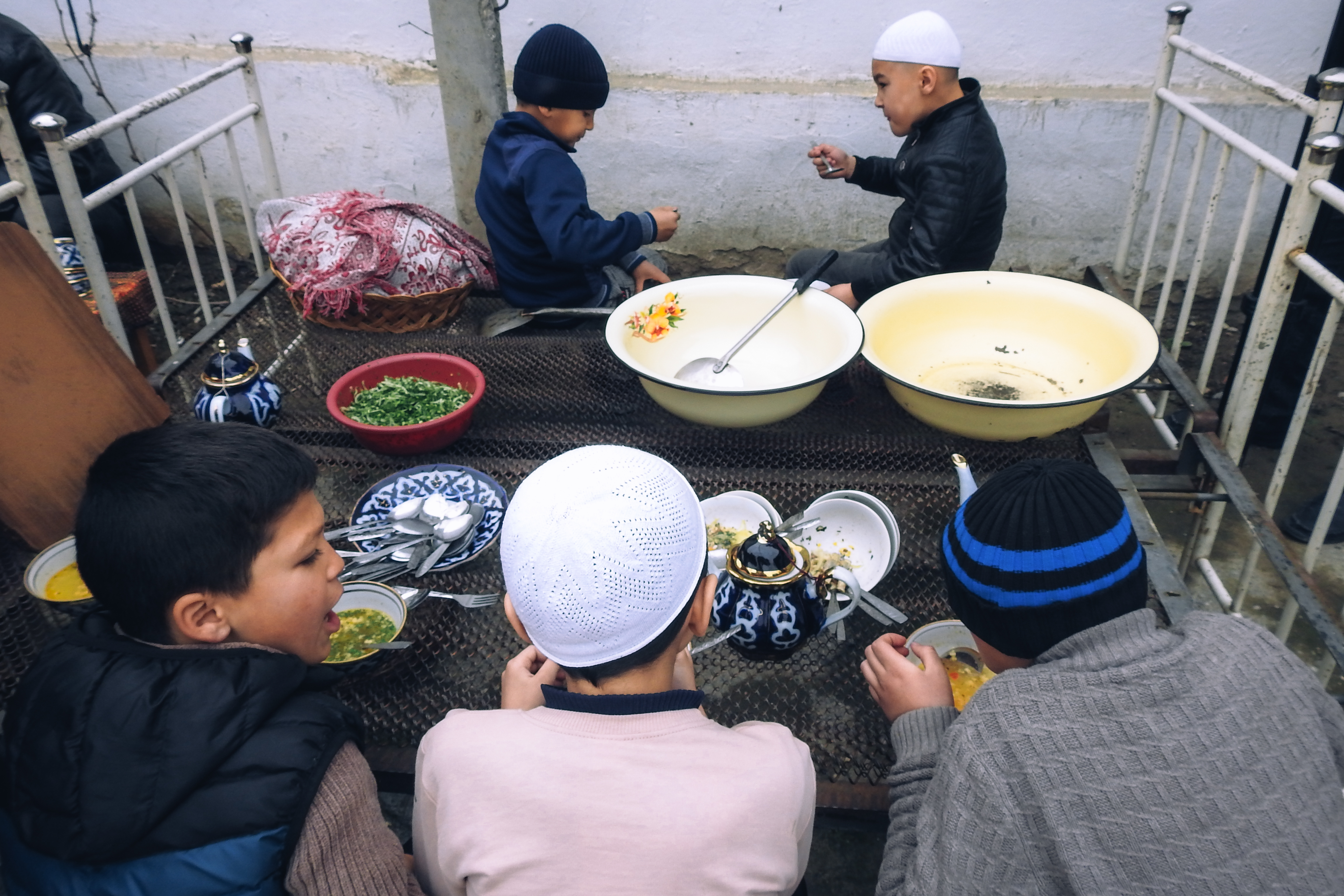 Photo: Ildar Sadykov
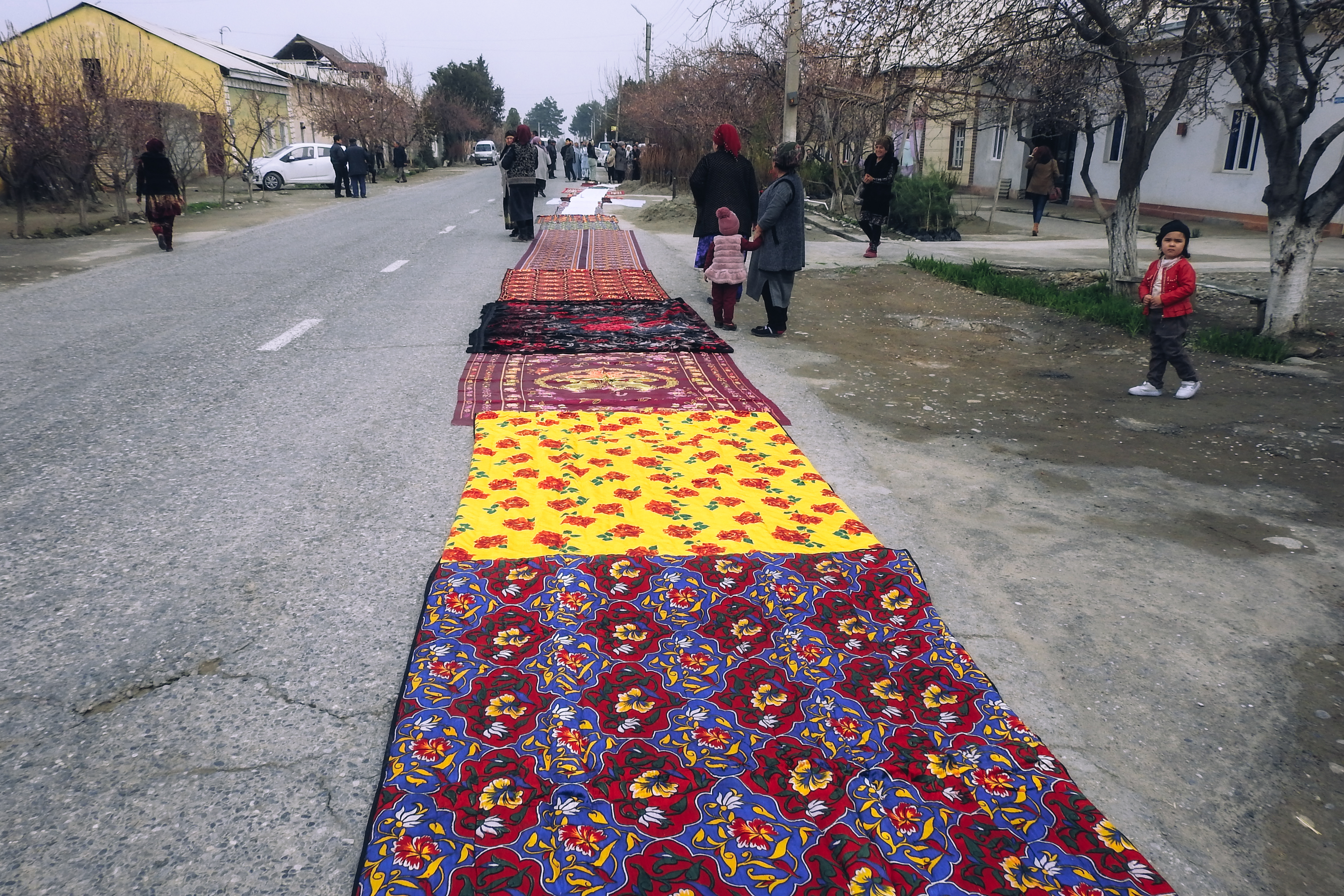 Photo: Ildar Sadykov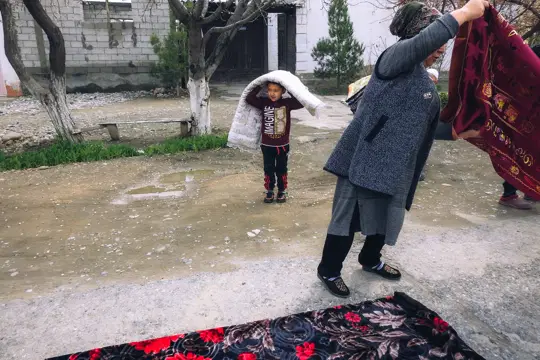
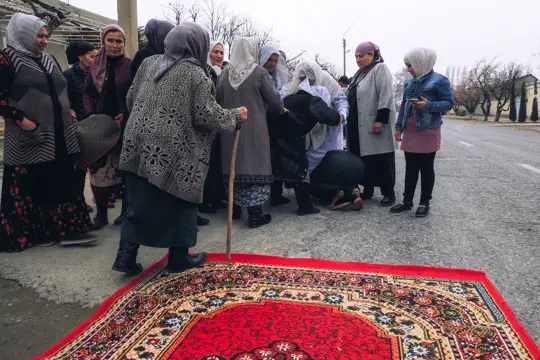
About 200 metres from Sharofat-apa's house another
ceremonial path has been laid out, this time opposite the house where the
village elders live. Her first step is to greet them, as if sharing the
blessing with the most respected members of the community.
Only after that do her sons approach their mother. Finally,
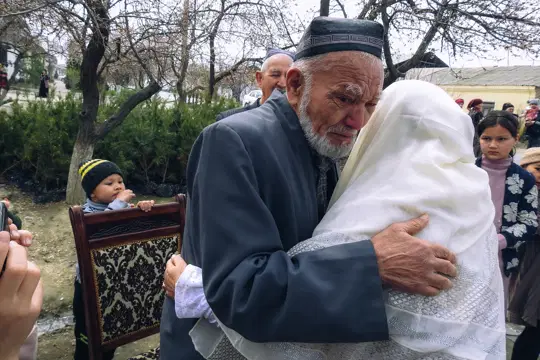
seated by the entrance to the house, is Sharofat-opa’s husband. When they meet,
both burst into tears as he gently congratulates her on completing the
pilgrimage.
After this, all family members enter the house. From that moment the neighbours
quickly gather up their quilts and blankets so that they can follow and pay
their respects to the heroine of the day in her home.
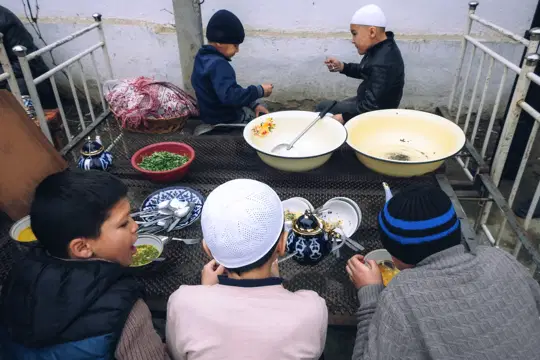
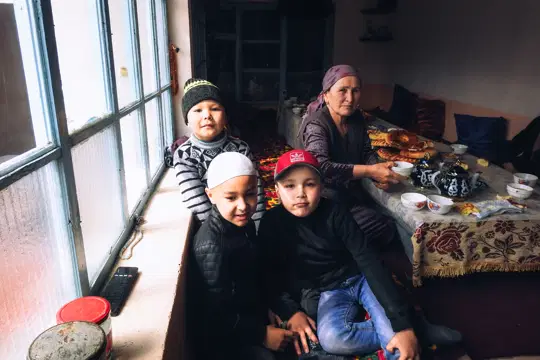
In her courtyard Sharofat-opa sits at a separate table
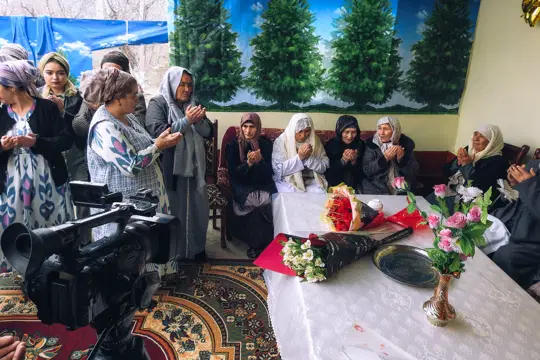
together with the village elders. After the ceremonial du’a,
the Uzbek feast begins. Hearty dishes start being served, and a separate table
is set for the children.
Despite the splendour of the preparations, the celebration
itself does not last long. Sharofat-opa is tired after the journey and needs to rest.
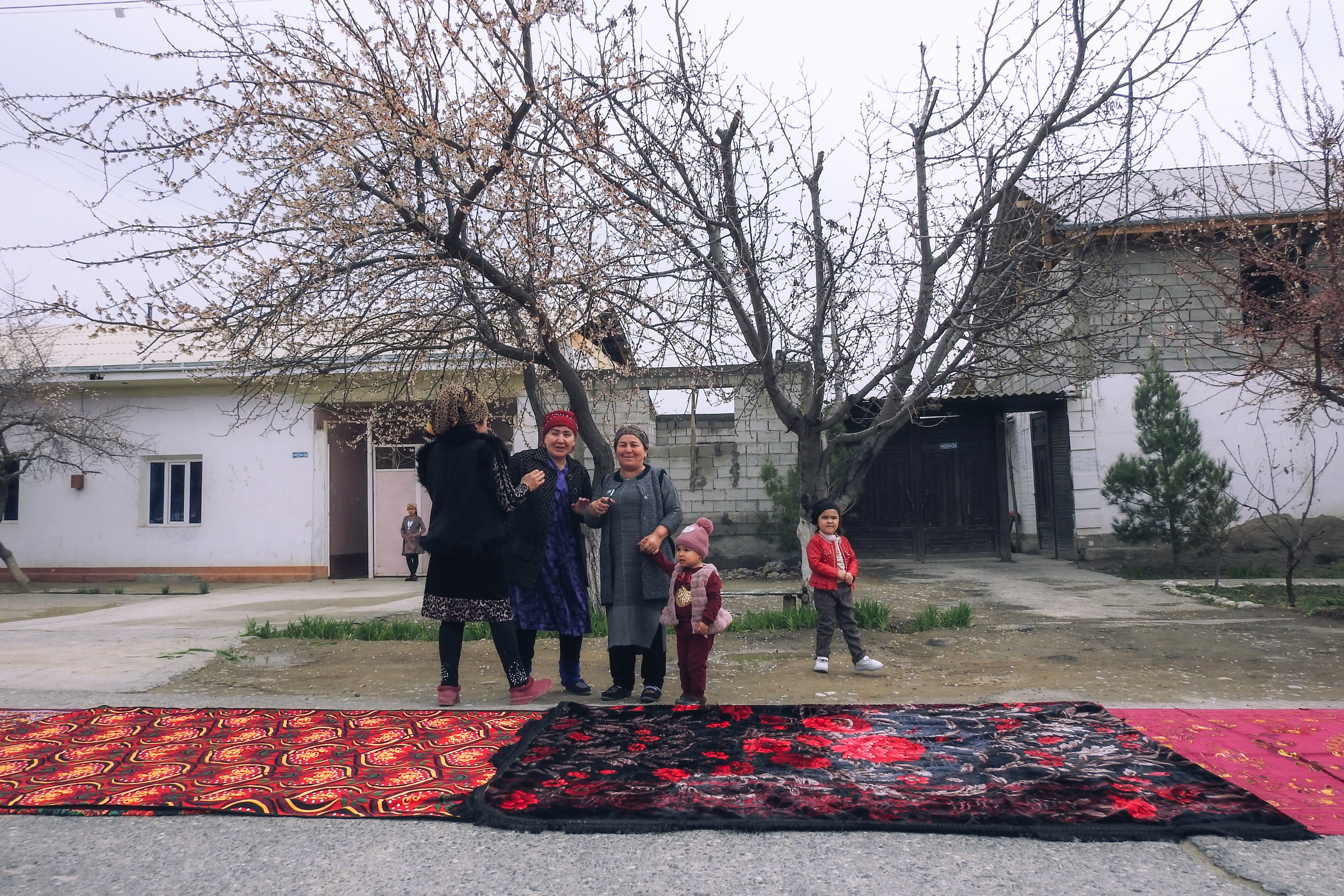 Photo: Ildar Sadykov
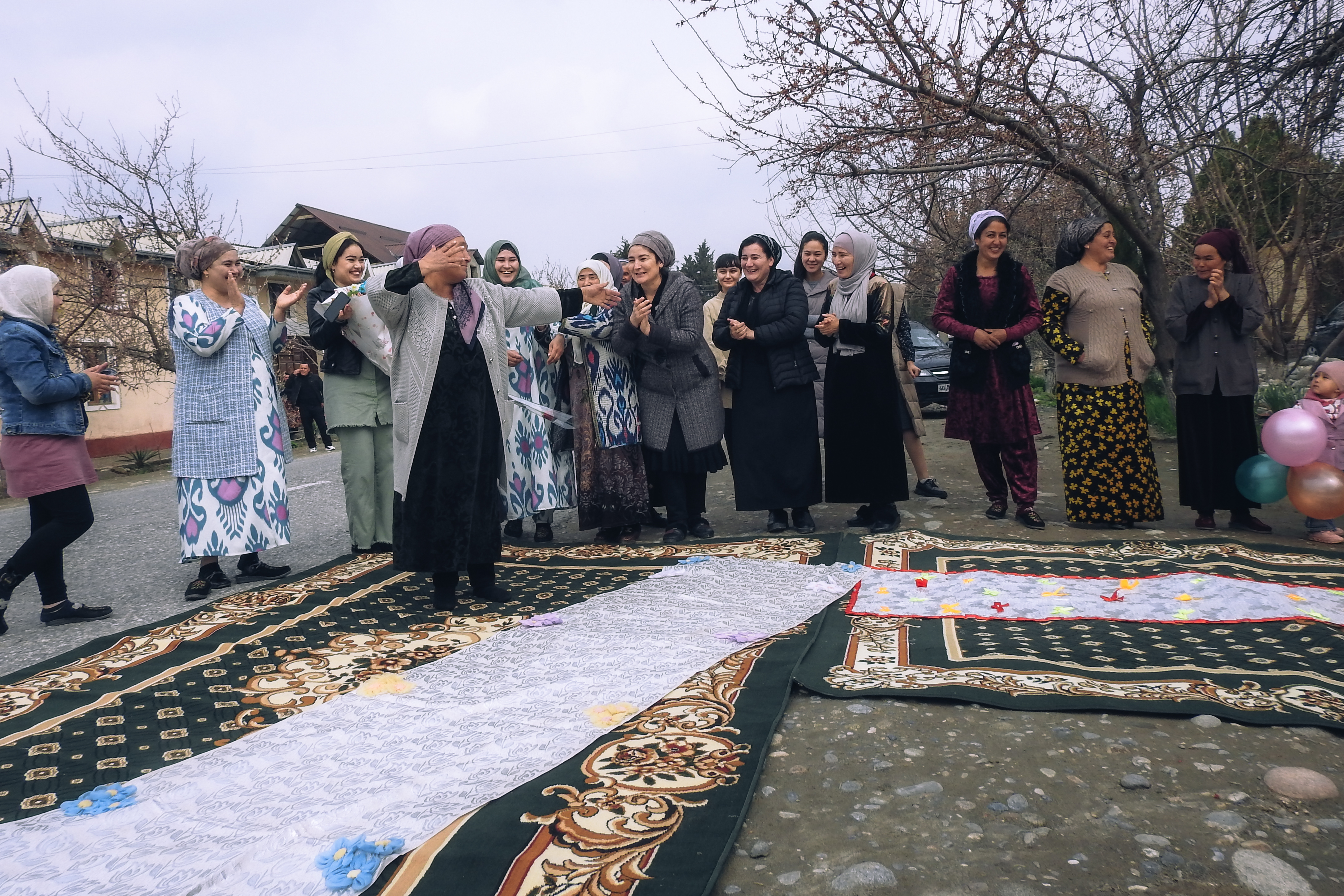 Photo: Ildar Sadykov
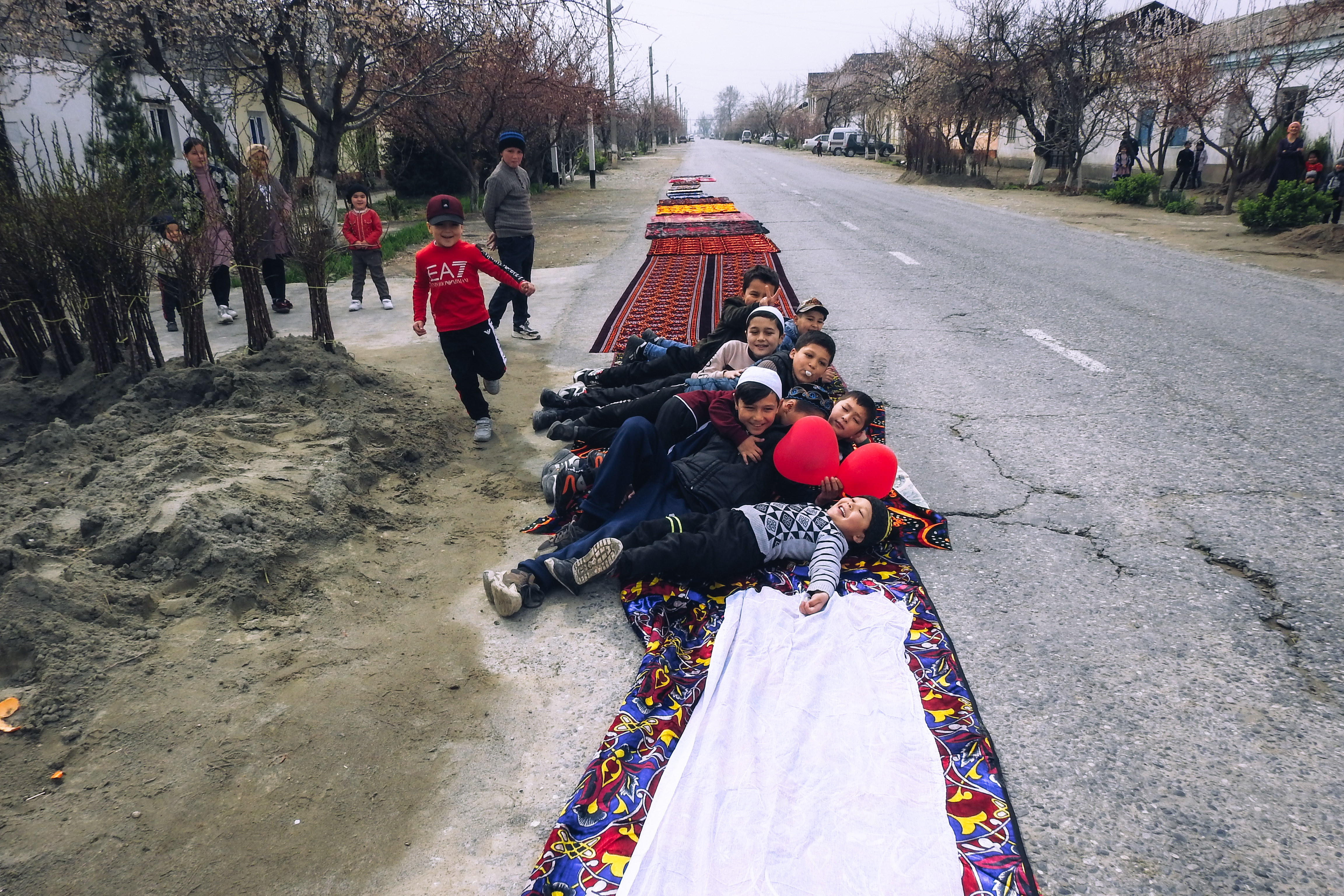 Photo: Ildar Sadykov
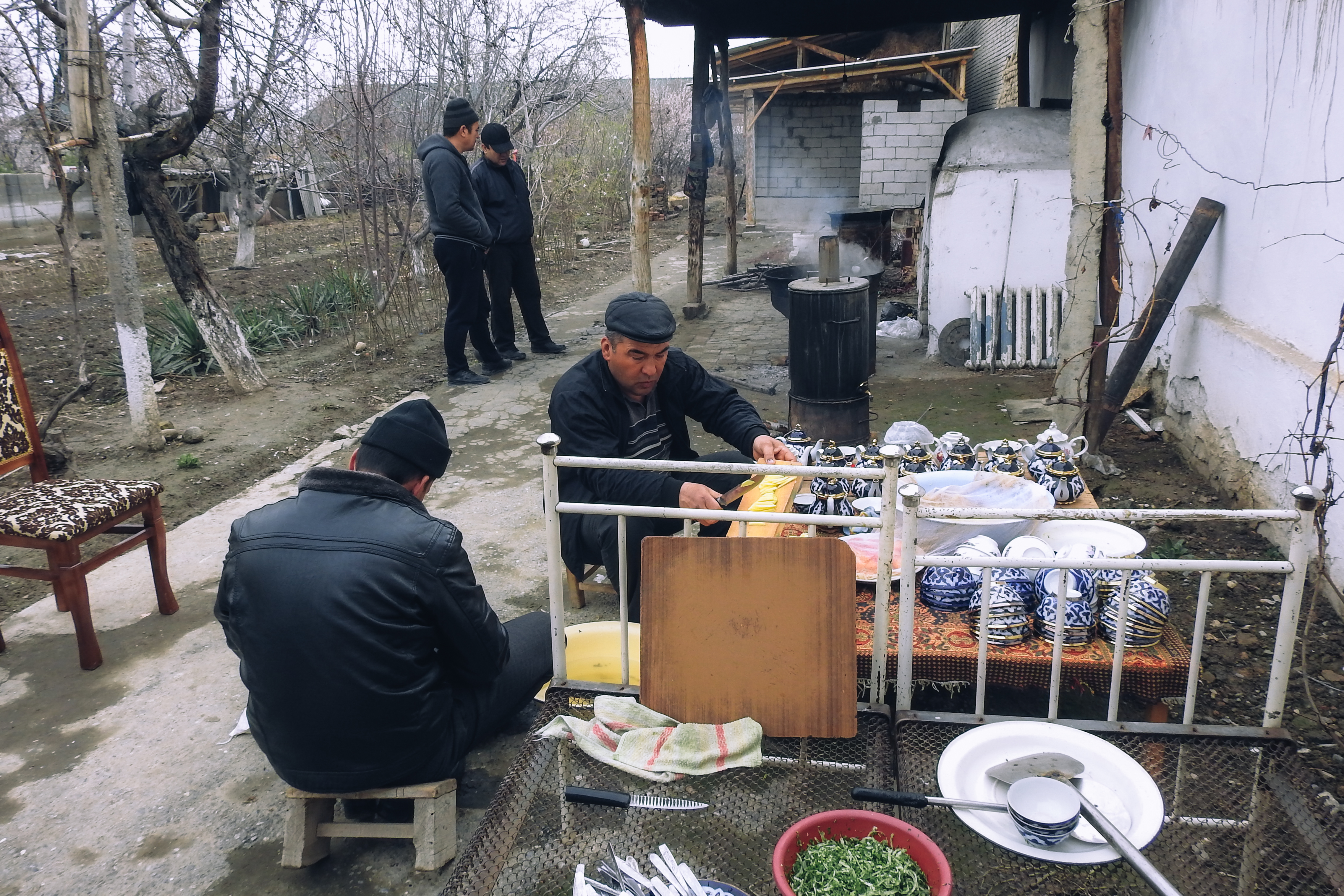 Photo: Ildar Sadykov
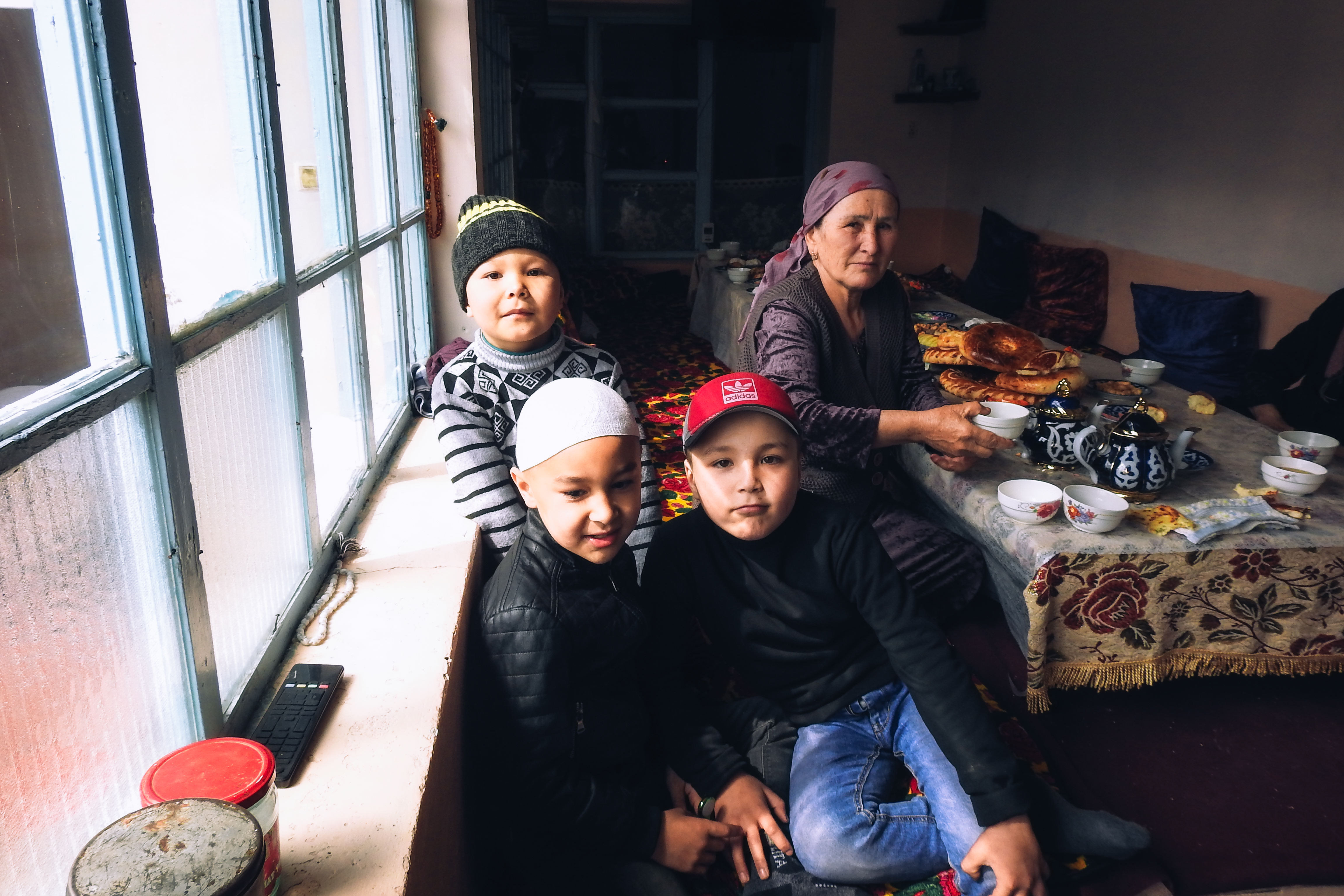 Photo: Ildar Sadykov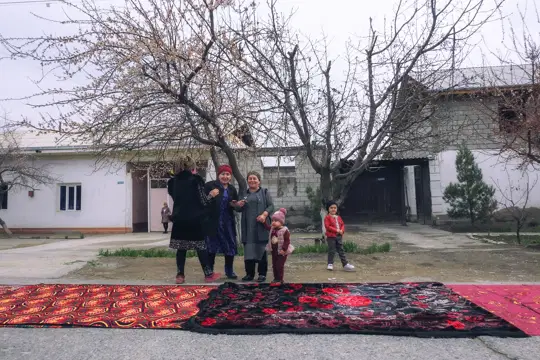
The tradition of sending the most respected person in a
village for Umrah is particularly common in rural communities. Yet this was the
first time I had witnessed such a colourful and moving ceremony. It is important to note that the funds for Sharofat-opa’s
pilgrimage were collected by the entire village. This reflects respect for the
older generation, personal hopes and prayers, and a shared wish for well-being
for everyone involved. Such well-being is not divided but multiplied with every
kind wish and good deed.
What struck me most of all was that among the many neighbours
and relatives gathered there, I did not see a single envious face. Every
resident of Shröder rejoiced sincerely, as if welcoming their own mother home.


