In Uzbekistan, the New Tashkent project is designed for two million residents. Kazakhstan has started building Alatau, a satellite city near Almaty. Kyrgyzstan has launched the Asman project along the northern shore of Lake Issyk-Kul, while in Samarkand, the Eternal City tourist complex is already operational. All these projects promise to improve quality of life, create jobs, attract investment, and open new economic opportunities.
In this article, we explain why Central Asian countries are building new cities, how they are structured, who is investing in them, and what hopes are pinned on them. We also analyse what problems these cities are meant to solve, what risks they face, and what expectations governments, investors, and ordinary residents have for them.
Why Central Asia Needs New Cities
Tashkent and Almaty have grown rapidly. In Tashkent alone, 4–5 million people live and work in a city that is already under pressure, with shortages of housing, schools, and hospitals. To address these challenges, Uzbekistan has begun building New Tashkent, a modern urban extension designed for two million inhabitants, with wide roads, parks, and upgraded infrastructure.
Kazakhstan is taking a similar approach with Alatau, a satellite city near Almaty. Both projects aim to ease pressure on existing megacities, provide new housing and jobs, and reduce traffic congestion.
New cities can also become drivers of economic development. Alatau is expected to host the region’s largest business zone with tax incentives, while New Tashkent is already attracting significant investment, including major contracts with companies from China, Saudi Arabia, and other countries. These projects are opening up new economic sectors and helping to reduce pressure on existing urban centres.
The interest in these urban experiments goes beyond mere construction. Across the region, professional initiatives and discussion platforms are emerging to explore how new cities can become real tools for sustainable development rather than simply architectural showcases. One example is the Tashkent Urban Forum, which aims to highlight architecture as a long-term economic resource and examine how urban environments can increase land value and investment appeal.
The recent boom in new city projects across Central Asia is neither a fad nor an inevitability. Rather, it represents a deliberate political and economic strategy through which states demonstrate modernization, strengthen control, and attract investment. According to architect Philipp Meuser, these new cities serve both as instruments of demographic management and as showcases of state power.
Some of the cities truly address infrastructure challenges or help diversify local economies, while others remain largely symbolic, impressive in form but empty in substance. The key factor is whether these cities grow from real socio-economic needs or are constructed as architectural theatre for political visibility.
Philipp Meuser
New Tashkent (Uzbekistan)
Why it's being built
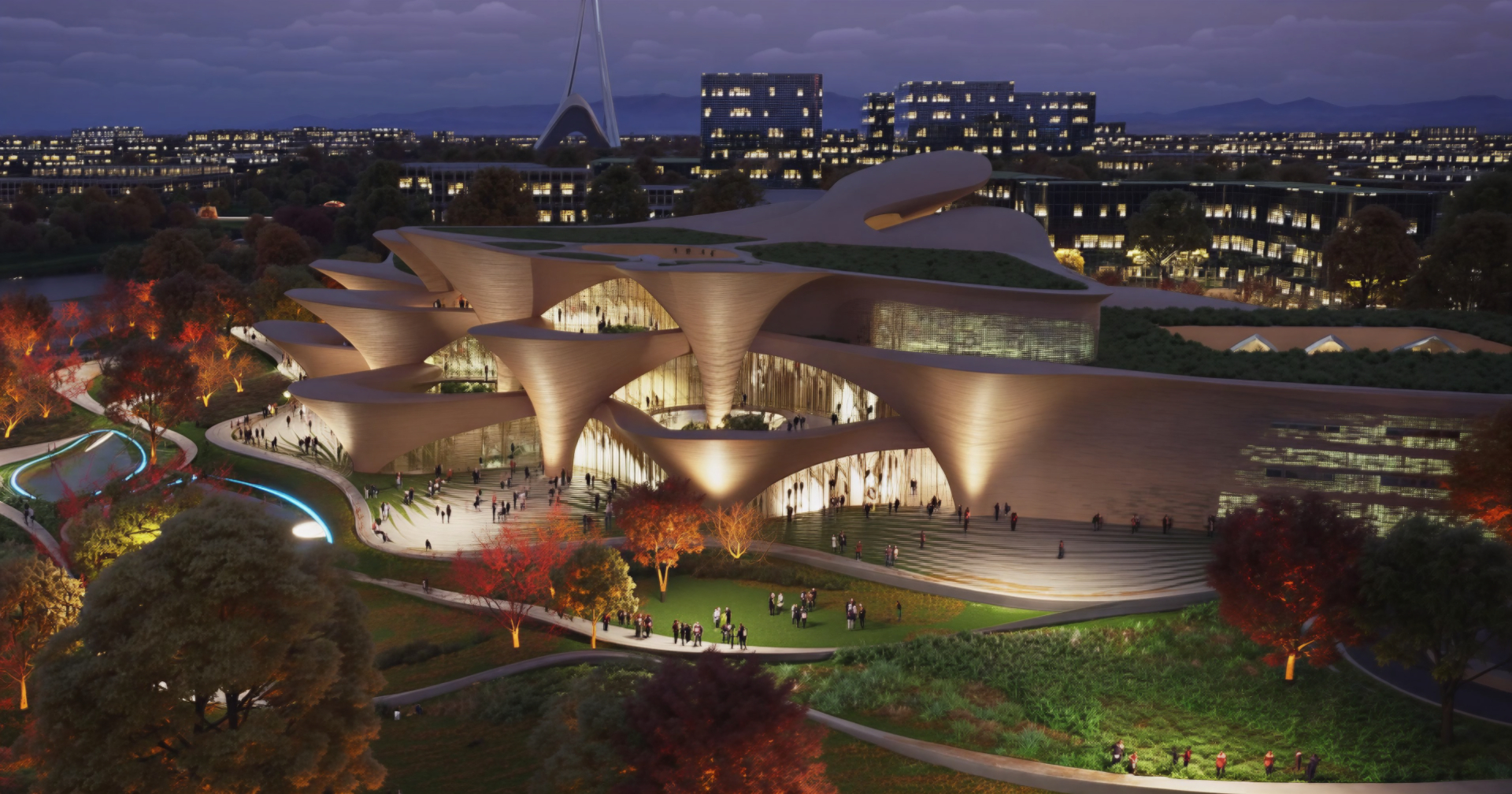
New Tashkent is a large-scale project aimed at extending Uzbekistan’s capital to the east. The initiative was launched in response to rapid population growth and
increasing pressure on the existing city. Today, roughly 4–5 million people live and work in Tashkent, creating shortages of housing, schools, kindergartens, and healthcare facilities.
President Shavkat Mirziyoyev has emphasised that the sustainable development of the capital requires forward-looking planning for the next 15–20 years, including the development of new territories beyond the current city limits.
 Source: yangitoshkent.uz
New Tashkent is designed as a modern city, with residents’ comfort as its top priority. The project is part of the broader “New Uzbekistan” vision, reflecting the country’s economic reforms and its drive for urban development. Through this initiative, the authorities aim to accelerate urban growth, attract investment, and encourage citizens who have moved abroad to return home.
Built from the ground up on approximately 20,000 hectares between the Chirchik and Karasu rivers, the city is planned to be developed in stages until 2045. The master plan was designed by the British architectural firm Cross Works. The first phase covers 6,000 hectares and includes an administrative centre and residential districts for around 60,000 people, along with more than 60 planned government buildings. Some of these institutions are already operating from temporary facilities.
Connectivity between the old and the new city will be ensured through 14 tunnels and seven bridges, while all utilities, including electricity, water, gas, and internet, are routed underground to ensure reliability and maintain a clean urban landscape.
New Tashkent can succeed if it is seen as a continuation of the existing city, with early investment in public transport and water-sensitive design, including green infrastructure, shaded corridors, and the “sponge city” concept. Its success will rely on a combination of mixed-use development, accessible housing, and the gradual introduction of social infrastructure.
Otherwise, prioritising prestige architecture and land speculation risks creating an empty showpiece city disconnected from everyday life. For New Tashkent to be truly sustainable, it must place residents’ comfort and liveability above symbolic gestures.
Who is funding the construction of New Tashkent?
Funding comes from multiple sources. The state invests in roads, utilities, and other core infrastructure, while major private and international investors contribute to commercial and energy infrastructure.
In spring 2023, Uzbekistan began collaborating with experts from the UK, Singapore, and Turkey to help develop the overall master plan. Following the first land auctions, contracts worth $554 million were signed with private companies to construct hotels, restaurants, and landmark buildings.
Significant investments are also being made in the development of energy infrastructure. Agreements have been signed with Chinese companies CEEC-Gezhouba and China Datang to build solar power plants with a combined capacity of 2,400 MW in the Tashkent region, providing the new city with a stable electricity supply. The total volume of these investments exceeds $2 billion. Countries from the Gulf have also shown interest. For example, Saudi Arabia plans to develop a district called “Er-Riyadh”, named after its capital, with construction expected to begin in 2026.
Construction of New Tashkent officially began in March 2023, when the President personally laid a time capsule at the site of the future city centre. The first phase, scheduled to run until 2030, covers around 6,000 hectares and will include residential districts, main roads, and government buildings. By the end of this phase, the area is expected to accommodate roughly 600,000 people.
The city’s full development is planned through 2045. New Tashkent is intended to become a fully functional metropolis, with growth continuing beyond that point. The ultimate goal is to stabilise all processes by 2050. Expansion will happen in stages, while the historic centre of old Tashkent will remain untouched. The President personally oversees progress, holding regular meetings to ensure quality at every stage. From 2026 to 2028, key buildings, including residential blocks, government offices, and infrastructure, will be gradually put into operation, with the city expected to be fully functional by 2030.
Alatau (Kazakhstan)
Why Kazakhstan Needs a New City
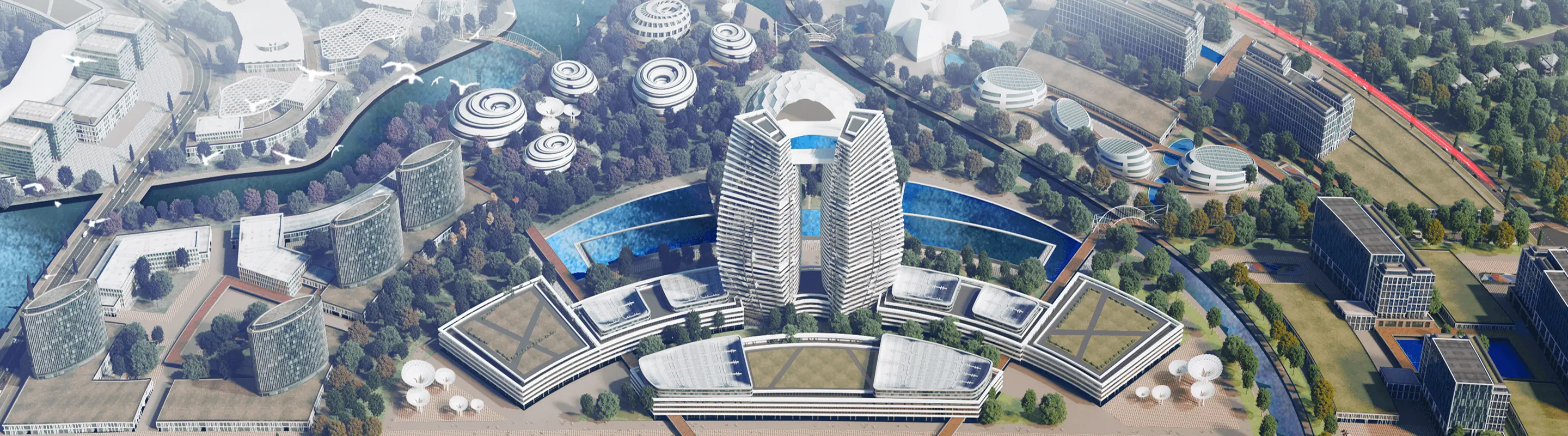
Alatau, a new city in the Almaty region, was decreed by the President of Kazakhstan in January 2024. The project has multiple objectives: easing the strain on overcrowded Almaty, creating new housing and employment opportunities, and fostering economic balance across the region.
Almaty is severely congested. The city continues to grow, but there is little room for expansion, streets are overcrowded, and housing is expensive.
The new city of Alatau is being built nearby to help ease pressure on the metropolis. It will provide new homes, create jobs, and host modern industries, contributing to a more balanced development of the country’s southern region.
 Source: alatau.city
Strategically located near major roads connecting Europe and China, with a future airport and rail access, Alatau is positioned as a hub for logistics, trade, and export-oriented industries.
The city is intended to serve as a model for a new approach to urban development, combining modern technologies, efficient infrastructure, and a comfortable living environment.
Alatau could become a benchmark project, provided there is transparency, open data, and sufficient funding for long-term maintenance.
Most “smart cities” fail for three main reasons: opaque decision-making, weak operational capacity, and an over-reliance on cars. A truly smart city is not just sensors and apps; it requires the integration of transport, energy efficiency, and citizen participation. Without an open governance system and accountable management, a “smart city” remains little more than a glossy façade rather than a new model of urban life.
Philipp Meuser
How the New City Is Structured
Alatau is designed according to a new urban model; the city is divided into four districts, each playing a specific role:
- Gate District, administrative and business centre, housing local government offices, banks, corporate offices, and international company branches. This district will serve as the city’s “gateway.”
- Golden District, dedicated to science, medicine, and technology. It will host universities, research laboratories, hospitals, and clinics, becoming a hub for learning, healthcare, and innovation.
- Growing District, the industrial and logistics hub, with warehouses, factories, a dry port, and tech parks. This district will concentrate activities related to manufacturing and transport.
- Green District, focused on recreation, tourism, and entertainment. Planned developments include parks, resort complexes, casinos, eco-friendly housing, and a range of tourist facilities.
The project has been developed in collaboration with the Singaporean company Surbana Jurong, renowned for its expertise in smart city solutions. The master plan has already been approved by the Government of Kazakhstan. Development will take place in phases: the first phase is planned until 2030, followed by further expansion through 2040, with full completion targeted for 2050.
Alatau was originally conceived as an investment-attracting project. To facilitate this, it was granted a special status: it operates independently of the regional administration, has its own governing body under the national government, and is designated as a special economic zone. This allows for faster decision-making and the provision of favourable conditions for businesses. It is the largest such zone in Central Asia, offering investors tax and customs incentives.
Within this framework, Alatau is set to become Kazakhstan’s first fully digital city, with plans for e-government services, 5G connectivity, and smart management of roads, lighting, water, and other urban systems.
In summer 2025, the first stone was laid for K-Park, a cutting-edge innovation hub focused on AI and IT startups, with Korean partners contributing to the project. The developers emphasise that Alatau is being built entirely from the ground up, with careful attention to avoiding mistakes made in other cities. The goal is to create a convenient, attractive, and intelligent urban environment from the very outset.
Asman (Kyrgyzstan)
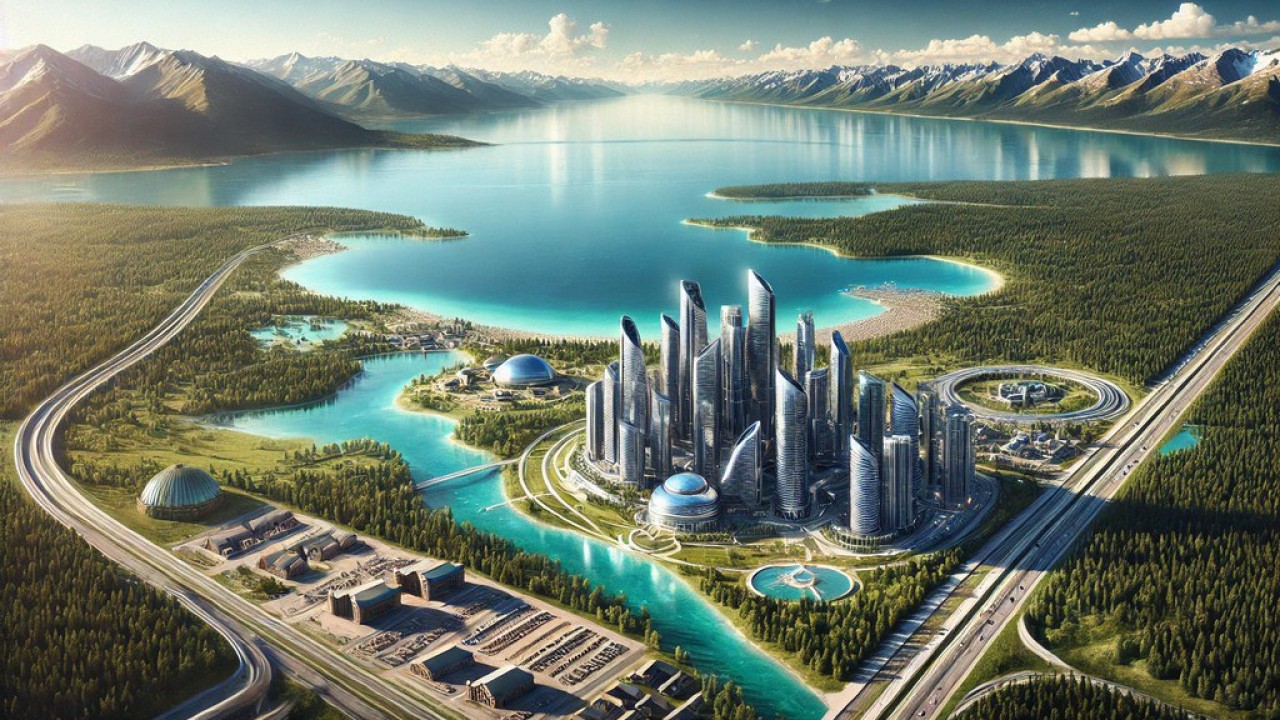
Asman is a planned eco-city on the northern shore of Lake Issyk-Kul in Kyrgyzstan, near the village of Toru-Aygyr, about 15 kilometres from Balykchy. The project aims to create a modern economic and tourism hub with well-developed infrastructure and governance, while easing pressure on the capital and attracting investment to the region.
The city is planned to cover roughly 4,000 hectares and could eventually be home to 500,000–700,000 residents. According to the concept design, the city’s layout from above will resemble the komuz, the traditional Kyrgyz musical instrument.
Asman is envisioned as a smart and environmentally friendly city, with sustainable transport and dedicated districts for education, healthcare, science, sports, and leisure. The project is also expected to encourage Kyrgyz professionals living abroad, including IT specialists and doctors, to return. For the country, it represents an important step in economic development.
 Source: tgstat.com
The project first took shape in 2022, when the authorities signed an agreement with three French companies willing to invest $5 billion in the initial stage, with total investment projected at $20 billion. Interest was also expressed by investors from China and Sudan. However, Following the project’s presentation and a symbolic capsule-laying ceremony in the summer of 2023, construction was suspended.
International partners recommended revising the concept to make the city more environmentally sustainable. The initial agreement was eventually cancelled, and the authorities opted to move forward with a phased approach involving multiple partners.
In November 2025, the country’s leadership attended an official ceremony marking the start of construction. The first development plots were allocated to the Kyrgyz company Elite House and a Chinese partner, while the government continues to court additional investors.
The debate around Asman extends beyond investment. The proposed site lies close to Lake Issyk-Kul, a UNESCO biosphere reserve, raising environmental concerns. Critics warn that large-scale construction could affect the region’s delicate ecosystem. Still, the authorities present the project as one of national importance, asserting that it could attract tourists, create thousands of jobs, and accelerate economic growth.
According to architect Philipp Meuser, expanding built-up areas in arid climates can disrupt water and temperature balance.
The risks associated with such projects are systemic and structural. In vertically organised systems, the voices of local communities and professionals are often overlooked, resulting in poorly adapted urban designs. Infrastructure is frequently constructed before residents arrive, leaving empty neighbourhoods and underused networks. Settlements planned primarily for investors or officials often lack social diversity and vibrant public life. Without participatory planning and long-term governance, such cities risk becoming monuments to political ambition rather than places where people truly live.
Philipp Möser
Eternal City (Samarkand, Uzbekistan)
Eternal City is a historical and ethnographic park within the Silk Road Samarkand tourist complex, covering 17 hectares east of Samarkand along the rowing canal. The park opened in August 2022 in the presence of President Shavkat Mirziyoyev and international guests.
The park serves as the cultural centrepiece of what is now the largest tourism complex in the region. Its aim is to present Uzbekistan’s cultural heritage in a vivid and accessible way, while also attracting international visitors and supporting the country’s growing service sector.
It recreates the appearance of historic Central Asian cities, with mosaic-covered domes, minarets, and palace façades, combining architectural elements from different eras and regions. Visitors can wander through streets inspired by Samarkand, Bukhara, Fergana, Khorezm, Tashkent, and other historic locations. The architecture brings together influences from across the region, creating an immersive experience of Central Asia’s urban and artistic legacy.
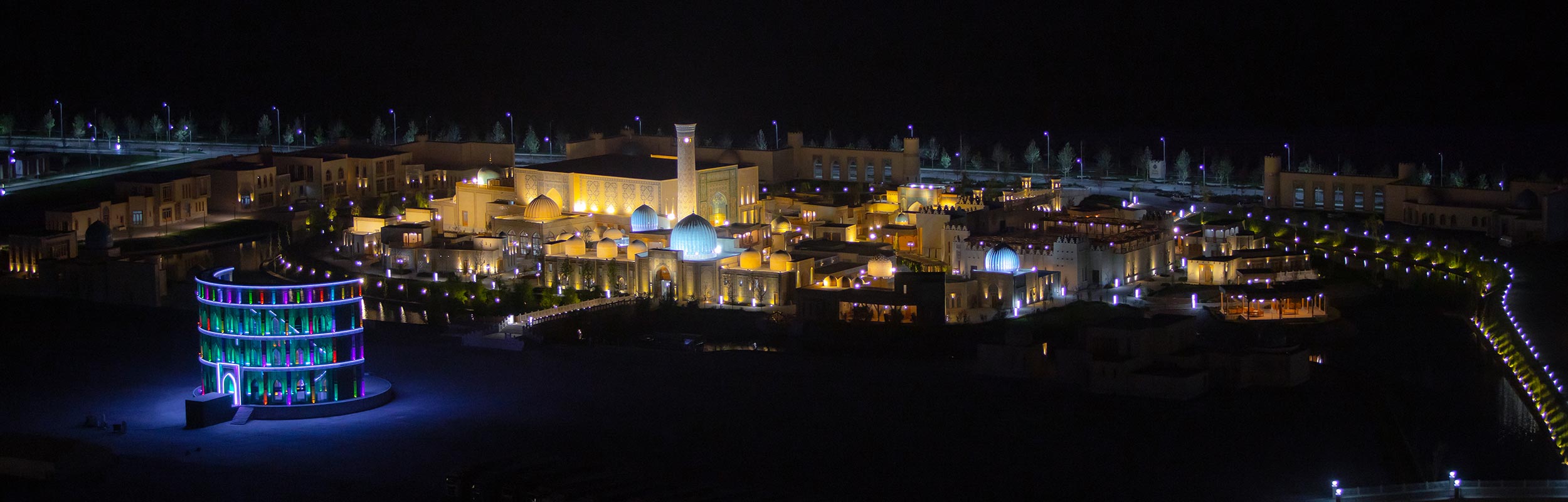 Source: silkroad-samarkand.com
The park was developed through a partnership between private investors and the state. Around $580 million was invested in the Silk Road Samarkand project, with construction completed in just three years. The complex was built by Uzbek companies with government support. International hotel brands, including Minyoun and Hilton, now operate there. It features eight modern hotels, a congress centre, a medical wellness centre, and a variety of other facilities.
Since its opening in 2022, the Eternal City has quickly become one of Uzbekistan’s most recognisable attractions. The Silk Road Samarkand complex is often described as Central Asia’s first resort of international standard, designed to welcome visitors from around the world for both leisure and business travel.
Soon after opening, the complex welcomed guests attending the SCO summit in Samarkand. President Shavkat Mirziyoyev described the project as an important step in the country’s development and a striking example of contemporary architecture within a historic city.
Building entirely new cities from scratch is justified only in rare cases—for example, in response to seismic risk or environmental degradation, when existing settlements become unsafe, or when new industrial or scientific clusters require vast expanses of land.
In most situations, however, it is far more sustainable to develop and densify existing cities. Working with current infrastructure, repurposing former industrial areas, modernising standard housing, and improving transport systems all leave a smaller environmental footprint while strengthening social continuity. Reforming the existing city is a slower, but ultimately more sensible path. It draws on collective memory, community, and the resources already invested.
Philipp Meuser
In this article, we've shown how and why countries across Central Asia are building new cities, from the vast New Tashkent project to the ambitious vision of Asman. These projects promise to address pressing challenges, expand opportunities for residents, and drive economic growth.
Yet for these cities to become truly vibrant and sustainable, bold architectural visions alone will not suffice. Successful cities are never created by design alone. They grow through human scale, open governance, and considered planning. Only then do new cities become more than symbols of change, but real places where people want to live and shape their futures.
Related reading: