
…Once, a ruler of Margilan decided to marry for the fifth time. He set his sights on the beautiful young daughter of an old weaver. The desperate craftsman fell at the ruler’s feet and begged him not to take his only child. The powerful and world-weary khan then issued a command: create for me a fabric of such extraordinary pattern that it will leave me speechless. Overcome with grief, the old weaver sat by the aryk as the sky poured down rain and he shed bitter tears. When the rain passed, a rainbow appeared through the clearing clouds. He saw the clouds reflected on the surface of the water, shimmering in all seven colours. In that moment, he understood how to create a pattern never seen before, one of heavenly beauty. He returned home and, in a single night, wove a silk so wondrous that the khan was indeed struck speechless.
And so khan-atlas was born, the royal silk. The weaver was rewarded, and his daughter was given in marriage to the khan's son, young and handsome, of course.
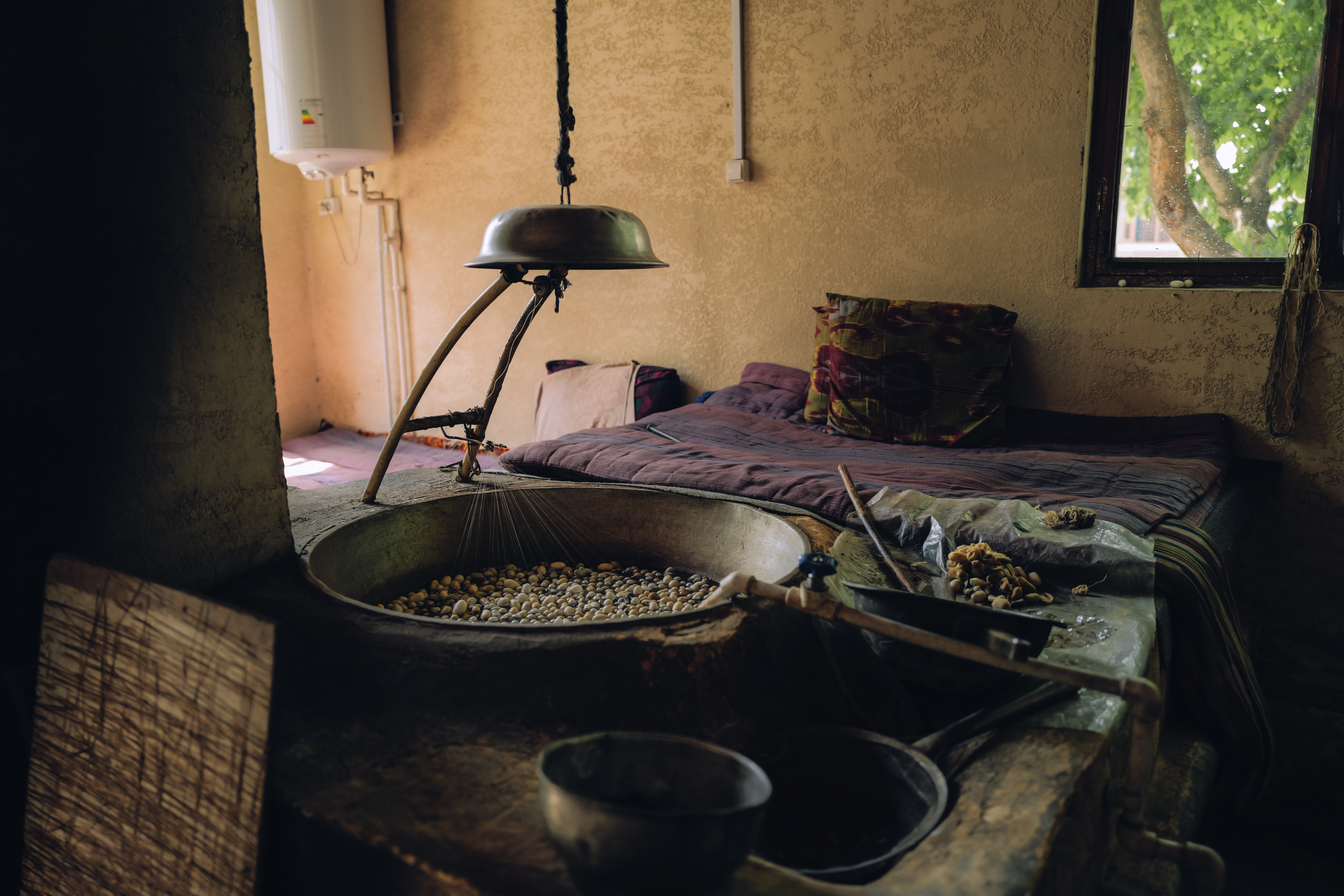 Photo: Ildar Sadykov
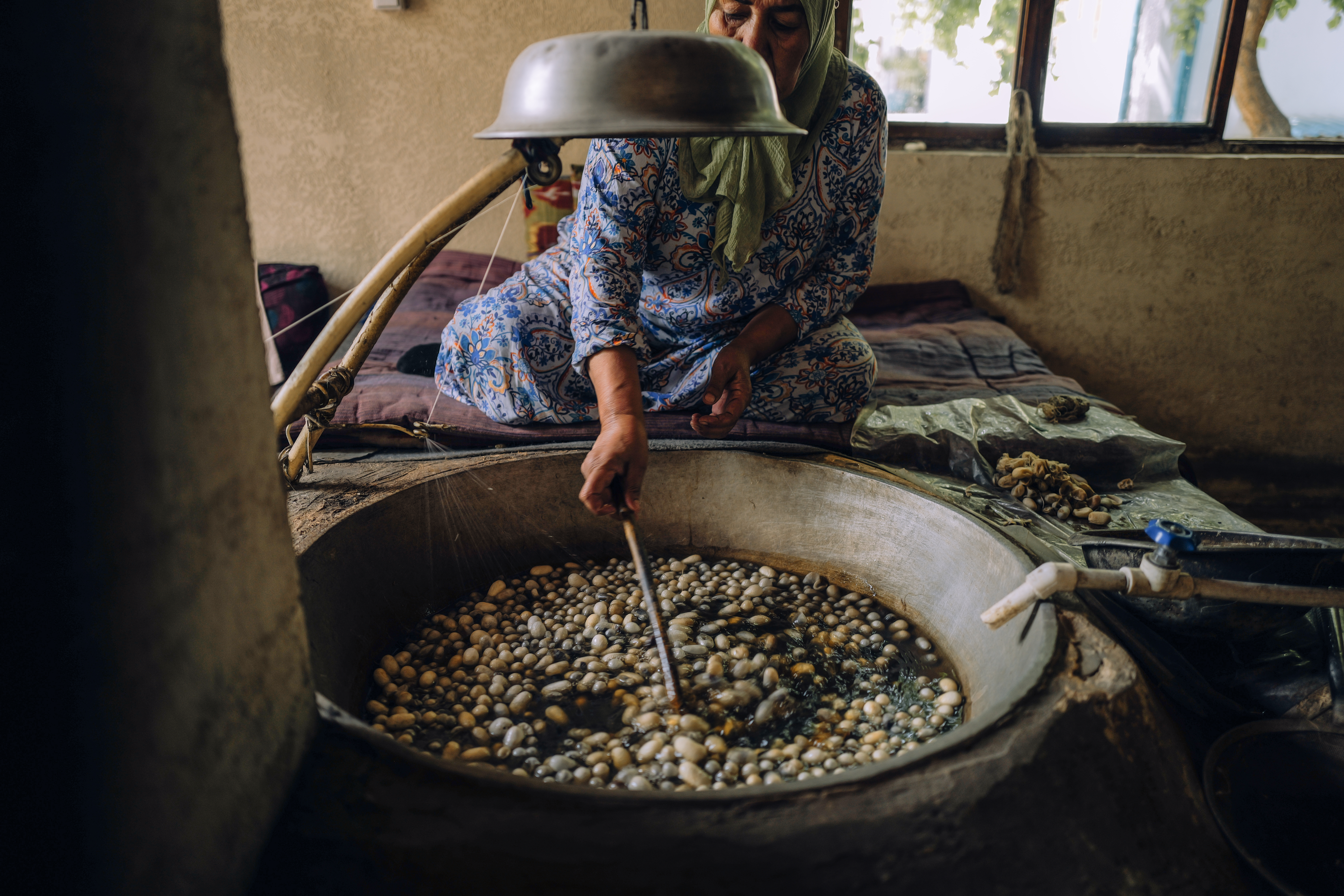 Photo: Ildar Sadykov
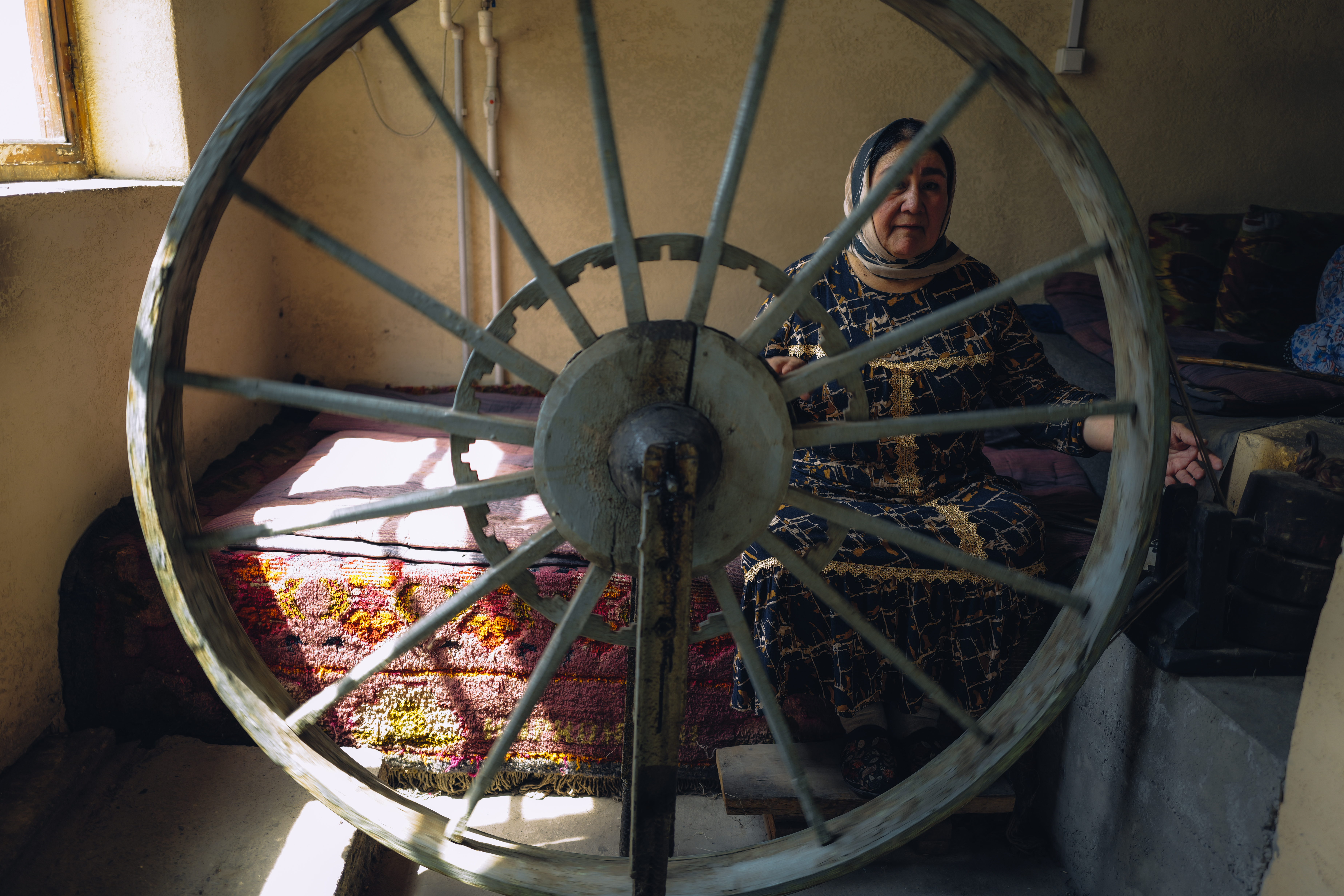 Photo: Ildar Sadykov
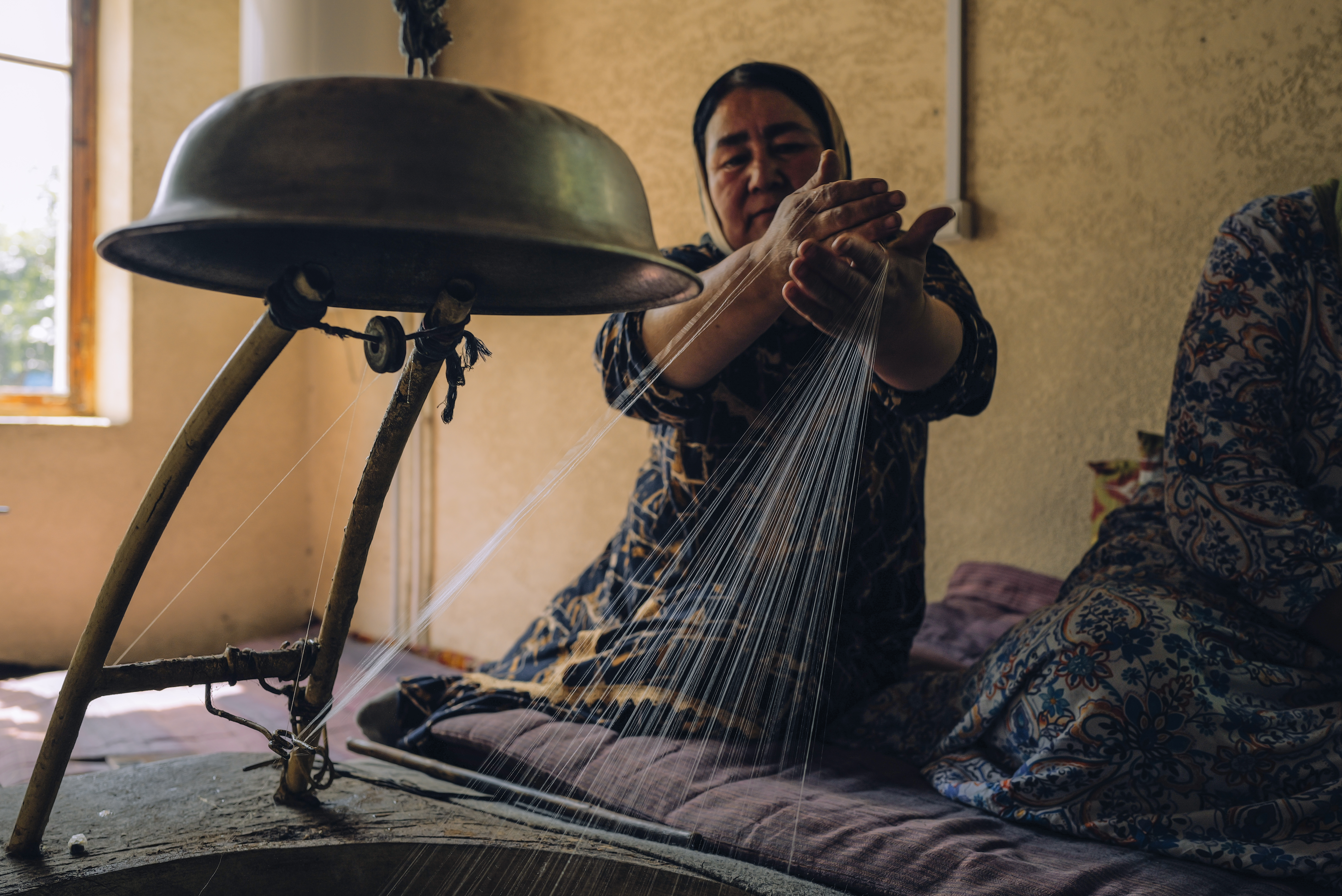 Photo: Ildar Sadykov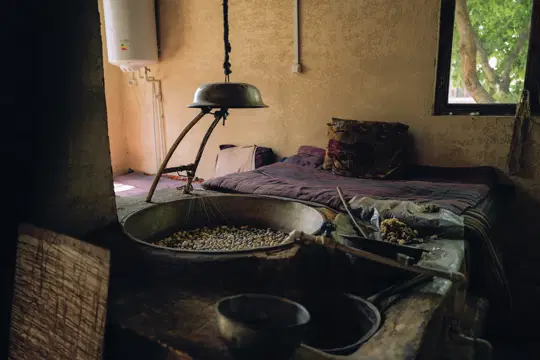
In just a few centuries, khan-atlas and other Uzbek textiles would shine proudly in the collections of world-renowned fashion houses such as Oscar de la Renta, Gucci, and Dries Van Noten, celebrating both their homeland and the old weaver of Margilan.
The word ikat is relatively recent and of Western origin. It describes the technique as a whole, one that exists across many parts of the world. Yet nowhere in the world are fabrics made with greater brilliance, variety, and beauty than in Uzbekistan.
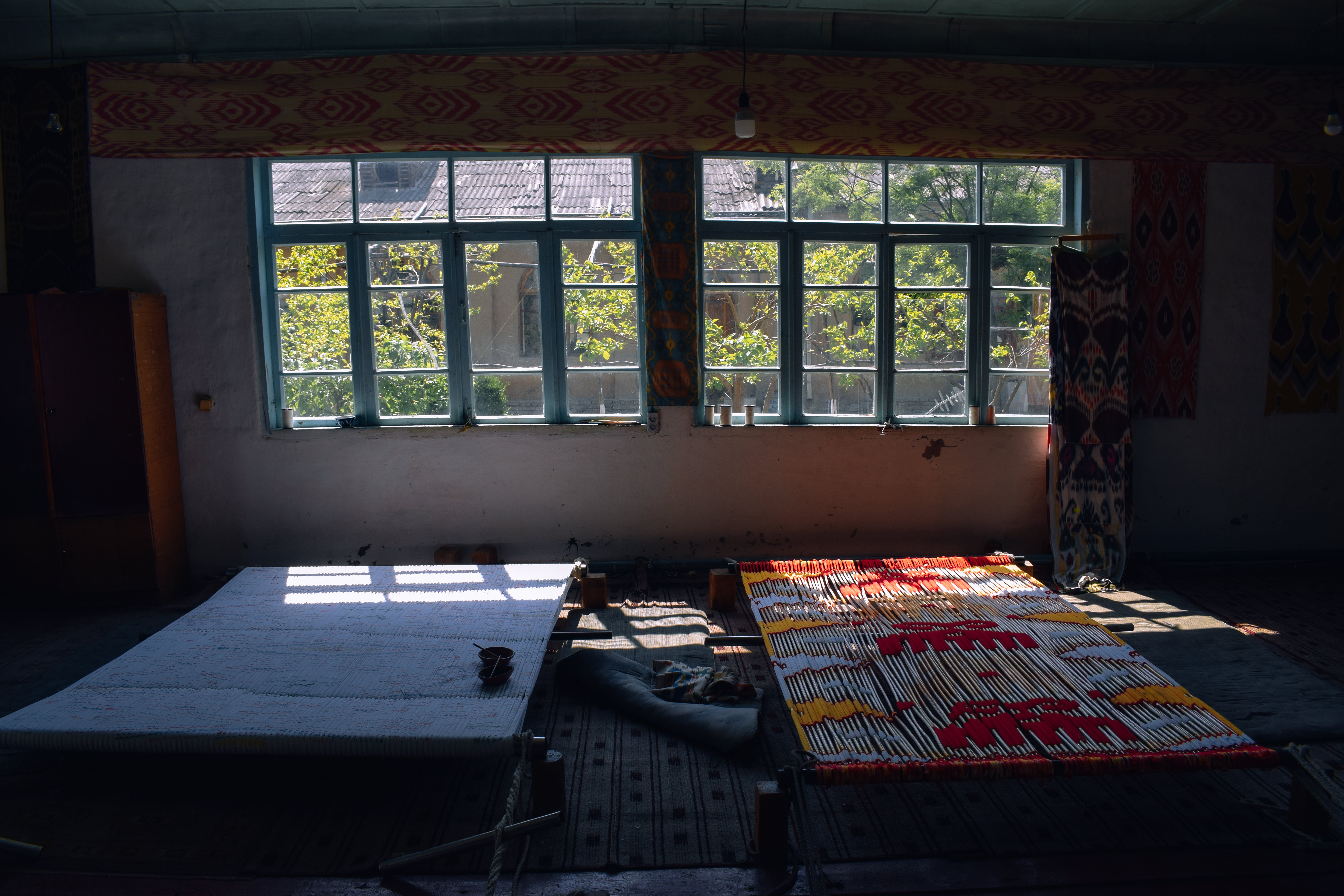 Photo: Ildar Sadykov
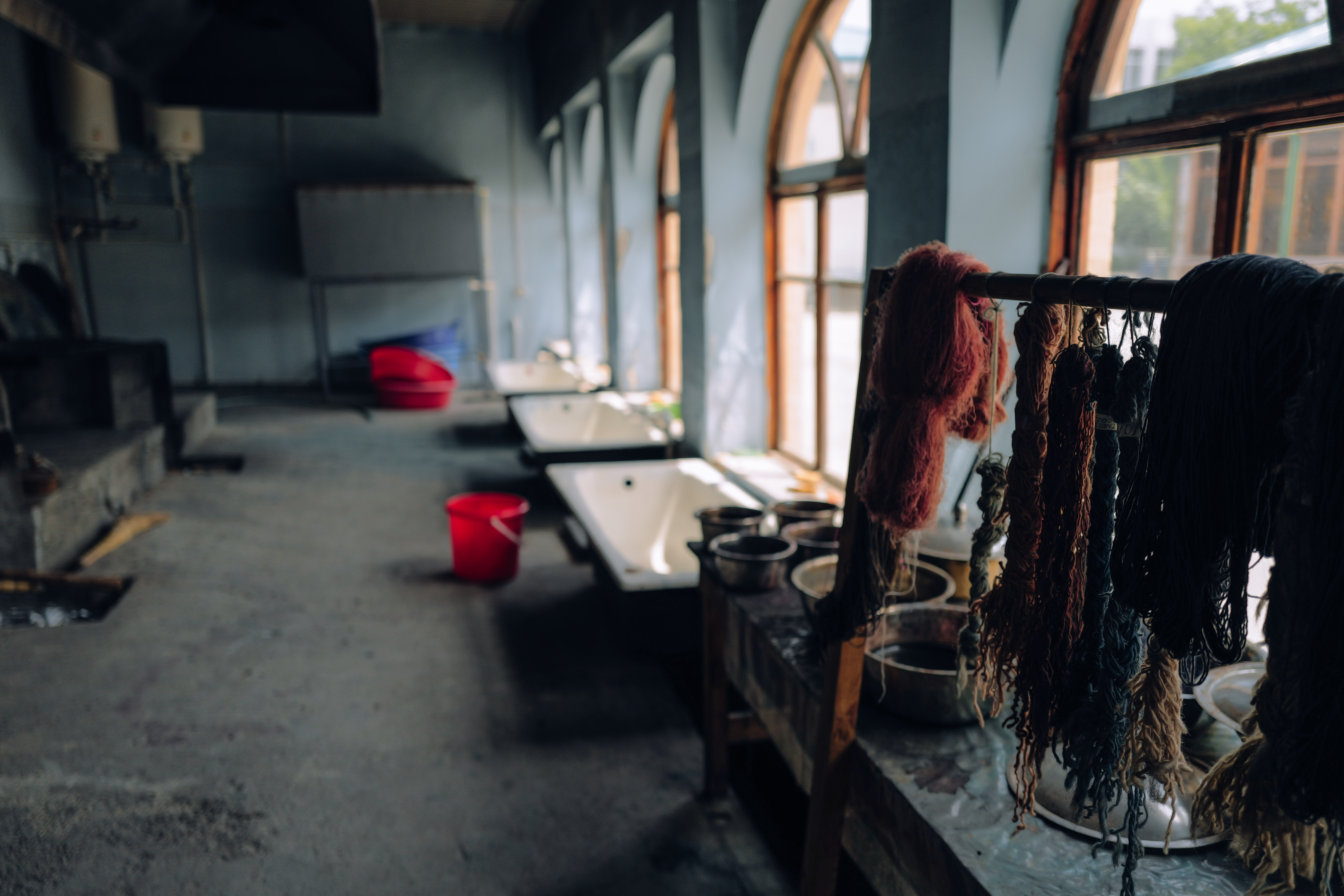 Photo: Ildar Sadykov
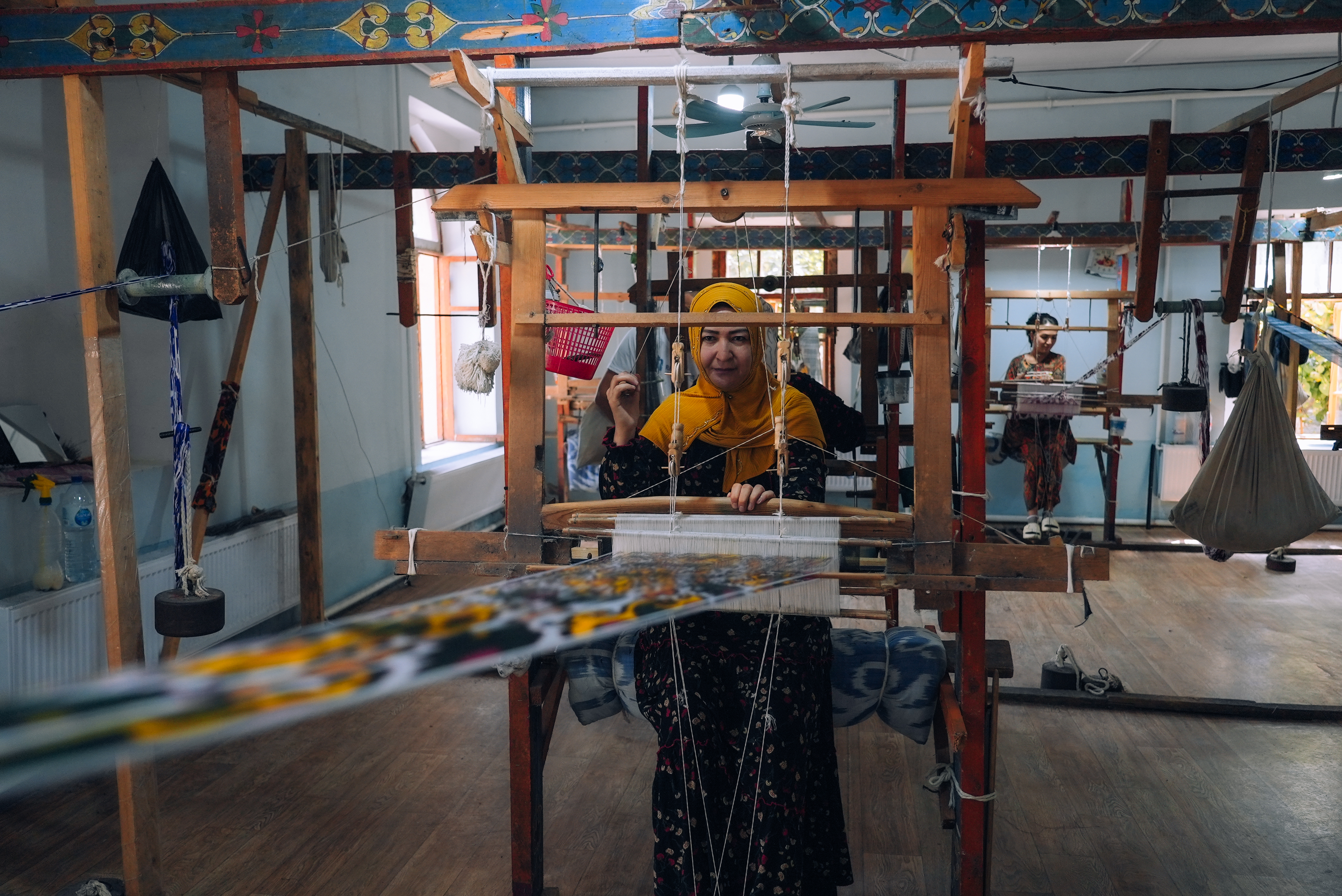 Photo: Ildar Sadykov
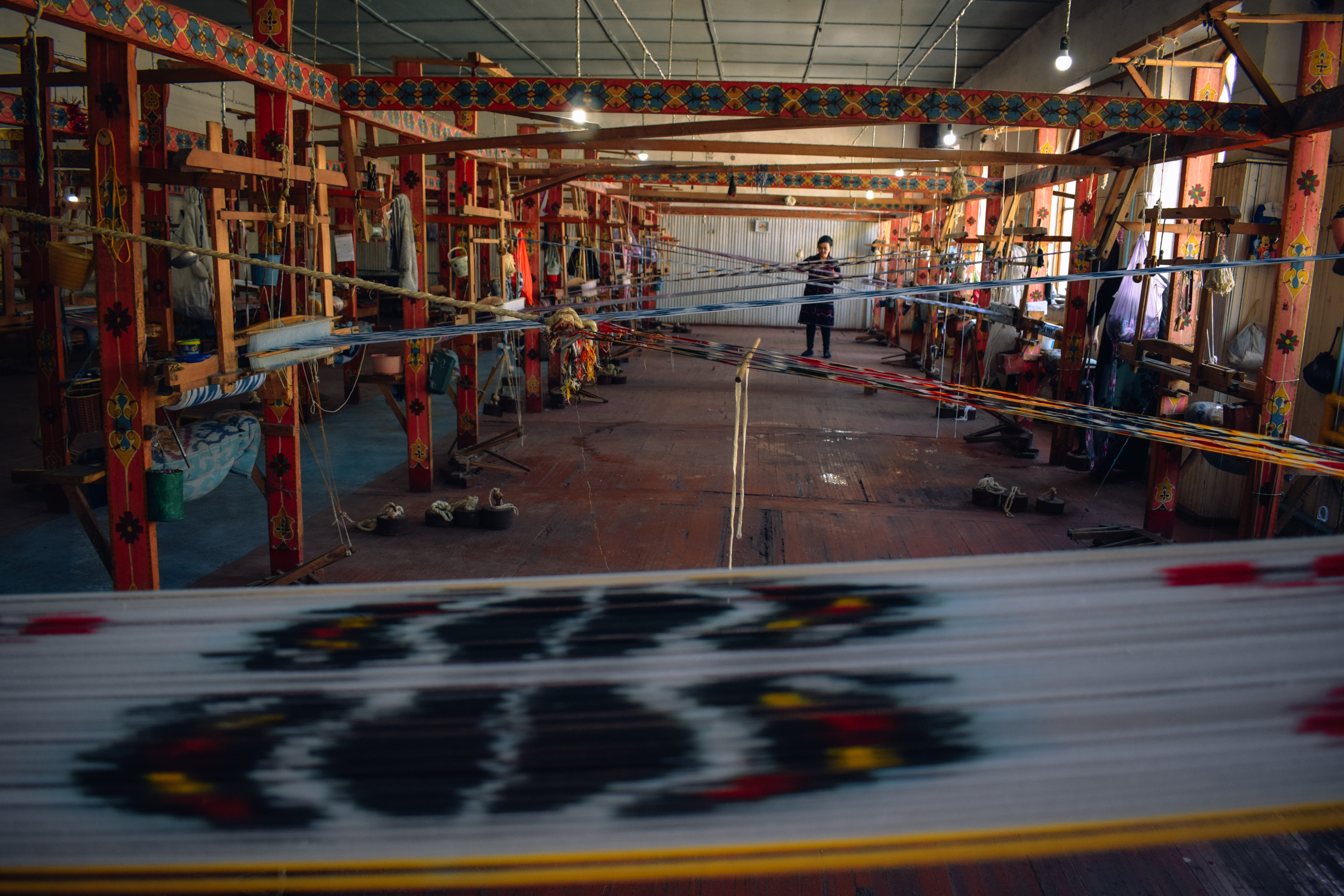 Photo: Ildar Sadykov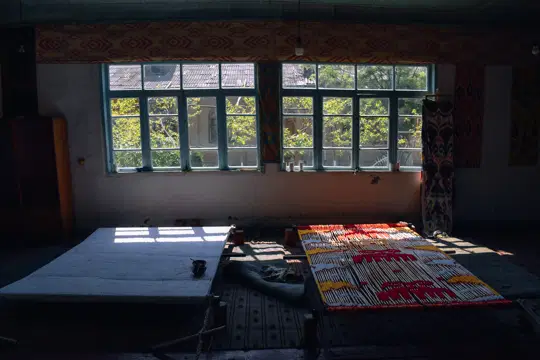
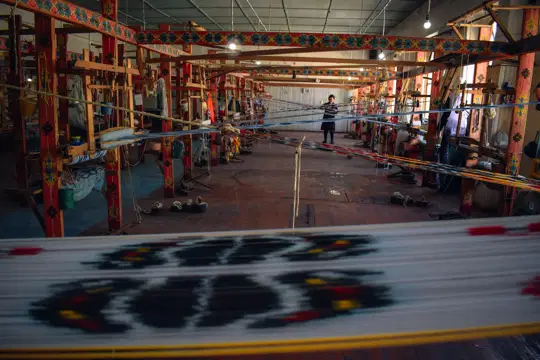
The proper name for khan-atlas, adras and other handwoven textiles is abr matolar, meaning “cloud fabrics” of Uzbekistan. The masters who create them are known as abrbandchi, literally “those who bind clouds”. Even if this interpretation is not entirely precise, as art historians continue to debate, its symbolism is strikingly beautiful.
To this day, no fully effective way has been found to mechanise the production of abr textiles. While machines have replaced human labour at certain stages, the process still resists full automation. Delegating work to technology is a demand of time and market, yet how can one replace a master capable of creating up to sixty distinct patterns?
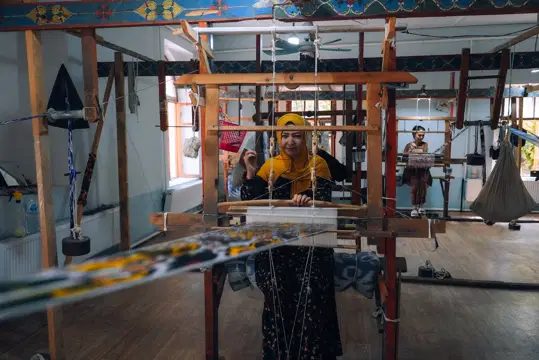
About a century ago, women also entered the craft, which had originally been the domain of men due to its physical demands.
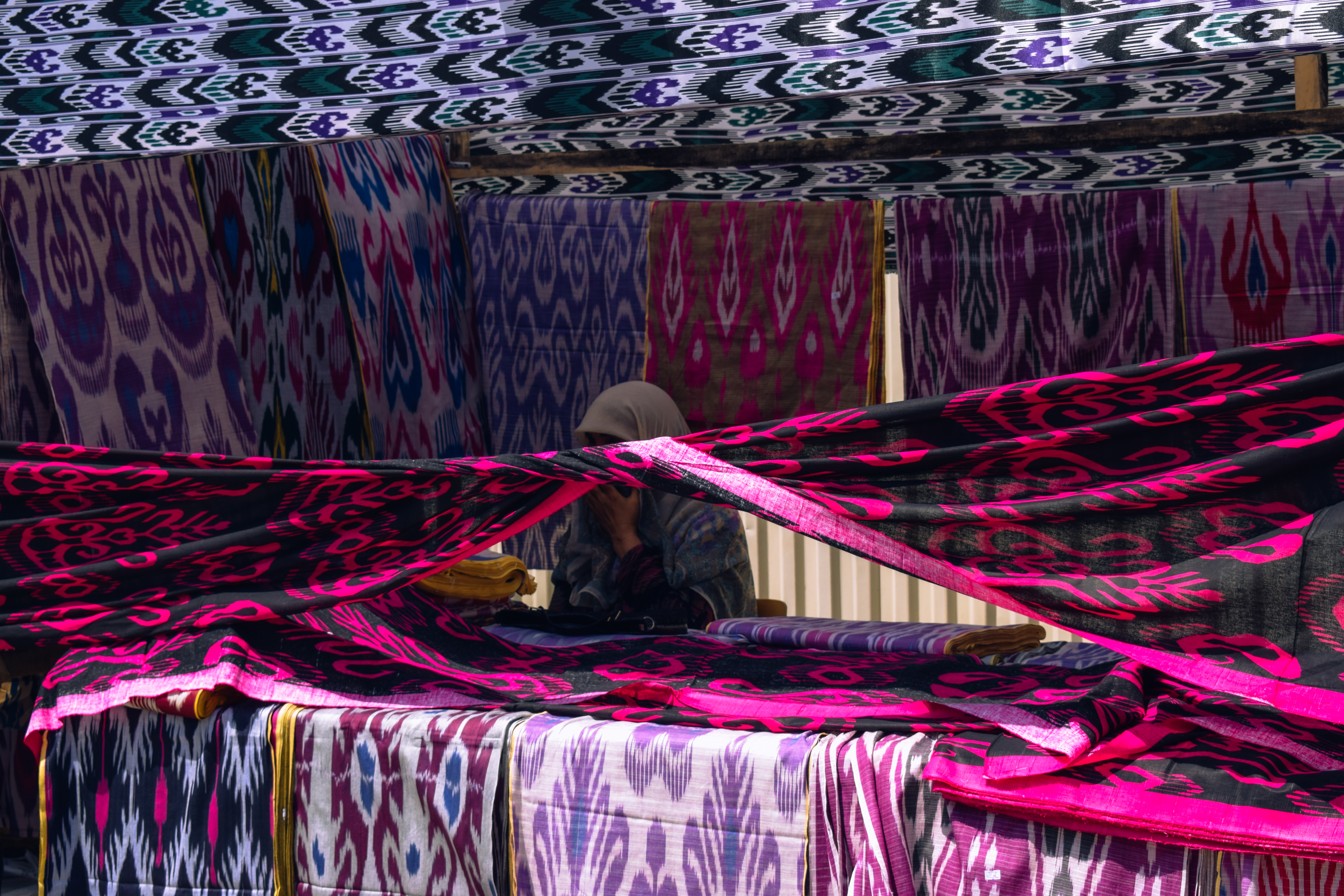 Photo: Ildar Sadykov
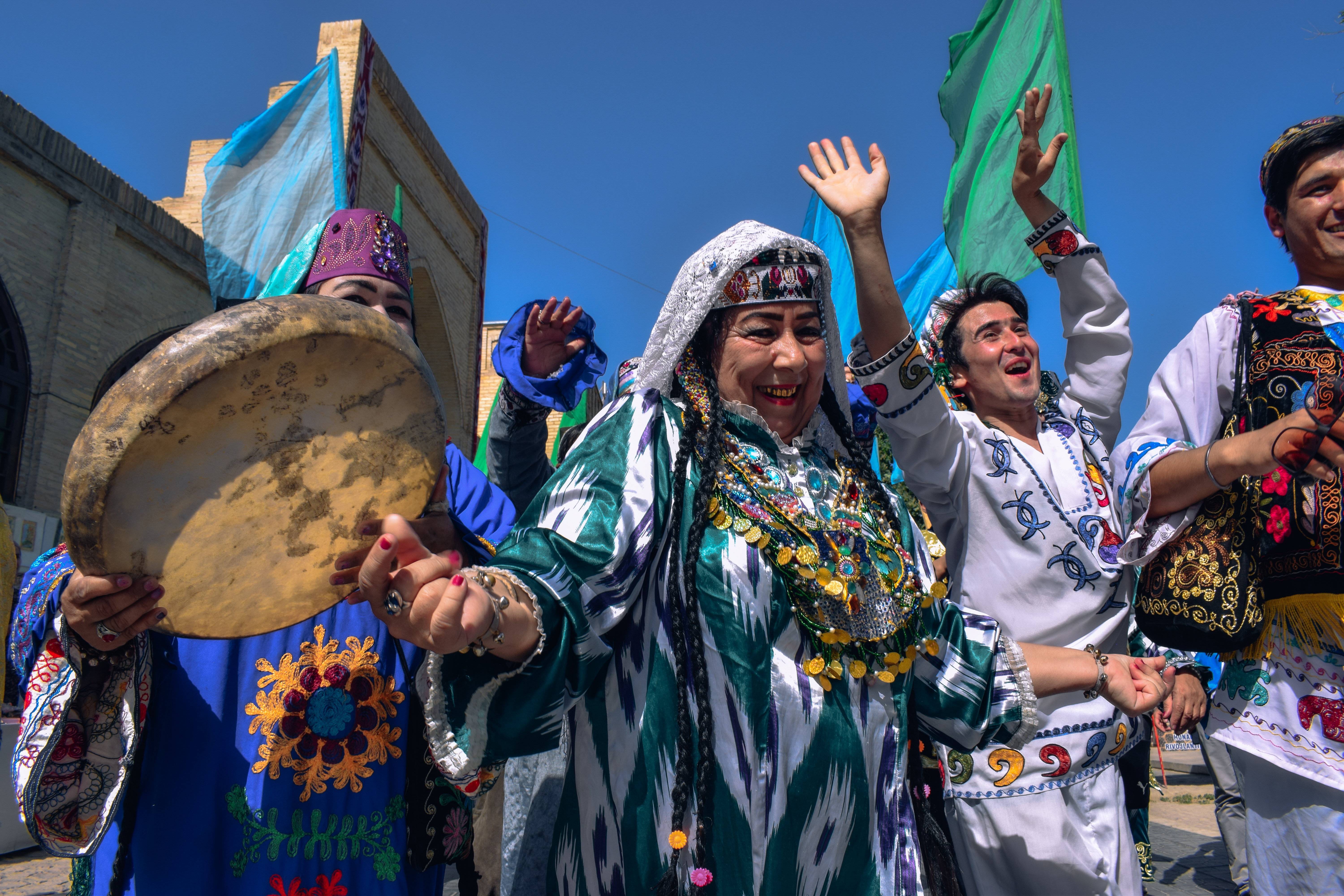 Photo: Ildar Sadykov
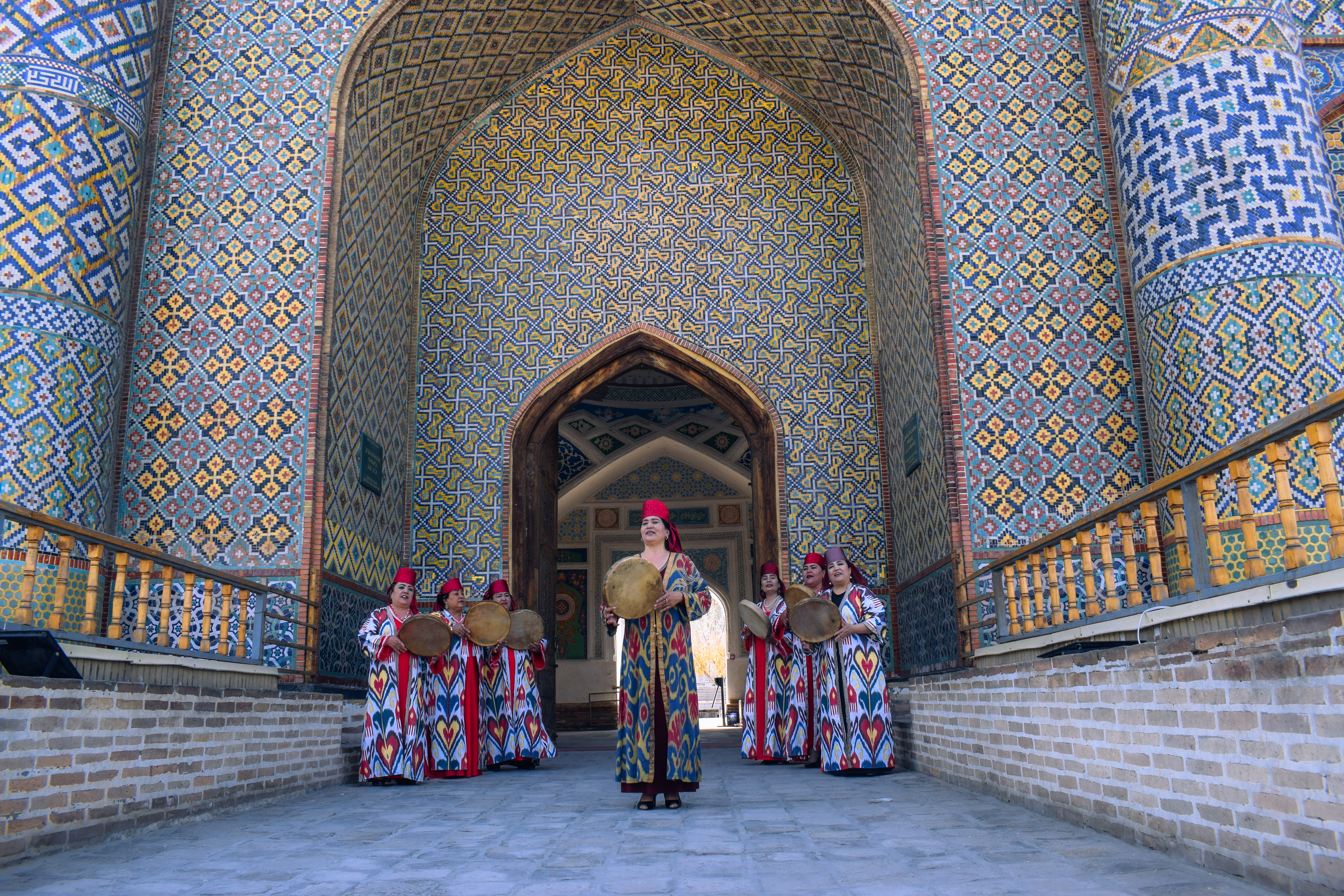 Photo: Ildar Sadykov
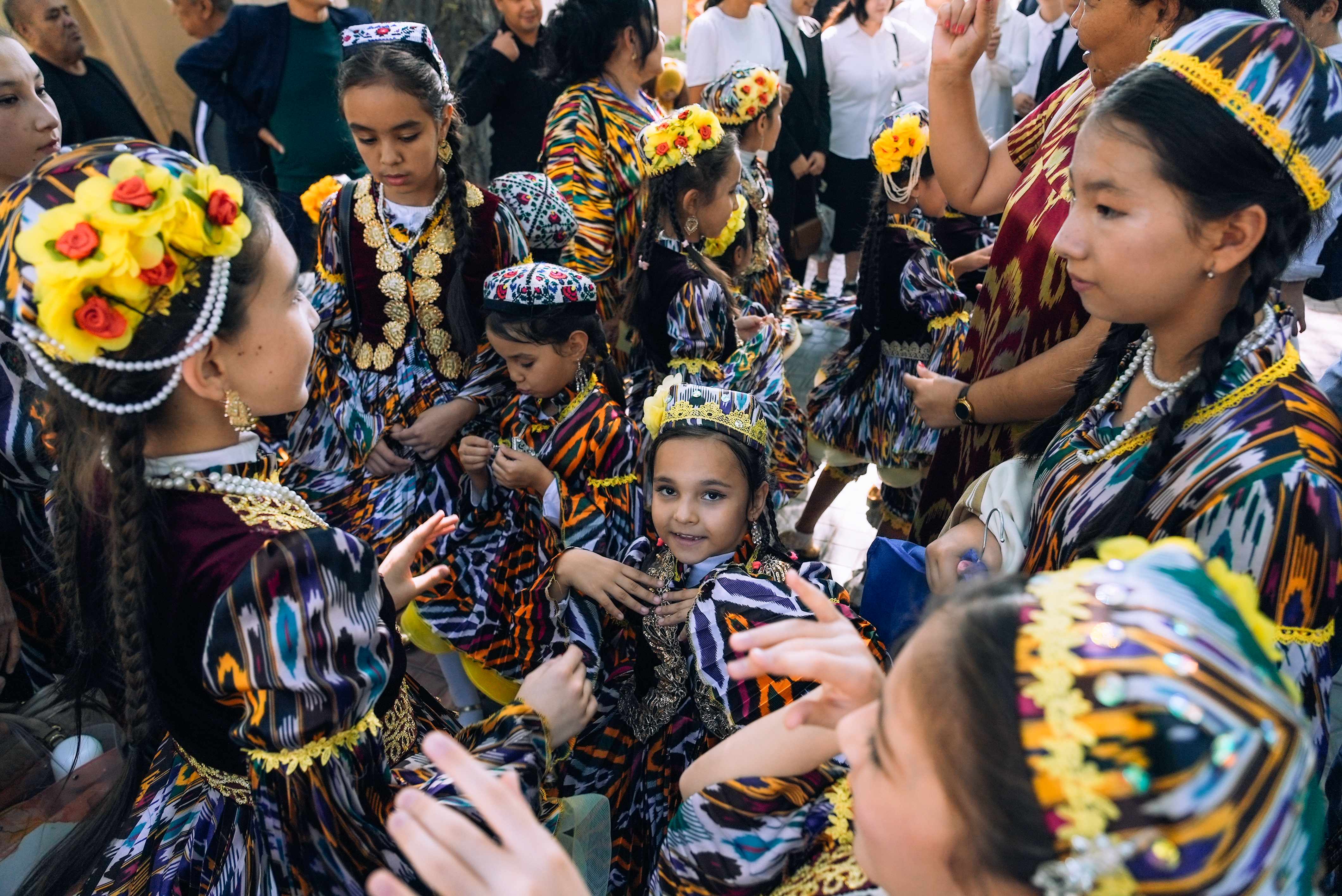 Photo: Ildar Sadykov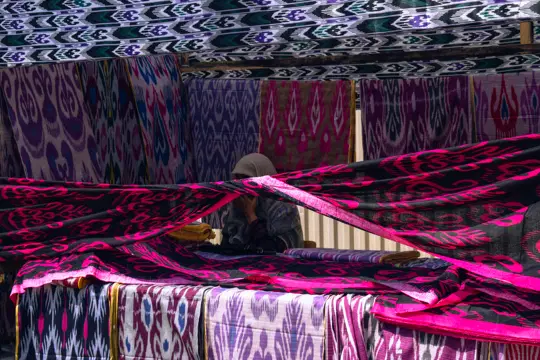
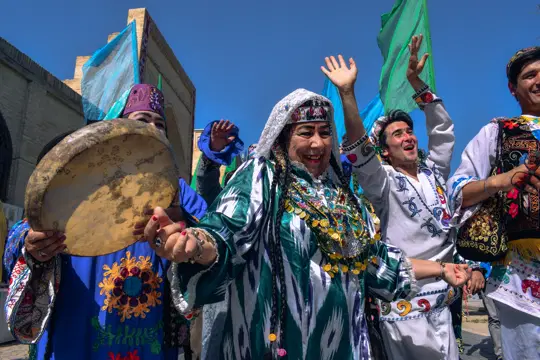
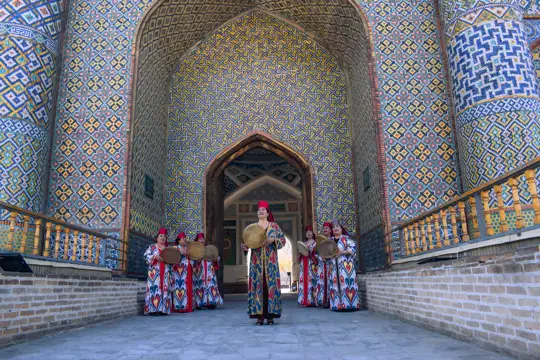
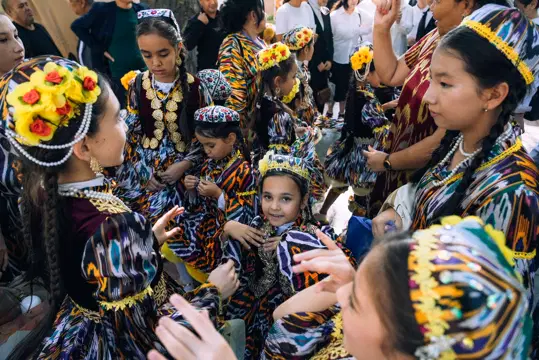
Khan-atlas is as distinguished as it is demanding. It requires great skill from the seamstress, careful wear from its owner, and attentive care.
In earlier times, lengths of the fabric were stored in family chests and passed down from mother to daughter and granddaughter. Today, vintage khan-atlas remains highly sought after. Tourists admire it, while locals tend to save it for celebrations and special occasions.
It is still woven at Margilan’s historic Yodgorlik factory. Setting legend aside, one might note that the pattern we call ikat came to us from Yemen and South-East Asia along the caravan routes, while silk itself came from China. Craft traditions once flourished across several cities in Uzbekistan and Tajikistan, though many have not survived. Today, the Ferghana Valley and the small but now world-famous ancient city of Margilan remain the living centres of this craft, where anyone can witness its quiet magic.
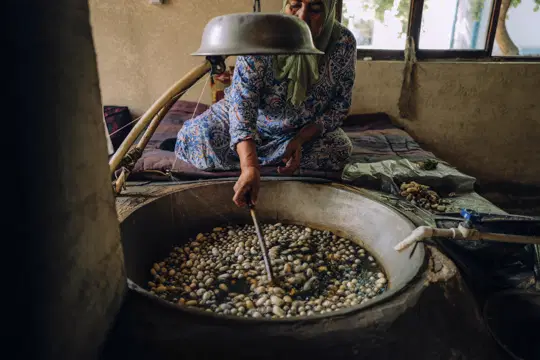
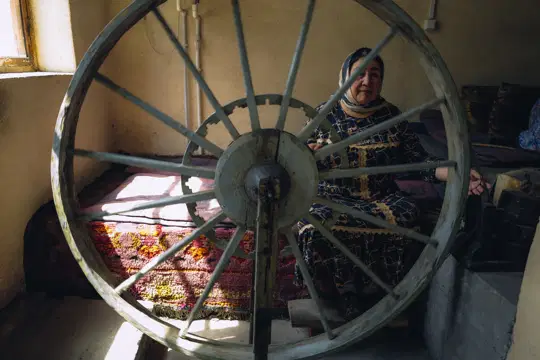
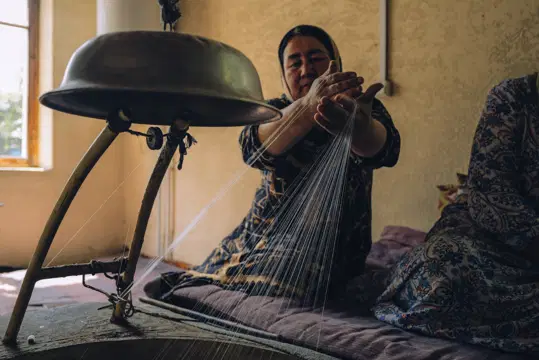
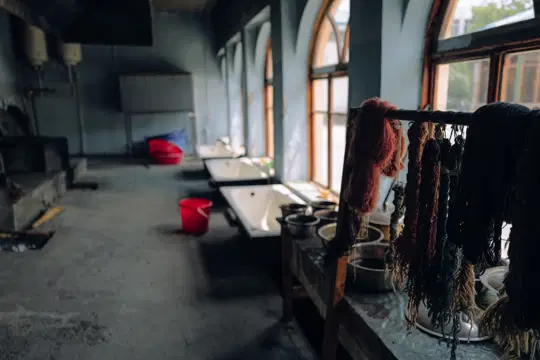
Silkworm cocoons are boiled in large cauldrons, after which the threads are drawn out, reaching up to two kilometres from a single cocoon. The fibres are then bleached and softened.
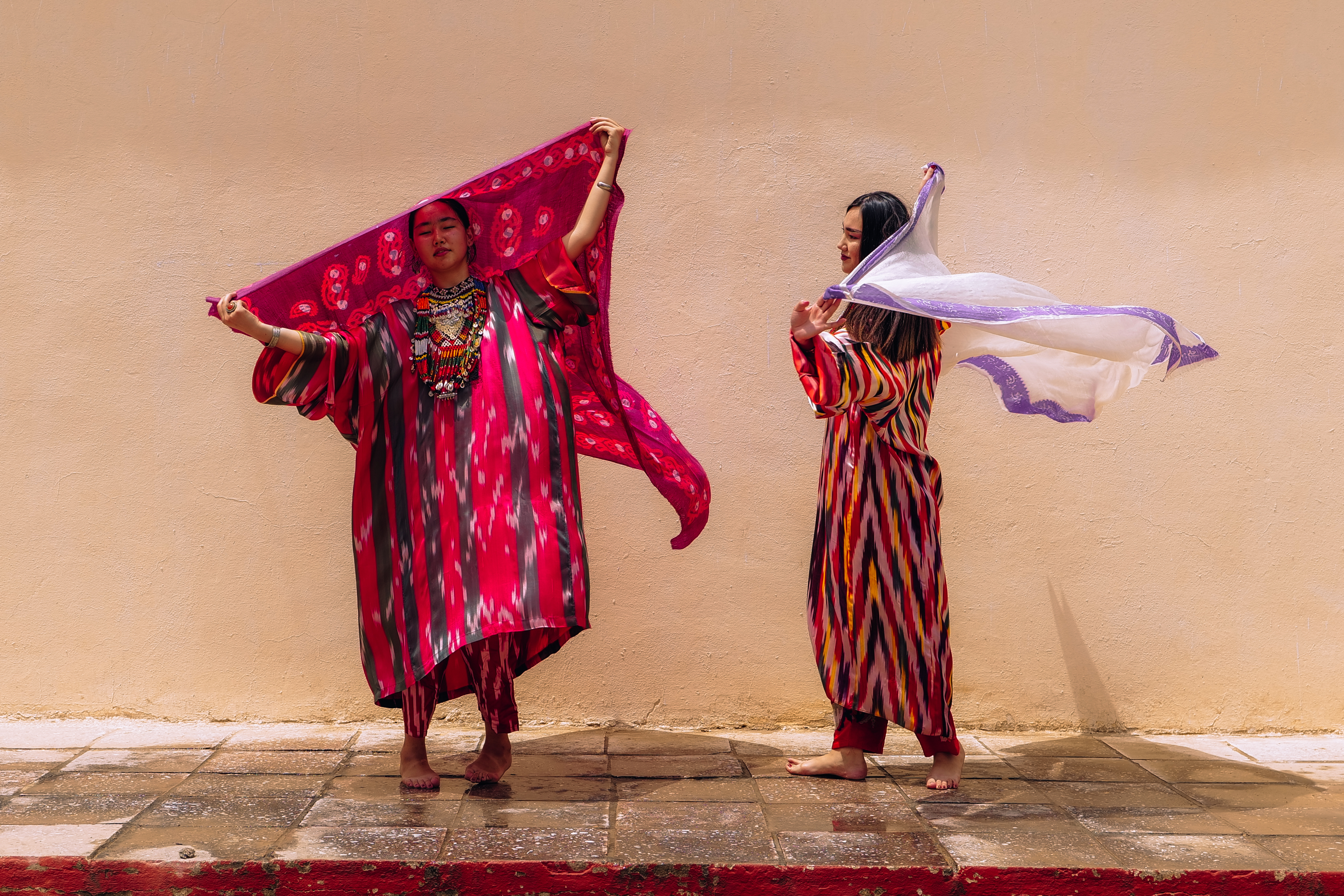 Photo: Ildar Sadykov
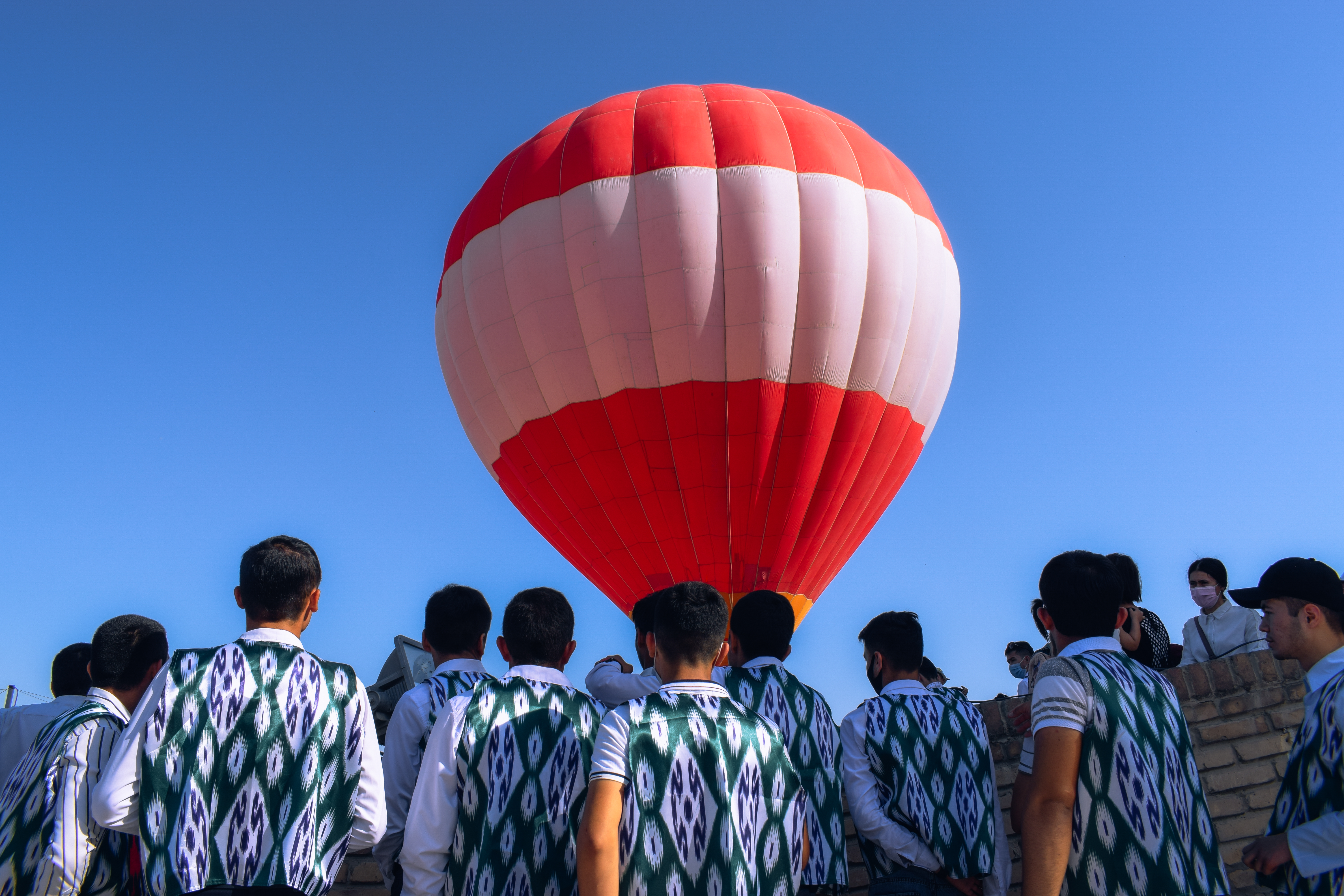 Photo: Ildar Sadykov
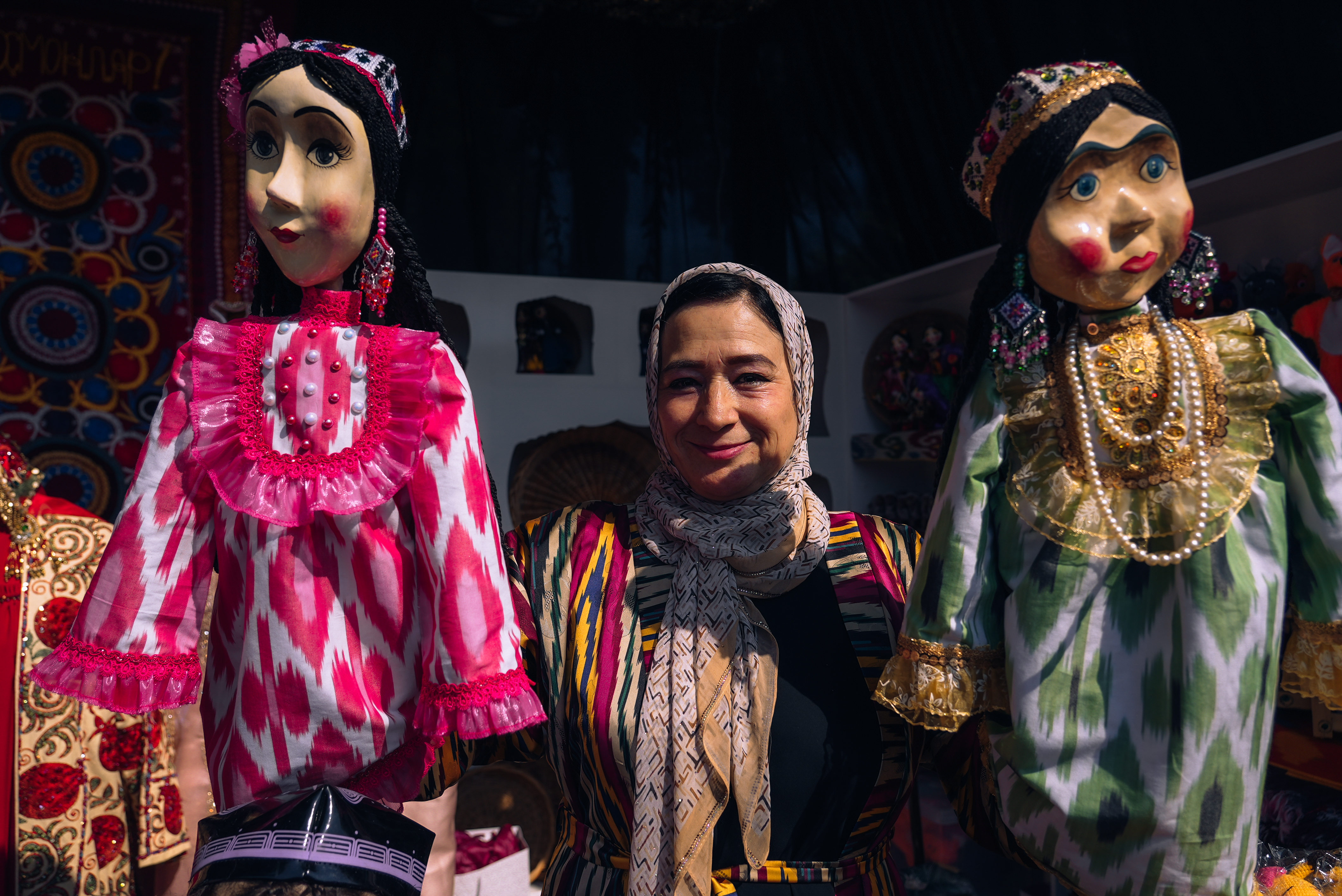 Photo: Ildar Sadykov
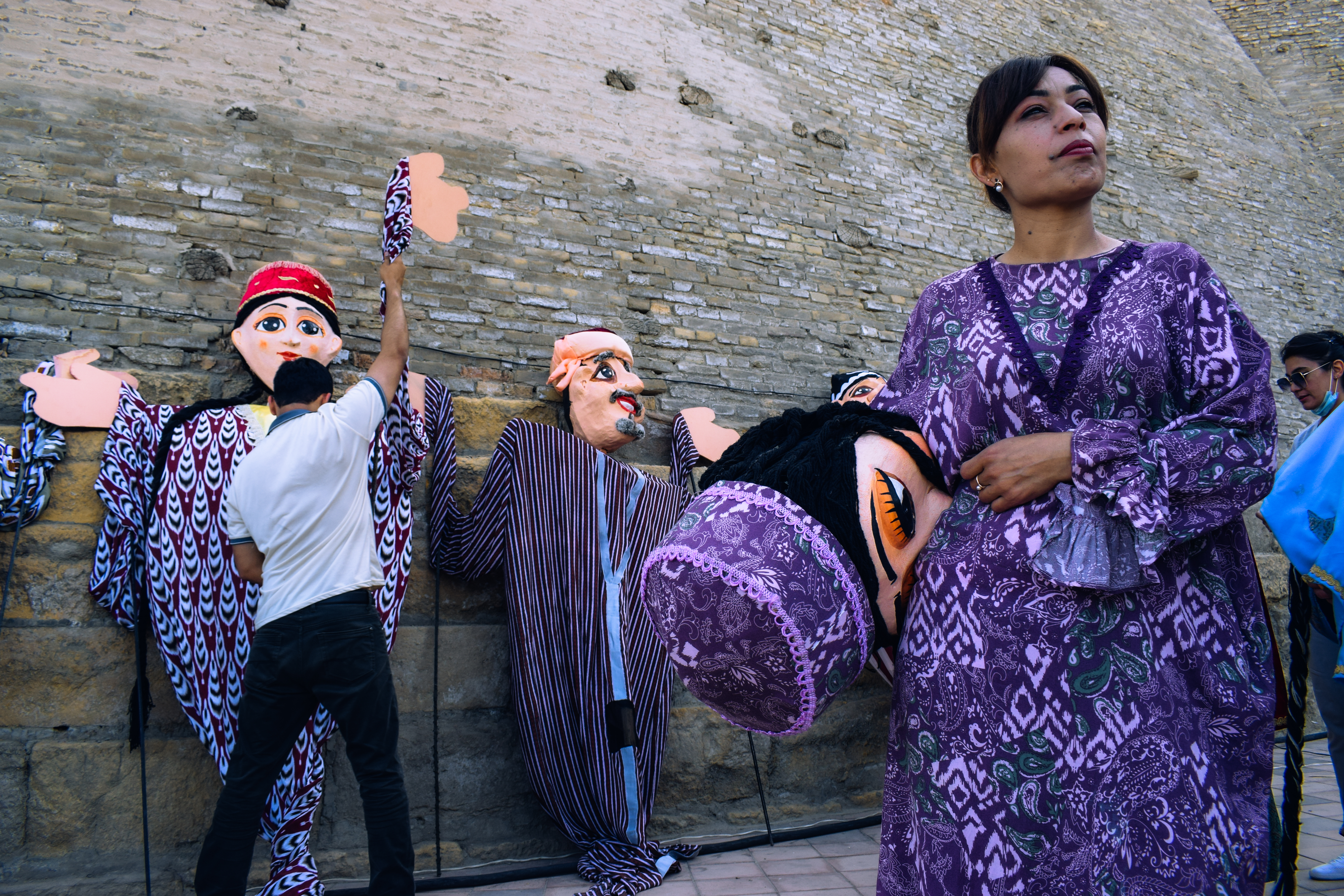 Photo: Ildar Sadykov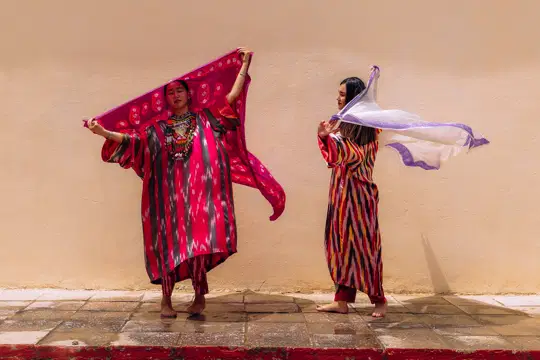
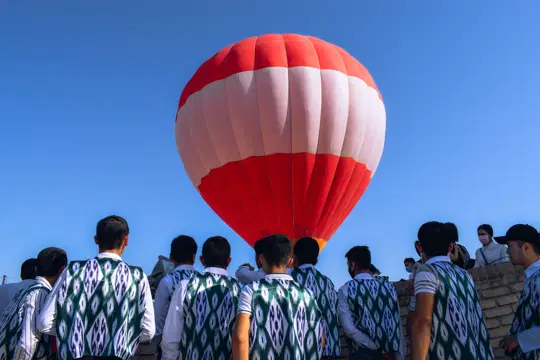
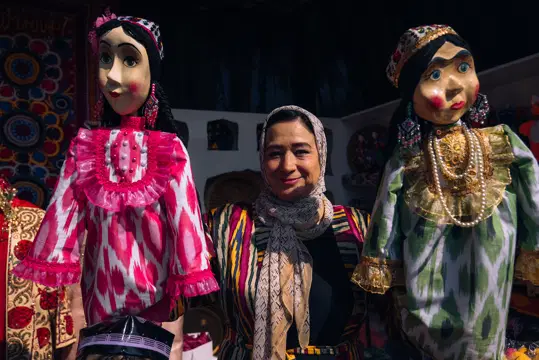
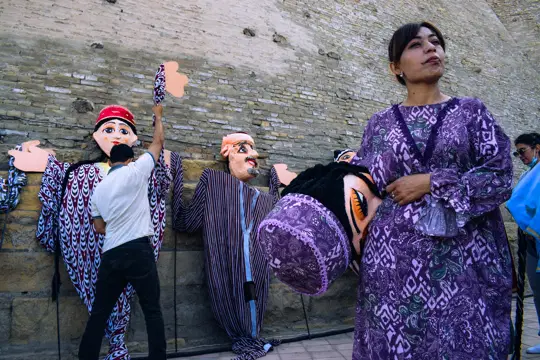
The oldest and almost sacred stage is the application of the pattern onto the stretched threads, as it has been done since time immemorial, traditionally using soot or clay.
Next comes the process of resist-dyeing the threads. In accordance with the pattern, they are bound in bundles and dipped one by one into the dye, as many times as there are colours in the finished print. This is the origin of the characteristic blurred edges of the patterns. Today, synthetic dyes are widely used, yet traditional natural pigments have not been forgotten, including indigo powder, walnut, onion skins, pomegranate peel, madder root and acacia flowers.
And the patterns themselves: amulets and talismans, known as tumors, jewellery forms, animal and natural motifs, ancient sacred symbols. More recently, custom designs have expanded the possibilities to almost any image imaginable, even skulls. The symbolism of abr textiles has been the subject of countless studies, yet, as always in the East, it retains an element of mystery and invites endless interpretation.
At one of the final stages, the prepared threads are placed on a loom with six to eight pedals, where a craftswoman weaves the fabric. From this process emerge richly patterned textiles, only about the width of an arm, produced at a rate of three to four metres per day.
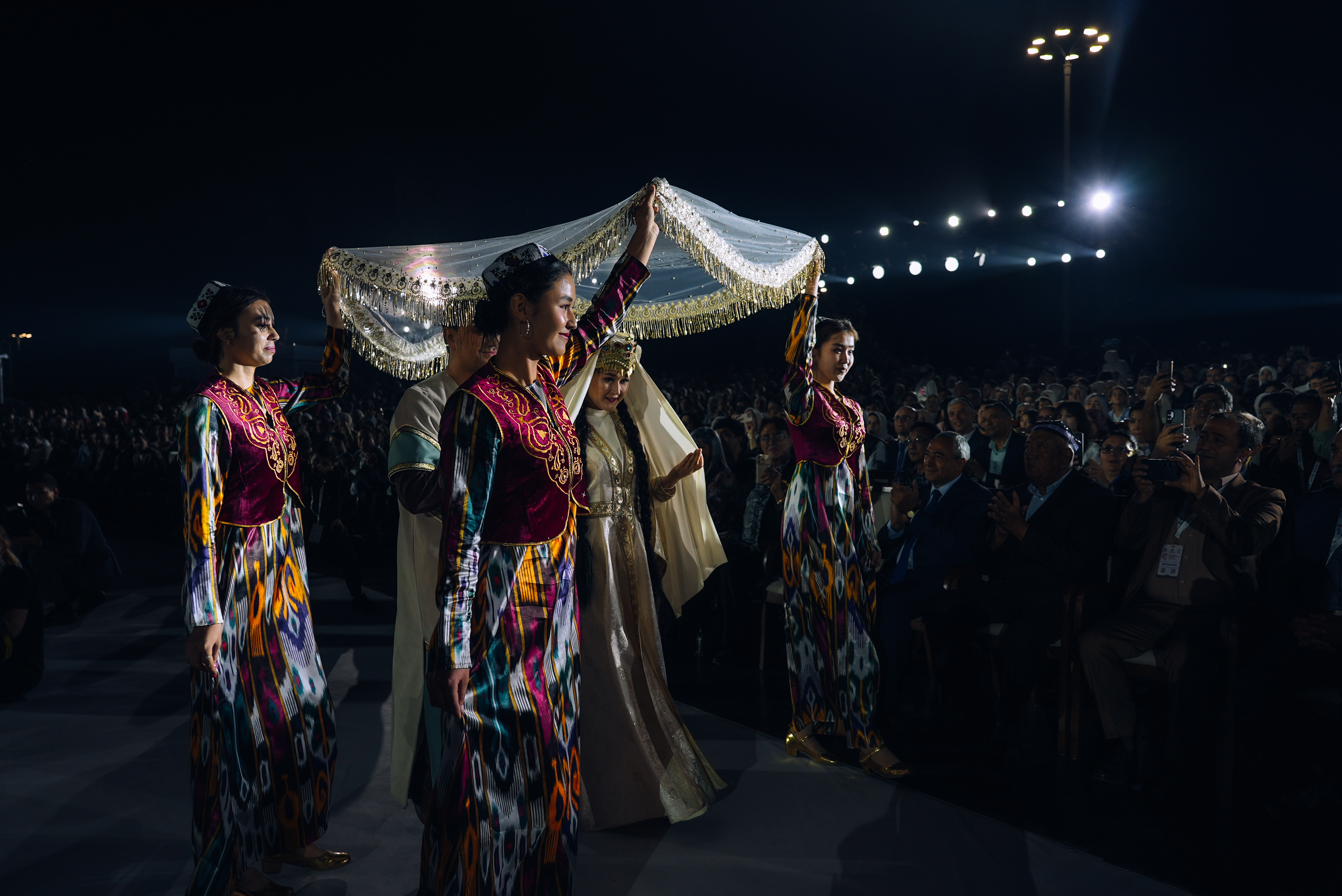 Photo: Ildar Sadykov
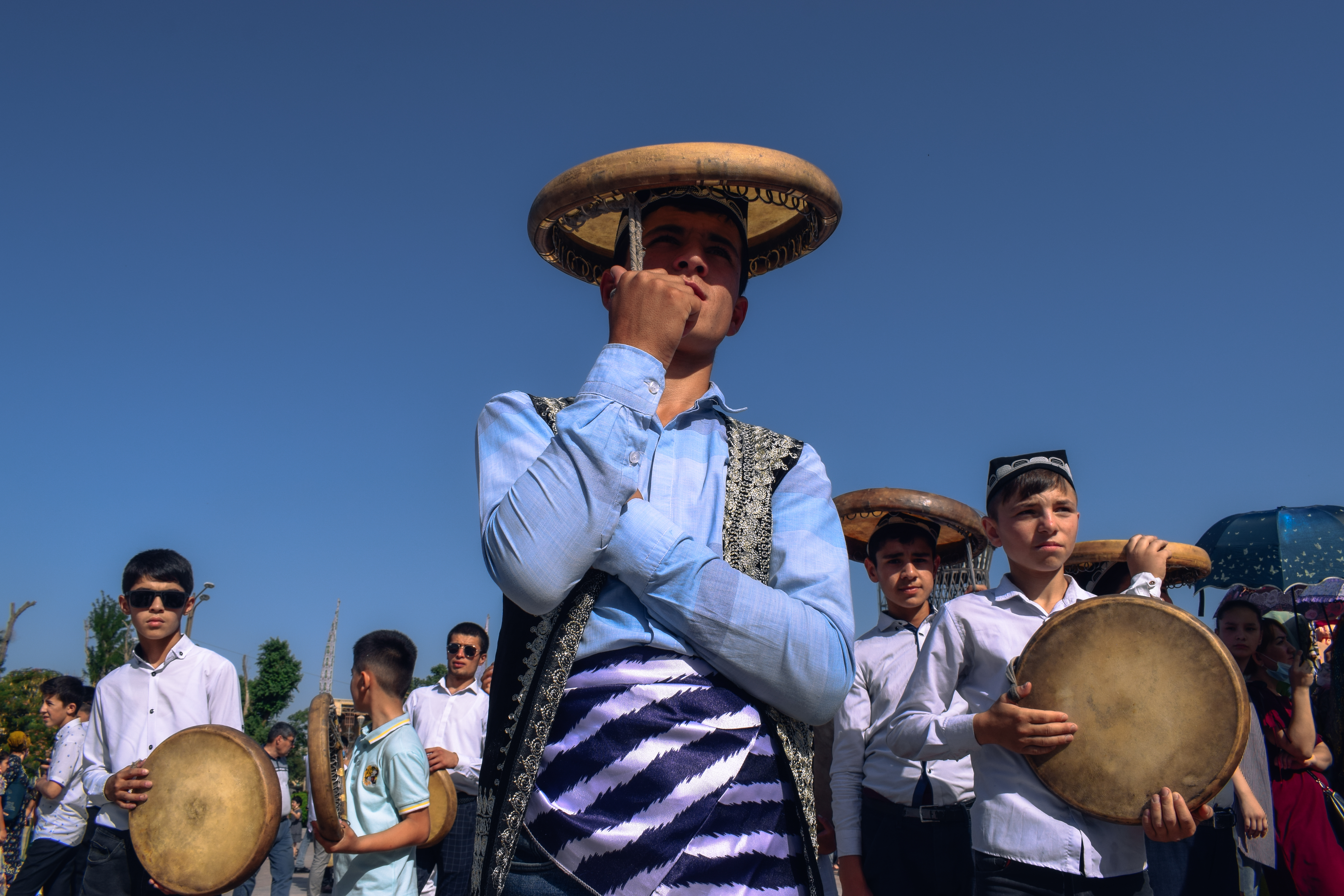 Photo: Ildar Sadykov
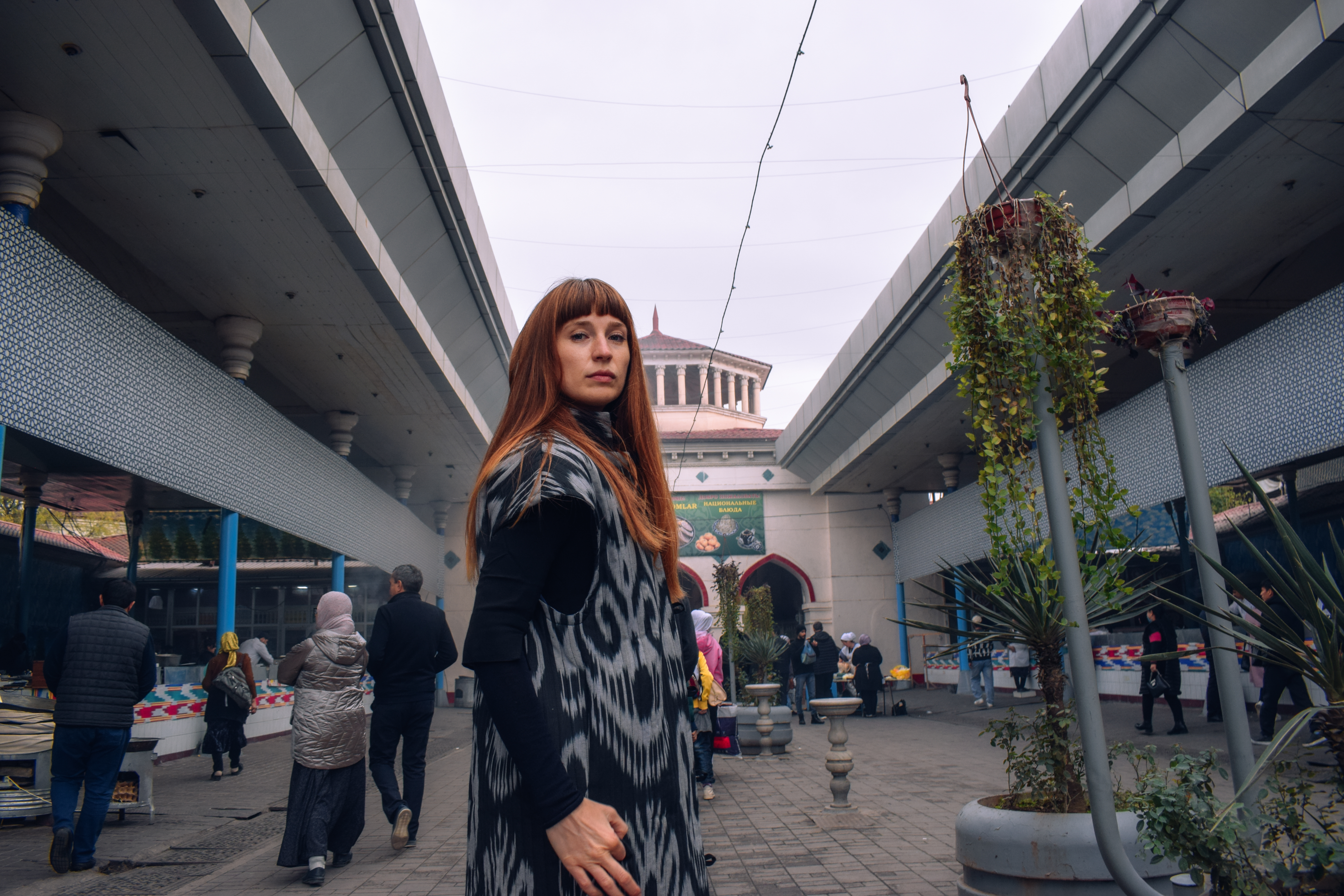 Photo: Ildar Sadykov
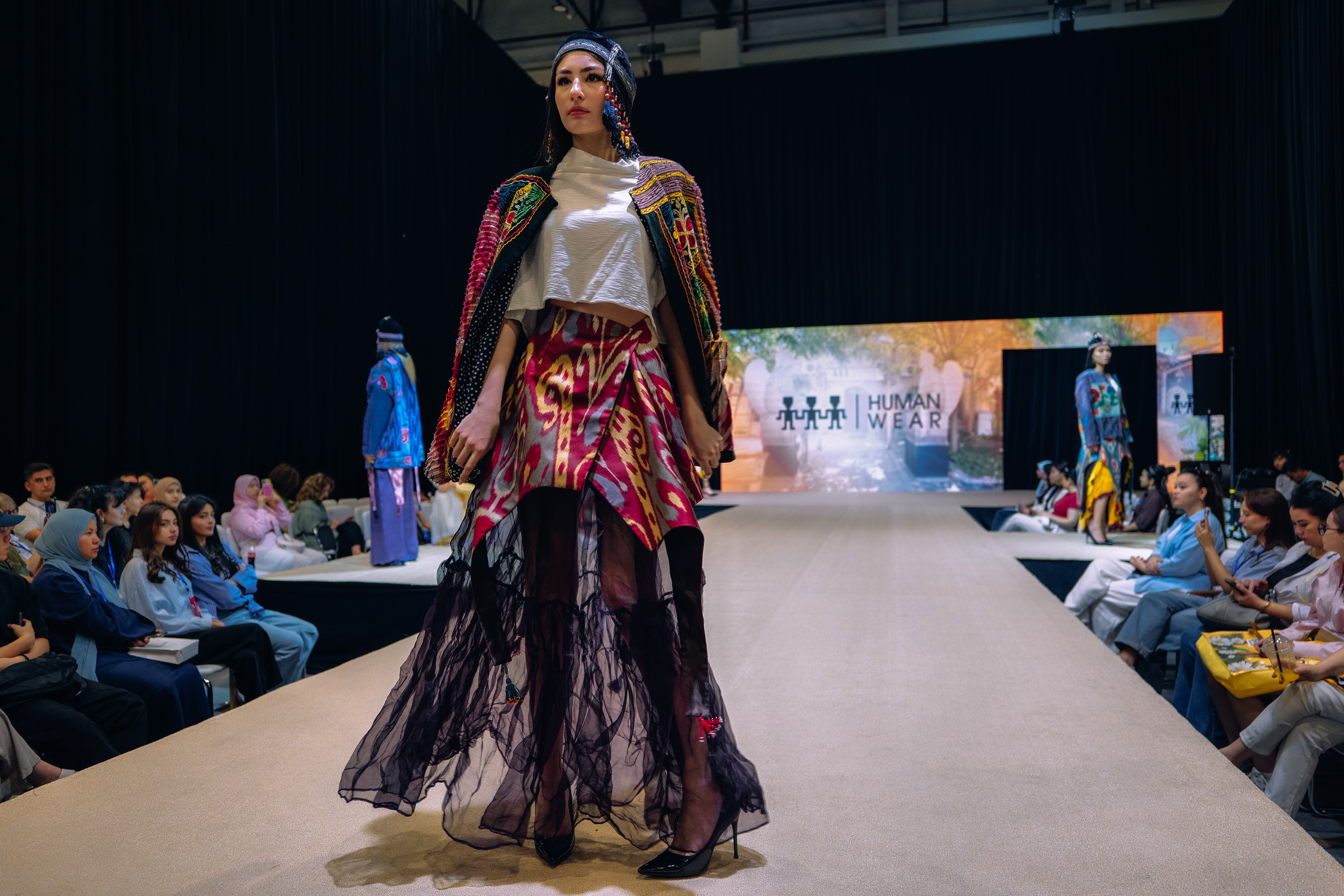 Photo: Ildar Sadykov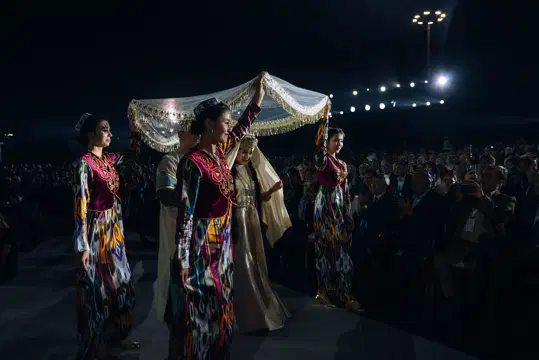
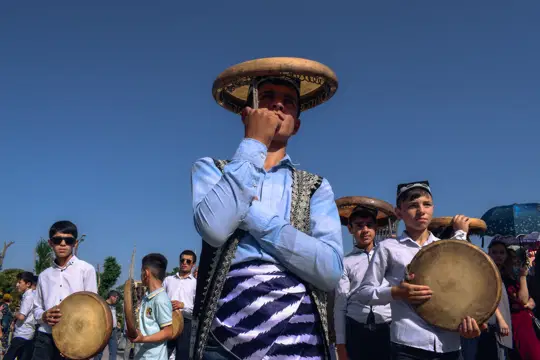
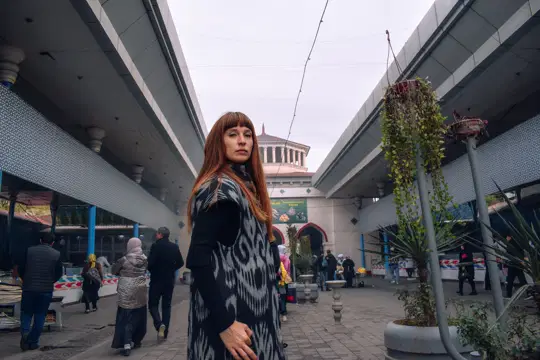
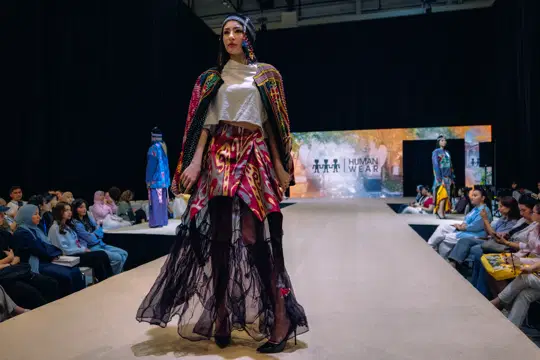
And although the market today is flooded with factory-printed fabrics, often produced in China and imitating the shimmering effects of khan-atlas and adras while surpassing them in practicality, true khan-atlas will forever remain a living symbol of the greatness of human craftsmanship.


