
You can easily tell that the author of this material is a Gen Zer, so a disclaimer: you will encounter Anglicisms here, words like 'vibe' and corresponding slang. But, honestly, it's hard to talk about running any other way today: for our generation, and indeed not just ours, it has long ceased to be merely physical exercise and has become part of the cultural code.
We live in an era where a lifestyle is sold as effectively as any product. Coffee shops once went down this path, and we will draw a parallel with them in this material, because from a mere place to drink coffee, they transformed into spots with aesthetics, merchandise, philosophy, and — most importantly — a community. Almost the same thing happened with running: from an action, it turned into an environment.
In the 21st century, it is no longer enough for us to know what is 'healthy' and what is not: when did stickers on cigarette packs about the dangers of smoking ever stop anyone? Or did posters of athletes urging us to exercise out of awareness of its benefits really motivate us? After all, many things can be beneficial, but what becomes a real habit is what is also beautifully packaged, emotionally charged, and socially supported. Running, in this regard, proved to be an ideal format: it combines benefit, personal effort, visual culture, and discipline, but without a rigid and binding system. Yet, the main thing about it today is the feeling of belonging.
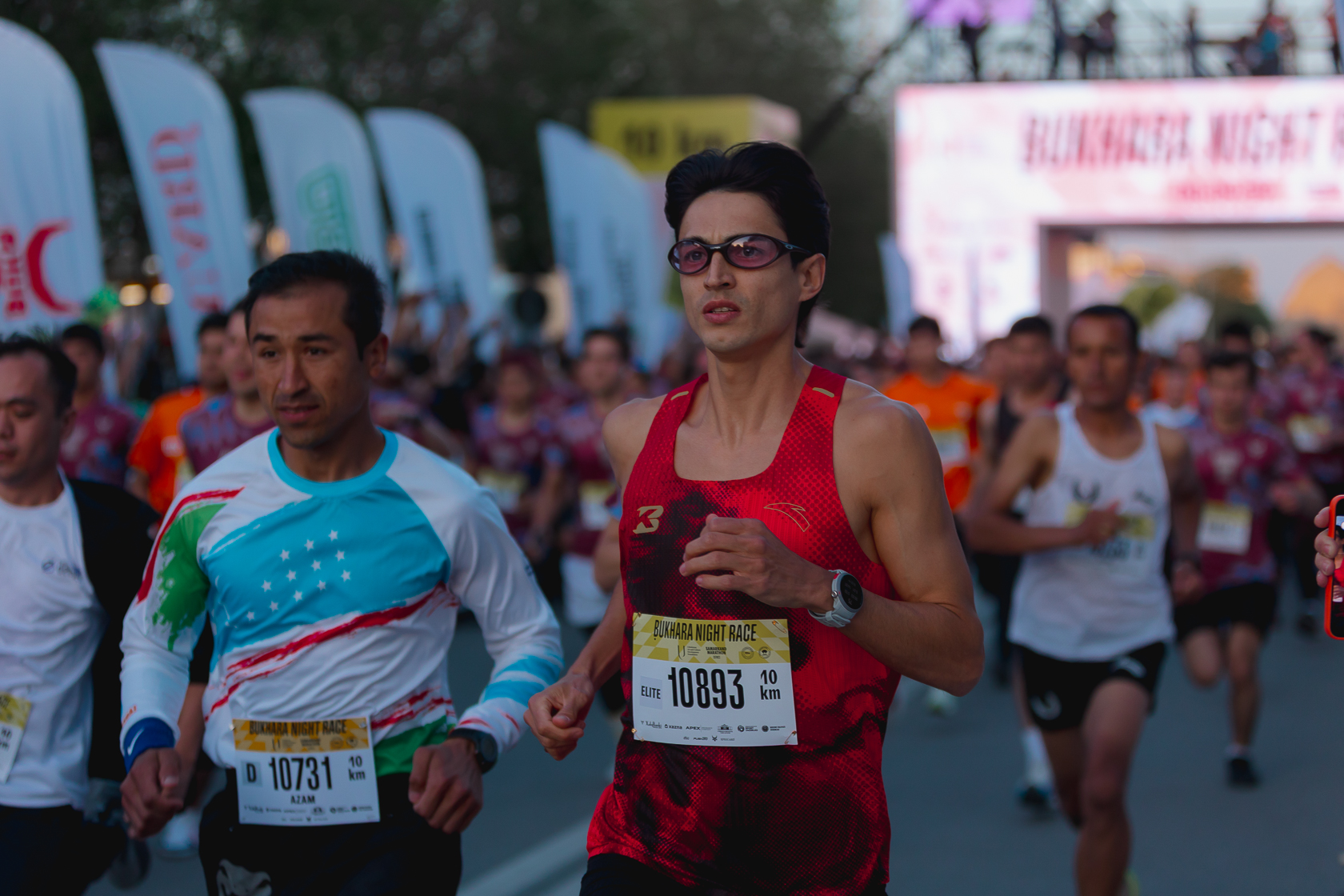 Photo: ACDF Press Service
Generational optics: how Gen Zers and millennials choose a comfortable environment of detachment and separateness, and what does running have to do with it?
Running culture has taken root very well among millennials and Gen Zers, because running does not require an expensive entry ticket, and this is especially relevant now, given the economic situation, so part of the routine must be accessible. Running is very easy to romanticise, and therefore, to sell. Imagine this: you put on a stylish outfit, get up early in the morning, choose a scenic route, ideally catching sunrise or sunset, create a cool playlist, feel yourself overcoming all those long distances, and afterwards reward yourself with a cup of coffee in a nice coffee shop. Plus, on weekends, you meet people who share your views, who are definitely friends with you on Strava and like your reposts from the app about the distance you covered.
But there is another reason — less beautiful, but more significant. Gen Zers and millennials are called the two loneliest generations, generations with the highest personal boundaries, which are already becoming a real fortress. Technology has undoubtedly influenced this: any service today can be obtained without directly addressing a person, yet everyone still has a need for communication, because we are social beings who need to find a place where we can feel not alone.
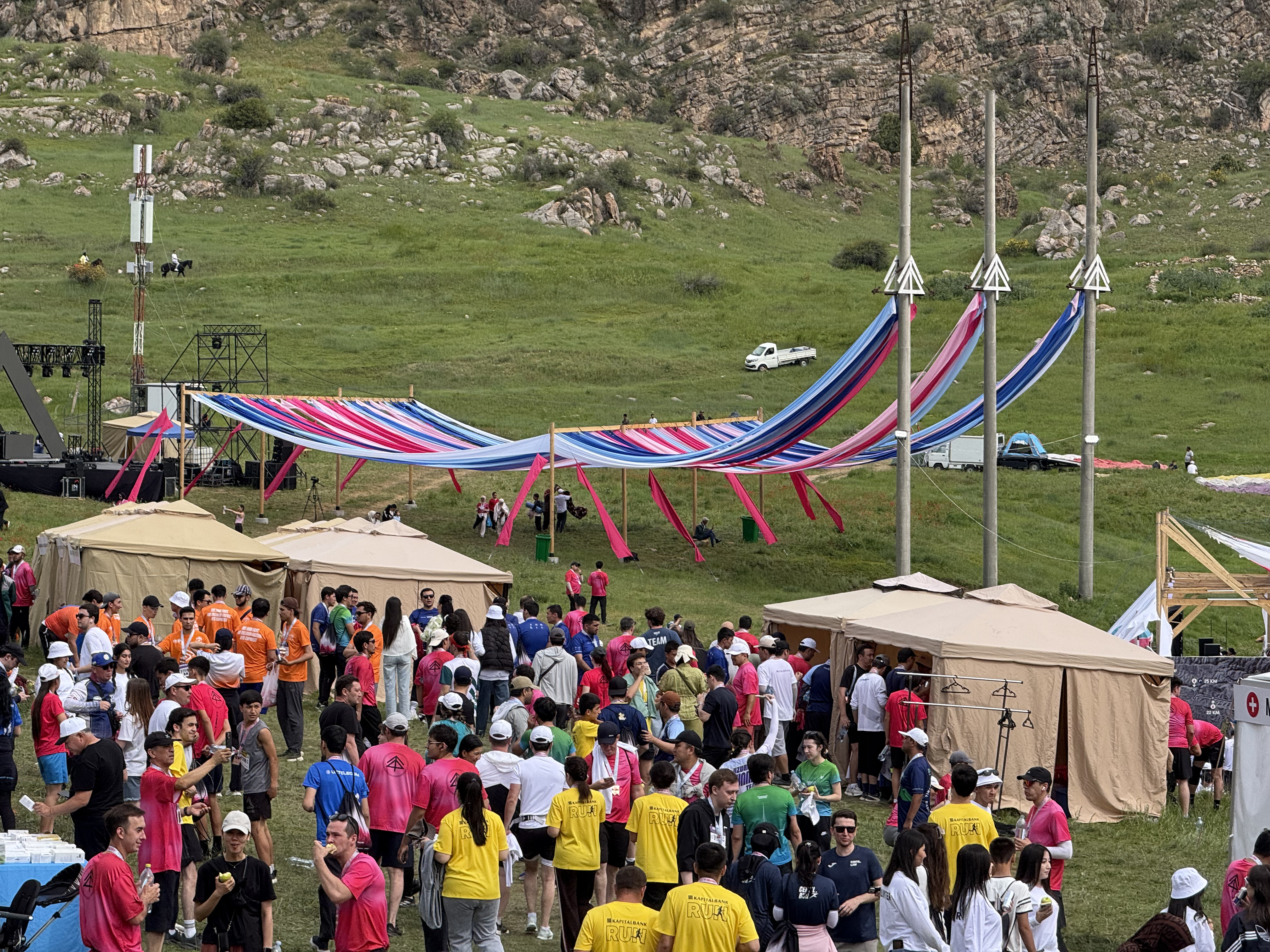 Photo: E'zozakhon Akhmedova
Coffee shops were the first to become such a place. A regular with a laptop, who works for hours, studies, or simply reads a book in their favourite coffee shop — this is not a coincidence, but a formed behavioural pattern of an entire generation. Its representatives have found a shell in the form of a gadget, into which they can retreat at any moment if small talk becomes boring. What matters here is that a community is created around you, close to you in age, mindset, and lifestyle — it is comfortable because it is safe. Even if you like someone, you can simply keep going to that coffee shop and cross paths with them there, but it does not compel you to take action.
Running works on the same principle. It is still about you alone, but the person running next to you, at their own pace and with their own thoughts — is also part of the process and this community. You do not talk, but you are together, connected by a shared idea, a ritual.
Sport for young people also functions as a social signal. It is as if you are announcing who you are, what you live for, what you love, but you do it from a safe distance. Here, running has become part of identity — almost as much a marker of the environment as your favourite coffee shop, playlist, clothing brand, or city district.
Numbers confirm this better than any words. According to Strava, users increasingly cite social connection as the main reason for group workouts: 77% of Gen Zers say they feel a greater connection with others when they see the activities of friends and family, and Gen Zers themselves are 29% more likely than millennials to train with someone at least occasionally. At the same time, Gen Zers are 31% less likely to train 'for health' and more often for results. Les Mills records a similar picture: 36% of Generation Z already exercise regularly, and another 50% would like to start.
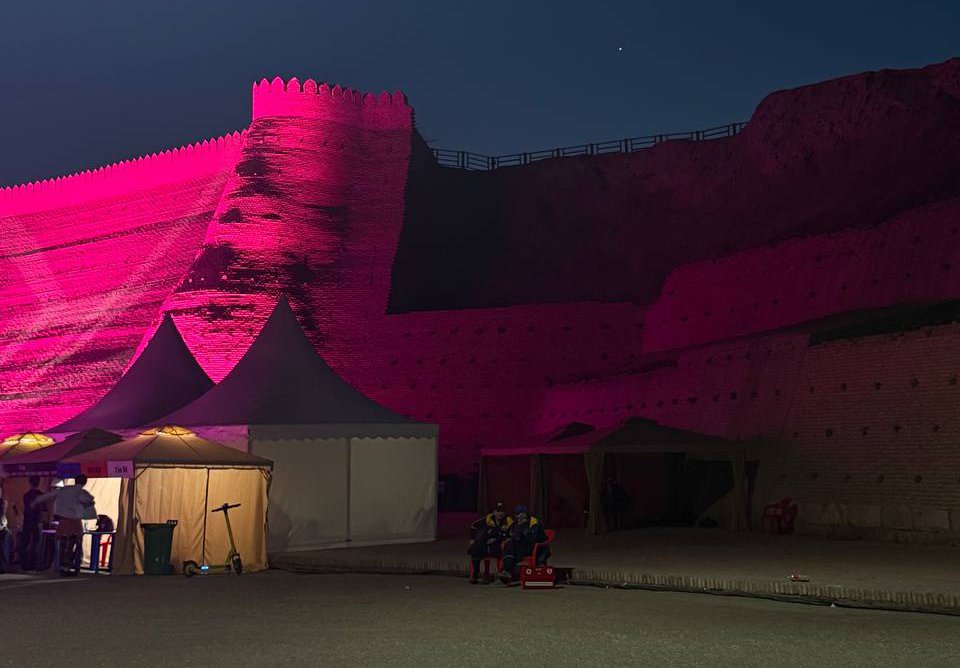 Photo: Kristina Inyakina
How is running sold?
Running is a broader field for marketing campaigns than, for example, a gym or yoga studios, which are limited to mirror selfies and buying cool sportswear. Running is all of that plus a romantic ritual, a community, and a lifestyle that defines part of your identity. It is no coincidence that the word 'runner' (like 'athlete') has long ceased to be a description of an action and has become a characteristic of a person. And, as it turns out, the coffee metaphor works not only on the level of imagery — coffee shops and running clubs are literally merging. For several years now, trendy coffee 'spots' have been creating their own running clubs during the summer seasons. They gather participants at the start and then — after the run — over a cup of coffee.
To avoid turning the text into a notebook of one Gen Zer's observations, we spoke with Daria Rybakova — founder of the running club in St. Petersburg, '9 am running club'.
— What started this running boom and what is really behind it, why now?
Running was popular before, of course. The running movement developed differently in different countries. In America, for example, in the 20th century, women ran amidst riots and scandals. At the same time, in the USSR, women quite vividly demonstrated their physical abilities, achieved results, and competed. If we talk about the present, about times closer to us, we can highlight the pandemic. A time when many people lost access to their usual sports activities, gyms were closed, and they had to find alternatives – even though you could exercise at home, running was something more: you go outside and in a short time you can get a good dose of activity. That's one reason.
But probably an even greater influence comes from brands, technology, and apps. For example, the now-popular Strava, which came up with an easy, convenient way to share your achievements and photos from runs, provided the opportunity to beautifully publish your route and pace on social media. And people around the world easily picked up on it. Then there are the big sportswear brands, which notice an emerging interest early on and start releasing sportswear lines, investing, and sponsoring various competitions. In this way, they present running as a beautiful sporting activity, as a particular aesthetic. And people like it; they want to be part of it.
Daria Rybakova
It's interesting to highlight here that running finds itself at the intersection of several narratives. On one hand, it's a story about the body and the right to control it, and on the other, it's a story about forced isolation, which suddenly coincided with the emergence of a tool that turns a solitary workout into a collective 'coping mechanism'. What began as a way to survive without the usual infrastructure turned into a new format of display – personal and social at the same time.
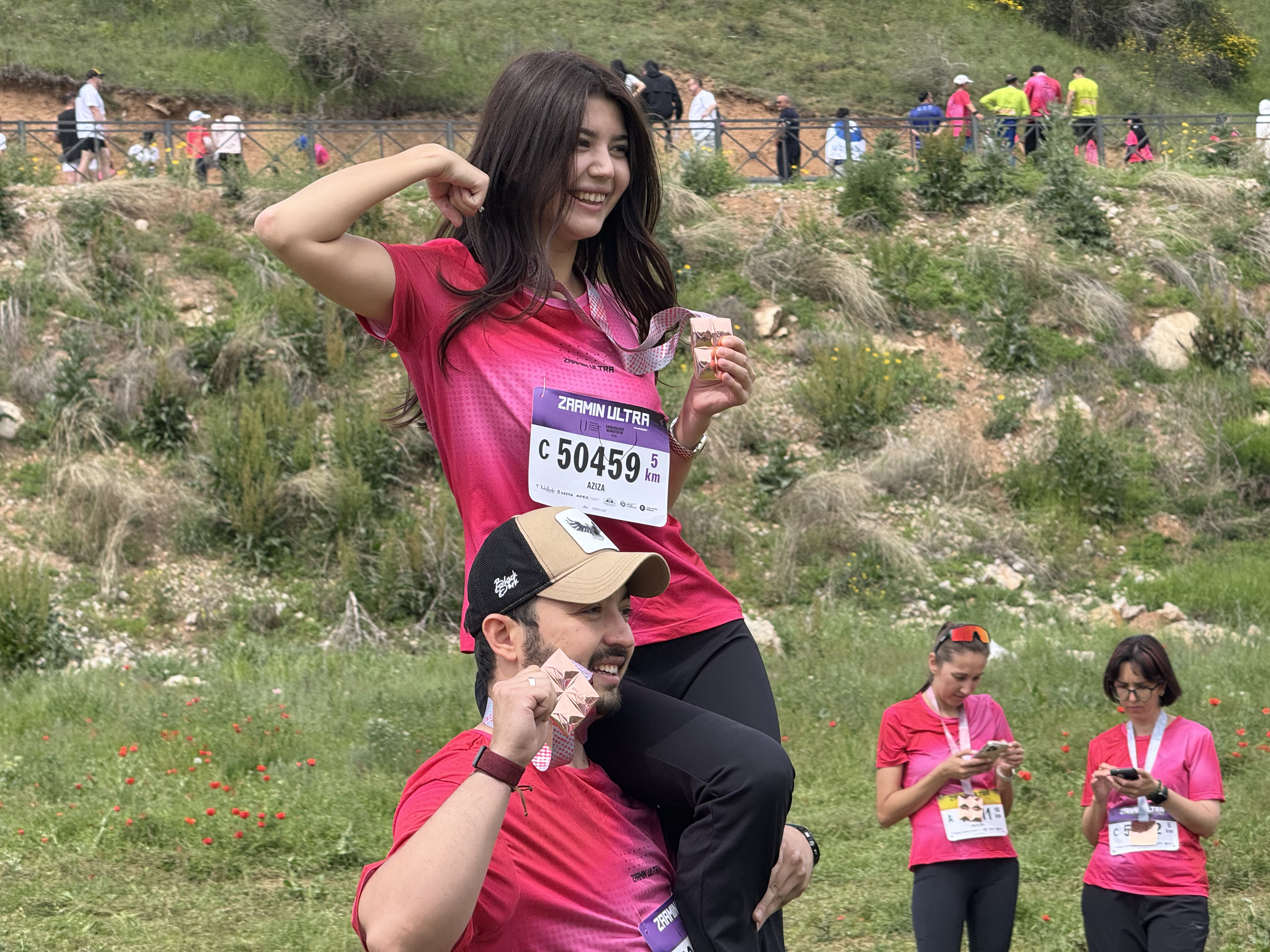 Photo: E'zozakhon Akhmedova
— So, were the trend largely set by brands and marathons?
A marathon is an event that brings huge amounts of money to a city. Getting into the New York City Marathon is very difficult; the number of applicants exceeds the city's capacity. It would seem, where is New York and where is Kazan, but the Kazan Marathon also gathers 40,000 participants, which is a huge number. And all these people come from different countries, book hotels, and spend money. And when you look at the people running these marathons, you see that actually, you could run too. It seems like a very accessible sport that anyone can do, which is true. And so, when you see marathon participants, the idea might creep into your mind to take part in such a race yourself someday. And then you're already part of some public activity, you feel involved.
Running brands create lines, think about how to attract people to buy this clothing, these collections. Running clubs are created, like in St. Petersburg, for example. There are a large number of clubs that appeared as a way to promote running and sportswear. Then clubs appear for other categories – women's; for those who want to run fast; for those who want to run slow; for those who are older, younger. Cafés also realise that they can combine their business with runners. There are tons of such clubs run by cafés. And it all just snowballs, piling on top of each other and supporting this trend.
Daria Rybakova
— What does running give a person, besides health benefits?
If you mean physique and physical health, then yes, that's clear. But there is also psychological health, and running is indeed promoted as a kind of antidepressant or as an opportunity to be alone, an opportunity to think. I've noticed it myself, and I think there are other people who notice that you go out for a run with some problem spinning in your head. And you come back from the run and it seems that the problem has become smaller – this time, this activity helps you unload, helps clear your head.
Daria Rybakova
The word 'antidepressant' here sounds almost literal and is no coincidence. In recent years, the topic of mental health has ceased to be taboo and has become part of ordinary conversation, and running turned out to be one of the few self-care tools that requires neither an appointment with a specialist nor money. In this sense, a run is therapy you can start right now, by stepping out of your house. This is a huge part of its appeal for a generation that is simultaneously very open about talking about anxiety and very much dislikes it when self-care turns into yet another obligation.
But in general, of course, you need to run to socialise, to meet people you might never have met otherwise. Using my own club as an example: we really have people from different professions. You'd think the algorithms promoting the club on social media would find people similar to me – and indeed, they are similar to me, but not in their experience or background, but in their values. I think it's really cool that running unites us all. For example, in other countries – I'm thinking of Bali right now – people use running as a way to network, asking who works where, who does what. They also find useful connections – not just friendships, but ones that advance them professionally.
Daria Rybakova
Uzbekistan
Above, we analysed trends and patterns relating more to questions of era and generations, but now let's look at running, particularly the marathon, geographically. The dynamic we described above is not just a story of Western capitals.
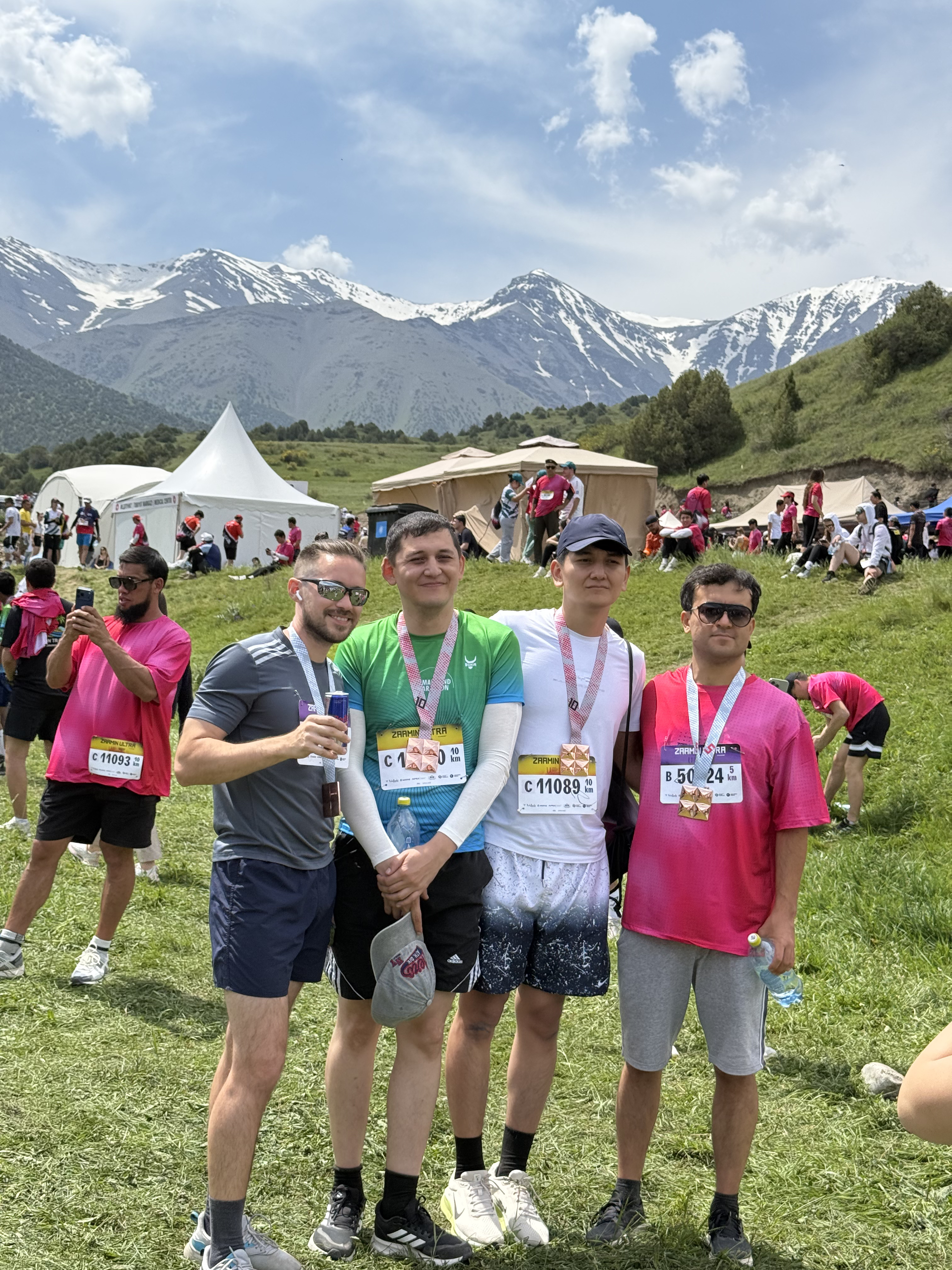 Photo: E'zozakhon Akhmedova
In Uzbekistan, over the last decade, not just an interest in sport has been forming, but an entire ecosystem. By the end of 2024, 7.09 million people in the country were engaged in physical culture and sports. Adult running schools operate in Tashkent. International events gather thousands of participants and become part of the city's calendar.
Samarkand Marathon was launched in 2019 as an international cultural and charitable event. Within this series, several scenarios for the development of modern running culture can be observed.
Bukhara Night Race has been held since 2022 and best demonstrates how running here has become part of the cultural fabric. The marathon engages with the urban environment. It offers a fresh perspective on the historic city: the route winds through ancient streets, architectural ensembles, and tourist landmarks. The city transforms from an object of observation into a participant in the event.
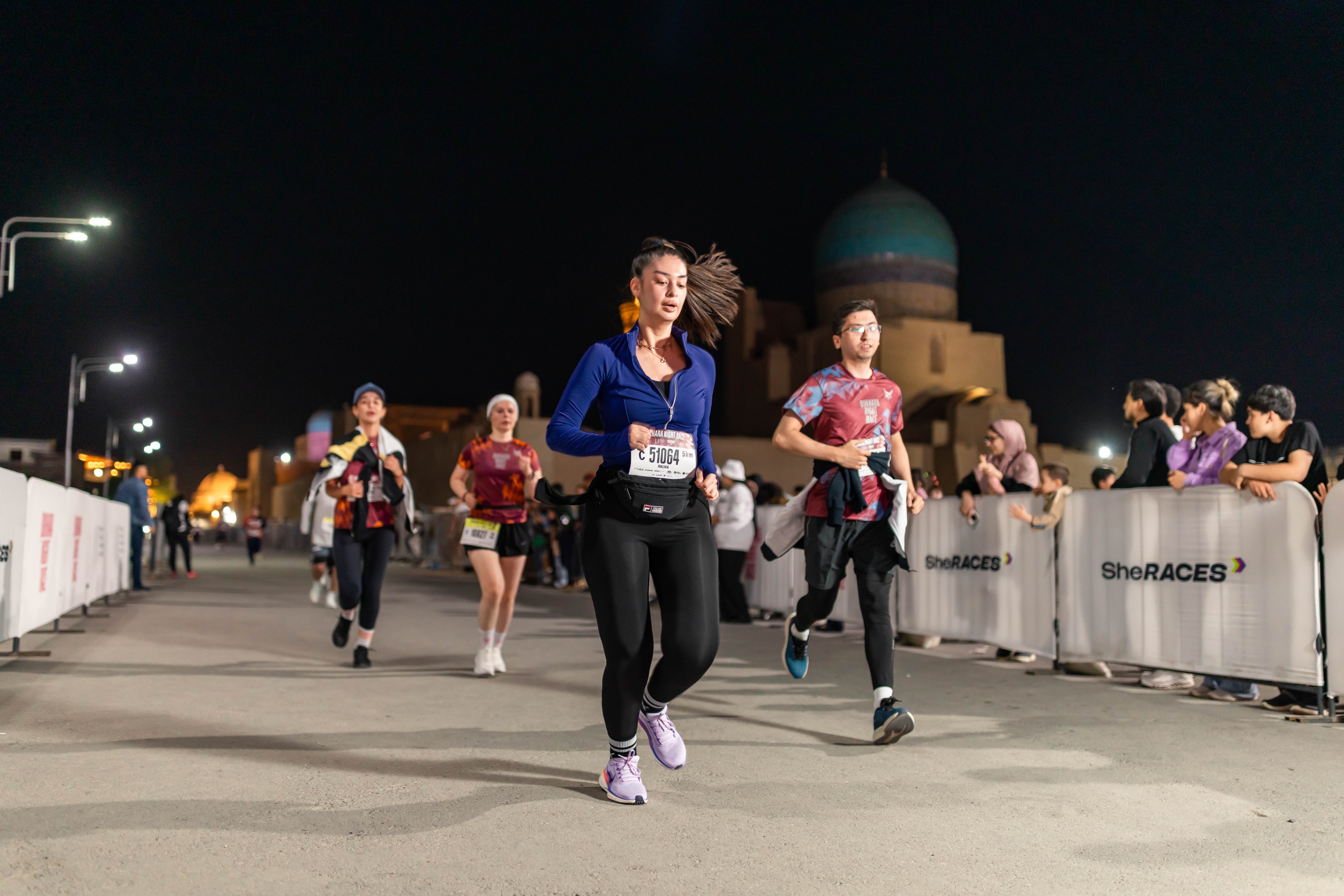 Photo: ACDF Press Office
The choice of Uzbekistan's historic centres can be seen as a way of engaging with space, culture, and the very concept of travel. Looking at the major races of recent years, it becomes clear that they offer participants a complete narrative for experiencing the event. Running becomes a reason to visit a new region, stay for several days, and get acquainted with local history, nature, and people. In this sense, the marathon is closer to a festival, a cultural event, or even a form of modern tourism than to a classic sporting competition.
What is particularly important is that the funds raised from runners' entry fees are directed towards the restoration of architectural landmarks along the athletes' route.
ZAAMIN ULTRA, on the other hand, offers an experience of escaping the city. Participants find themselves in a national park, running along mountain trails, camping overnight, taking part in environmental initiatives, and spending weekends amidst natural landscapes. Here, running becomes part of a growing outdoor culture – a culture of hiking, camping, trail running, and mindful engagement with the environment – the event also featured an eco-run (plogging), where participants cleaned up litter from nature while running.
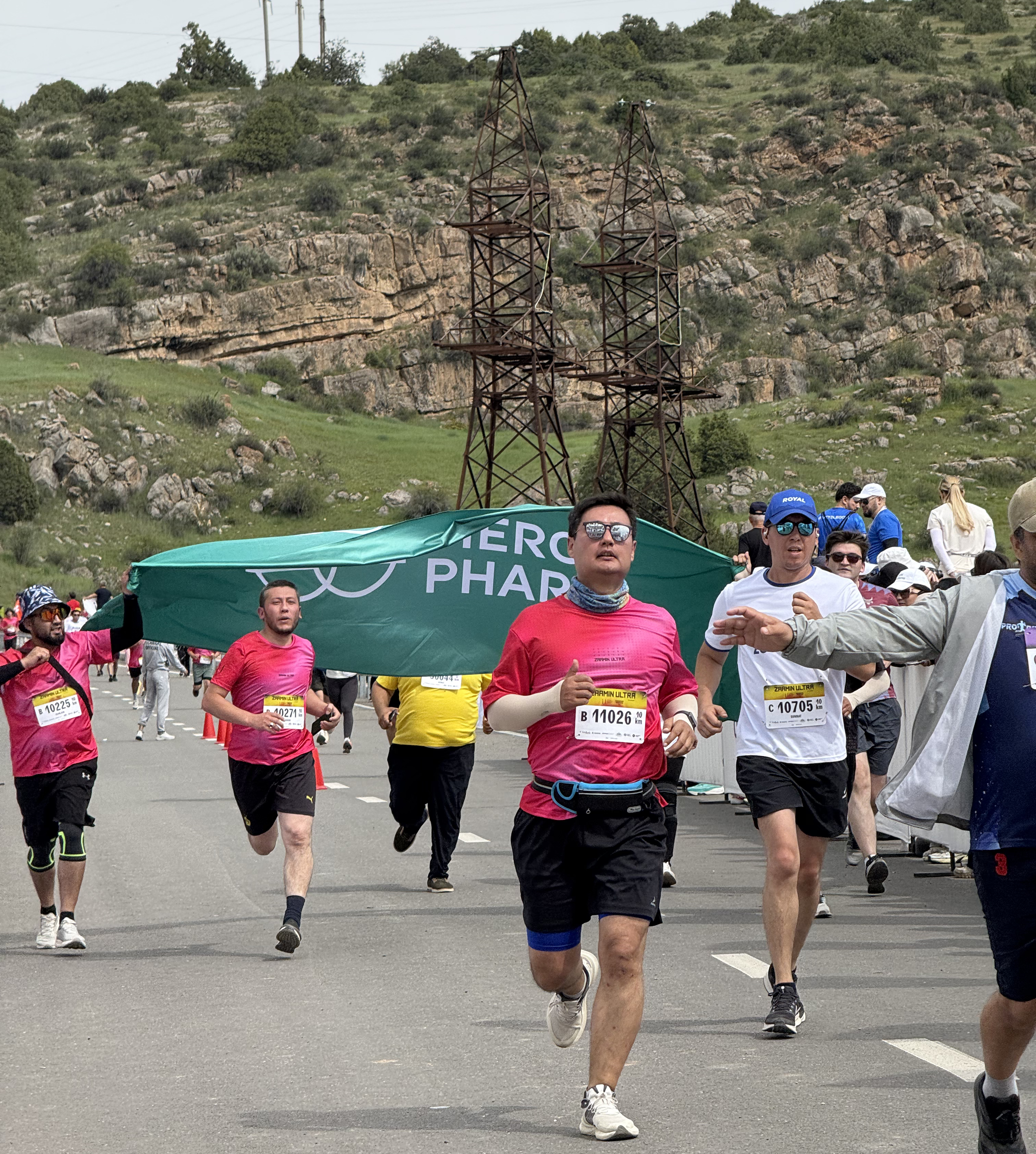 Photo: E'zozakhon Akhmedova
This is why it is increasingly difficult to view marathons solely as sporting events. They become a tool for discovering a place, not to mention the community. In one case, it is a historic city; in another, a natural landscape. And it is at this intersection of sport, tourism, and culture that what can be called Uzbekistan's new running culture emerges.
This is particularly significant for a country that has been actively rethinking its tourism potential in recent years. While travel to Uzbekistan was once primarily centred on visiting historical monuments and bustling sites, new formats for experiencing the country are now emerging.
Perhaps this is the main paradox of the current running boom. Formally, people come for a medal, a personal record, or a new distance. But in reality, they are increasingly coming for an experience. For the sensation of a nocturnal Bukhara filled with music and thousands of runners. For a sunrise in the Zaamin mountains. For the chance to be part of a large community of people who choose running as a way to explore the world. And perhaps this is why marathons are so in demand today: they offer not just sport, but an experience that is difficult to obtain in any other way.


