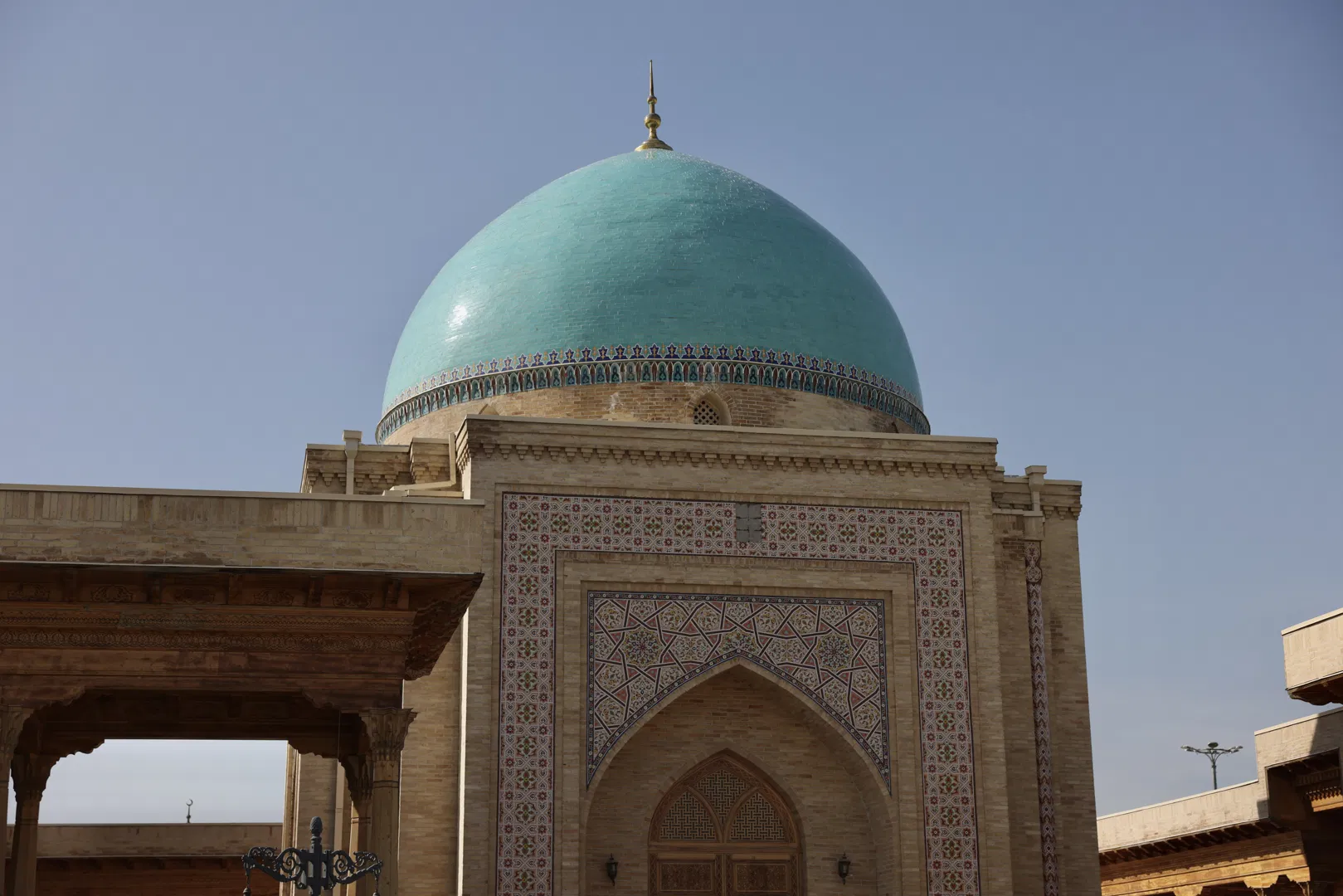
If you look closely at Tashkent's buildings, the city begins to tell its story through lines, stars, and symmetry. Let's examine three key monuments through the geometry of their patterns.
In previous articles, we discussed the significance of ornamental patterns in Tashkent and learned how to study them independently:
The pattern of civilization from ornamentsEvgeny Sklyarevsky’s Guide to the Ornamental Heritage of Tashkent.mag.humodoc.com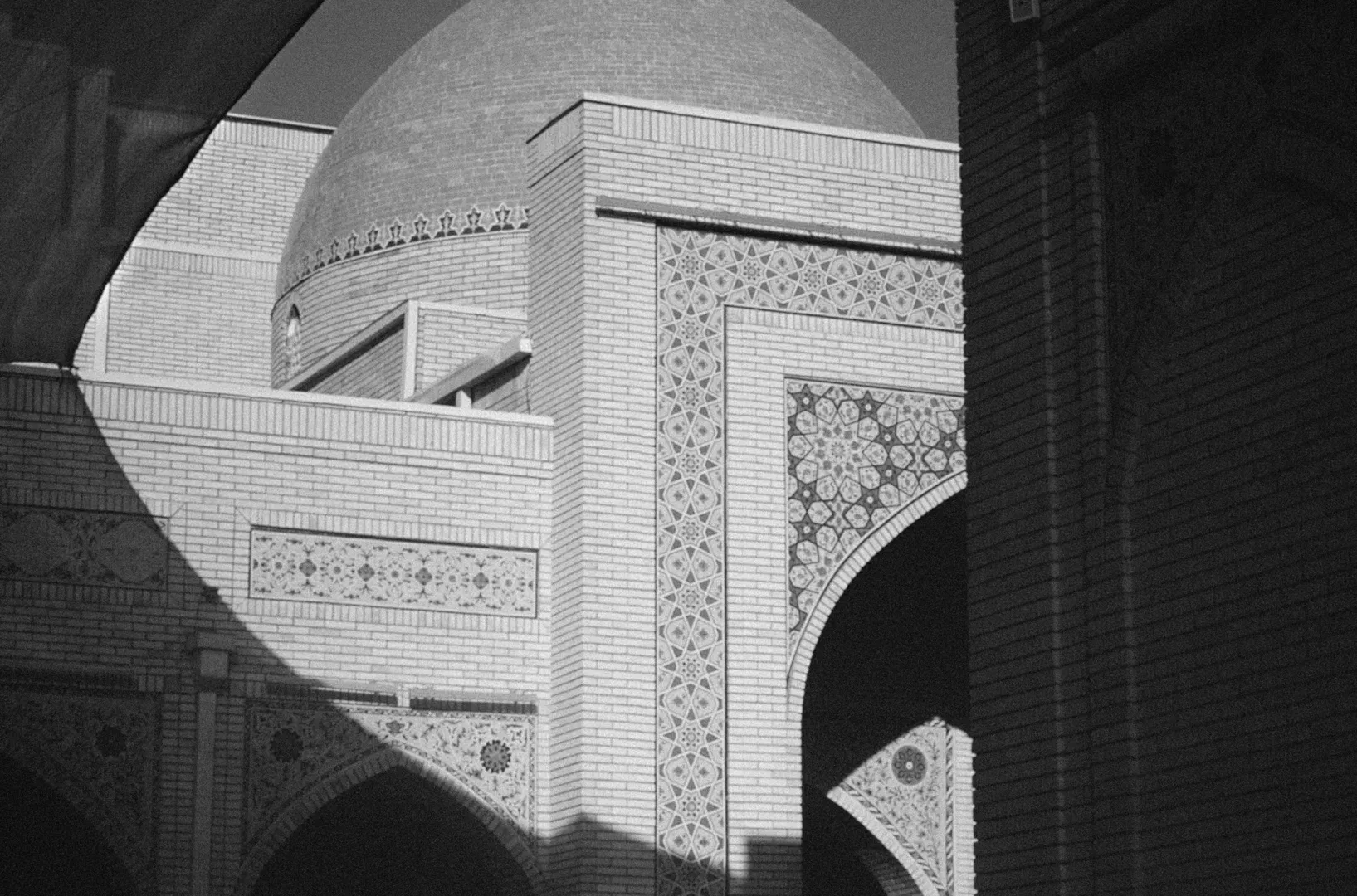 How to Read Islamic Ornament: A GuideHaving discarded, on the advice of experts, the seven introductory paragraphs that discuss the importance and necessity of the article, we proceed to delve into Tashkent ornamentsmag.humodoc.com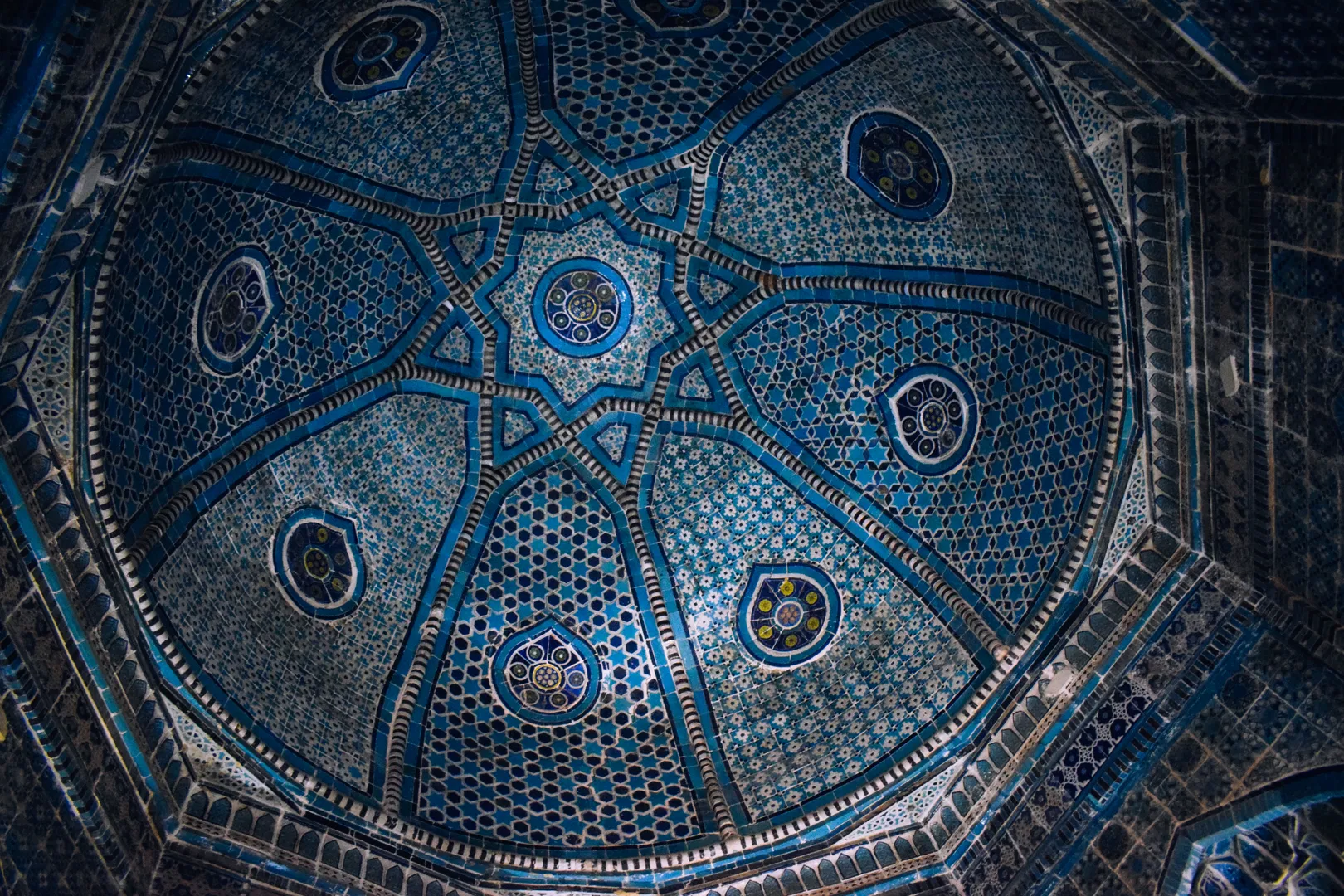
Today we will continue our exploration.
Mausoleum of Yunus Khan
This source of ancient ornamentation was built in the 15th century in honor of Yunus Khan of Moghulistan (1415–1487), who, according to contemporaries, was a gifted individual, an influential politician, ruled the territory of Tashkent and the Fergana Valley, and remained in the memory of descendants as a wise ruler.
Let us also note that Yunus Khan was a descendant of Genghis Khan, and his grandson was the great commander and poet Zahiriddin Babur.
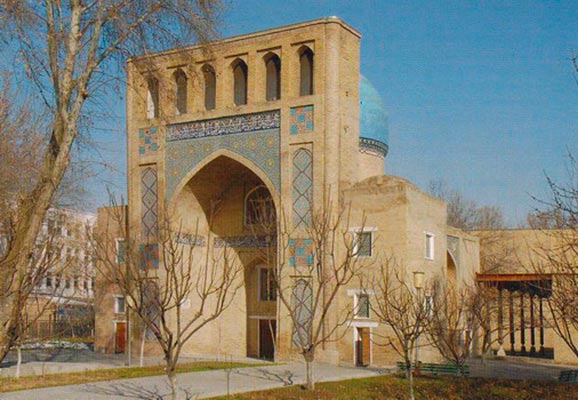
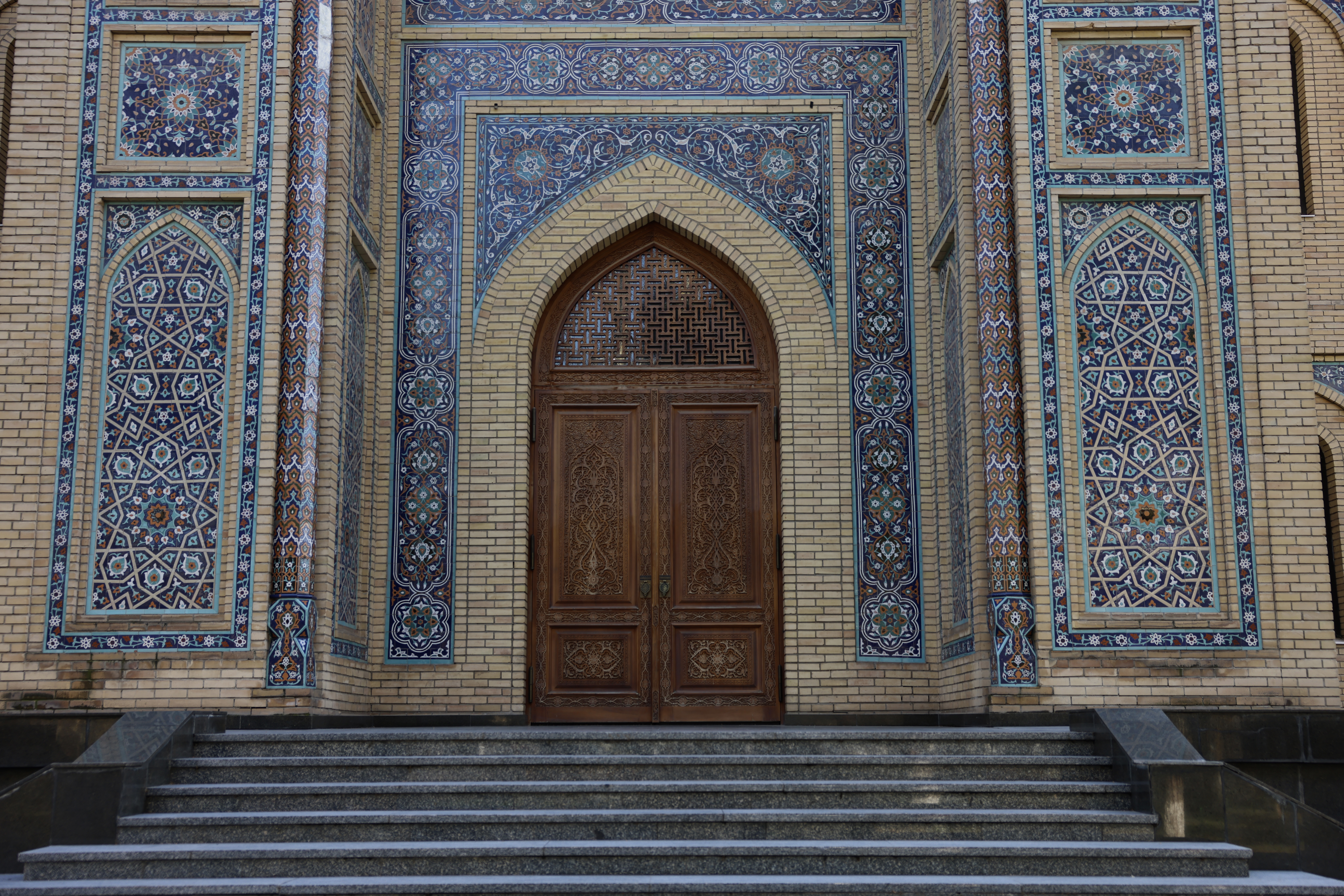
The Mausoleum of Yunus Khan is one of the largest preserved structures from the 15th century, featuring a pointed arch portal and a double dome. In its time, the mausoleum served as a shelter for dervishes and pilgrims, who were accommodated in special cells. Interestingly, there is no actual burial in the mausoleum, and its location is unknown, but the mausoleum preserves the memory of the ruler.
The entrance portal is decorated with ornamentation, calligraphic epigraphy, and a carved door.
The ornament, similar to the one at Kukeldash, features decagonal stars and hidden lines, suggesting that both ornaments were created by the same craftsmen during the 20th-century restoration.
Additionally, the Kukeldash Madrasah and the Yunus Khan Mausoleum are united by identical panels on the main portal on either side of the entrance. On them, a square is divided into nine small squares, and religious symbols are inscribed within them, which we will discuss in future publications.
Unfortunately, the mausoleum is located on the grounds of the Islamic University and access to it is restricted.
Kukeldash Madrasah
As one of the capital's main adornments, it was built five centuries ago on a high hill and still towers over the Chorsu Square. And this is despite the appearance of GUM and the recently demolished Chorsu Hotel, on the site of which a giant modern complex will be erected.
According to various sources, Kukeldash was built in 1570 by the hakim (governor) Dervish Khan, who was the milk brother ("kukeldash") of the khan himself, which is immortalized in the name. Over its centuries-long history, the building has changed, partially dismantled for bricks and later restored. In the 18th century, it served as a caravanserai for visiting merchants.
As a result of the earthquakes in 1868 and 1886, the building was damaged, the majestic portal collapsed, and the structure stood without a portal for almost a century. In the 1950s, a summer cinema operated in the remains of the building.
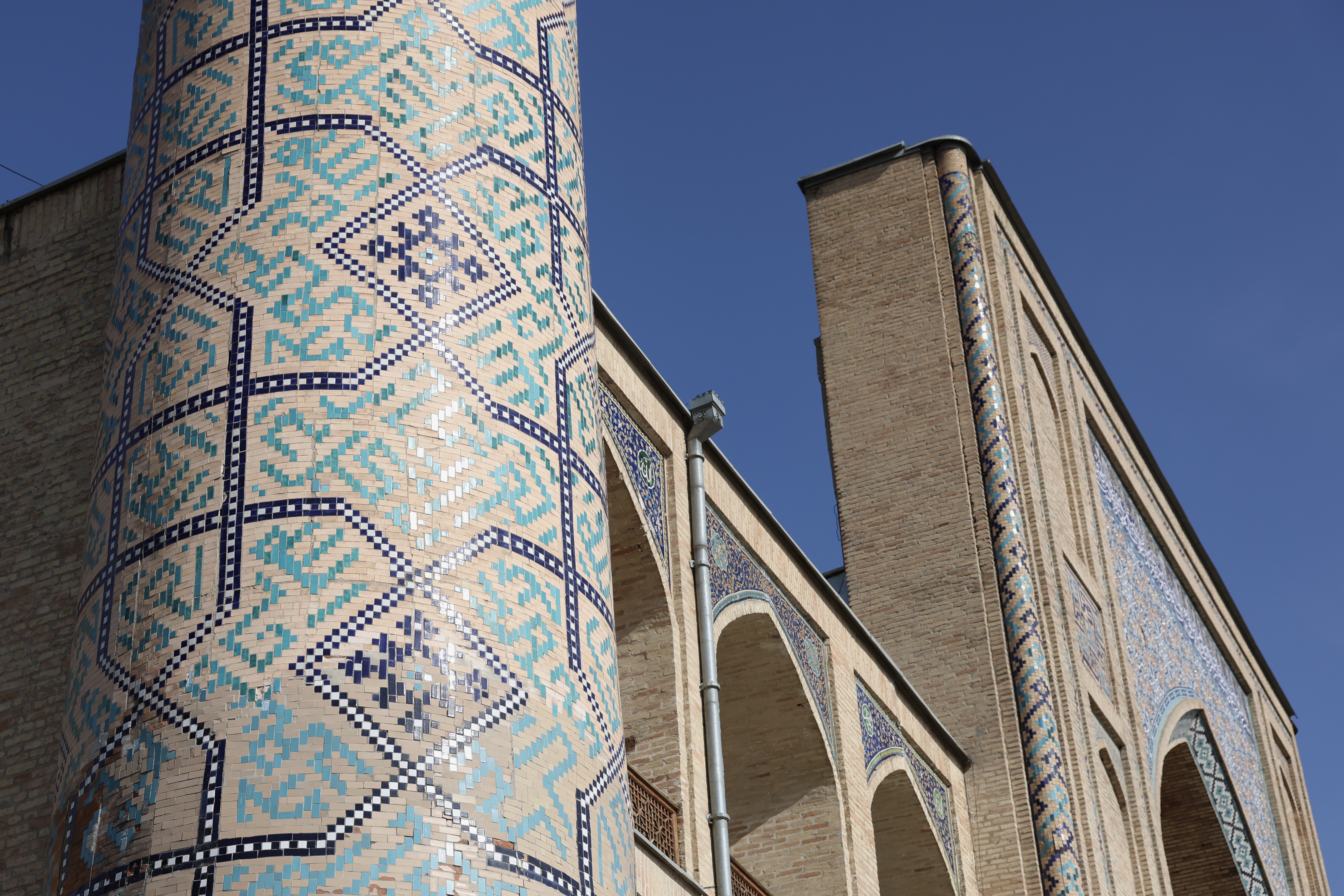
The portal was restored in the 1960s of the last century, a second floor with cells was added, and in the 1970s, the minaret towers on the sides of the facade were restored.
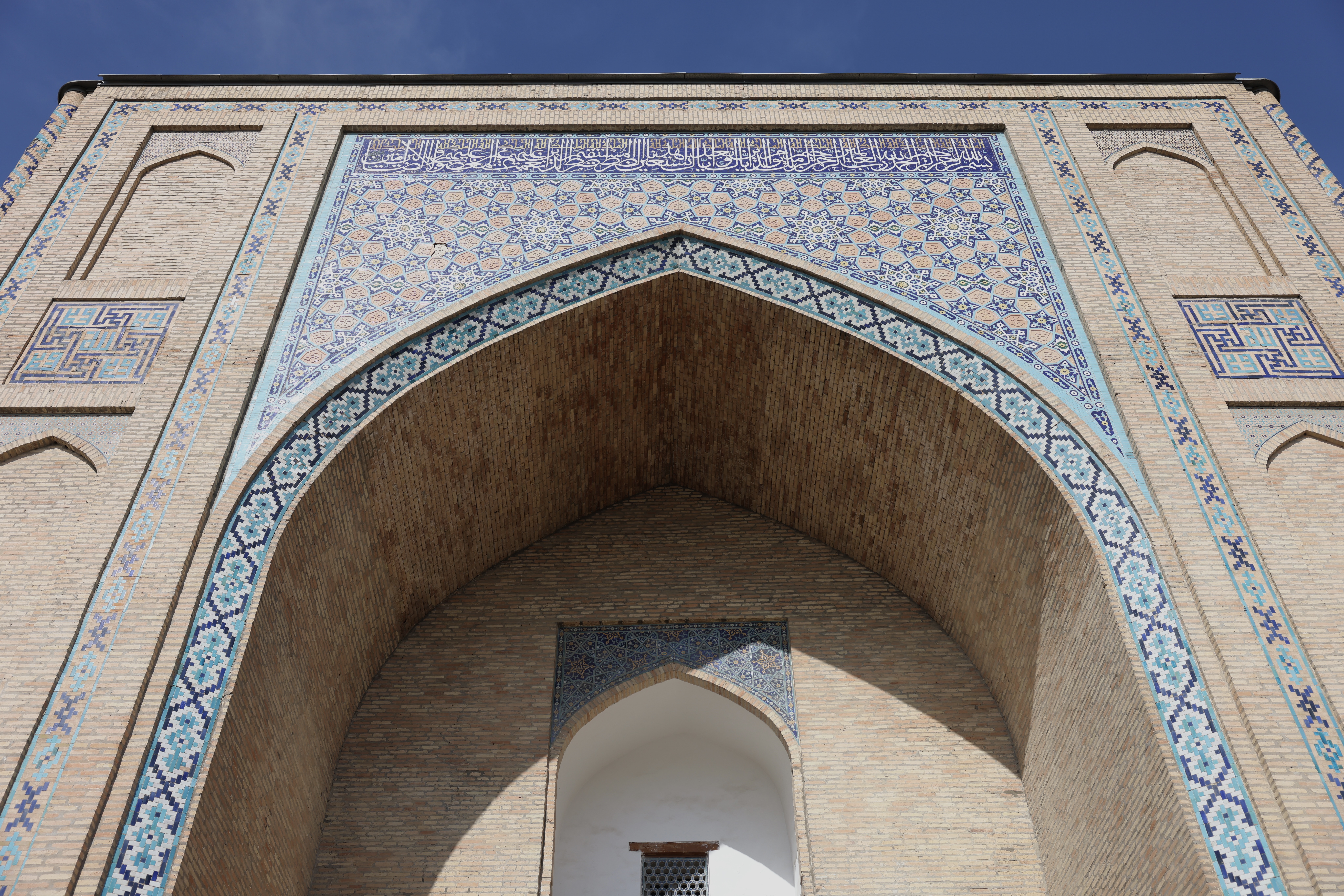
The currently restored Kukeldash is now used for its original purpose - the madrasah houses an Islamic secondary specialized school ("Kukeldash" Islamic Specialized Secondary Educational Institution). However, the building remains the number one attraction for tourists and lovers of ornamentation, restored according to ancient sketches.
On the external portal, decagrams are surrounded by pentagrams, with the ornament executed without lines. They are certainly present, as it would be impossible to construct them otherwise, but they are not explicitly delineated, which makes the ornament resemble a carpet.
On the inner side of the portal facing the courtyard, there is almost the same pattern, but the bright yellow stars are arranged on a dark blue background. Those who have been to Tbilisi are surprised to see the same design at the entrance to the sulfur baths. Local residents explain that this design was made by craftsmen from Uzbekistan.
Suzuk-Ota Complex
The next structure with ornaments is also located near the "Chorsu" market. It was built many centuries ago in honor of the righteous Hazrat Sheikh Mustafoqul Khodja, the grandson of Khodja Ahmad Yassawi, the founder of one of the Islamic movements. Legend has it that Ahmad Yassawi had a particularly warm affection for Mustafoqul. Every time he saw him, his grandfather would joyfully exclaim:
Suzugim — my dark-eyed one — come more often!
Thus, the name "Suzukota" became established among the people. Mustafoqul studied and traveled extensively before settling on the outskirts of Tashkent. Here, he gathered masters from different cities, and together with the local residents, they developed this area.
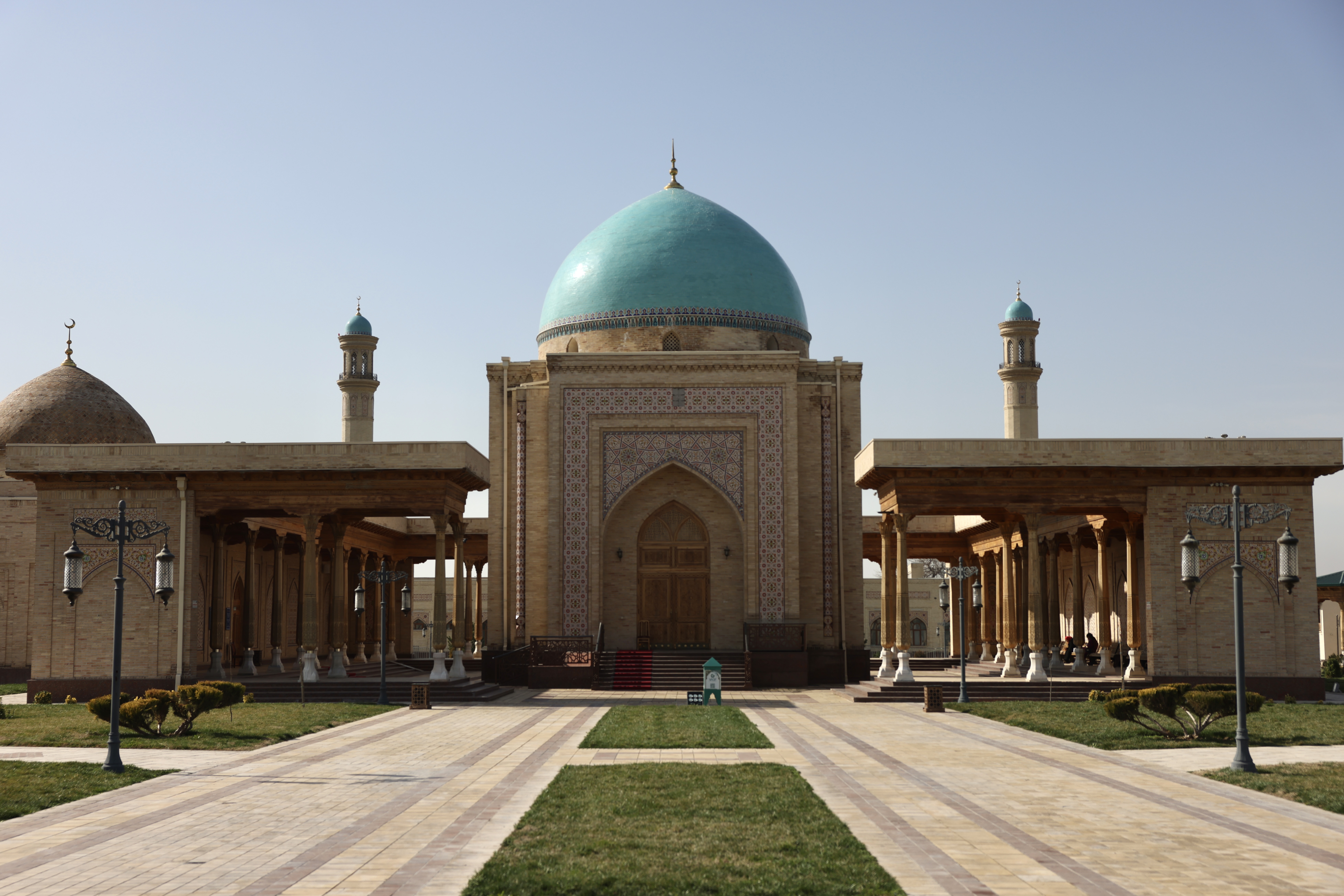
Over time, through the labor and wisdom of the faithful, this abandoned place transformed into a flourishing mahalla. Suzukota lived a long and meaningful life and passed away in 1217. According to legends, the mosque in honor of the righteous man was built by order of Amir Temur in 1364. It survived until the 20th century; during the Soviet era, it served as a warehouse and a chemical plant. After gaining independence, the mosque was returned to Muslims, restored, and has been operational since 1996, inviting the faithful to prayers. The mazar-mausoleum of the righteous man was located near the mosque.
In 2017, Shavkat Mirziyoyev proposed to renovate the mosque, and two years later a new complex emerged, combining the mausoleum and the mosque and adorned with a special ornament.
The distinctive feature of all ornaments in this collection is the beige color, as opposed to the widespread turquoise. Narrow but contrasting borders are visible, creating a conditionally three-dimensional effect at intersections. Each of the three octagonal stars is surrounded by golden pentagons (for this, the stars are slightly distorted), and to fill the plane, the pentagons between the stars are paired and slightly compressed. The overall appearance is dignified and festive.
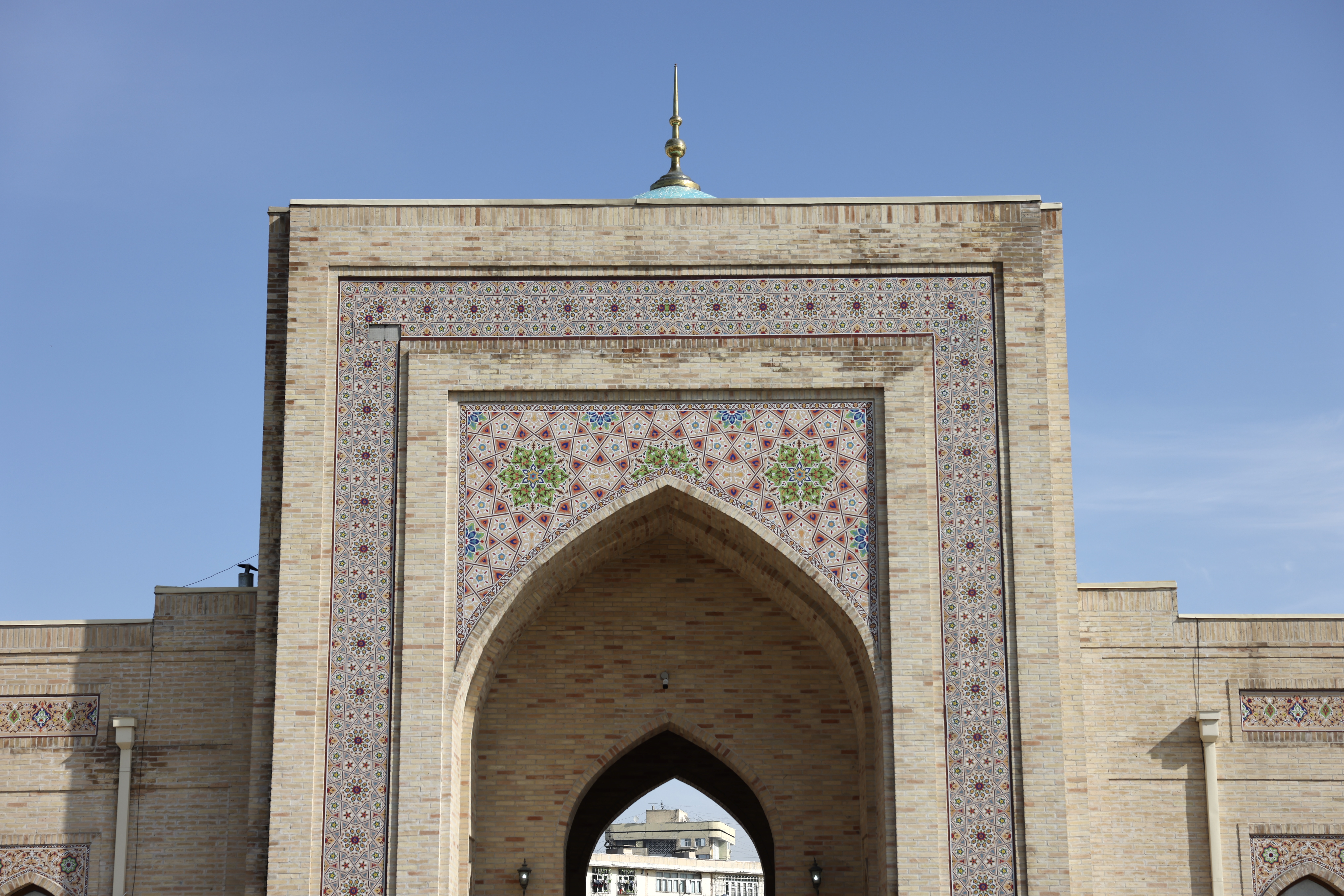
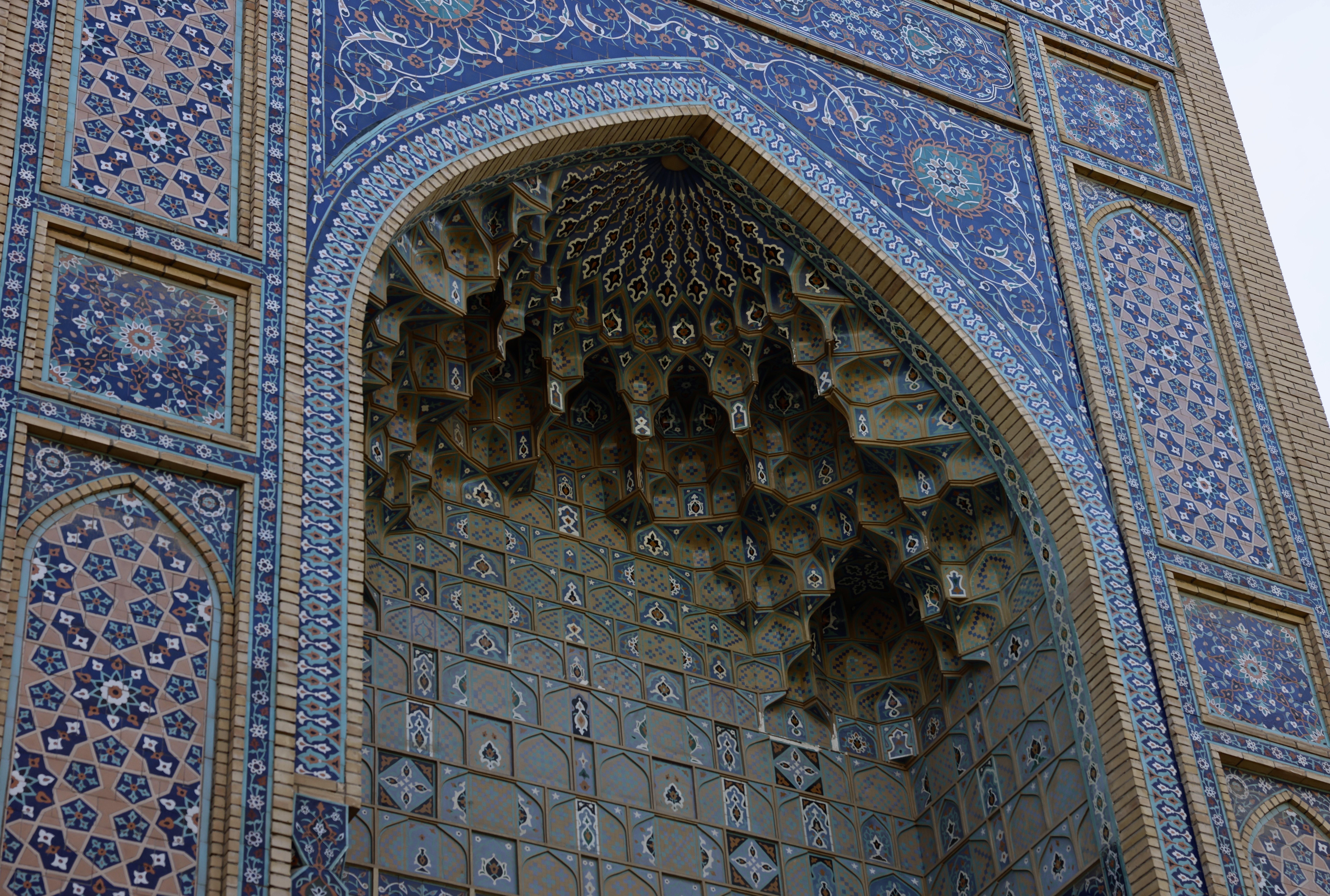
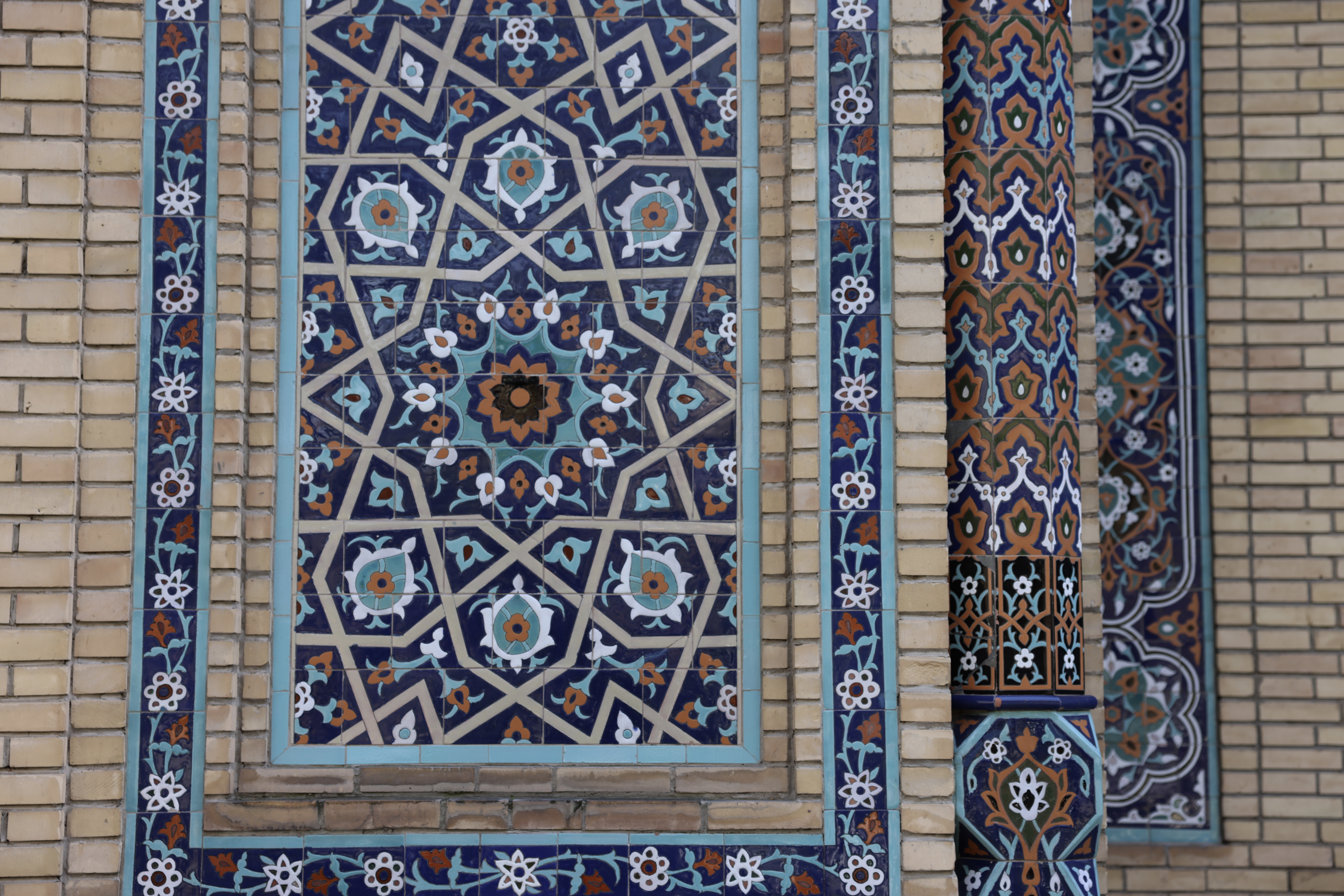
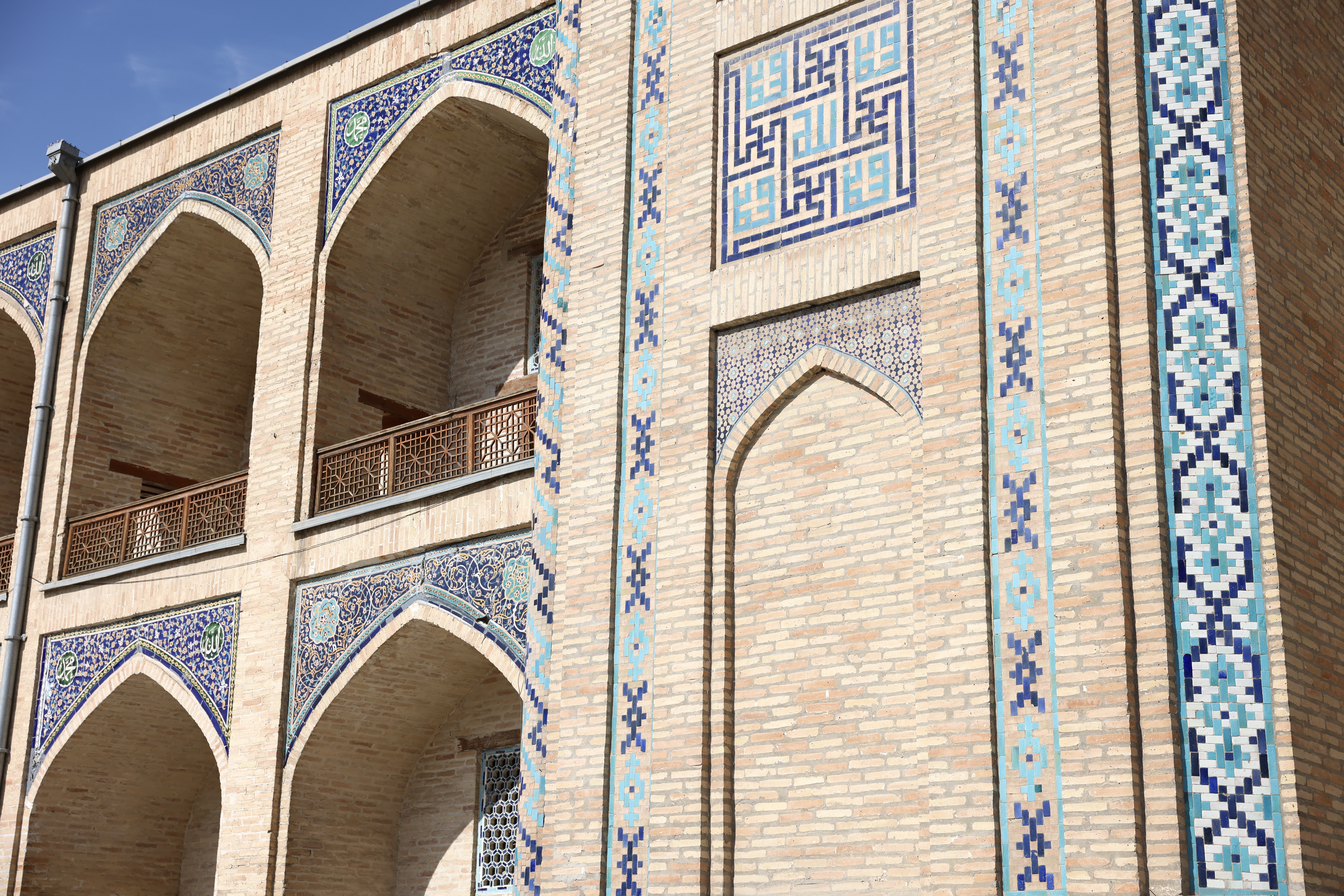
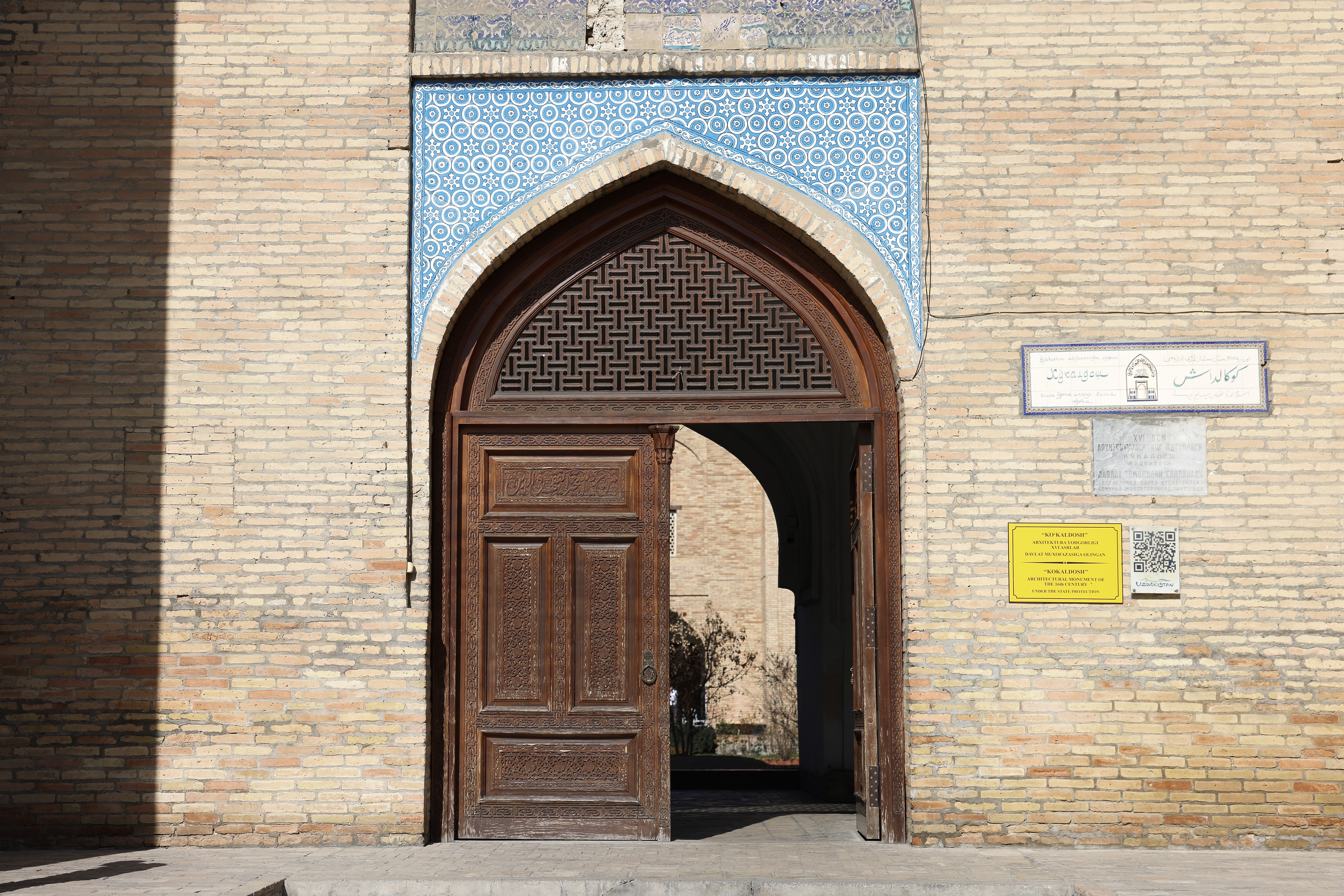
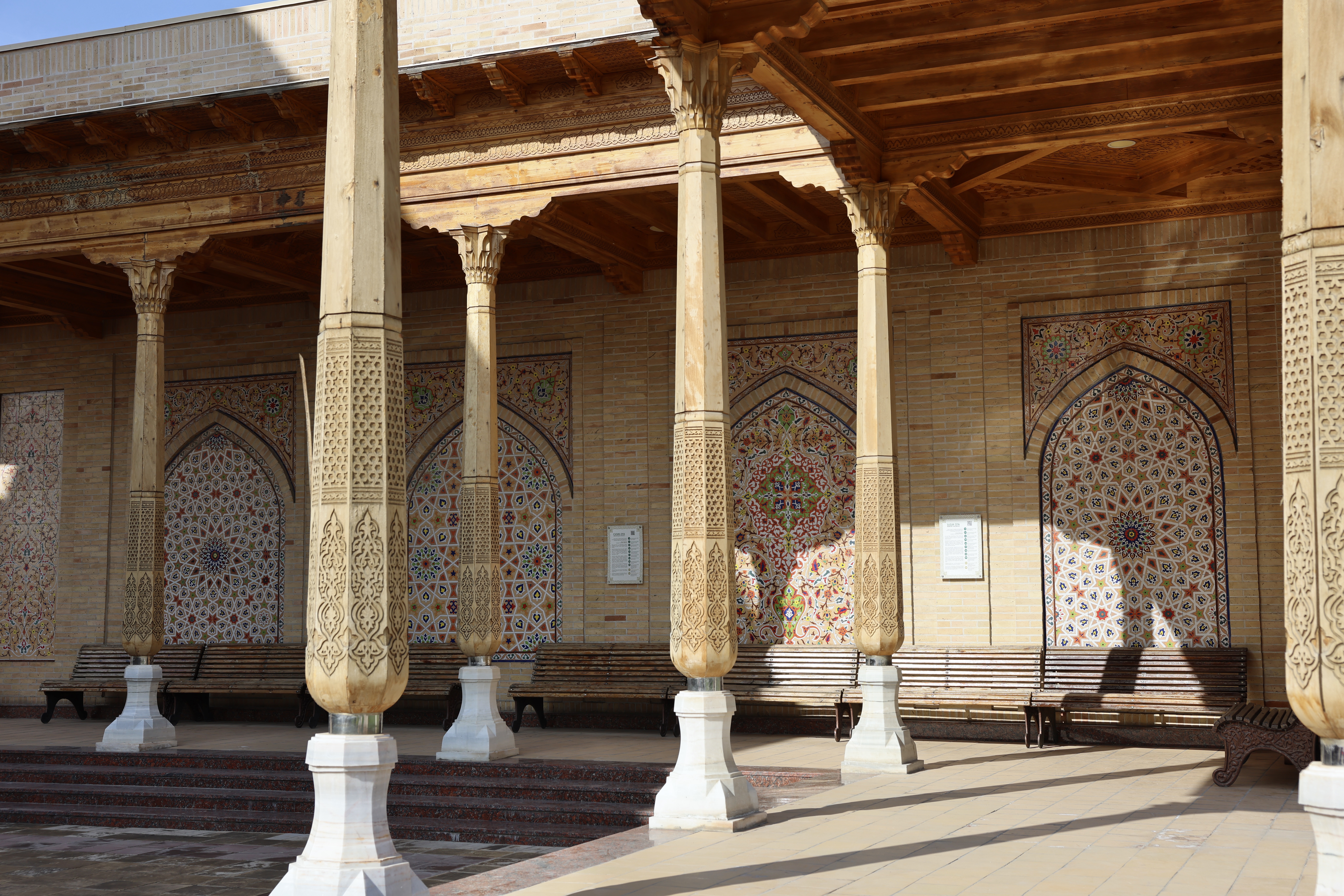
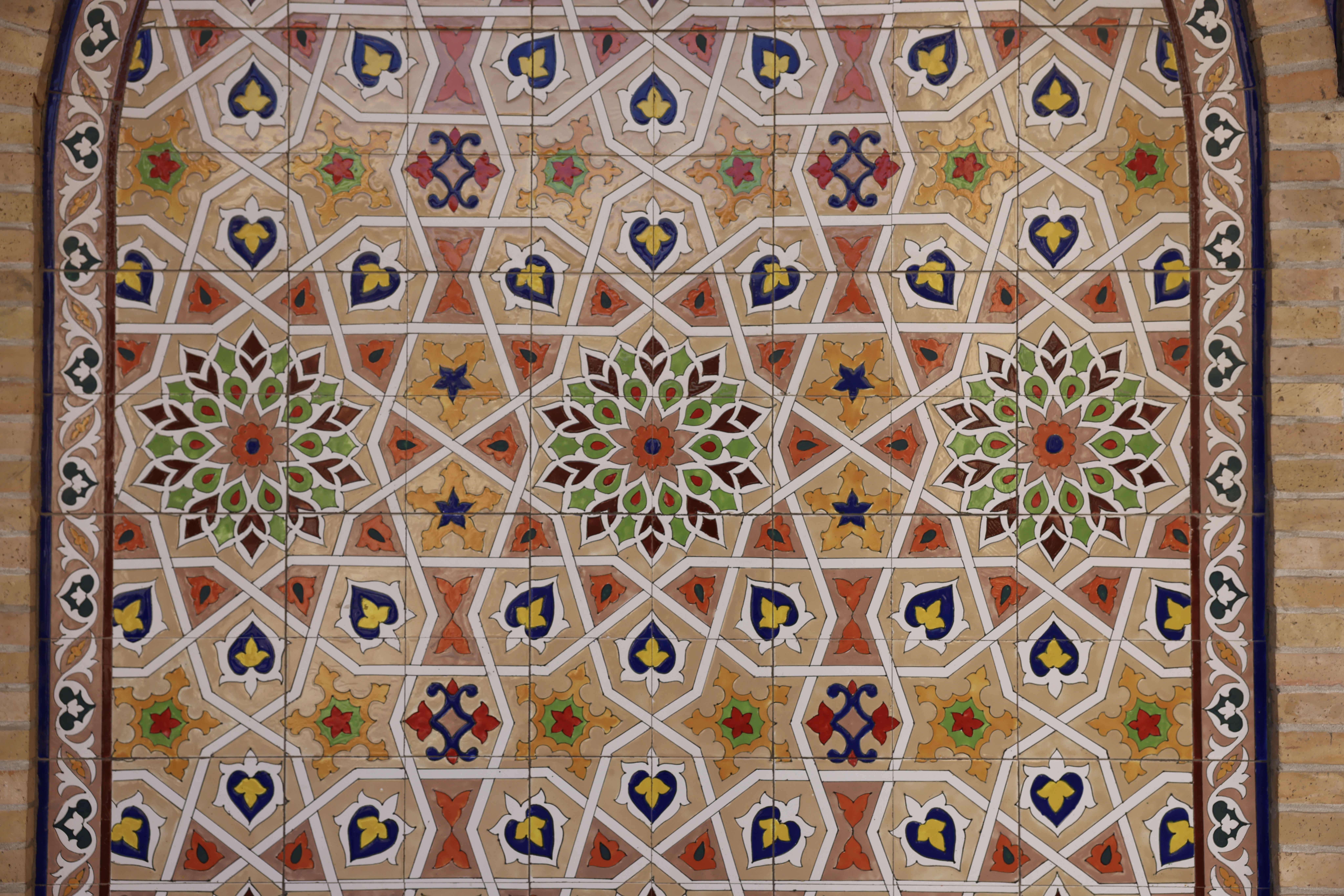
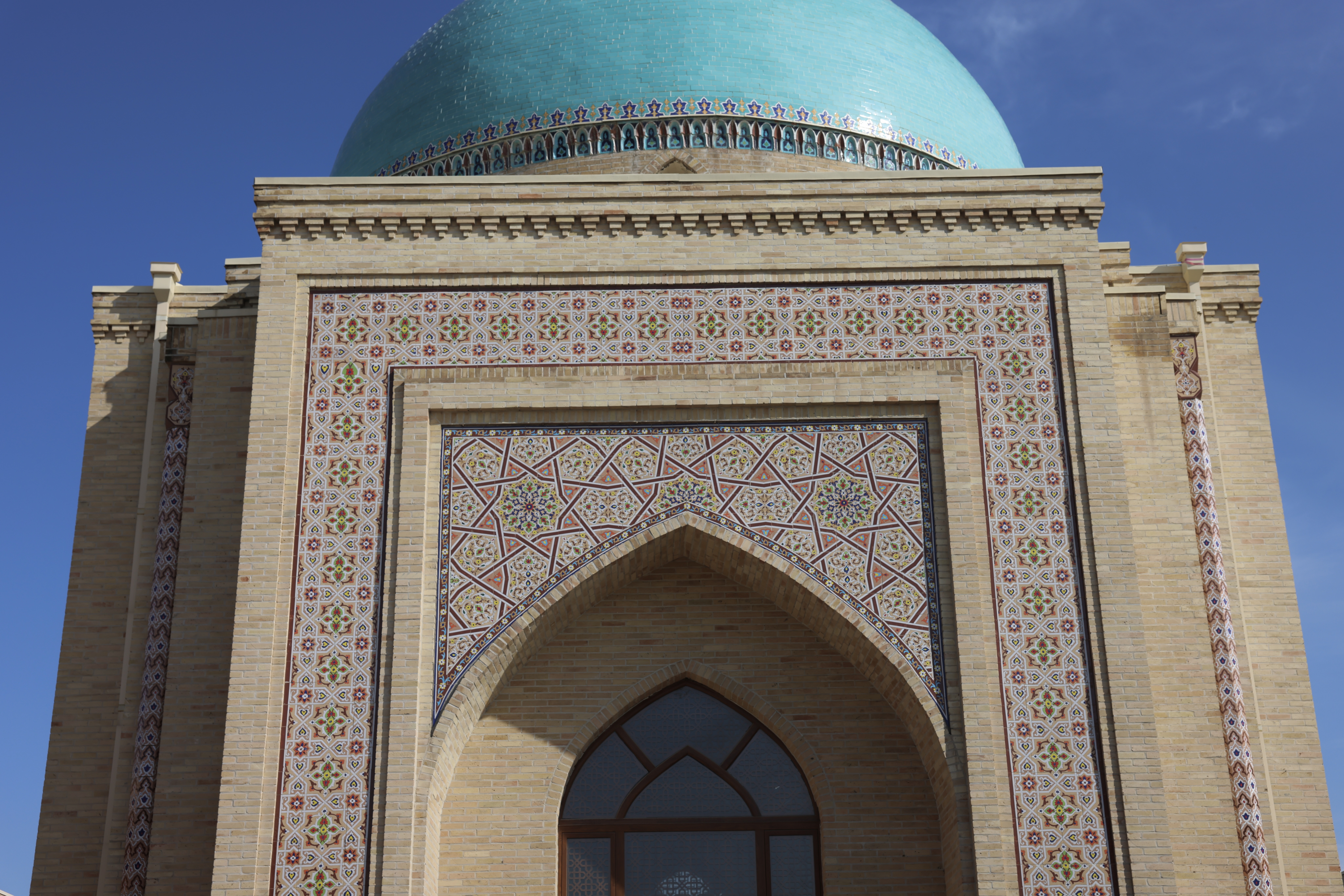
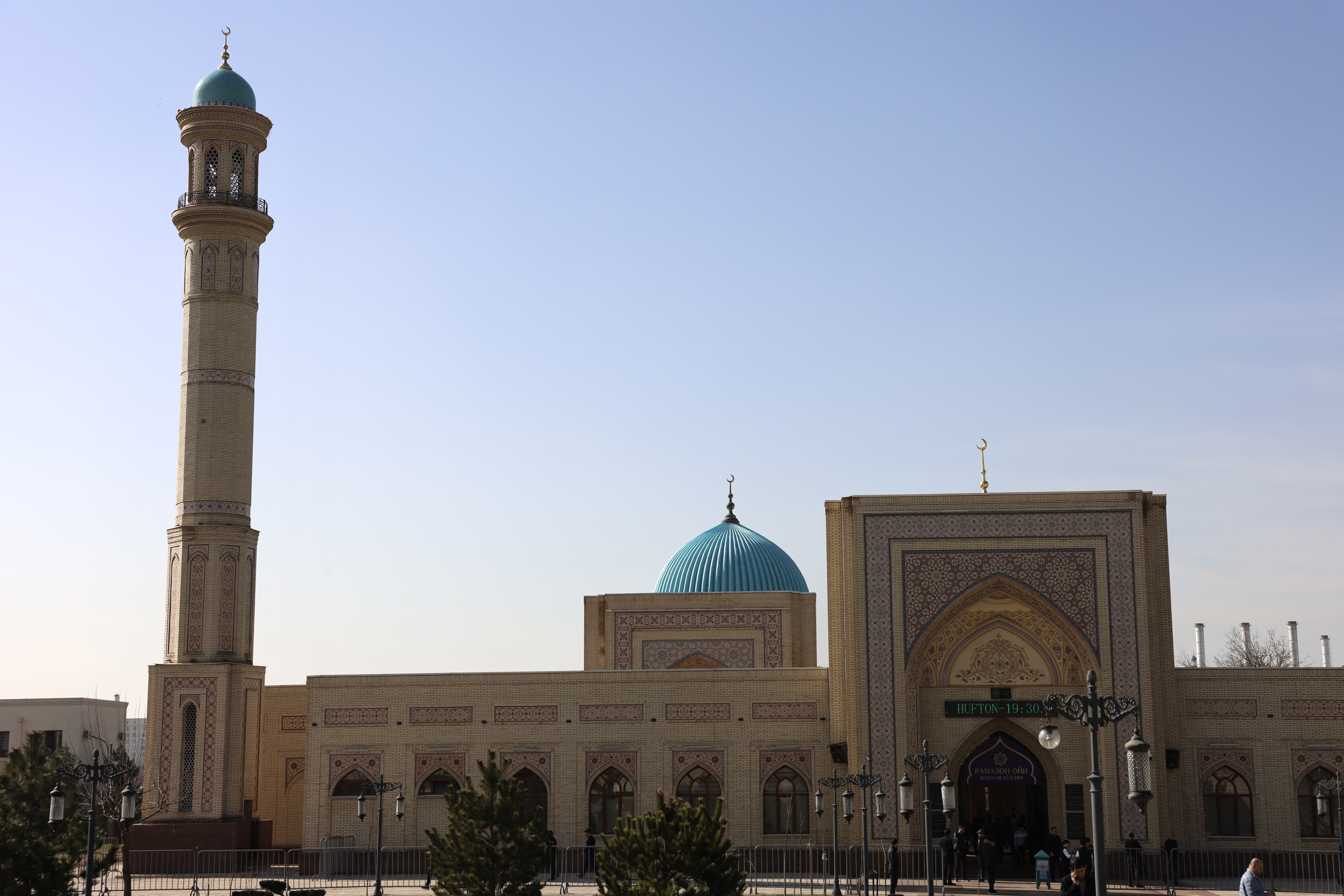
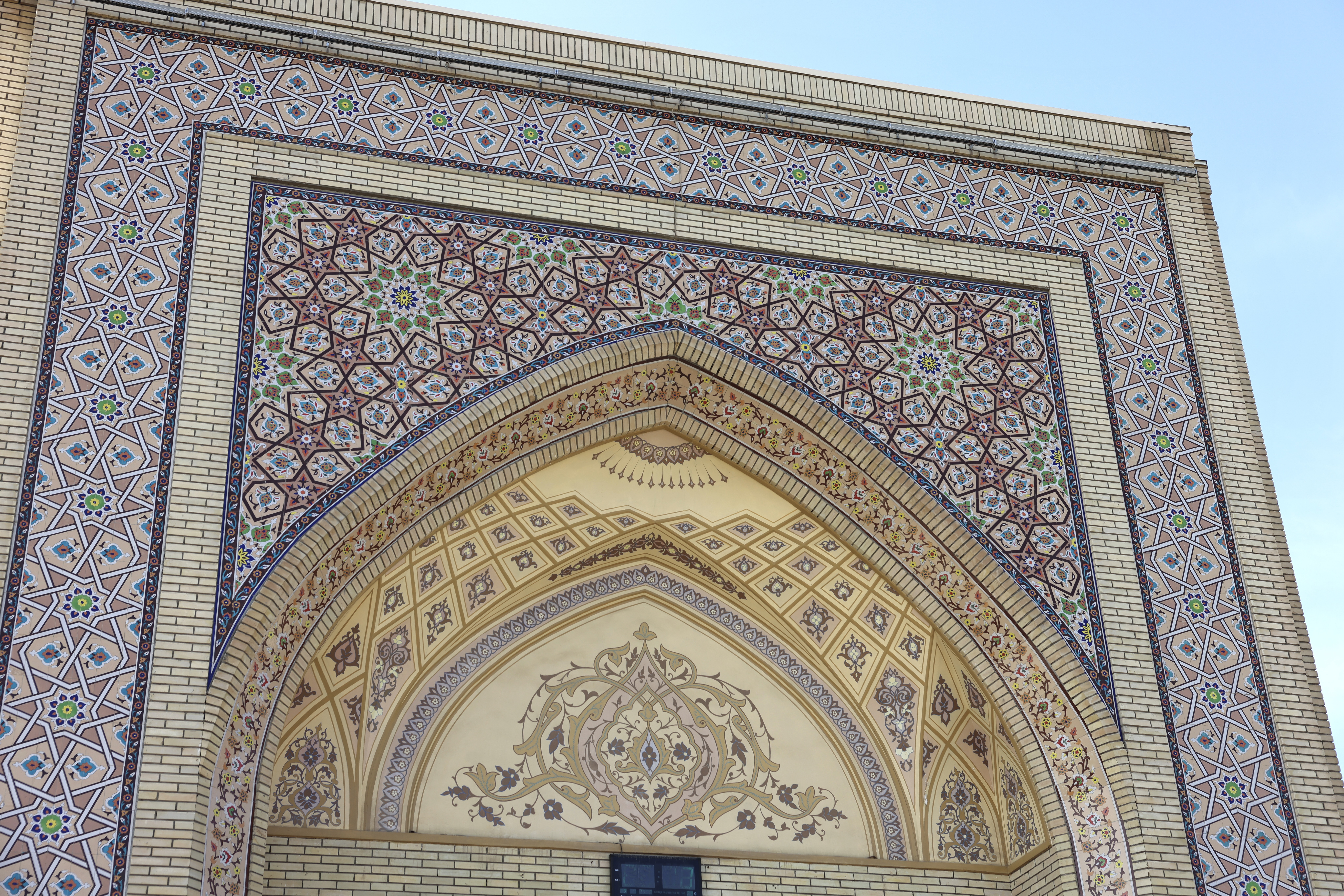
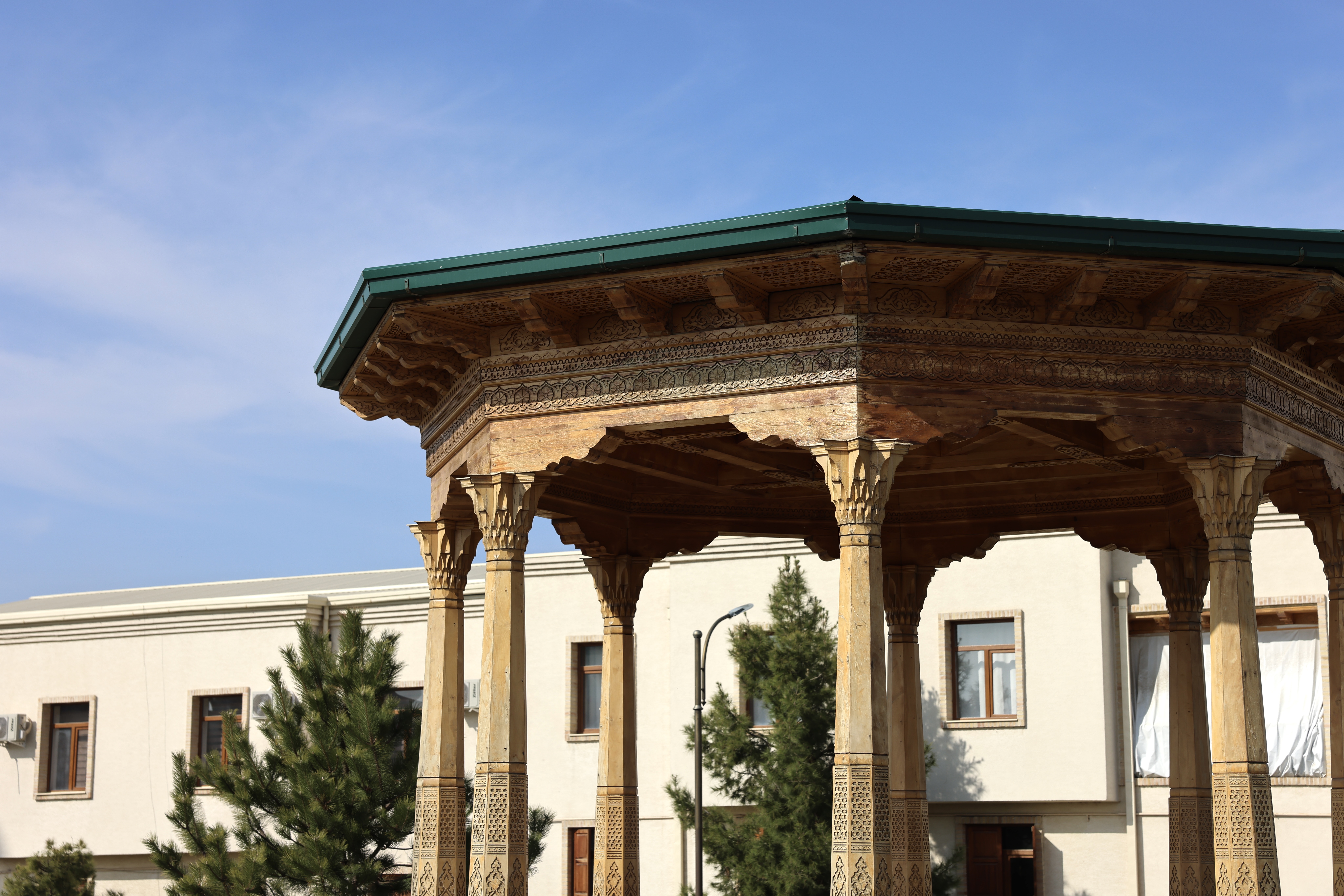
Please note that in the Suzuk-Ota complex, there are three main structures: the entrance portal, the mazar (mausoleum), and the mosque. They feature three different patterns, united by color and elements, but differing in brightness and the width of the dividing lines. If on the entrance portal they are slightly hinted at, and on the mazar they are clearly visible, then on the mosque they are wide and contrasting, easily seen from a distance.
Read also
 Architecture & Urban Environment
Walking Almaty’s Modernism: Architecture Against the Mountains | A Photo Essay
Alfiya Kalmaganbetova, Amira Kassenova
 Architecture & Urban Environment
FLOW Park: A New Space for Active Recreation in Almaty | A Photo Essay
Amira Kassenova, Gulsara Kenbaeva
 Architecture & Urban Environment
A Building with a History: Almaty’s First Government House
Gulsara Kenbaeva
Newsletter
A letter from the HD editors
Once a week, we send the best stories, events, and cultural discoveries from Central Asia.