Architecture & Urban Environment
Everything is going according to the master plan: how standard rural housing is changing the face of Uzbekistan's suburbs
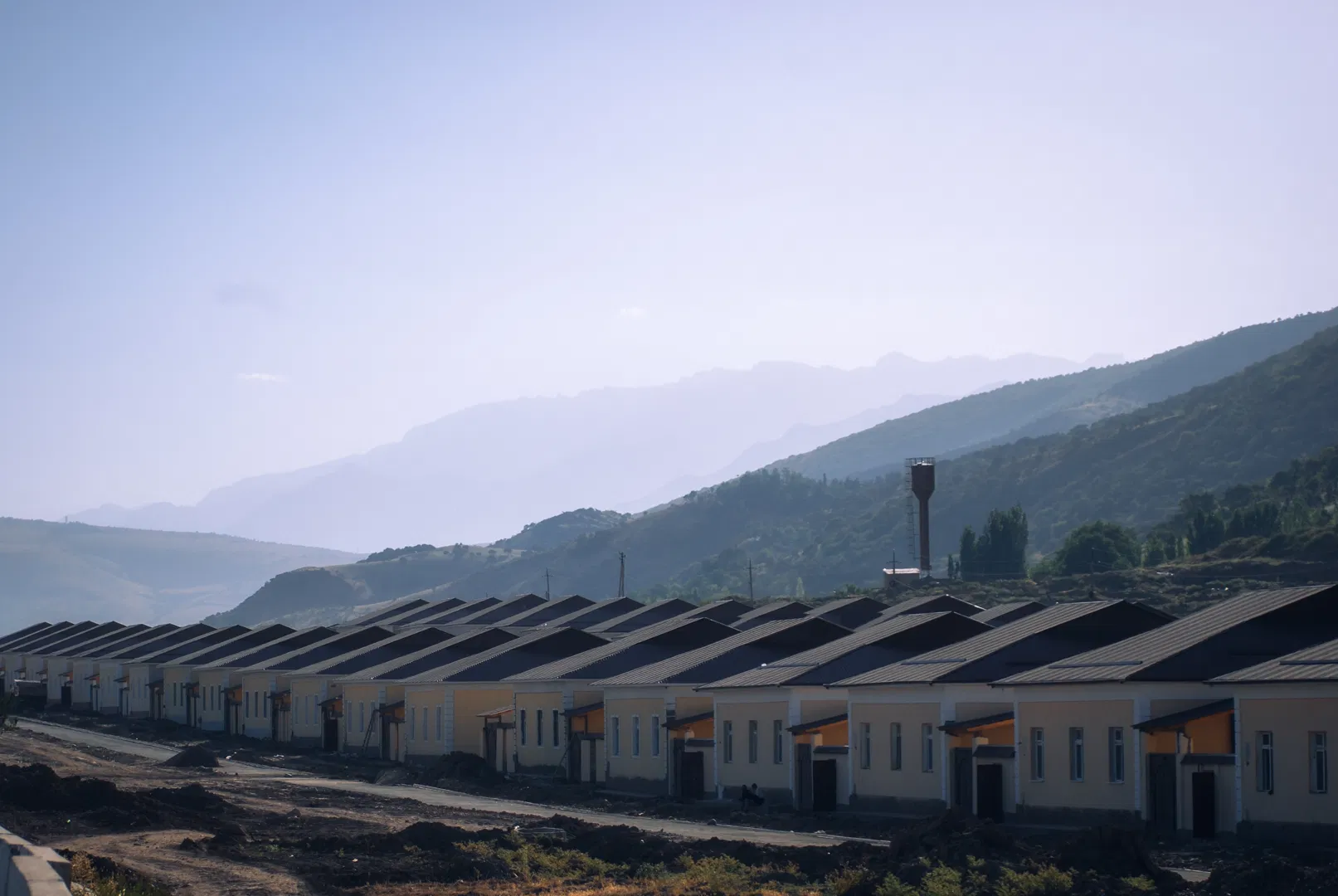
For the past 15 years, a quiet revolution has been taking place in rural Uzbekistan: standard cottages with identical roofs and plumbing are replacing traditional adobe houses—just as "Khrushchyovka" apartments once replaced communal apartments and urban private housing. We analyze the phenomenon of standard rural housing.
The idea of relocating villagers into comfortable and well-equipped houses originated in Uzbekistan in the late 2000s.
The initiative quickly grew into a large-scale construction project. Already in 2009–2012, 23.6 thousand modern rural houses were built across the country. New residential areas appeared in 159 districts – virtually in almost every rural district of Uzbekistan. The state invested over $1.2 billion to lay utilities and create infrastructure in these settlements. By 2013, the pace was only accelerating: it was planned to build another 10 thousand houses, which is 17.5% more than the previous year.
In 2013, then-president Islam Karimov announced the launch of a state program for the construction of standardized individual housing. The slogan of the program was formulated in the spirit of the times:
If the village develops, the quality of our life will grow, the country will prosper.
Agricultural regions were particularly active in construction: Andijan, Namangan, Jizzakh, Bukhara, Navoi, and Syrdarya regions. They became a kind of "pilot" sites for the program, which is explained by their need for housing modernization and support for the agricultural sector.
To finance the program, they established the joint-stock commercial bank "Qishloq Qurilish Bank" (Qishloq Qurilish Bank), which provided rural residents with preferential mortgage loans. Later, international partners joined: the Asian Development Bank (ADB) allocated several tranches totaling $500 million in 2011, and the Islamic Development Bank (IDB) partially financed projects in some regions.
Thus, since the late 2000s, a "village revolution" began in Uzbekistan – the centralized construction of new, well-equipped settlements designed to solve two problems at once: to raise the standard of living for half the country's population (which is exactly how many live in rural areas) and to give an impetus to the economy through the development of the construction industry.
How a typical rural house is structured
In 2009, the design institute «Қишлоққурилишлойиҳа» was established, which developed standard designs for rural houses and social facilities.
Typically, a standard house in an Uzbek village is a single-story cottage without external frills, featuring spacious rooms for large families, an ayvan (terrace), and a garden plot. Designers have developed as many as 22 layout options for 3, 4, or 5 rooms. On average, the living area is around 130–180 m², and the garden plot is about 600 m².
For comparison, traditional rural houses built during the Soviet era were constructed by the owners themselves, often without a foundation, from adobe bricks, and lacking basic amenities. The new houses, however (at least in theory), are supposed to be built from fired bricks, reinforced concrete, and metal structures, have a solid foundation, and a roof.
Each such house is connected to utility networks: electricity, gas, and water supply are installed, and there is even a telephone line. The designers claim they have even considered domestic details – for example, the presence of a summer kitchen or a separate room for storing the harvest.
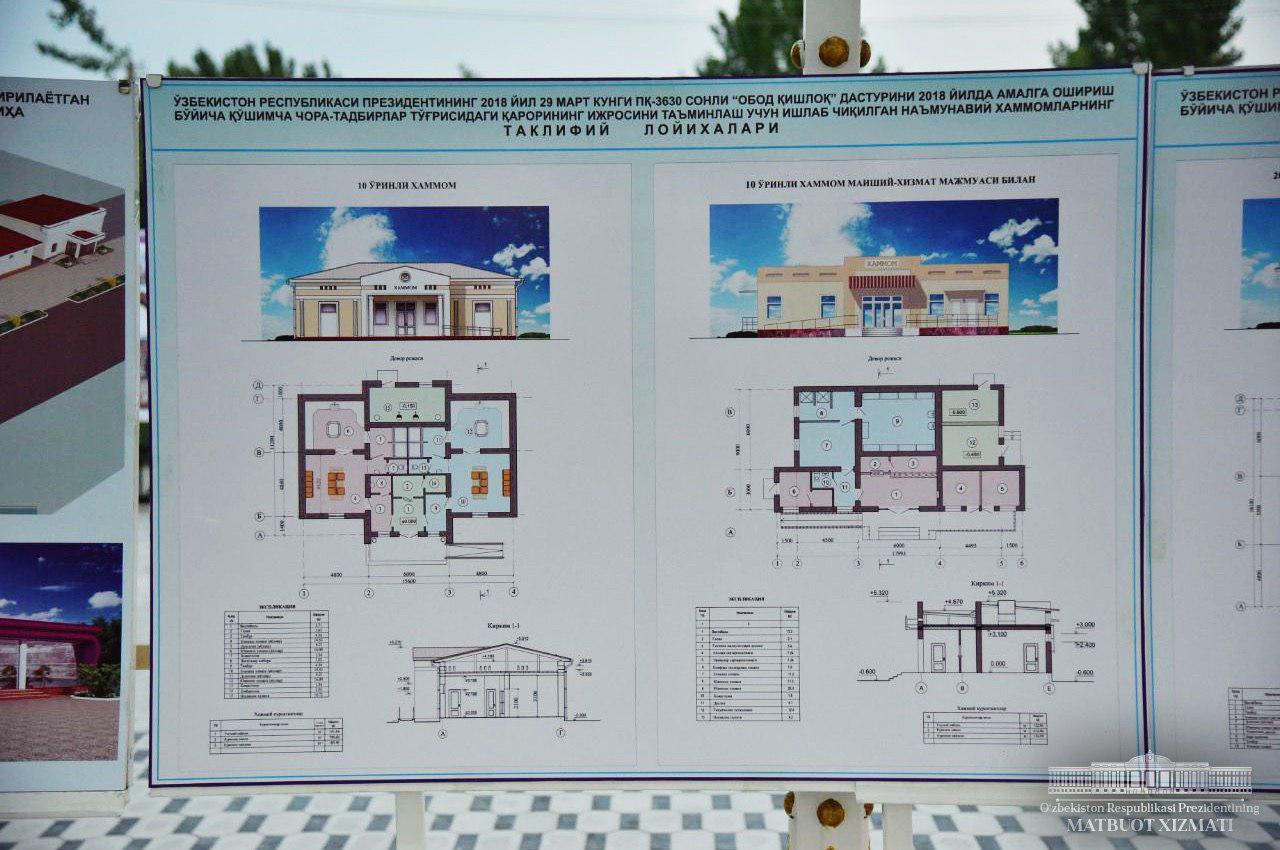
Photo: prezident.uz
What does a typical house look like inside? Usually, it includes a kitchen, a hall (living room), and several bedrooms. In a three-room house, there are two bedrooms and a hall; in a five-room house, there are four bedrooms. Projects often include two verandas (front and back), a carport, and a pantry. High ceilings and large windows ensure good lighting and coolness in summer. Heating is most often gas (convectors or a boiler). A mandatory feature is plumbing: inside there is a bathroom with a shower or bathtub and a toilet, which was previously a rarity in villages.
In new settlements, wide asphalt streets, street lighting, and access roads are immediately built, and nearby – a school, a medical point, a mahalla guzar, shops, and a market. In short, it turns into something resembling the "Uzbek dream": a cozy house with a solid foundation, in a well-developed mahalla with all amenities.
Indeed, residents of some new housing estates complain about shortcomings: in some places, natural gas was not immediately supplied, forcing them to use cylinders initially; in other places, water pressure turned out to be weak due to old pumps. In Karakalpakstan, there were cases where strong winds tore off roofs from new houses—local residents attributed this to cost-saving on the quality of roofing materials. Additionally, some families face difficulties with loan repayments.
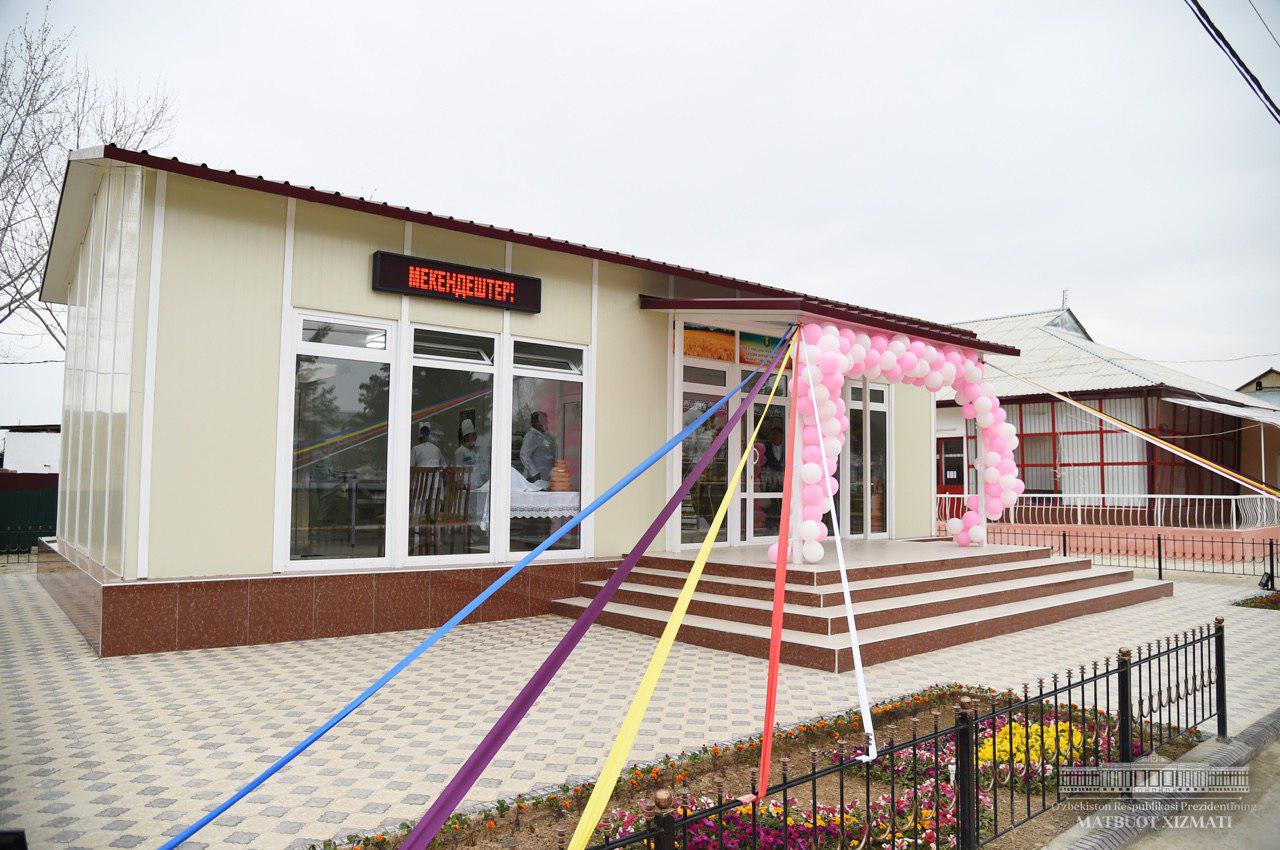
Photo: prezident.uz
The average cost of such a house in the first years of the program was equivalent to 40-50 thousand dollars – an amount unaffordable for most farmers. The initial down payment was 25%, with the rest covered by a mortgage loan from Kishloqkurilishbank at a preferential interest rate. Initially, loans were issued for 15 years.
According to official data, 35–40% of rural housing stock stood idle because these houses could mostly be purchased by affluent people—heads of farming enterprises, market directors. In 2017, President Shavkat Mirziyoyev directly acknowledged this miscalculation and ordered a shift to building genuinely affordable housing.
Since 2018, the maximum mortgage repayment term has been extended to 20 years, and the down payment for needy families was reduced to 10%. The preferential mortgage program includes young and large families, social sector workers (teachers and doctors), as well as those being relocated from dilapidated housing.
After this, the concept of an "affordable home" emerged: new, more compact designs were developed and additional loan benefits were introduced. For example, within the framework of the "Obod qishloq" (translation: "Well-Equipped Village") program, four-story residential buildings with 8–12 apartments began to be constructed in some villages as an alternative to cottages. Such apartments are cheaper and intended for the lowest-income families and young professionals. Furthermore, a portion of the homes began to be allocated to military personnel and employees of the Ministry of Internal Affairs.
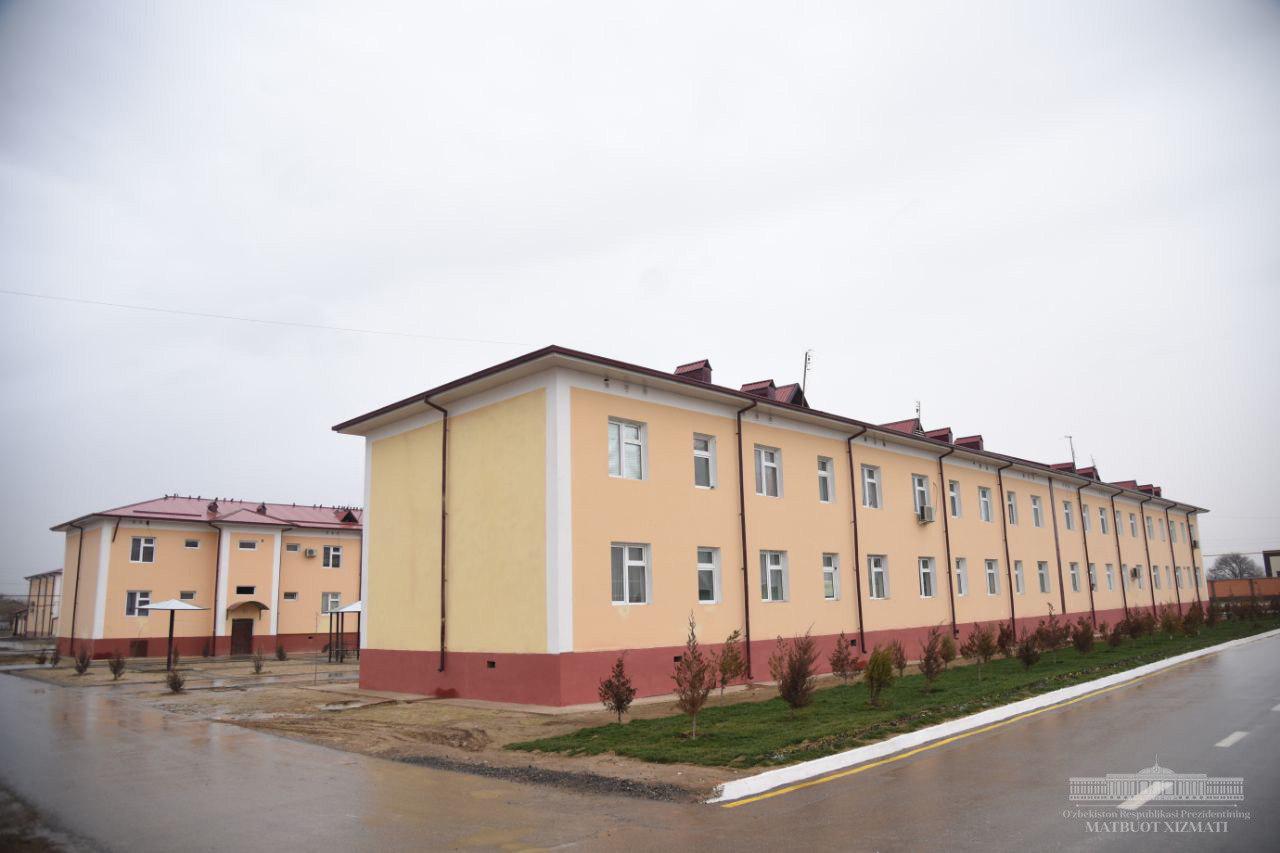
Photo: prezident.uz
Rural "Kariyevkas"
From an urban planning perspective, the construction of standard rural houses brought both benefits and new challenges. The benefits include the planned development of villages according to a master plan, infrastructure development, and employment growth. Over the years of the program's implementation, an entire industry has grown around it: cement and brick factories, construction teams employing over 300,000 people.
However, despite the preferential interest rate, monthly payments are a serious burden for rural residents, especially for those without permanent employment. At the beginning of the program, local authorities sometimes "recommended" that public sector employees participate. A case in Namangan region is known, where teachers were asked to contribute a day's wages for the construction of houses under the "Obod Qishloq" ("Prosperous Village") program.
Nevertheless, the demand for such housing does not decrease for an obvious reason. In hundreds of villages across Uzbekistan, schools are still built from clay and adobe bricks, there is no running water or paved roads, and garbage is not collected.
In one decade, Uzbek villages acquired a standard facade appearance: houses built along geometrically straight streets – identical, painted in pastel colors, with gabled roofs.
The mass construction of standard houses in rural areas is often compared to "Khrushchyovkas," the erection of which in the late 1950s–early 1960s made many post-Soviet residential areas practically indistinguishable from one another. "Karimov-style" standard housing resembles Khrushchev's multi-story buildings in its philosophy (uniform houses without architectural excesses) and goal – to dramatically improve living conditions for the working population.
READ ON THE TOPIC:
Цемент власти: разбираем архитектурный «большой стиль» центральноазиатских «сталинок»Сталинский ампир, продолжающий привлекать исследователей городской среды, эстетов и риэлторов на постсоветском пространстве, в Центральной Азии приобрел свои узнаваемые черты. Архитектор Филипп Мойзер и историк сталинской архитектуры Дмитрий Хмельницкий рассказывают, как «большой стиль» попытался мимикрировать под богатые национальные традиции зодчества, но не сумел скрыть тоталитарное начало.mag.humodoc.com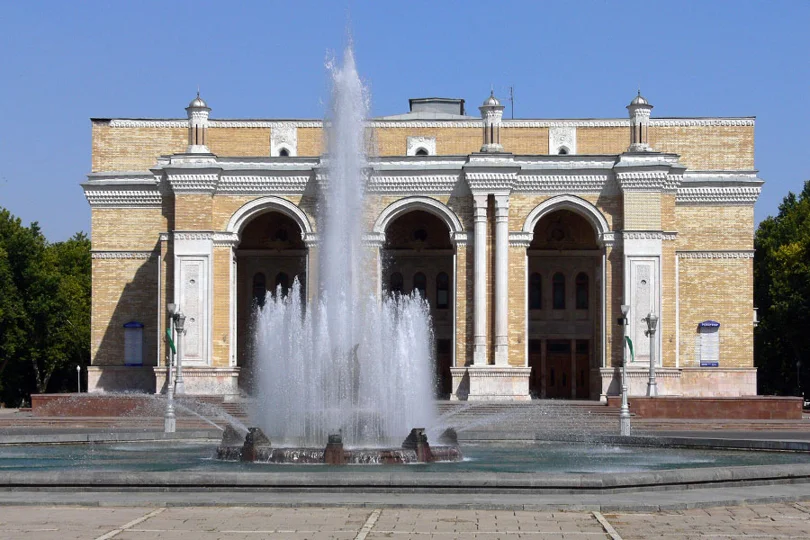
Did you like the story? Subscribe to us on Instagram and Telegram — there's even more interesting content there.
Read also
 Architecture & Urban Environment
The Architecture of Tomorrow: New Identities, Emerging Technologies and the Human Factor
Damir Ussenov
 Architecture & Urban Environment
A Pretty Facade Doesn’t Make a Business
Maxim Shabashov
 Architecture & Urban Environment
Walking Almaty’s Modernism: Architecture Against the Mountains | A Photo Essay
Alfiya Kalmaganbetova, Amira Kassenova
Newsletter
A letter from the HD editors
Once a week, we send the best stories, events, and cultural discoveries from Central Asia.