Architecture & Urban Environment
Meet Uzbekistan’s Central Exhibition Hall – a Modernist marvel whose better days are long past
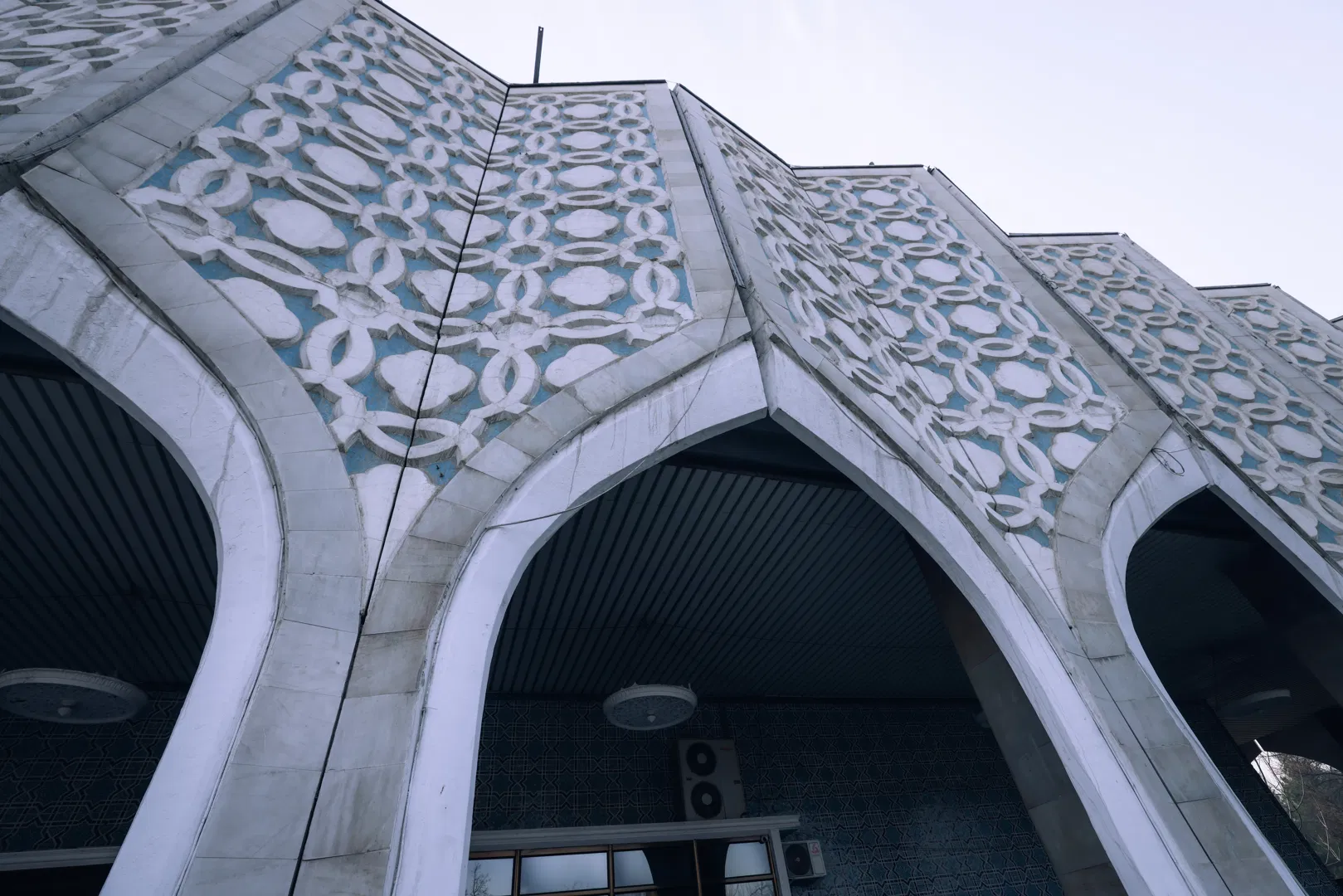
The Central Exhibition Hall is one of Tashkent's most remarkable art spaces. Since the mid-1970s, local and international artists alike have worked here, exploring new boundaries in painting and sculpture. Showcasing both architectural and engineering excellence, the Hall – which houses Uzbekistan’s Academy of Arts – is a piece of art itself. We’re getting you a glimpse of what it used to be – until it’s too late.
Back in December 2024, an HD magazine team recorded an interview with the head of the Academy of Arts, Ibrohim Valikhodjaev, on the Hall’s premises. The interior looked dismal: rain flowed through the bad roof and there was no heating. Chilly rooms started to take a toll on the Academy staff and their paintings. A place designed to host nationwide exhibitions and biennale has seen better days and is in dire need of major repairs.
Here is why we commissioned this piece.
Vision to construction
The idea of a major exhibition space in Tashkent dates back to 1970 – however, Tashkent’s Main Architectural and Planning Council (GlavAPU) rejected the initial project as unfeasible for an exhibition venue. It wasn't until 1976 that the concept materialized in a different form — this time as the Museum of People’s Friendship dedicated to the victims of the 1966 Tashkent earthquake.
The Central Exhibition Hall as we now know it was designed by Uzbek architects Rafael and Firuza Khayrutdinov. For Rafael Khayrutdinov, that was one of his first major architectural projects. Originally trained as an artist, he intrinsically understood what an ideal space should look like for both creators and visitors.
To refine his vision, Khayrutdinov presented his sketches and a scale model to some of the most respected artists of Soviet Uzbekistan, Chingiz Akhmarov, Rakhim Akhmedov, Akmal Nur, and others. They endorsed the design, recognizing the seamless amalgamation of architecture and artistic sensibilities.
Uzbekgidroenergostroy, a major local construction company, was selected as a general contractor for the project. One its chief engineers, Georgiy Isaev, previously in charge of building the Charvak Hydroelectric Dam, oversaw the construction works and played a crucial role in innovating the hall’s façade. Under his guidance, the distinctive arched panels with ornamental designs were precast in specialized molds and installed on-site — an example of how industrial construction technologies gained prominence at the time.
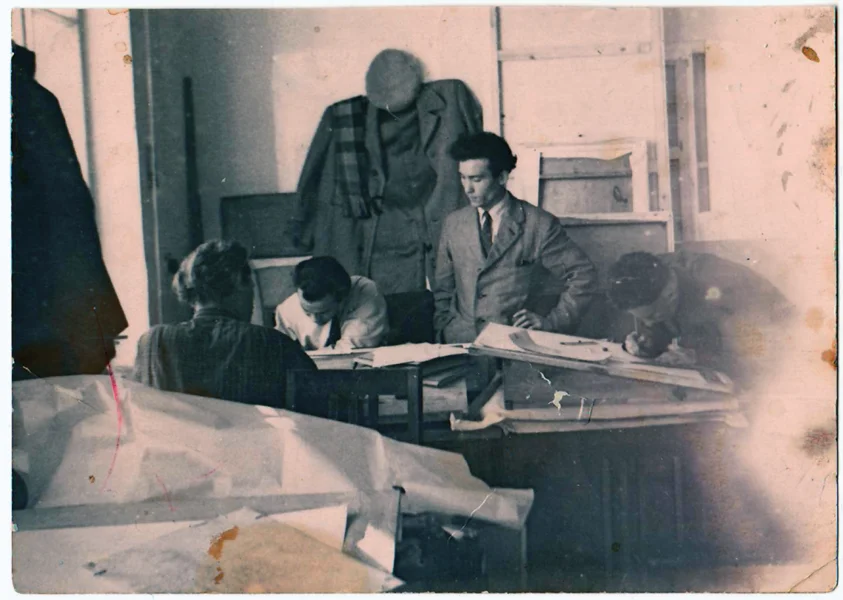 Rafael Khairutdinov at work / Family archive.
 Artistic prowess and bureaucratic conundrums
As the project neared completion, artist Rakhim Akhmedov arranged a meeting between the architects and Sharaf Rashidov, then-head of the Communist Party of Uzbekistan. A quick thinker, Rashidov not only approved the project but greenlighted the budget expansion by 50%.
The Hall’s design featured elements of traditional Uzbek style, with a layout centered around a two-story atrium that provided natural vertical ventilation. A deep summer gallery with arched structures added an unmistakable Oriental look to the building, offering views of the adjacent boulevard and sculpture park. Beyond aesthetics, this feature shielded the ground floor from direct sunlight, maintaining a comfortable indoor climate. The second floor utilized a similar idea — folded panels cast shadows, while ventilated air pockets between walls reduced heat absorption. Remarkably, it was Khayrutdinov’s wife who meticulously calculated the building’s natural light exposure, ensuring an intricate play of sunlight filtering through the skylights.
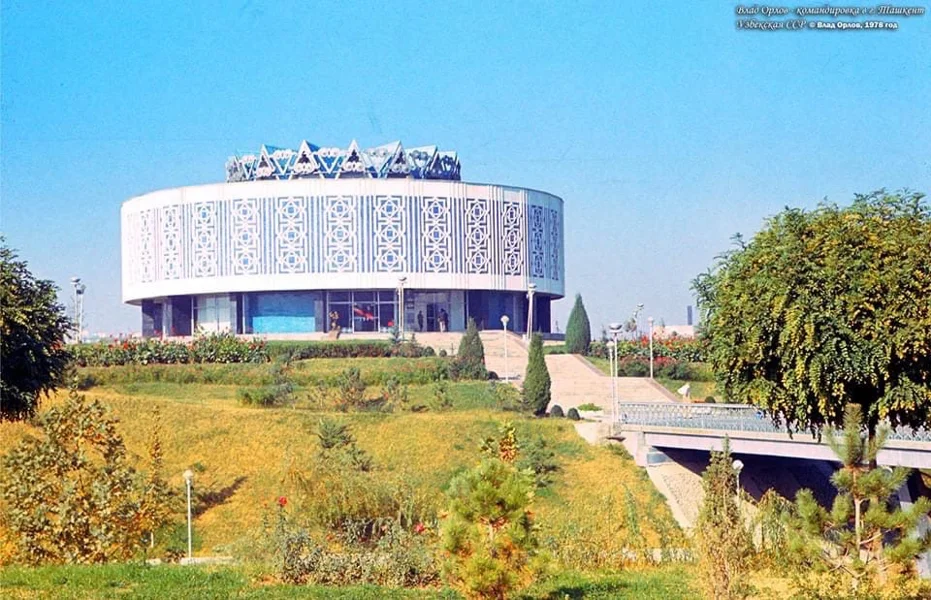 Museum of People's Friendship / Vladislav Orlov
A masterpiece of light and space
Lighting played a pivotal role in the Hall’s concept, with a strong emphasis on natural illumination. The central hall was crowned with pop-art-inspired arched skylights, designed to modulate sunlight throughout the day. This careful calibration resulted in a dynamic interplay of warm and cool tones, enhancing the visual impact of exhibits. Even decades later, this lighting system continues to captivate visitors.
Along the roof’s perimeter, two rows of specially glazed skylights were embedded into the ceiling structure, diffusing soft natural light across the second floor. Unfortunately, in the 2000s, poor waterproofing caused leaks during rainstorms; the skylights were eventually sealed off and replaced by artificial lighting. Proper renovation and modern translucent materials, on a par with adequate insulation, could reinstate the original design, reviving the intended ambiance of the space.
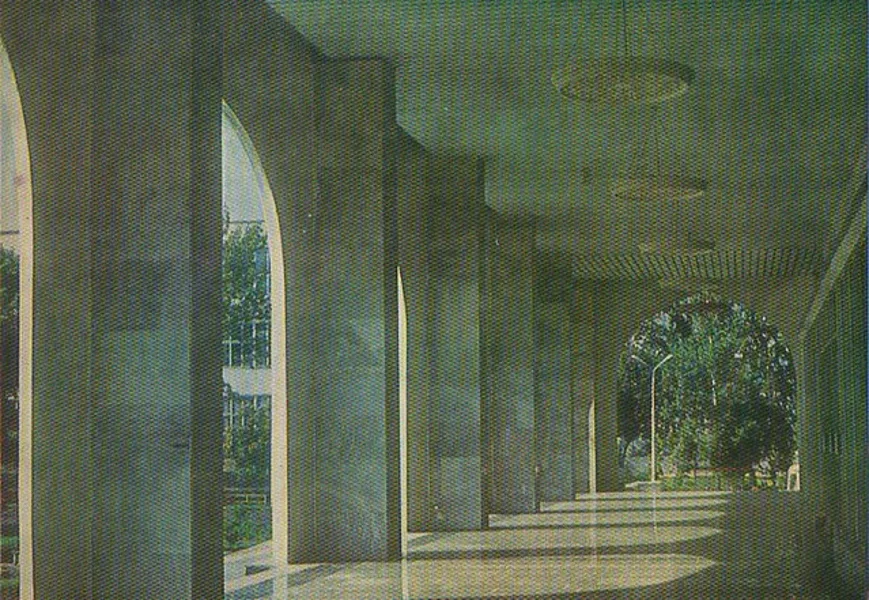 Central Exhibition Hall / zightsev / Flickr
Shelved renovation plans
In 2005, the Hall administration proposed enclosing the gallery with glass to accommodate additional spaces for the Academy of Arts of Uzbekistan. Architect Khayrutdinov offered an alternative option, that is to expand the underground level beneath the three-meter embankment on which the building stands. His solution would have preserved the Hall’s exterior aesthetics, but the plan never came true due to the lack of funding.
The idea behind glazing the gallery resurfaced in 2022 during discussions on major renovations. However, prominent artists, led by Akmal Nur, opposed the move, fearing it would irreversibly alter the building’s authenticity. Their concerns were taken into account and the proposal was scrapped, as was the financial support for restoration.
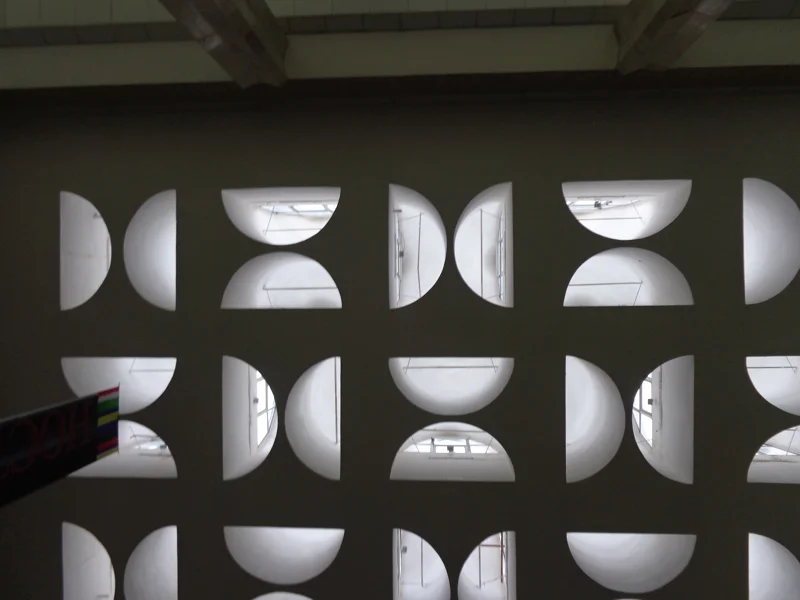 Central Exhibition Hall interior / Uzbekistan Academy of Arts
A landmark under threat
Today, this architectural masterpiece is in decline. The building lacks heating, the ceiling is leaking, and temperature fluctuations impact works on display. Despite its aging interior, the Central Exhibition Hall continues to serve as a key venue for exhibitions and biennales.
A full-scale restoration requires significant investment. Essential upgrades include modernized heating systems, restored skylights, functioning restrooms, and accessibility improvements such as elevators. Yet beyond these practical necessities, preserving the Hall’s original design idea — a unique interplay of light and space — should be a top priority.
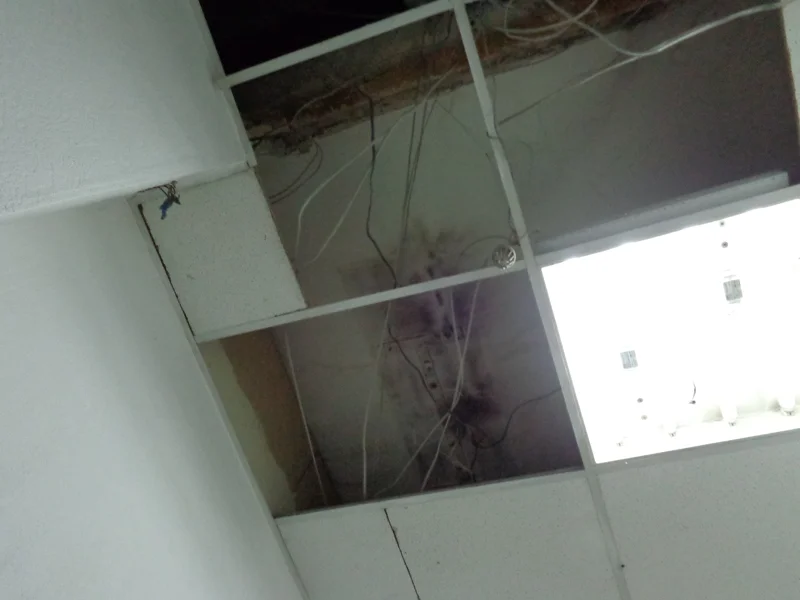 Central Exhibition Hall interior / Uzbekistan Academy of ArtsCentral Exhibition Hall interior / Uzbekistan Academy of ArtsCentral Exhibition Hall interior / Uzbekistan Academy of Arts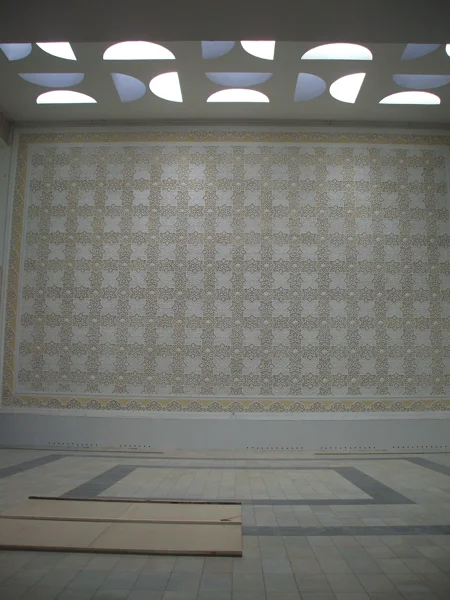
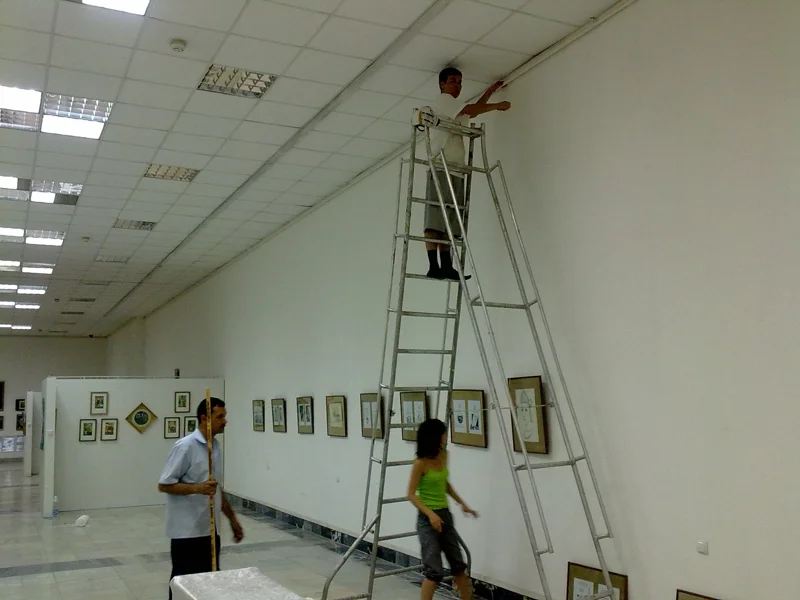
The fate of the Hotel Chorsu (formerly "Moscow") is one striking example. A gem of Soviet-era Modernist architecture, it was left in neglect for too long, leading to irreversible structural damage and the subsequent ultimate demolition. Likewise, the Palace of Aircaft Manufacturers, now pending renovation for four years, is steadily deteriorating.
Tashkent’s architectural heritage is at a crossroads. The Central Exhibition Hall can either be left to decay or restored to its former glory. In urban planning, as in art, nothing is set in stone.
Read also
 Architecture & Urban Environment
The Architecture of Tomorrow: New Identities, Emerging Technologies and the Human Factor
Damir Ussenov
 Architecture & Urban Environment
Walking Almaty’s Modernism: Architecture Against the Mountains | A Photo Essay
Alfiya Kalmaganbetova, Amira Kassenova
 Architecture & Urban Environment
FLOW Park: A New Space for Active Recreation in Almaty | A Photo Essay
Amira Kassenova, Gulsara Kenbaeva
Newsletter
A letter from the HD editors
Once a week, we send the best stories, events, and cultural discoveries from Central Asia.