Architecture & Urban Environment
What do Kazan and the shift settlements of the Trans-Siberian Railway have in common? We explore with German architect Philipp Meuser.
Why were major cities in the post-Soviet space built not for living, but to fulfill political (often authoritarian) will? How did Kazan become a model of synergy between Christianity and Islam, and St. Petersburg a symbol of one man's desires? German architect Philipp Meuser explains how geopolitics, economics, and ideology shape a unique urban appearance, by which a typical Eurasian city can be recognized. This text is the first part of his extensive research, which we are publishing with minor abridgments.
When examining the typology of the Eurasian city, it is essential to pay special attention to Russia. Notably, architecture and urban planning played a key role at critical moments in Russian history, yet the factors that determined their development differed significantly from those that stimulated the transformation of major Western European cities.
If in Germany or France urban development occurred under the influence of public, private, and economic interests, then in Russia for centuries it was dictated primarily by political and military considerations. Russian cities were much more often built based on strategic needs, rather than as a result of carefully planned civic or economic processes. This trend persisted for centuries, including the Soviet period.
East of Moscow
Moscow holds a central place in shaping Eurasian self-determination. For centuries, with the exception of a brief period when St. Petersburg was the capital, it has remained a center of power, a model to emulate, and a source of influence for the regions of Eurasia. The architecture of Moscow, like that of the entire central part of Russia, initially developed under the influence of Byzantium. This influence manifested itself primarily in the construction of stone churches from the 11th to 16th centuries with domes rising above a Greek cross in plan. One of the striking examples is the Dormition Cathedral of the Moscow Kremlin, built between 1475 and 1479 as the main church of the Muscovite state.
The formation of the multi-confessional and multi-ethnic character of the Russian Empire is largely connected with the conquest of the Kazan Khanate by Ivan IV the Terrible in 1552.
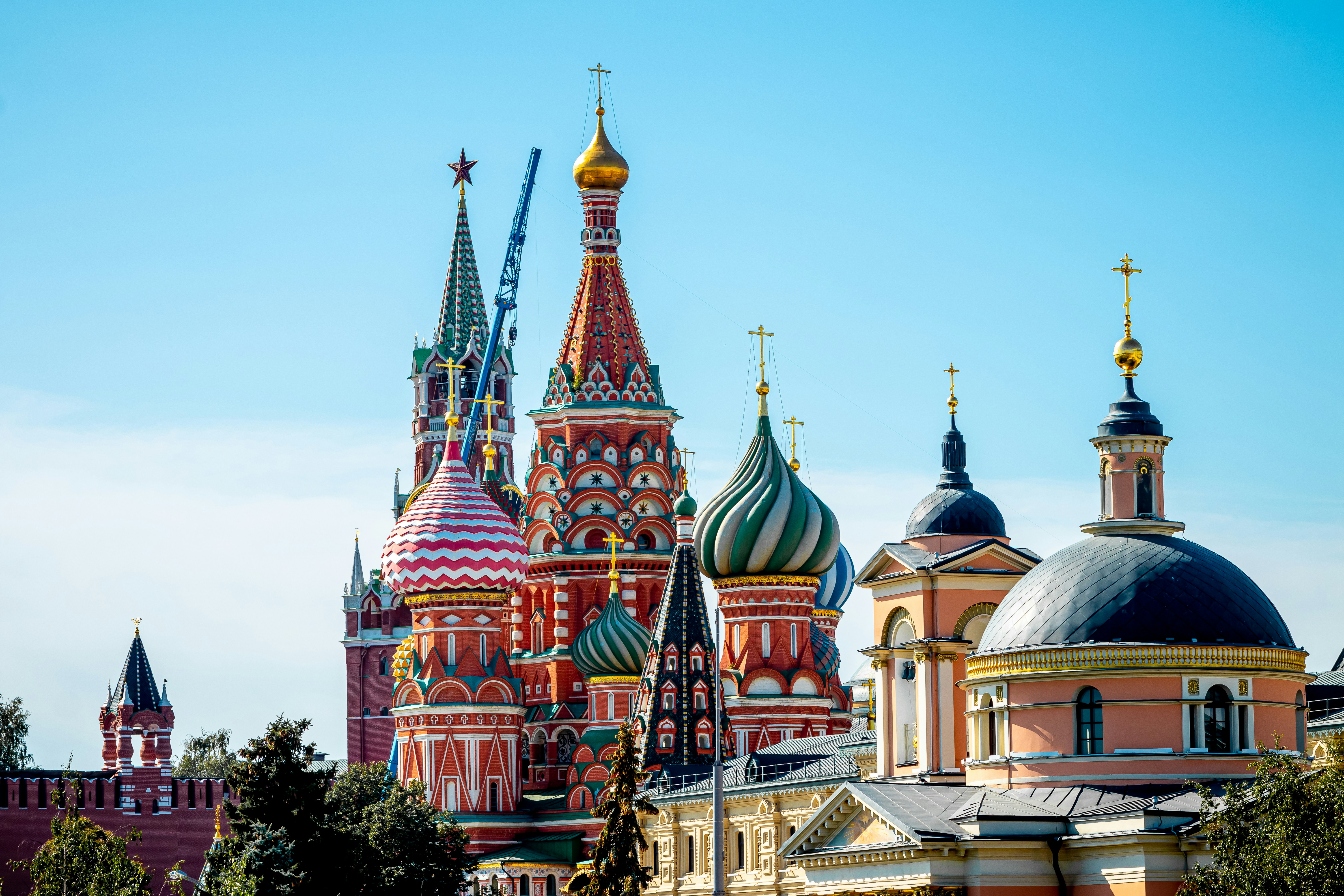
Moscow saw itself as the successor to Rome, and Roman expansion, as is known, was accompanied by military campaigns during which temporary camps often turned into fortified cities.
Before the campaign against Kazan, Ivan IV (the Terrible) ordered the construction of a prefabricated wooden bastion in Uglich. It was transported along the Volga for 1500 kilometers and assembled in less than a month on a hill at the mouth of the Sviyaga River, which allowed the Moscow troops to capture Kazan. After the annexation of the khanate, the military fortress transformed into an Orthodox monastery, becoming an important tool for spreading Christianity to the East.
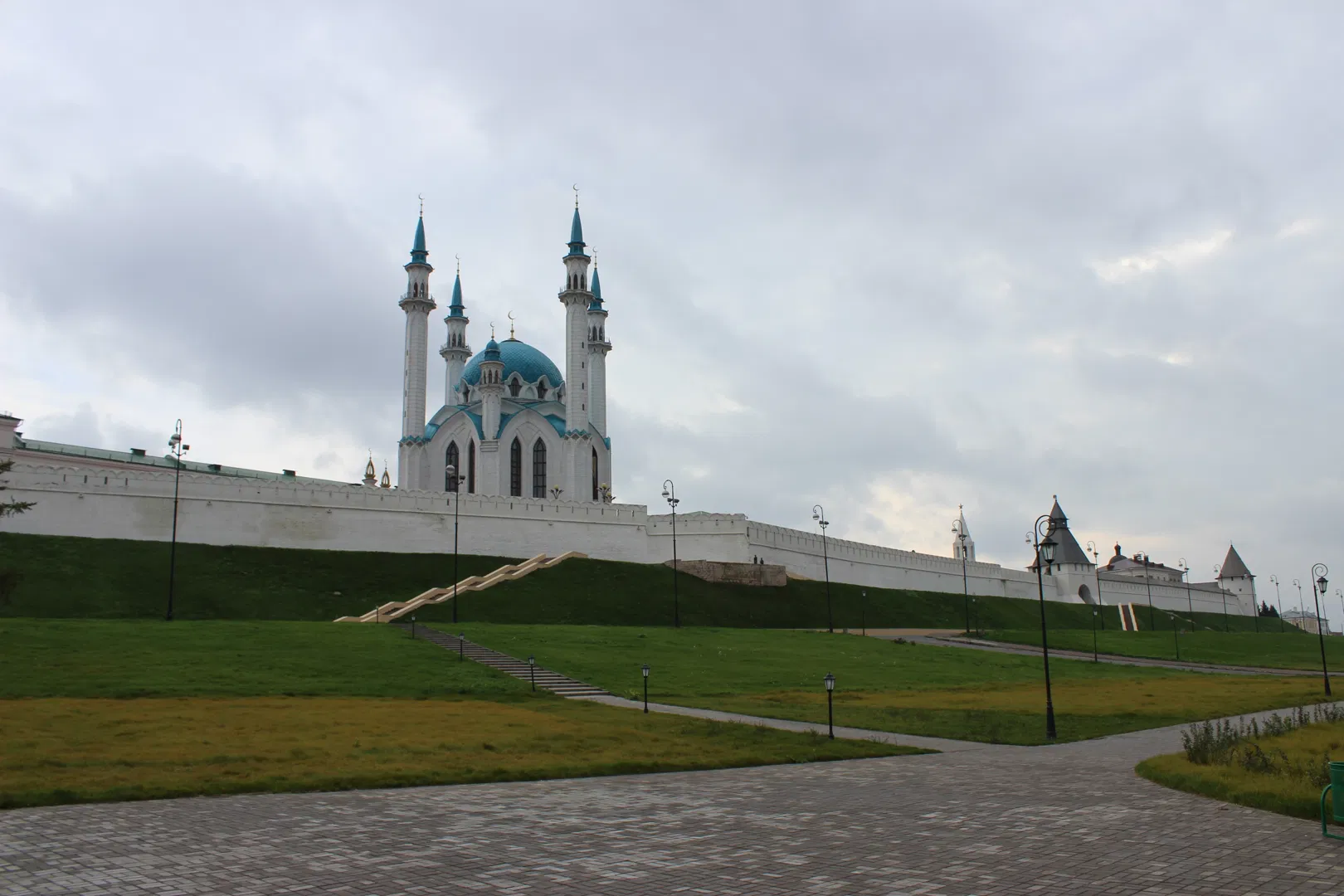
Kazan, as a key trade hub, was virtually destroyed during military operations but was soon restored, becoming an outpost[1] of Russia. On the site of the residence of the Kazan Khan, the Kazan Kremlin was erected, symbolizing the fusion of European and Asian cultures. The merging of Western Christian and Eastern Muslim elements, the unification of nomadic and sedentary lifestyles are reflected in modern culture. How else can one explain the construction of the Kul Sharif Mosque, which since 2005 has become the visual center of the Kazan Kremlin?
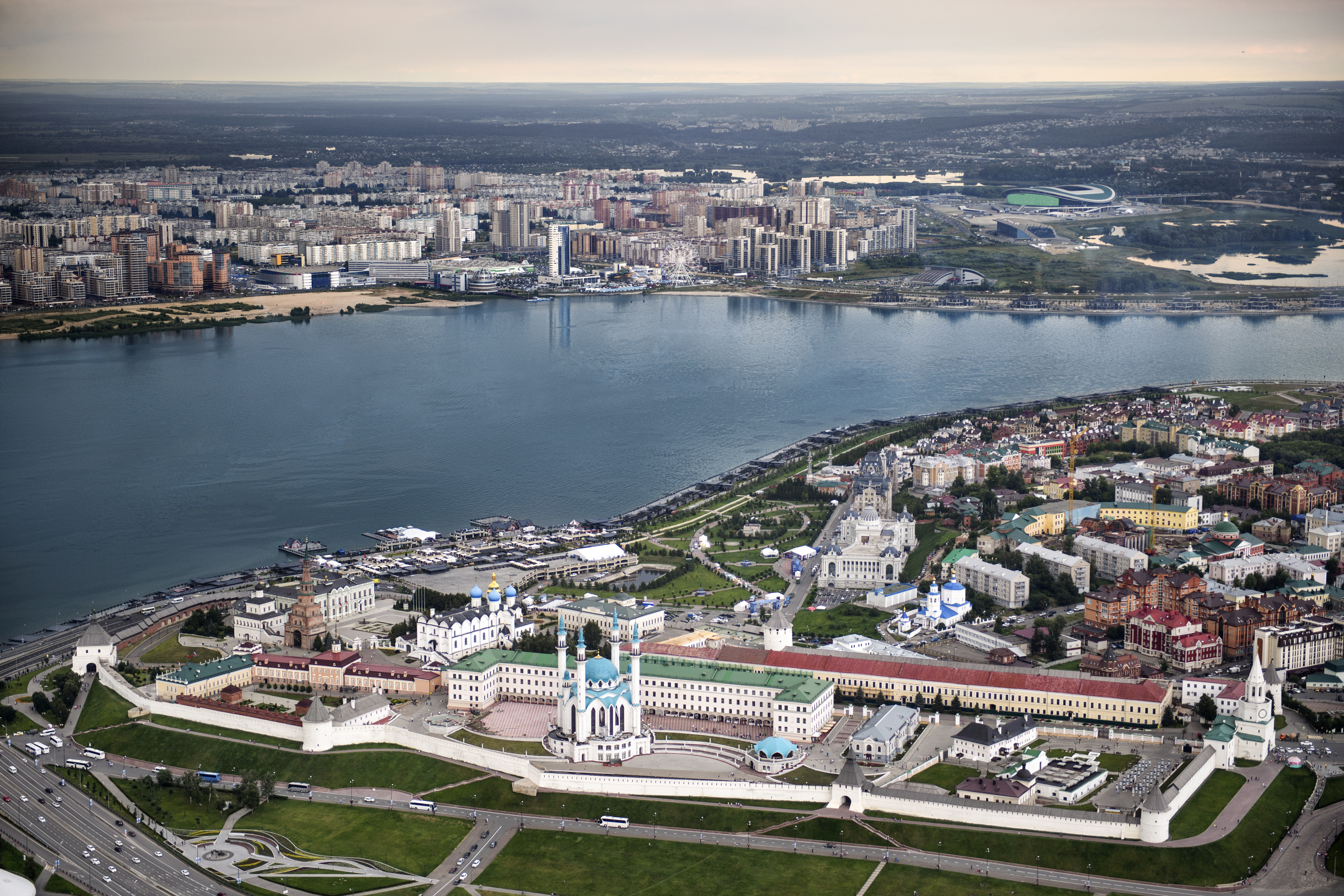
The architectural appearance of the Kul Sharif Mosque represents a unique synthesis of traditions. The central dome resembles a helmet, and the Gothic cross vaults, atypical for Islamic architecture, give the building an unusual yet harmonious look. Lancet windows with floral ornaments, characteristic of early Gothic style, are combined with Eastern motifs, creating an impressive ensemble. In addition to the traditional crescent on the minarets and dome, Eastern ornamentation is also traced in the decorative elements at the base of the mosque, and verses from the Quran are carved on the friezes of the pointed portals. Kazan can be viewed as a model of a Eurasian city—a space where Christian and Muslim religious symbols peacefully coexist, emphasizing the equality of European and Asian traditions.
A Window to Europe in Urban Planning
If we consider Russian history on a scale of centuries, the next great colonization, emanating from Moscow as the political center, was directed towards the West and is associated with the founding of St. Petersburg by decree of Peter I. This city, like others created based on political will, reflected the symbolic use of foreign construction technologies and architectural styles.
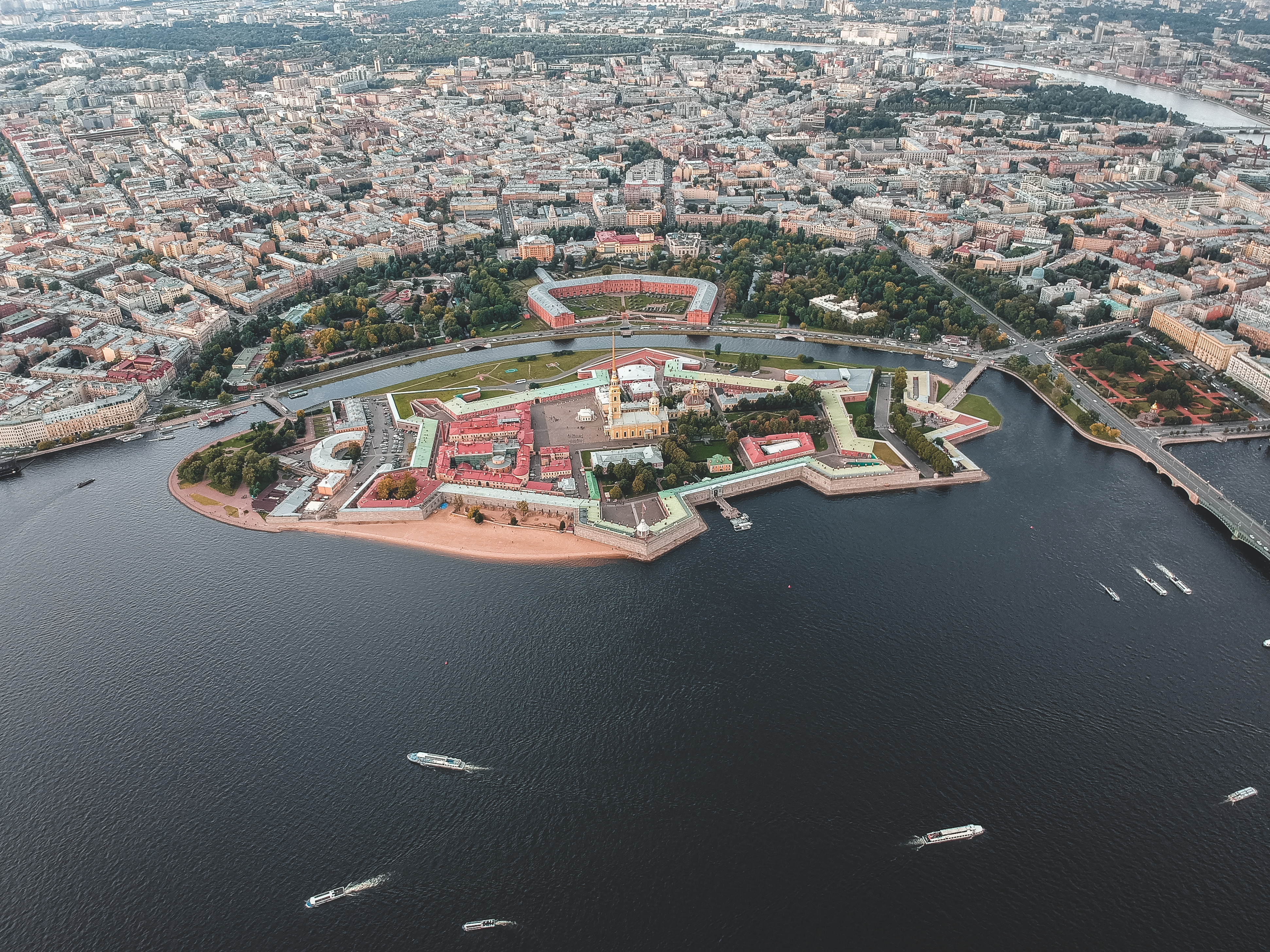
"This second capital of Russia is not a supplement to Moscow, but its opposite. If Moscow arose spontaneously, this city was created purposefully, according to a plan, by a strong-willed effort. Moscow looks to Asia, Saint Petersburg looks to Europe," wrote Stefan Zweig in his essay "A Trip to Russia."
But why did Peter choose this particular location? If he had merely sought a new residence, he would have chosen a more comfortable territory, not the swampy lands at the mouth of the Neva, prone to flooding. The decision was dictated by political and military motives — the desire to strengthen Russia's position in the West. Opening a "window to Europe" meant, first and foremost, access to the Baltic Sea, which ensured freedom of maritime trade and strategic advantages in the war with Sweden.
St. Petersburg was built in the shortest possible time: more than 30,000 peasants were mobilized to construct the city—a method later employed in Soviet times as well. The architectural appearance of St. Petersburg expresses a political demonstration of power: no building could be higher than the tsar's palace. "There is no architectural chaos like in Moscow, where styles are mixed as if at a masquerade," noted Zweig in 1928. "This city arose by the autocratic decree of a single man and was realized exactly as conceived by Peter the Great."
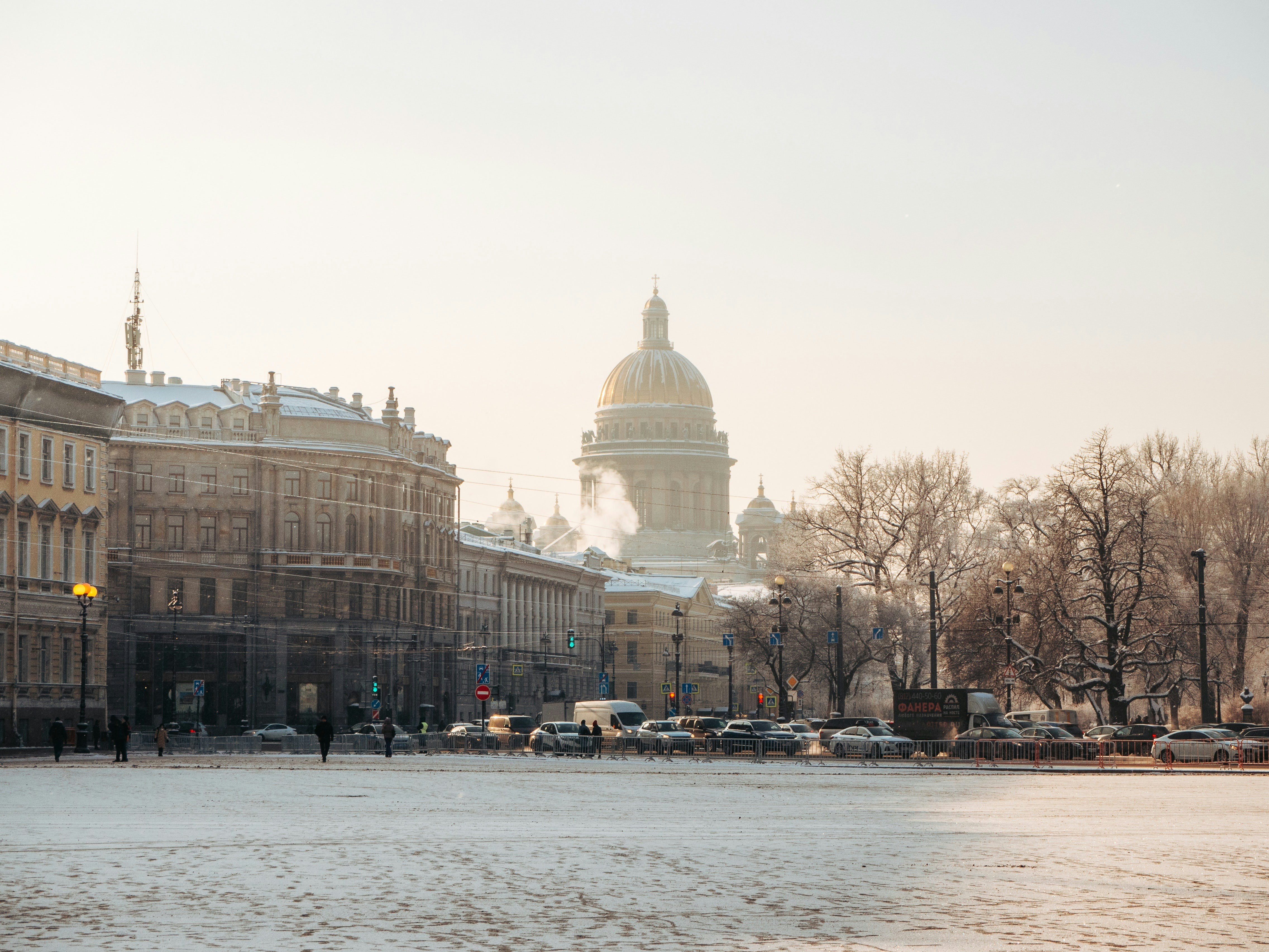
The construction of Kazan Cathedral — references to St. Peter's Basilica in Rome, the canal system — parallels with Amsterdam, and the city's name sought to emphasize not only a connection with the Apostle Peter but also a German sound. This reflects an important tradition of city renaming in Russia: Petersburg became Petrograd in 1914 to distance itself from Germany, then Leningrad in 1924, as the new regime sought to erase reminders of tsarism. This same practice persists in the post-Soviet space — an example is the renaming of the capital of Kazakhstan.
To fill the city with architectural structures built according to the latest European trends, all possible means were used. As a result, St. Petersburg initially acquired features of the Rococo style, from which only the Smolny Cathedral retained traditional Russian elements. Later, other classical architectural styles appeared in the city, following European fashion. However, traditional Eurasian motifs continued to be preserved in church architecture, as evidenced by the domes of the Kazan and St. Isaac's Cathedrals.
Saint Petersburg is perceived as a Western city, yet its planning, implementation, and functioning continue to exhibit Eurasian characteristics.
Eurasian Cities of the Trans-Siberian Railway
Having gained confidence, Russia continued to expand southward and northward, occupying territories that previously held no interest for world powers. Much like the Romans establishing fortifications according to a pre-designed plan during military campaigns, the Russians set up military settlements as they advanced eastward, wherever it was strategically advantageous and effective. The eastward advance was accompanied by infrastructure development, particularly the construction of the Trans-Siberian Railway.
At first glance, this process can be compared to the settlement of the Wild West in North America. However, there are fundamental differences between them: migration to the United States occurred with practically no state guidance, whereas in Russia, new settlements, similar to Roman military outposts, were created on the initiative of the central authority.
The old trade route between the West and the East existed long before, but the use of horse-drawn transport ceased to be rational for extracting natural resources and transporting Siberian grain. Alexander II authorized the construction of the Siberian Railway as early as the 1870s, but the practical impetus to begin building the world's longest railway, whose construction was completed only in October 1916, was given by his son Alexander III.
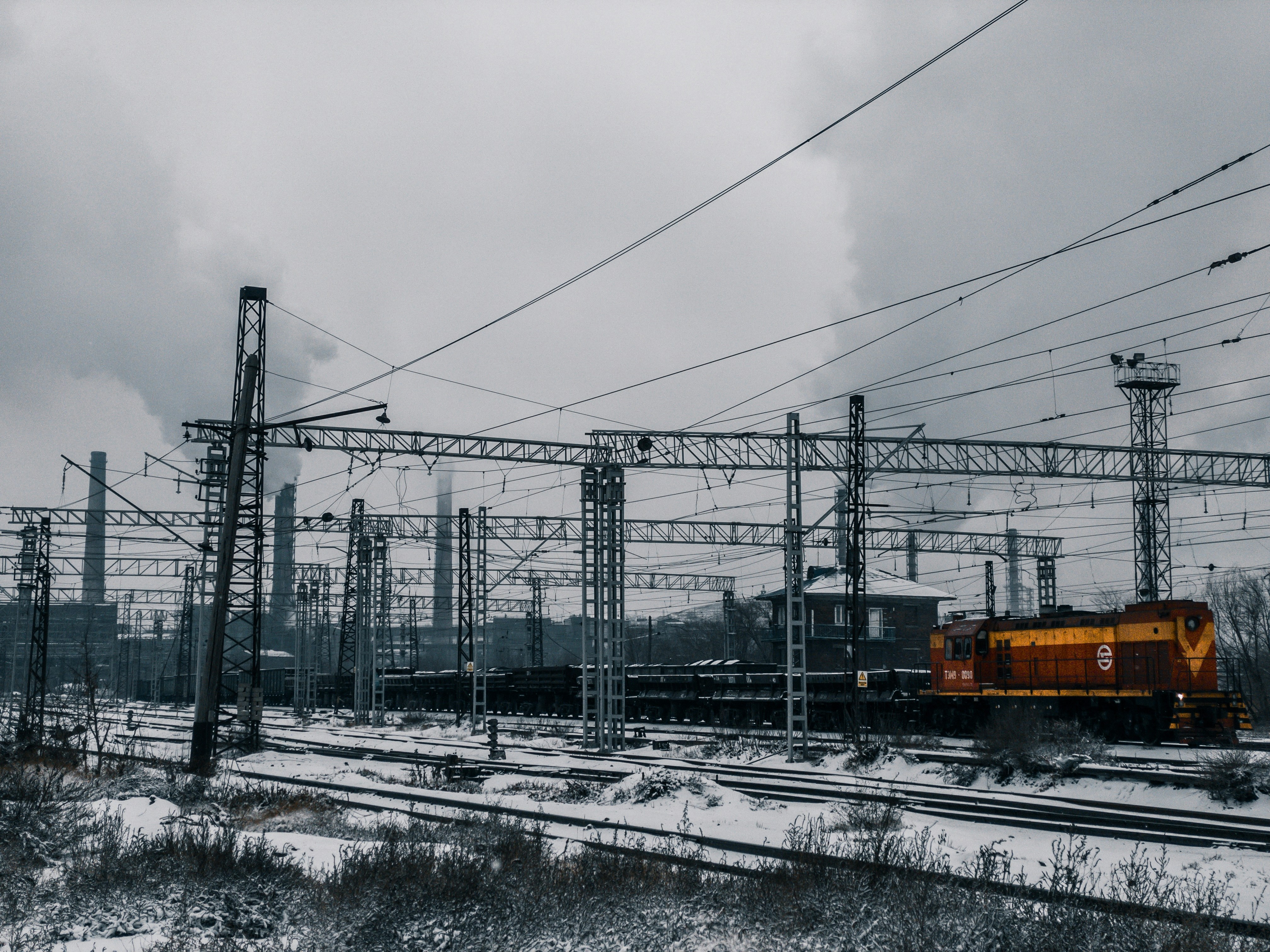
The current length of the Trans-Siberian Railway is 9,288 km.
Settlements emerged along the railway lines, on the banks of major rivers, and in locations convenient for the extraction and transportation of raw materials. The functionality of these towns was even reflected in their names: stopping points where people settled were often designated by kilometer markers. Construction proceeded simultaneously on several sections, and the directions of the work can still be traced today by the location of the new towns.
The construction of the Trans-Siberian Railway impacted not only the economic development of the region but also the rapid growth of Siberia's population. A vivid example is Novosibirsk — the largest city in Siberia and the third most populous in Russia after Moscow and St. Petersburg. The central location of the railway station, which remains one of the largest in Eurasia, reflects the city's history and its strategic significance.
The city developed in stages, changing its original purpose. Under Stalin, Novosibirsk became a major industrial hub: a new railway line was built, connecting it with Central Asia (Turksib), as well as with the coal regions of Kuzbass. In 1957, on the outskirts of Novosibirsk, Akademgorodok was founded, becoming a scientific center with 14 research institutes.
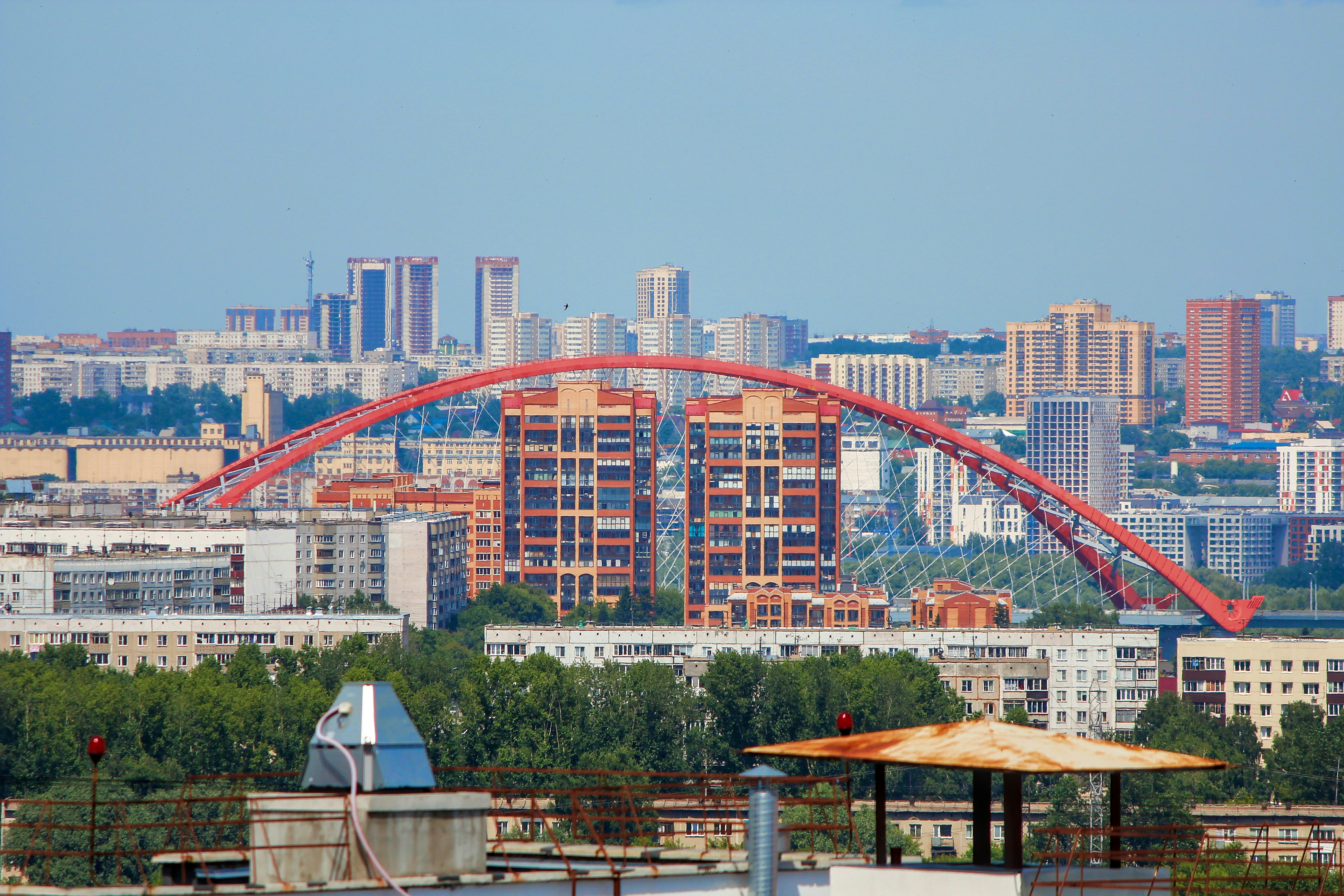
Despite constant changes in development direction, urban planning has always been centralized, which was characteristic of Soviet urban development policy. In this sense, Soviet cities are in many ways similar to European ones: however, if in Western European cities the central place was traditionally the market square, surrounded by religious buildings, then in Soviet cities the main element was the parade square, surrounded by administrative buildings and a monument to Lenin. Representative structures grew along the ceremonial avenue, and around the center, residential districts (microdistricts) were formed according to a single model, providing equal living conditions for all citizens.
The trend of constructing new cities and neglecting the development of industrial monotowns in areas of major deposits continued even after the October Revolution of 1917. Thus, here too, one can note the presence of a typical feature of the Eurasian city.
A characteristic feature of the 1930s-1940s is the emergence of cities and settlements linked to the development of the timber and coal industries, which became the country's fuel base. For the 1970s-1990s, the emergence of cities associated with oil and gas extraction is characteristic, forming a new fuel base for the USSR.
Did you like the story? Subscribe to us on Instagram and Telegram - there's even more interesting content there.
Read also
 Architecture & Urban Environment
The Architecture of Tomorrow: New Identities, Emerging Technologies and the Human Factor
Damir Ussenov
 Architecture & Urban Environment
Walking Almaty’s Modernism: Architecture Against the Mountains | A Photo Essay
Alfiya Kalmaganbetova, Amira Kassenova
 Architecture & Urban Environment
FLOW Park: A New Space for Active Recreation in Almaty | A Photo Essay
Amira Kassenova, Gulsara Kenbaeva
Newsletter
A letter from the HD editors
Once a week, we send the best stories, events, and cultural discoveries from Central Asia.