
There is a simple way to understand how Tashkent has changed. We need not even look at the new districts or count the shopping centres — we have already addressed that in another of our articles:
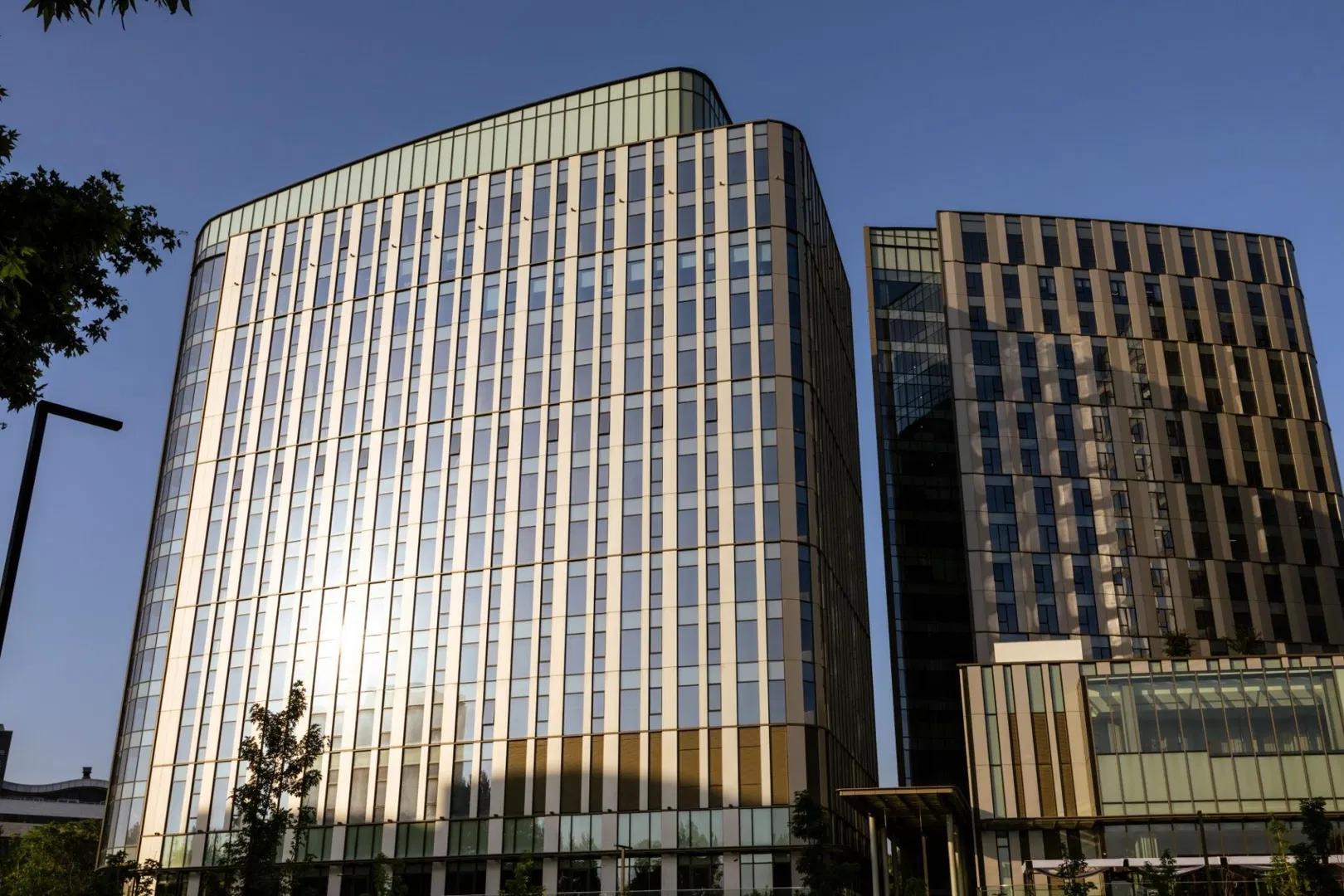
Simply ask yourself: where do you go when you need to meet someone? In all likelihood, your answer will be a coffee shop. And it is hard to believe that just fifteen years ago such a thing would have been unimaginable.
Nothing has happened to coffee itself. People drank it then, and they drink it now. What has changed is the way it is perceived in our traditionally tea-drinking society. Alongside this, there has been a shift in the reasons Tashkent residents visit a café, in what they do there, and in how long they stay.
Where Speciality begins…
It all began rather prosaically. Coffee was drunk at home, brewed in cups or even small piala bowls from sachets, or in cafés and restaurants where, on occasion, it was made from those very same sachets. Some establishments did have coffee machines, but these were largely the preserve of aesthetes, intellectuals, and hedonists. Coffee shops as standalone venues did not exist at all. Why? There was no demand, and so there was no supply. A classic case. And the very notion of "shall we go for a coffee?" simply did not exist in people's minds.
The pioneer in the effort to popularise coffee culture was the (now established) Bon! chain, followed shortly afterwards by Beans & Brews Coffee House (or simply B&B) and Chaikof. At that time, the coffee on the menus of these establishments attracted attention, yet it was not enough to unsettle the capital's deeply rooted tea-drinking traditions.
The Black Bear Kofi chain went even further, opening the country's first roastery in 2016 — an establishment dedicated exclusively to the roasting of coffee beans. The roasted beans could be taken away or sampled on the premises. I well remember the days when I was writing copy for this chain, explaining what speciality coffee was and how brewing with a Chemex differed from using a French press.
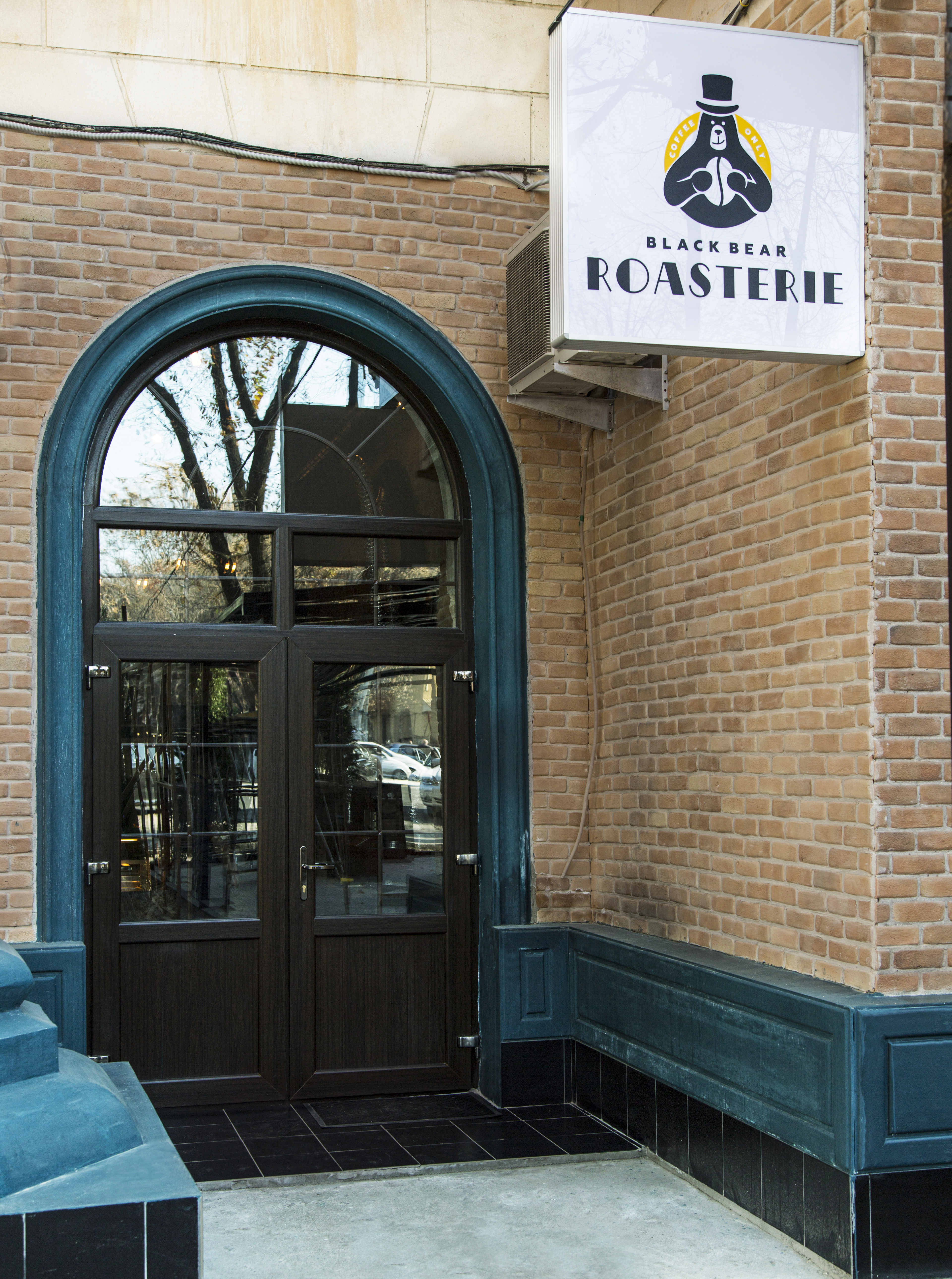 Source: Black Bear Kofi photo archive
Needless to say, the readership for such content was criminally small.
The mistake that changed everything
Yet an altogether more daring venture was undertaken by the owners of a small, independent coffee shop called Milly Coffee & Pastry the following year. Few people now recall just how bold — if untimely — that experiment was. The café sourced its beans exclusively from the Double B network, one of the pioneers of Russian speciality roasting, and operated with premium-grade equipment, including the Victoria Arduino Black Eagle espresso machine — used, it should be noted, at world-level barista championships. By the standards of Tashkent at the time, it was rather like opening a wine bar in a German city accustomed to an entirely different drink.
The experiment did not end particularly well, however. Without a proper kitchen, the establishment was not taken seriously, and when it reinvented itself as a restaurant, it was unable to sustain its audience's interest. Not even its signature fresh blueberry tart could save it — blueberries that, in those years, were simply not to be found anywhere else.
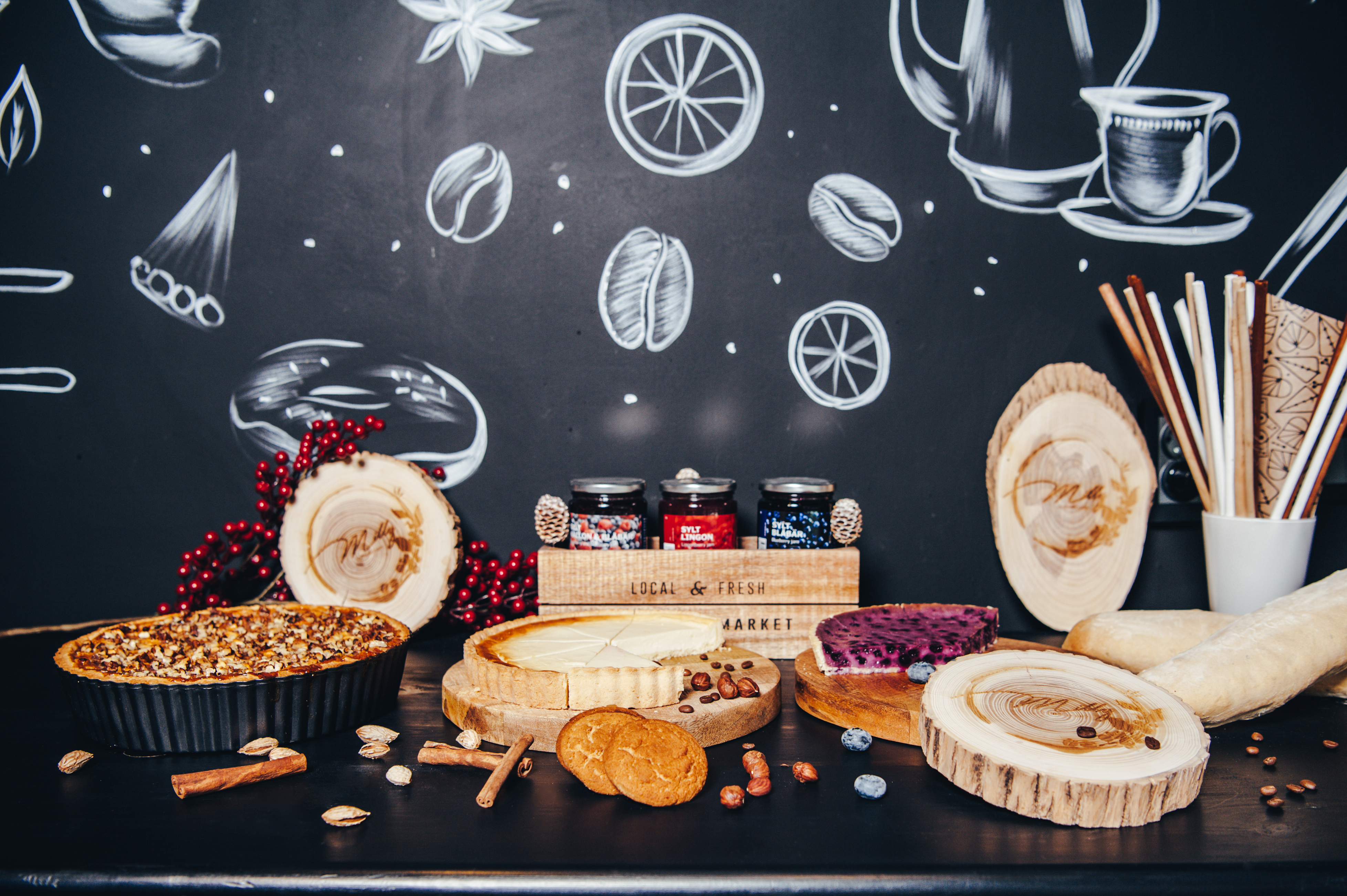 Source: Milly Coffee & Pastry photo archive
The capital was not ready for a coffee shop of such conceptual ambition. This was not because Tashkent residents have a lesser appreciation of coffee than, say, Berliners — it is simply that a market passes through several stages, and leaping over them is something that not everyone manages, and certainly not always. This affected not only Milly but a number of other coffee shops as well. High production costs, a narrow audience, weak repeat demand. Some projects transformed themselves; others closed.
A market, as is well known, first rejects a complex product and then slowly "grows into" it. The central challenge is to survive long enough for demand to materialise. Milly, regrettably, did not.
The turning point
And yet someone was buying beans from the country's first roastery. Someone was filling the rooms at masterclasses on alternative coffee-brewing methods. The seed of interest had been sown; all that remained was to wait for it to take root.
And then the most interesting thing happened — the market finally "sorted itself out" and identified a gap that could not be left unfilled. It is worth recalling here a similar type of establishment that briefly illuminated the city's cultural horizon during this period before disappearing rather abruptly: the anti-café. The most significant anti-café in Tashkent could rightly be called… well, Antikafe itself. Guests gathered there primarily to spend time together, rather than for food or drink.
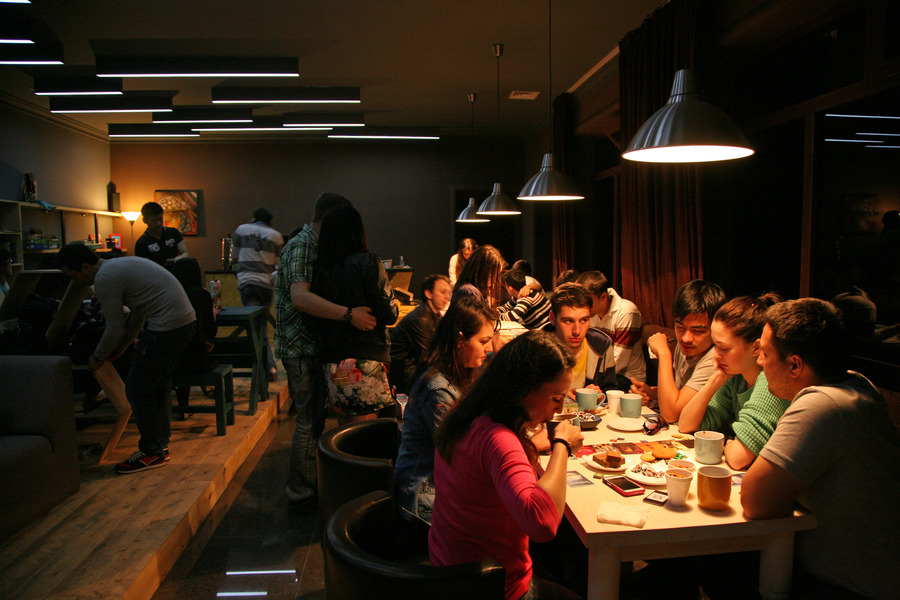 Source: personal archive of Askar Nasyrov, co-founder of Anticafe
Such establishments drew poets, musicians, cinephiles, bibliophiles, and board game enthusiasts, for they created the atmosphere of the intimate home gatherings that virtually every member of Tashkent's creative scene had heard of in one way or another. For a number of reasons, however, anti-cafés were unable to survive in their original form. Today they look and operate quite differently. The forced transformation took various shapes with varying degrees of success, but for some players in the market, one of the most effective forms it took was a transformation into… a coffee shop. A coffee shop with a particular nuance, however.
Why a pure coffee shop is a poor business
Here is an analytical fact that tends to remain off-screen in the beautiful narratives surrounding coffee culture: the profit margin on a cup of coffee is low. Particularly so if you are using quality beans, paying rent in the city centre, investing in the skills of your baristas, and so on besides. A coffee shop that sells only coffee either operates on very high footfall or it does not survive.
Hence the inevitable logic — one must sell and serve something else as well. What, precisely? The classic formula: bread and circuses. As a result, you can now eat a steak and watch a stand-up set in a coffee shop. This is not a new story. Coffee shops in London, Berlin, and New York have all been through the same. There are differences, of course. But what of the Eastern flavour?
There is a joke in Tashkent that serious business conversations take place not in offices but over a morning plov. It is one of those jokes that contains more than a grain of truth. Decades and centuries ago, the dastarkhan was the point around which rulers and their viziers made affairs of state, whilst ordinary people exchanged news, rumours, and stories.
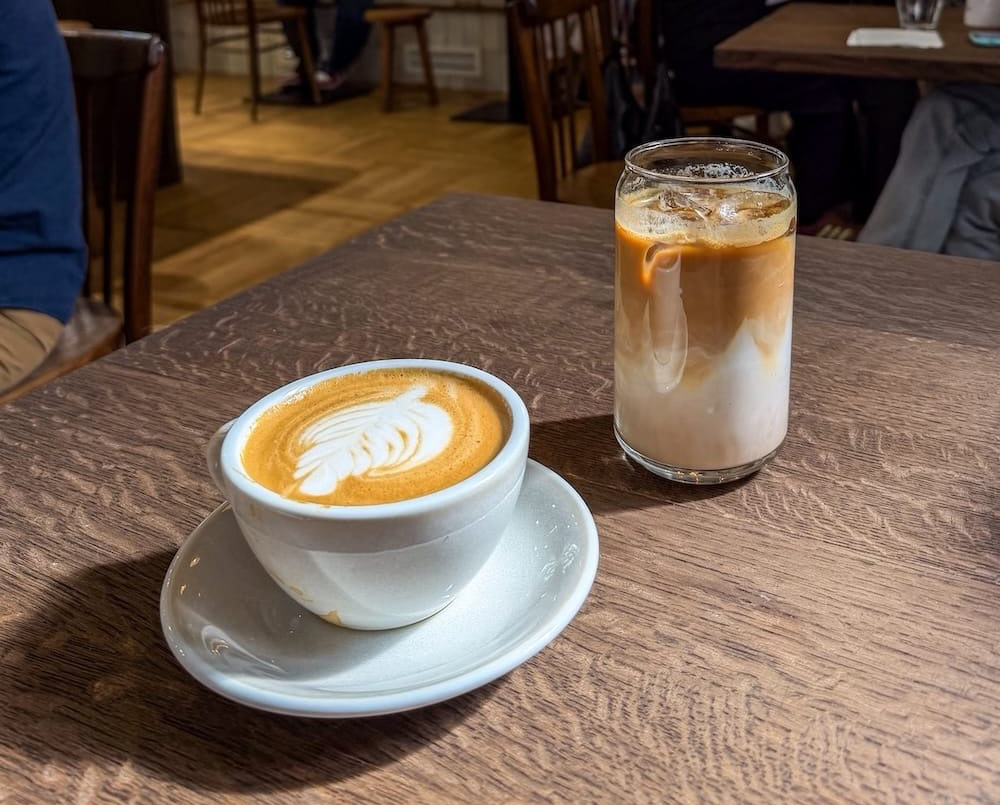 Source: Megan Starr's blog
A considerable amount of time passed before modern Tashkent found a new form for socialising and hospitality to replace the ancient chaikhana. Yet today everything seems to have fallen into place: we arrange business meetings at the coffee house, gather there with friends, and bring family members along after, say, a concert.
And, of course, every cloud has a silver lining — the pandemic made its own contribution. During that period we learned not only to queue outside pharmacy doors because entry was forbidden, but also to work remotely, since the office too was off limits. The domestic environment, however, can sometimes be a hindrance and at other times create unnecessary complications for work. Whereas at a coffee house terrace one can settle comfortably with a tablet or laptop, attend to all the day's tasks, and sip one's favourite drink at leisure.
What is life without a cappuccino?
Naturally, to claim that coffee houses have already fully replaced the chaikhana would be an exaggeration. Our chaikhana tradition is far too ancient and far too deeply embedded in our roots for that. Yet traditions belong to their own time and are forever transforming, adapting to new currents and new needs.
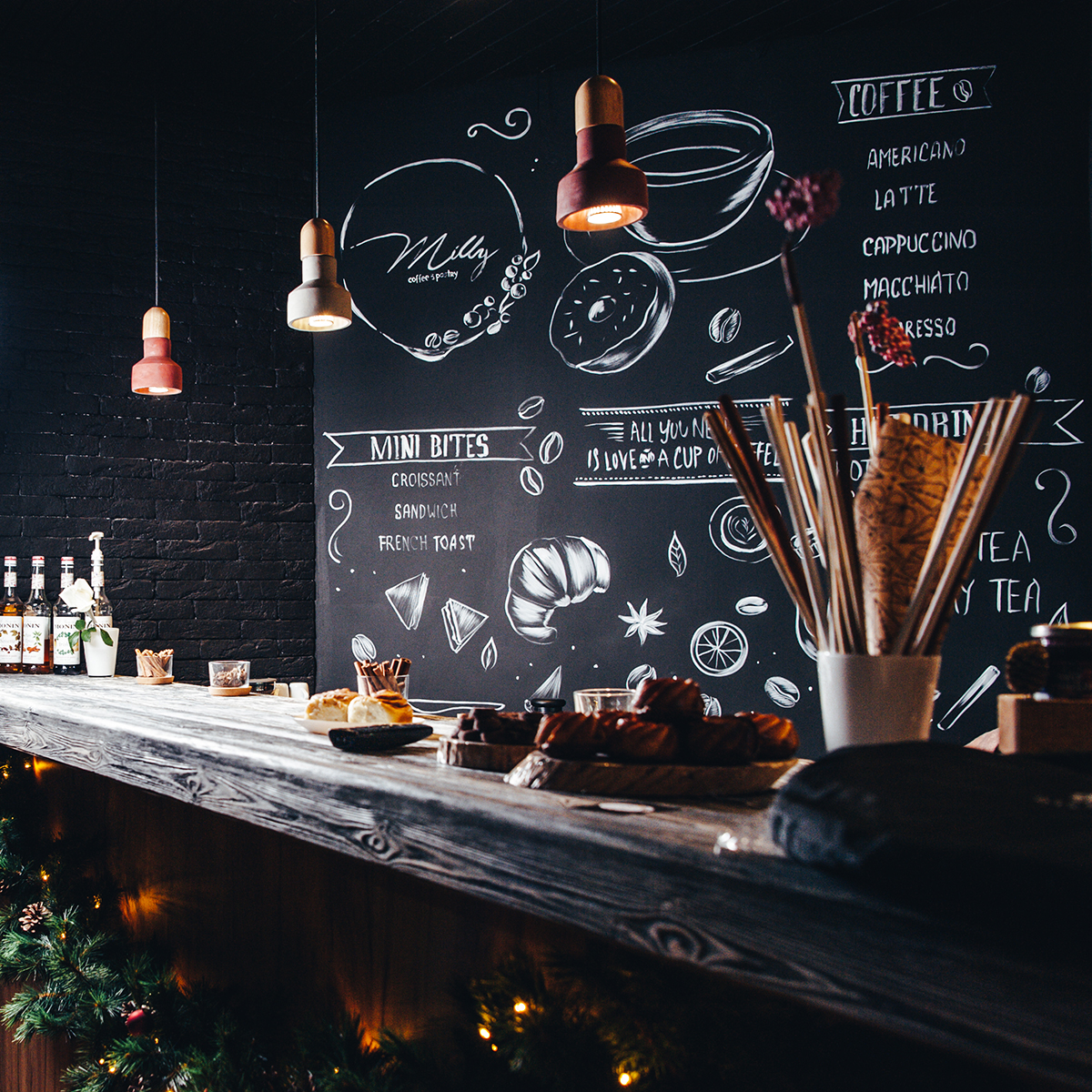 Source: photo archive of Milly Coffee & Pastry
The chaikhana is an enormous laghan of plov shared among everyone. The coffee house is a communal table at which each person has their own drink to their own taste. This, perhaps, best encapsulates the process of "reformation" — alongside the tradition of the collective, a tradition of the individual has taken its place; alongside the tradition of the long and unhurried, a tradition of the light and fleeting has emerged.And the drink… the drink is merely the most obvious and most tangible variable in this social equation.


