Cinema and Performing Arts
Dangerous Double: Why Do People Die on Film Sets?
Model and actress Sabrina Zhabbarova recently shared on Instagram how she was run over twice by a car during the filming of Ozoda Nursaidova's music video "Dilbarim" in November 2024. The driver was a minor actress who did not know how to drive. The SUV lost control, and one of its axles literally rolled over Sabrina's body. The injuries were severe—the actress is now confined to a wheelchair.
This tragic incident raises many questions: How serious is the safety issue on film sets? Who should be held responsible for the lives and health of actors? What measures need to be taken to prevent similar incidents in the future? Find the answers to these questions in an exclusive feature by HD magazine, where film industry professionals share their views.
Risks on the film set: examples
The history of cinema knows many accidents that turned into tragedies for actors, stunt performers, and technical specialists. Actress Martha Mansfield died in 1923 because a stranger threw an unextinguished cigarette into the car window where the girl was sitting. Her dress ignited instantly. Actor Brandon Lee, son of the legendary Bruce Lee, was shot dead on the set of "The Crow" in 1993. The charge was supposed to be blank, but a bullet fragment was found in the weapon, and Brandon refused to wear a bulletproof vest that day.
Furkat Fayziev, actor and director:
Injuries among stunt performers are far from uncommon. For example, Usen Khudaibergenov fell from a horse and hit a wall during the filming of the movie "Youth of a Genius," and a few years later, he suffered serious burns to his face and hands. I also recall Turkmenistani stuntman Sergey Bernichenko getting burns—molten skin on his fingers was the result of high temperatures.
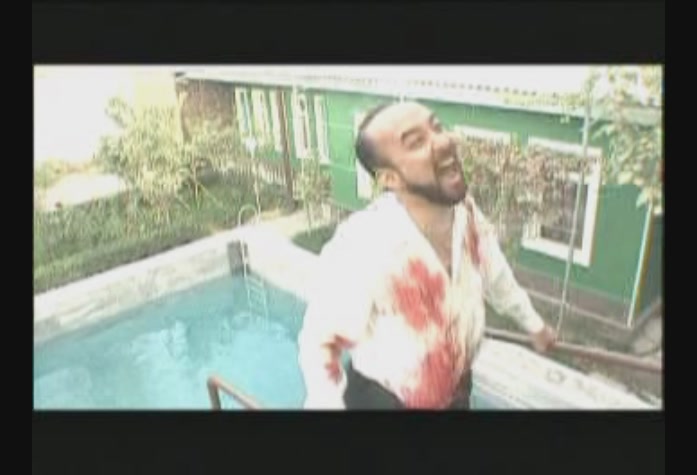
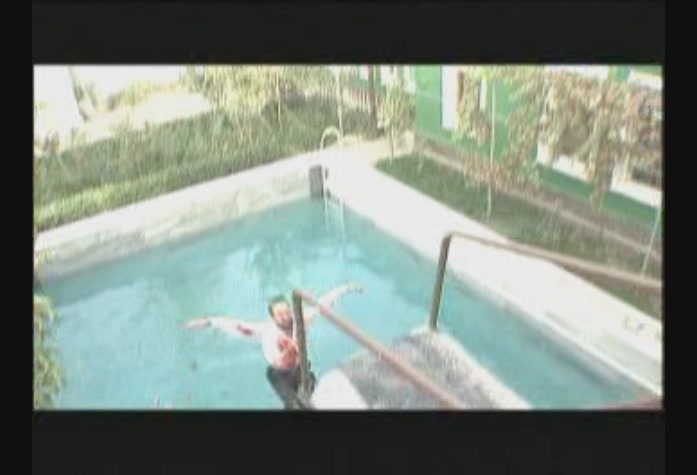
Filming a jump from the second floor into water for the movie "Shaitanat." Footage provided by Furkat Faiziev
Vladimir Isaev, top-category stuntman:
In 1999, I was invited along with a group to work on the set of director Bakhtiyor Khudoynazarov's film "Lunar Papa". There was an episode where the main character is thrown off a train for cheating at cards. I was the one who had to jump from the train at a speed of 30 km/h. After five takes, it turned out that the landing area was not cleared. I reflexively put out my arm to cushion the fall. The result was a fracture.
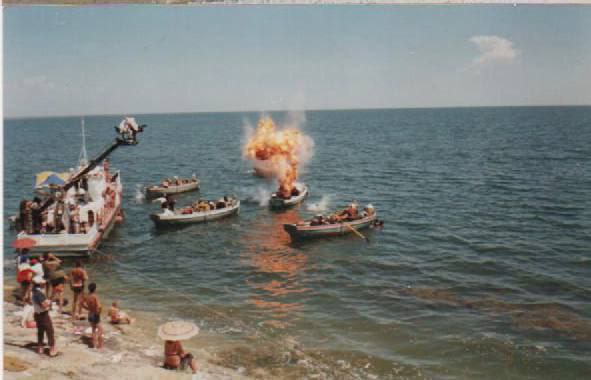
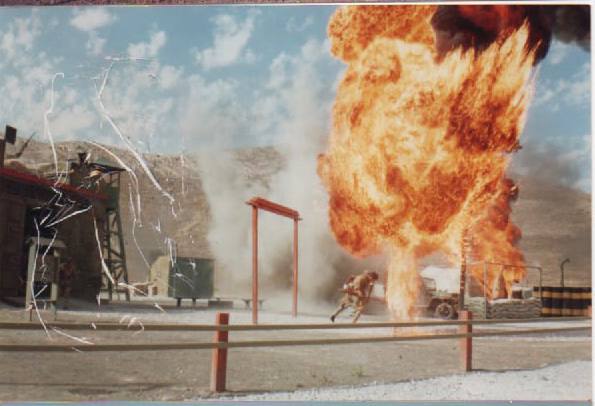
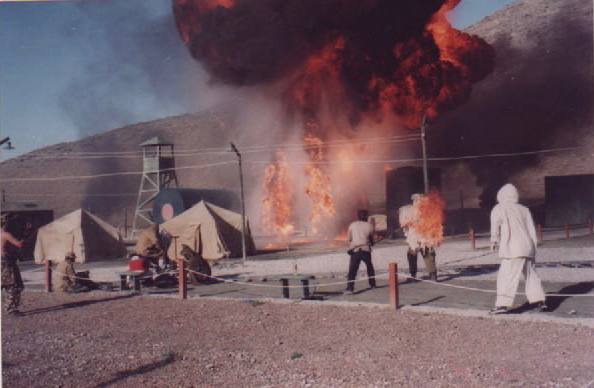
Stuntmen at work on the set of the film "Shima." Provided by Vladimir Isaev
Who is responsible for safety?
Aziza Daniyarova, producer:
All participants in the filming process bear responsibility, but each within their own domain. The producer oversees the organization, creating conditions under which safety standards are upheld and qualified specialists operate. The director is responsible not only for the artistic realization of the idea but also for ensuring risky scenes are well-thought-out and safe. The safety coordinator is a key figure during the filming of complex stunts, as it is their duty to check every detail and minimize potential threats.
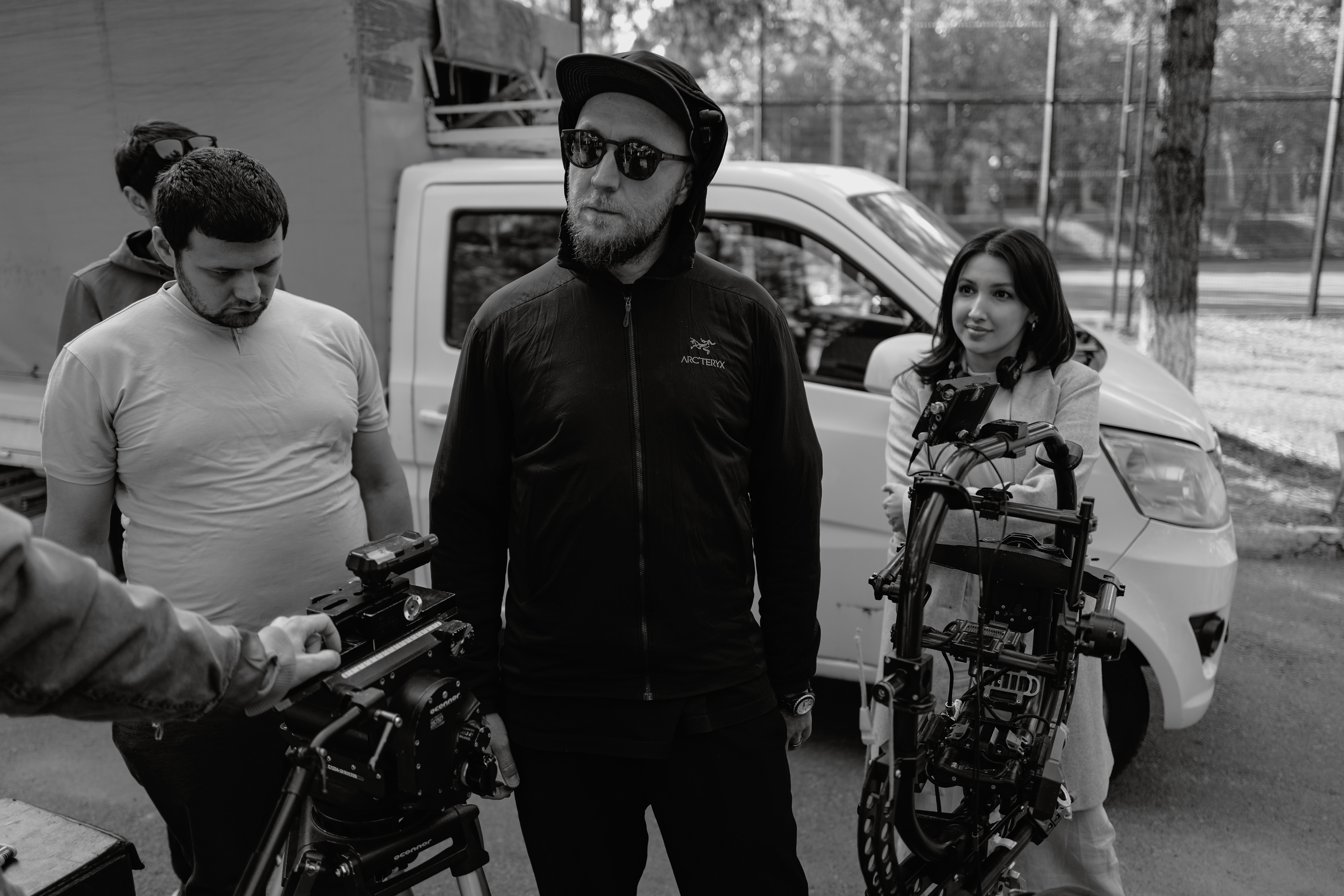
On set for a construction company project. Archive of Aziza Doniyorova
In Hollywood, this is a standard, but in Uzbekistan, it seems that on-set safety coordination is less common. Perhaps this is because we try to avoid dangerous scenes, replacing them with CGI graphics.
Anastasia Lee, producer and co-owner of production studio DBLA:
According to the law, the primary responsibility for safety on a film set lies with the employer. However, in reality, the distribution of duties within a team can vary. Responsibility is often shared between the producer, who organizes a safe process, the director, who oversees the implementation of creative ideas without harming the team, and the coordinators, who ensure all safety measures are followed. Sensible standards for distributing responsibility are not yet codified, and each production crew determines them independently.
Vladimir Isaev, top category stuntman:
First and foremost, responsibility lies with the director, as it is they who assemble the team by inviting cinematographers, production designers, costume and set designers. The second key figure is the producer (formerly the director), who approves the core crew. And the specialist responsible for monitoring compliance with safety regulations is the safety engineer, engaged by the producer. Since Soviet times, we have had a set of rules, a safety manual, and a safety logbook – an integral part of the filming process. This surprises many, but it is precisely these documents that sometimes save us.
Any filming involving risk - whether stunt, underwater, or aerial scenes - is recorded and documented. The log reflects the shooting process plan, as well as a list of all participants - from the director to the technical staff. Everyone undergoes a briefing and confirms it with a signature - still done manually.
Gulnara Ivanova, director:
The primary responsibility for safety on the set lies, first and foremost, with the producer and director. The safety coordinator is an important position, but is not found on all projects. As a rule, they are invited when complex and potentially dangerous scenes are planned, including stunt shoots.
The producer is responsible for organizational matters, the budget, and the selection of specialists, including making the decision to hire a safety expert. It is they who create the conditions in which the filming process proceeds without risks for the team.
How to make filming safer?
Aziza Daniyarova, producer:
In large projects in Uzbekistan, safety is calculated in advance; on-site, there are stand-ins and specialists who control risks. However, in small productions and independent projects, responsibility often falls on the participants themselves, although even here they try to avoid unnecessary risk.
It is necessary to analyze potential threats in detail. Insurance and clear instructions are mandatory, and for particularly dangerous scenes, the presence of medical personnel is required.
Ideally, the process should be controlled by security professionals. In Uzbekistan, life insurance practices are not yet widespread, but on large and international projects, both the team and equipment are insured.
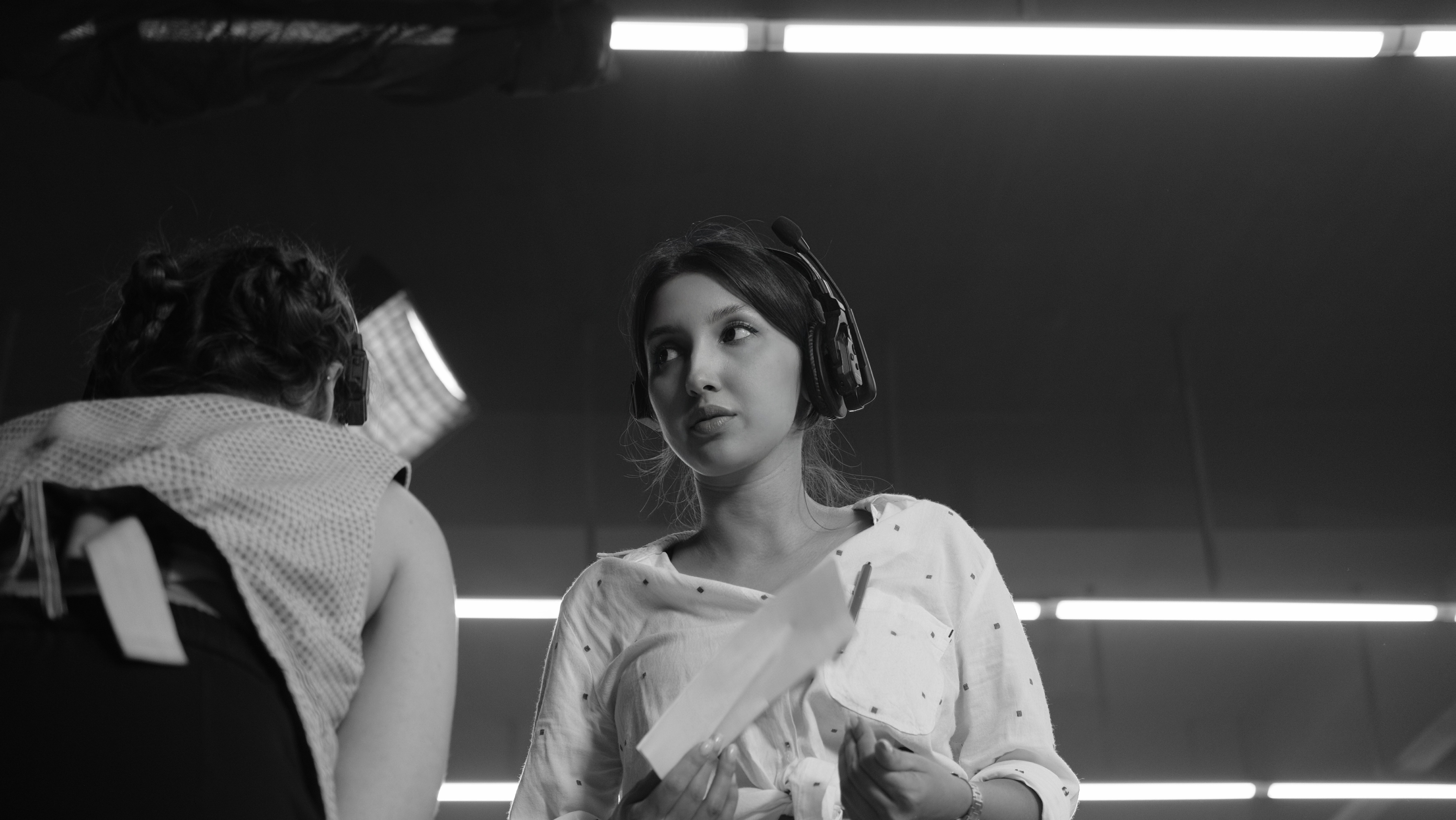
During the filming of a project for an electronics store. Archive of Aziza Danierova
Furkat Fayziev, actor and director:
Every film crew hires stunt doubles and stunt performers as needed. For example, if an actor has a driving scene but doesn't know how to operate a vehicle, they are replaced by a person with a similar physique—a double. And if a complex stunt is required, such as a fall from height, work with fire, or a horseback trick, a stunt performer with the appropriate clearance and training is engaged. However, there is negligence, inattention, and disregard for rules. In my opinion, any accident is, first and foremost, a consequence of human factors. Ideally, life and health insurance for actors and the film crew should be mandatory. But in cases where the film does not contain complex staged scenes, a detailed safety briefing may suffice.
Vladimir Isaev, highest category stuntman:
On a film set, safety must be thought through down to the smallest details. A basic set of protective equipment is necessary: barrier tapes, a water supply, a medical kit, and in some cases — an on-duty ambulance crew.
The ideal option is to have an in-house paramedic.
If scenes involve moving vehicles, permission must be obtained in advance from local authorities. The area is cordoned off, access to unauthorized persons is restricted, and the National Guard is engaged for security. This is especially important when working with pyrotechnics, open flames, or animals.
Anastasia Lee, producer and co-owner of DBLA production studio:
If there are dangerous scenes, it is strictly necessary to involve professional stunt performers. Safety must remain the priority. However, in practice, safety specialists and stunt performers are not always utilized – often the crew takes on risk management themselves.
In Uzbekistan, there is mandatory employer's liability insurance (ОСГОР), but voluntary life and health insurance for film crew participants is rare. Many simply do not attach due importance to it, although the consequences of accidents can be extremely serious.
Why do accidents happen?
Vladimir Isaev, top category stuntman:
Many actors want to perform stunts themselves, but without preparation, it's dangerous. In such cases, a stunt double is necessary, as an unprepared person risks injury. However, even professional stunt performers are not immune to accidents.
The main cause of tragedies is unprofessionalism and cutting corners on safety.
Some directors hire untrained athletes, believing their physical skills are sufficient. Mistakes in safety measures, working with fire, or explosives can lead to tragedy. Incompetent stunt coordinators, in turn, may improperly secure wires or pyrotechnicians may incorrectly prepare the mixture..
Ultimately, it is the director and producer who are responsible for safety on set, as they assemble the team and make decisions on which people's lives depend.
Read also

Newsletter
A letter from the HD editors
Once a week, we send the best stories, events, and cultural discoveries from Central Asia.