Cinema and Performing Arts
Ivan Vasilyevich Changes Dubbing: We Tell About the Golden Age of Uzbek Dubbing
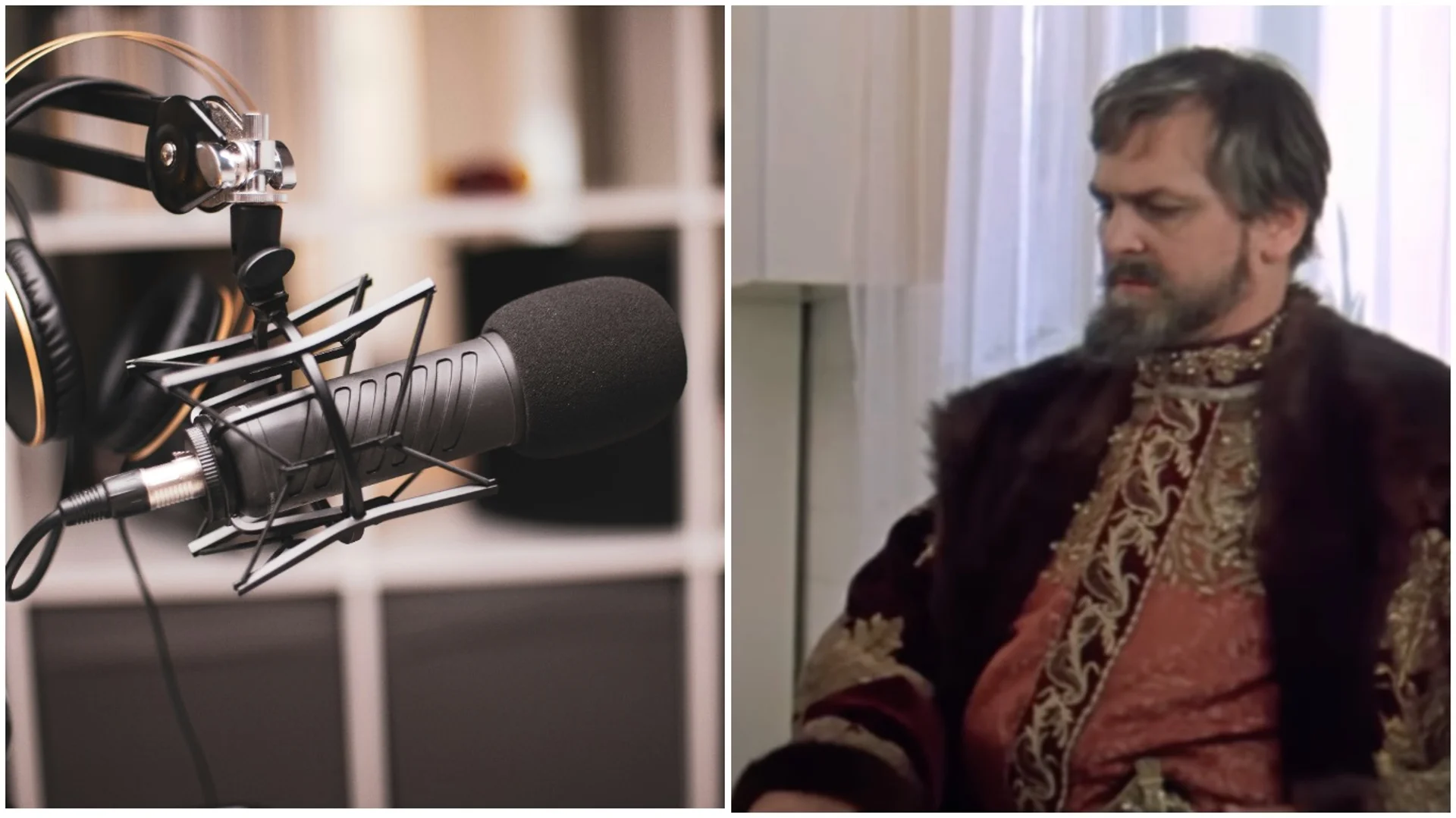
They had no right to falseness and no time for food. A breath, a cart with sound, silence before the take — and you are no longer yourself, but the Georgian pilot Mimino, Tsar Ivan the Terrible, or King Lear. Welcome to the world of Uzbek film dubbing of the Soviet period — where voices played so accurately that the local audience believed every word spoken from the screen.
When Dubbing Was a One-Actor Theater
In Soviet times, dubbing was a full-fledged creative work, where actors didn't just read lines, but 'lived' each scene at the microphone. They weren't taught to memorize the text — they were helped to get into character, understand the mise-en-scène, and capture the character's breath. Sometimes an actor would get to watch just one short episode, and then go straight into the dub, without rehearsals or partners.
Two years ago, this art form celebrated its 85th anniversary, and for the jubilee, the book "Dublyazh san'ati tarikhi" ("The History of the Art of Dubbing") by People's Artist of Uzbekistan Mukambar Rakhimova was published — an actress, director, and keeper of the memory of the golden age of dubbing.
"You are alone. They give you a scene: here is a quarrel, there is love, then a hospital. All in one voice. One actor—the entire film," recalls the legendary actress.
With a distinctive, even multi-faceted voice, Rakhimova effortlessly voiced a wide variety of heroines—from young girls to elderly women with a cracked timbre. Her voice was used for Lyudmila Prokofyevna in "Office Romance," Assol in "Scarlet Sails," Nina in "Kidnapping, Caucasian Style," Alevtina in "Zigzag of Fortune," the blonde in "Ivan Vasilievich Changes His Profession," and the grumpy grandmother in "The Stepmother." In each of her portrayals, there is refinement, temperament, and a deep understanding of character. While dubbing the role of Lyudmila Gurchenko in "A Railway Station for Two," she fainted right at the microphone—so intense was the emotional strain.
True mastery was demonstrated in the ability to accurately convey intonations, rhythm, and accents. It was a play of the voice—almost like on stage, but without makeup, costumes, or an audience.
One of the distinguishing features of the Uzbek dubbing school was absolute mutual support. No one "snatched" roles from others. Everyone knew: the lyrical heroine was one actress, a character role was another. Casting was done considering timbre, psychological authenticity, and sometimes—vocal compatibility with on-screen partners.
"If one person is late, the entire shift stops" — this is how veterans of "Uzbekfilm" recalled the rules at the dubbing studio.
Dubbing often took place at night in the halls of the "Vatan" cinema. The sound was recorded on carts, and the actors brought food, played chess during breaks, and worked with full dedication.
Legendary voices of the old school
Khamza Umarov is one of those whose voices are associated with an entire era. His voice possessed amazing power and timbre, which allowed him to voice the most diverse characters. The People's Artist of the Uzbek SSR voiced Yuri Yakovlev in the comedies "Ivan Vasilyevich Changes Profession" and "The Irony of Fate, or Enjoy Your Bath!", Yevgeny Yevstigneyev in "Zigzag of Luck" and "Old Men-Robbers", Innokenty Smoktunovsky in "Beware of the Car", and Vakhtang Kikabidze in "Mimino". There was a special magic in his voice, and in the Russian dubbing of Uzbek films, the actor often voiced his own roles himself.
Yakub Akhmedov possessed a remarkable memory and a chameleon-like voice. His dubbing of characters by Vladimir Etush—Comrade Saakhov in "Kidnapping, Caucasian Style," Anton Semyonovich Shpak in "Ivan Vasilyevich: Back to the Future"—demonstrates subtle irony. He also dubbed Byvaly (Yevgeny Morgunov) in "Operation Y and Shurik's Other Adventures." His instant immersion into the character made his dubbing a true performance.
Khojiakbar Nurmatov is the voice of Anatoly Novoseltsev in "The Office Romance," adult Simba in "The Lion King," the beauty salon manager in "The Incorrigible Liar," and Makar in "The Tale of the Poor Painter." His intonations carry brightness, intelligence, and sometimes a slight bewilderment, perfectly suited for these roles. He has also lent his voice to many of his colleagues in Uzbek films. Over the years, Rashid Malikov, Bakhtiyar Zakirov, Abror Tursunov, and others have spoken with the voice of Khojiakbar Nurmatov.
Tulkin Tozhiev is a master of precise character portrayal. He voiced Leonid Kuravlev in the comedies "Ivan Vasilievich Changes Profession" and "You to Me, I to You," Alexander Pankratov-Cherny in "Where is Nofelet?," Oleg Basilashvili in "A Railway Station for Two" and "Office Romance," as well as the universally known Shurik (Alexander Demyanenko) in Gaidai's comedies.
Rimma Akhmedova is the voice of the heroines in the films "Moscow Does Not Believe in Tears" (Katerina), "Office Romance" (Olga Ryzhova), "Ivan Vasilievich Changes Profession" (Zinaida, Shurik's wife). Her intonation had a special feminine firmness combined with lyricism. She didn't just read the text—she breathed it.
Dias Rakhmatov gave voice to Georgy Vitsin and Savely Kramarov in the films "Kidnapping, Caucasian Style", "The Incorrigible Liar", "Ivan Vasilievich Changes His Profession". The comedic roles required subtle work with rhythm and absurdity. He knew how to be funny, but not grotesque, and this was a rare quality.
Obid Yunusov is the voice of Mikhail Pugovkin in Leonid Gaidai's comedies ("Ivan Vasilievich Changes Profession", "Operation Y"), Vyacheslav Tikhonov in "We'll Live Till Monday", and Leonid Kuravlev in the film "The Life and Amazing Adventures of Robinson Crusoe". It was to him that Khamza Umarov entrusted the role of King Lear — because he believed that Obid Yunusov, with his strained timbre, would convey the tragedy and restrained power of the role with special expressiveness. His voice was rich in nuances, and his work was distinguished by precise intonation and musicality.
The voices of old actors still resonate today — on tapes, in videos, in the memory of viewers. It was a school where the voice was not a tool, but the substance, and where every word meant more than just text.
What remains of the great school
Since the 1980s, film dubbing has begun to lose ground. Budget cuts, the shift to a four-voice scheme, and the departure of the older generation—all of this weakened the distinctive Uzbekfilm school of dubbing. Today, dubbing often boils down to "reading the text" rather than acting. But the voices of that era still resonate—in memory, on tape, in digitized clips that multiply on social media and garner hundreds of thousands of views.
Soon we'll tell you more about the actors who turned dubbing into an art, not just a craft — stay tuned and don't switch.
Did you like the story? Follow us on Instagram and Telegram — there's even more interesting content there.
Read also
Newsletter
A letter from the HD editors
Once a week, we send the best stories, events, and cultural discoveries from Central Asia.