Music and Audio Art
Songs of the steppes, mountains, and deserts: the ethnomusic of Central Asia in the 21st century
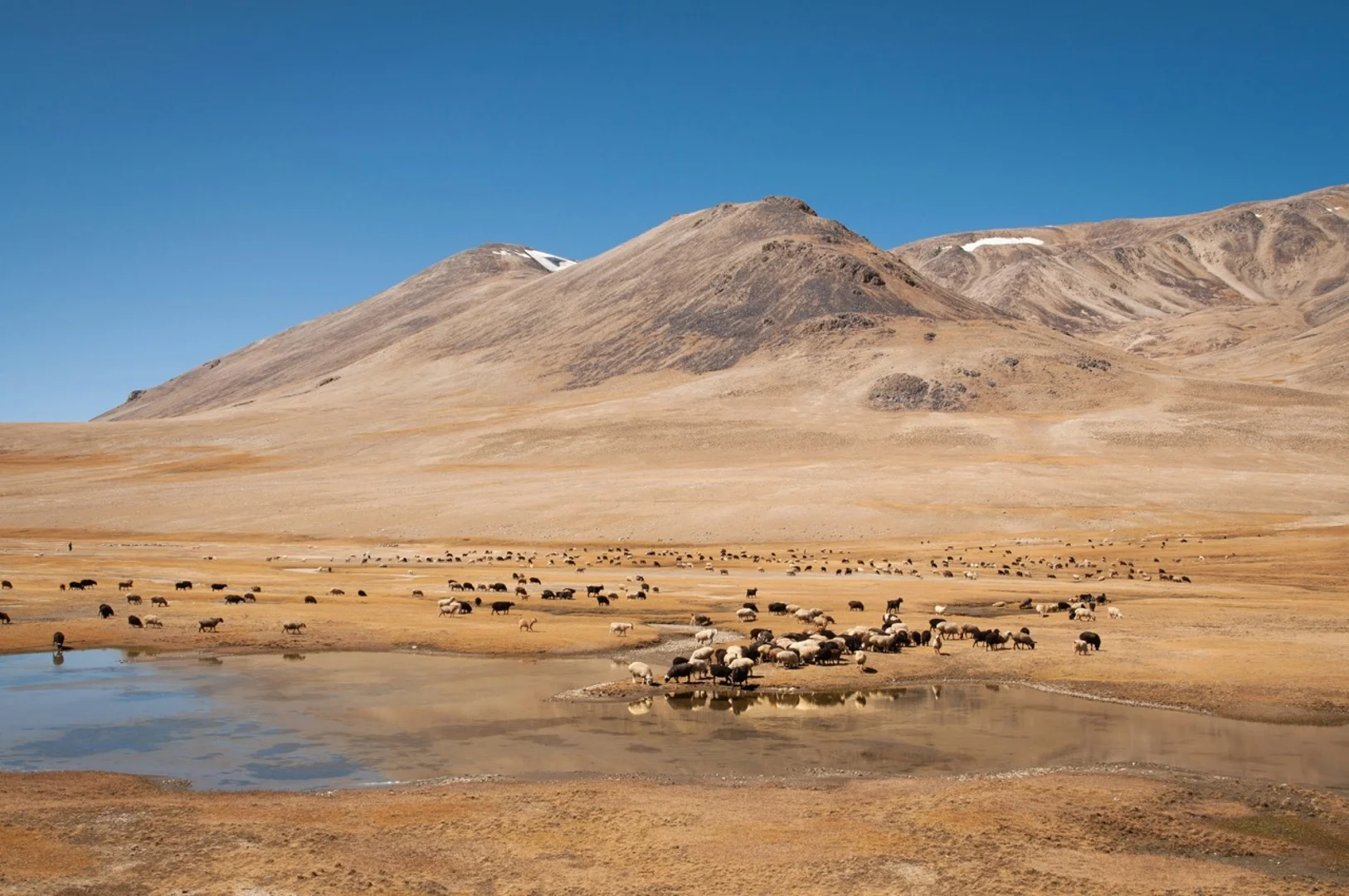
Ethnic motifs are increasingly permeating all spheres of cultural life in Central Asia. For example, the recent track by the Bashkir group AYYOLA has been actively covered and translated into Turkic languages. Or one can recall the trend around Shahzoda's song — Qayt. And in December 2023, "Pyala" was literally playing from every iron and microwave. HD magazine found out which ethnic groups exist in Central Asia.
Contemporary ethno-music has long transcended the boundaries of solely folk instruments. In a single composition, the sounds of a dombra and an electric guitar, throat singing and beatboxing can coexist. This gives rise to subgenres—from ethno-jazz to neo-ethno-folk.
Kazakhstan: The Electric Dombra and Nomadic Rock
Ulytau
The legendary Kazakh instrumental group that started the modern history of ethno-rock in the country. Their signature is powerful küis arranged for dombra, violin, and electric guitar. In their performance, Kurmangazy coexists with Vivaldi, and the steppe energy sounds like hard rock. The main hit — "Adai" from the album Jumyr Kylysh, — is known far beyond the region.
Roksonaki
One of the first Kazakhstani groups to combine traditional instruments (dombra, zhetygen, kobyz) and shamanic motifs with reggae, hip-hop, and world music. And all of it in Kazakh! The guys "made waves" at the Smithsonian Folklife Festival in the USA, where they became a cultural discovery. Their style is Kazakh identity in a free, experimental form.
Turan
Five multi-instrumentalists, masters of dozens of rare Kazakh instruments and the technique of throat singing. Their performances are a ritual where ancient heritage receives a vivid stage embodiment. Again, everything is in the Kazakh language! The band's concerts take place all over the world—from Europe to Japan.
HasSak, Steppe Sons
A new wave of Kazakh ethno-groups actively working with visuals, YouTube, and TikTok. Steppe Sons stand out in particular—their covers of jazz standards and Kazakh folk songs sound fresh and stylish.
Tigrahaud
A group with a hard-hitting ethno-rock sound and a powerful overdriven dombra. It sounds as if shamans gathered to play metal in the steppe.
Arkaiym
A project in the neo-ethno-folk genre, combining ethnic vocals, throat singing, electronic beats, and dream-pop aesthetics. Their performances are a shamanic mantra in the language of the 21st century.
Aldaspan
The first band to start using the electro-dombra. They amplified the sound of the traditional instrument and brought it into the realm of heavy rock. They call themselves the loudest ethno-band in the country.
The Magic of Nomads
An ensemble that blends Kazakh folklore with jazz and symphonic presentation. They attract a young audience through an accessible format—without losing authenticity.
Abzal Siguat
A multi-instrumentalist who has taken the internet by storm with his videos performing global hits on 20 Kazakh instruments. His goal is to bring the dombra and kobyz back into the sphere of interest for young people.
Uzbekistan: Eastern Melody and the Voice of the Desert
Sevara Nazarkhan
One of the main stars of the Uzbek stage and an icon of world music. Her album Yol Bo’lsin was released on Peter Gabriel's label and introduced the world to Uzbek folk music in a new, subtle arrangement. Sevara sings and plays the dutar and doira, combining maqam with singer-songwriter music and Sufi poetry. Her concerts feature both ancient chants and pop ballads with an Eastern flavor.
Dalahast
A group performing compositions in the ethno-fusion genre: verses by contemporary poets in Uzbek, a funky foundation, rock improvisations.
Salamat Ayapov
One of the main voices of the Karakalpak desert. Here you'll find the kobyz, throat singing, and the energy of the nomadic way of life. The track Qiz quwiw sings about testing young men for agility, strength, and skill in handling horses.
Dinara and Zinatdin Nuratdinov
The brother and sister from the city of Kungrad have long been known on the Karakalpak stage. They are professional musicians who master the folk instrument - the dutar. She is a powerful Karakalpak vocalist, he is a master of throat singing.
Kyrgyzstan: Nomadic Soul in the Rhythms of Jazz and Rock
Gulzada
An ethno-rock diva with the voice of a shaman and the charisma of a rock star. Her songs feature the river melodies of Naryn, throat singing, jazz improvisations, and rock guitar. She rose to fame with the hit «Мен кыргыздын кызымын» and has remained true to herself ever since: she performs in national costume and composes songs about the land, roots, and women. Her «Аппак Суу», performed with a komuz and saxophone, is exemplary ethno-jazz.
"Kambarkan"
A folk ensemble with history and respect est. 1987. It was the first to bring the "pure" Kyrgyz sound to the stage: komuz, kyl-kyyak, jaw harp. The ensemble's soloist is the great Salamat Sadikova, — "the voice of Kyrgyzstan". Today, "Kambarkan" is being renewed: young performers play ancient melodies with subtle electronic inserts, without losing the spirit of tradition.
Kanykei
An pop singer who skillfully blends pop with folk. She employs a folk singing style, incorporating folklore motifs into her lyrics. An early precursor of ethno-pop in Kyrgyzstan.
Tajikistan: rock from the roofs of the Pamirs
"Shams"
Pioneers of Pamir rock from Khorog blend folk melodies with the drive of electric guitars. Songs like "Ai yeru" and "Man yeri tuiyam" have long become favorites at weddings and in the playlists of mountain youth.
Siyodiddin Juraev
A master of playing the rubab — an instrument with a thousand-year history. Performs with international projects, popularizes Pamiri improvisation.
Turkmenistan: The Sound of Archive and Avant-Garde
"Firyuza"
A group ahead of its time. In 1979, they were the first in the region to perform compositions in the style of ethno-jazz: dutar, wind instruments, and jazz-rock on a single record. The album became cult and fetches hundreds of dollars on vinyl. "Firyuza" was not allowed onto the big stage, but they became pioneers.
"Gunesh"
The legend of Turkmen ethno-jazz from the 1980s. The group created complex compositions where dutar, synthesizers, and throat singing sounded as one. Their records on the "Melodiya" label are being reissued in Japan, and their music inspires modern producers.
If you resonate with the steppe marches, desert chants, and shamanic rhythms in a modern presentation — the ethnomusic of Central Asia is ready to surprise and inspire. This is not only a tribute to the past but also a confident look into the future.


Newsletter
A letter from the HD editors
Once a week, we send the best stories, events, and cultural discoveries from Central Asia.