Music and Audio Art
From Uzbek Eurodance to Little Big aesthetics: analyzing (and revisiting) Lola's best hits
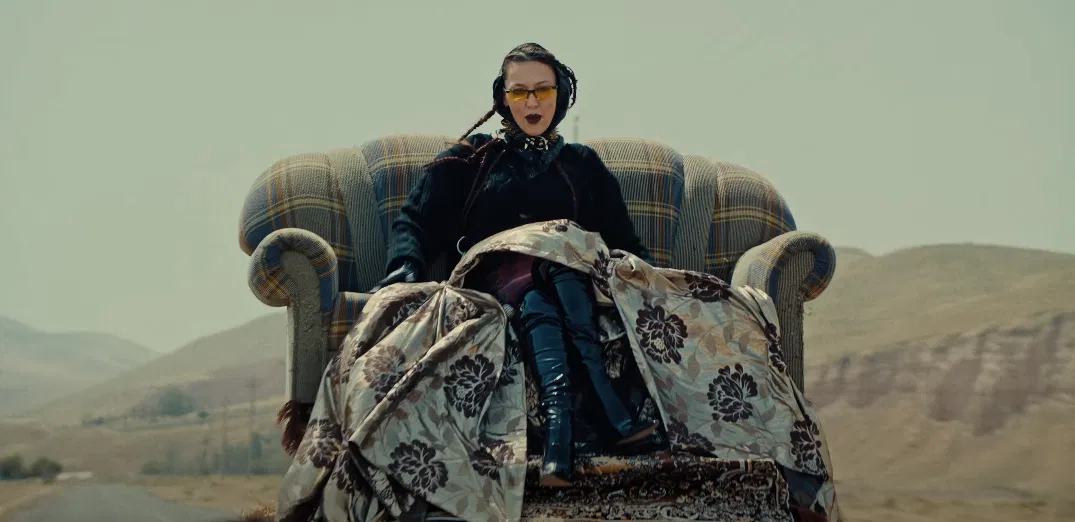
On July 11th, the music video for the song "O’zicha" by singer Lola Yuldasheva—one of the country's most popular performers—was released. The new work is a satire on the lifestyle entrenched in society. This is far from the artist's first bold statement. HD Mag tells the story of the singer's creative and life journey, which has led her from pop hits to manifestos for women's rights and freedoms.
Early Era
Lola Yuldasheva was born in 1985. Her father, Ravshanbek Yuldashev (1961-2020), was the founder of the Tarona Records recording studio and one of the most influential figures in Uzbek show business. However, he did not send his daughter to music school — instead, Lola entered Westminster University in Tashkent.
Her creative journey began early: she recorded her first song at the age of ten. Her first album, Netayin ("My Dear"), was released in 2002—when the singer was only 17. Two years later, the next album, Muhabbatim ("My Love"), saw the light of day, and a year after that, the third album, Topdim Baxtimni ("I Found My Happiness").
Despite individual experiments, the musical style overall remained characteristic of Uzbek pop music: a distinctive Eurodance with elements of folk instruments, electronic vocal processing, sound mixing into the center channel (so that the music sounds the same in the left and right headphones, without creating spatial effects), simple structures without bridges (transitions from verse to chorus) and codas (instrumental or vocal digressions).
Hits like Netayin, Toshkent–Samarqand, and Undan Nimam Kam ("What Am I Lacking?"), performed as a duet with the leader of the extremely popular group Bolalar, Tokhir Sadykov, were distinguished by their bright, memorable melodies and thoughtful lyrics. It was precisely these songs that made Lola widely known in Uzbekistan. In the comments on the YouTube music videos, one can see that these songs are associated with people's distant youth.
At the same time, under the pseudonym "Maya," Lola tried to make a name for herself in the Russian show business as well. Despite the song "Lost" being well-received on the radio, for unknown reasons, promotion in the Russian market was suspended.
Unhappy Marriage
In 2005, Lola got married. As it later became known, despite her husband's promises not to interfere with her career development, the singer was forced to leave her creative work and devote herself to her family. According to the artist's words, her husband even restricted her communication with close ones and friends.
In the end, Lola could not come to terms with the infringement of her rights and got a divorce, taking her son and daughter with her. Later, the singer appealed to her fans, urging them to value "their one and only life" and not allow their husband to be a "dictator and master."
After her divorce, Lola returns to music. In 2011, she released the album Senga ("To You"), and the following year, Sog'indim ("I Missed You"), which were warmly received by an audience that had been waiting for her new songs. The sound of both albums is typical both for Lola's work and for Uzbek pop music in general. However, the 2014 release Kel ("Come") set a new direction for the singer's creative development—it offered more diverse instrumental arrangements and songs in English.
In 2016, the album Bilmaysan was released, which, due to the lack of a common stylistic theme and the inclusion of remakes of old songs, could be called a mixtape. Subsequently, Lola would release precisely such compilation albums.
It is noteworthy that in Bilmaysan, Lola presented covers of the song "Zhuravli" ("The Cranes"), performed by Mark Bernes, and John Lennon's "Imagine." In 2023, she herself will be evaluating the skill of performing others' songs, joining the jury of the Uzbek version of the show X-Factor.
New period
In 2015, "Uzbeknavo," which at the time controlled the activities of artists in Uzbekistan, revoked Lola's license for concert activities. The reason was her performance in a red dress, which was deemed "excessively revealing" and "not in line with the country's mentality."
To continue her career, Lola was forced to make a public apology. She also participated in several state events, including an Independence Day concert. In the end, a special commission restored the singer's right to perform.
A similar scandal occurred nine years later. At an event dedicated to women's emancipation, Lola appeared in a dress that drew criticism online: according to some users, it excessively emphasized the contours of her breasts. As a result, the singer was summoned for a "preventive conversation" at "Uzbekconcert" — the successor organization to "Uzbeknavo".
RELATED READING:
Культура отмены: как она устроена и как (не) работает в УзбекистанеВесной этого года тема кэнселлинга вернулась в информационное пространство региона – в соседнем Казахстане за рукоприкладство «отменяют» звезду телесериалов, а уроженка Костанайской области обвиняет рэпера Оксимирона в домогательствах. А что с этим в Узбекистане? Разбираемся, как эхо процессов, давно идущих в западных обществах, отдается в нашей стране и какие формы принимает здешняя (спойлер: очень самобытная) культура отмены.mag.humodoc.com
Lola could not help but respond to attempts to ban her creativity. In 2019, the song and music video Sevgingni Menga Ayt ("Tell Me About Love") were released. The video depicts the activities of an artistic council, portrayed in an exaggerated "Soviet" style: the table arrangement where censors sit in strict suits, the setting, the red curtain, and the propaganda posters on the walls are reminiscent of cultural centers of that era. It also references the list of "potentially dangerous women" prepared by the city women's committee (including those suffering from depression, women with disabilities, the unemployed, those close to divorce, etc.), which had caused significant public outrage shortly before.
The clip marked a new stage in the singer's career—a time of bold social statements. In 2023, she performed the song Otmagay Tong ("Let the Morning Not Come"), written by Tokhtasin Jalilov to the verses of Alisher Navoi. The video featured women from Uzbekistan who have achieved outstanding success in sports, arts, and management, as well as representatives of the future generation and ethnic minorities. Lola conveyed her message directly: Dunyo beshigini ayol tebratadi ("A woman rocks the cradle of the world").
Finally, in 2025, Lola presents O’zicha ("In Her Own Way") — a statement on the petit-bourgeois values that often define the aspirations of traditional patriarchal society: "wedding, house, car," as well as the attitude towards a woman as her husband's property. The song is built on a subdued dance beat with a prominent bass and Lola's quiet vocals, which drew inevitable comparisons to Billie Eilish's style during the "Bad Guy" era — a noticeable contrast to the sound of her early albums.The video was directed by Alina Pyazok — a member of the Russian punk-rave group Little Big. The visual style of the group, which gained fame through the video Skibidi, which garnered millions of views on YouTube, is also evident in the work on O’zicha. Absurdly ironic gags — like a donkey dancing to a pipe — recall the aesthetic of Little Big's videos. Lola's dance moves also echo the group's signature choreography, complementing the video's ironic mood.
Film Career
In addition to music, Lola also acted in films. Her debut took place in 2003, already after the release of her first albums, in the melodrama "Sevinch". The plot is simple and typical of the sentimental genre: the main character, upon learning of her terminal illness, decides to distance herself from her beloved to avoid breaking his heart.
Subsequently, Lola starred in five more films, the last of which was released in 2015. In the comedy Kelgindi kuyov ("The Visiting Groom", 2005), Lola demonstrated that she was capable of not only melodramatic but also comedic roles. Actor Farhod Abdullayev, who played the role of her character's father in the first film, commented on Lola's acting talent as follows:
"Before, I was against singers acting in movies. But after working with Lola in the film 'Sevinch,' my opinion completely changed. She always performed the roles entrusted to her honestly and at the highest level."
However, the films Lola starred in after 2005 did not achieve great success, although her film experience was certainly useful for the singer when shooting music videos.The story of Lola Yuldasheva could have become one of many examples of how popularity gained at a young age (especially under the patronage of influential relatives) did not lead to a successful adult life. However, Lola found the strength to, despite an unhappy marriage and state bans, return to creativity, add new sound and new themes to the country's mainstream music, and — through vivid songs and music videos — become the voice of women defending their rights.
You can listen to Lola's greatest hits in our playlist. If you liked the story, share it on social media and subscribe to our Instagram and Telegram.
Newsletter
A letter from the HD editors
Once a week, we send the best stories, events, and cultural discoveries from Central Asia.