
 Shagayu.uz
Step by Step: How Shagayu.uz Became an Urban Movement
— How did the Shagayu.uz Initiative Come About?
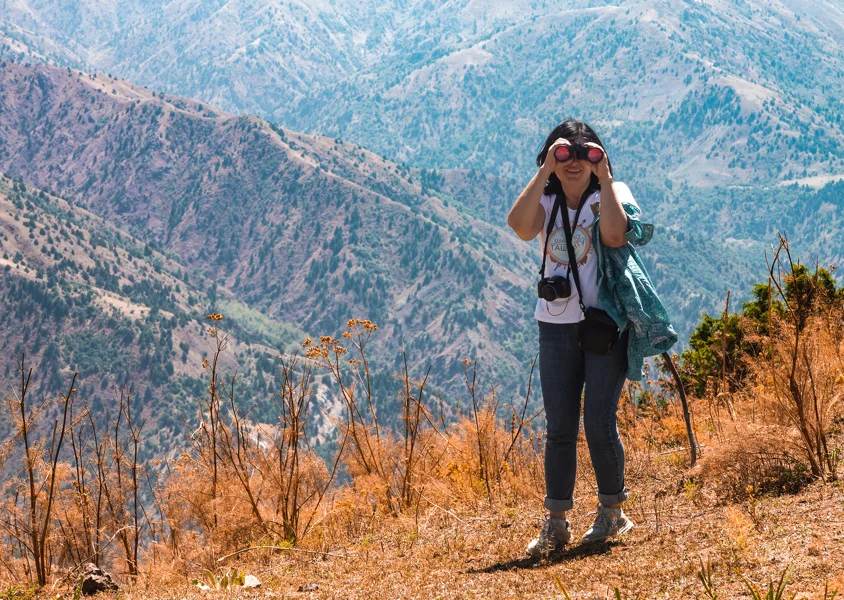
— Today everyone counts their steps, 10,000 a day. But in 2017 that was still new. Fitness apps had just started to appear, and enthusiasts were sharing screenshots. And I thought: what if you walked consciously, looking around, understanding where you live?
Around the same time, I was with the Young Photography of Uzbekistan group at an exhibition at the House of Photography. After the show, we simply went out to walk through Tashkent with our cameras, photographing faces, light, the city.
Later the group dissolved, but I kept the idea: to walk with attention. On 6 May 2017 I posted the first announcement on the Ekskursomania community page. The next day we met near Mirzo Ulugbek Park and set off. We simply walked, without a guide, without any goal except one: to see our city differently. That is how the Shagayu po Tashkentu group emerged.
 Shagayu.uz
Logo of the "Shagayu.uz" project
— How did participants react?
— The format caught on quickly. People walked, observed, talked and sometimes simply stayed silent. They were surprised: “Are there really places like this in Tashkent?” Of course there are, and plenty of them. One of the walks gathered 56 people, and that was when I realised people truly needed this. We were rediscovering the city step by step. And it felt real.
— The project started as a local initiative. How did it grow into something larger?
— Around 2017–2018, we started travelling beyond Tashkent: first to the outskirts, then into the mountains. Our earliest routes were simple: Sukok, the Solar Institute. At the time, Sukok was not yet considered a tourist destination. There was no commercial tourism, no agencies, no guides. We would meet in Kuylyuk, travel to Parkent and then continue by shared transport to the reserve. Everything was built purely on enthusiasm. Of course, organised tours following our routes appeared later, but our own trips were filled with a sense of romance and pure discovery.
Gradually, our geography expanded further, and we began travelling to neighbouring countries. One of the most memorable moments came in December 2018, when we crossed the border for the first time. First came Khujand in Tajikistan, then Shymkent in Kazakhstan. Everyone covered their own expenses. We returned exhausted, but full of impressions.
— The COVID-19 pandemic changed many things, including tourism. Did it affect your projects?
— Of course. COVID brought its own adjustments: we met less often and I spent more time walking alone or in very small groups. But the habit of exploration remained. I still try to choose places untouched by mass tourism. That remains my principle.
— What draws you most strongly to these journeys?
— Abandoned towns. Yangiabad in Uzbekistan, an old mining settlement in Tajikistan… We were among the first to travel there. Later came commercial tours, then interest from local authorities. Yangiabad, for example, is now developing infrastructure and tourism projects. And I see that as a result: these places are coming back to life. Which means those journeys were not in vain.
As You Walk, the City Comes Alive
— Do you still organise city walks?
— Much less often now. If I do, they are usually themed routes: walks dedicated to mosaics, Chilanzar, sometimes quizzes or quests. Simply taking people around the city no longer interests me. My perception of time has changed, and so has my understanding of the value of knowledge.
— And none of this brings in income?
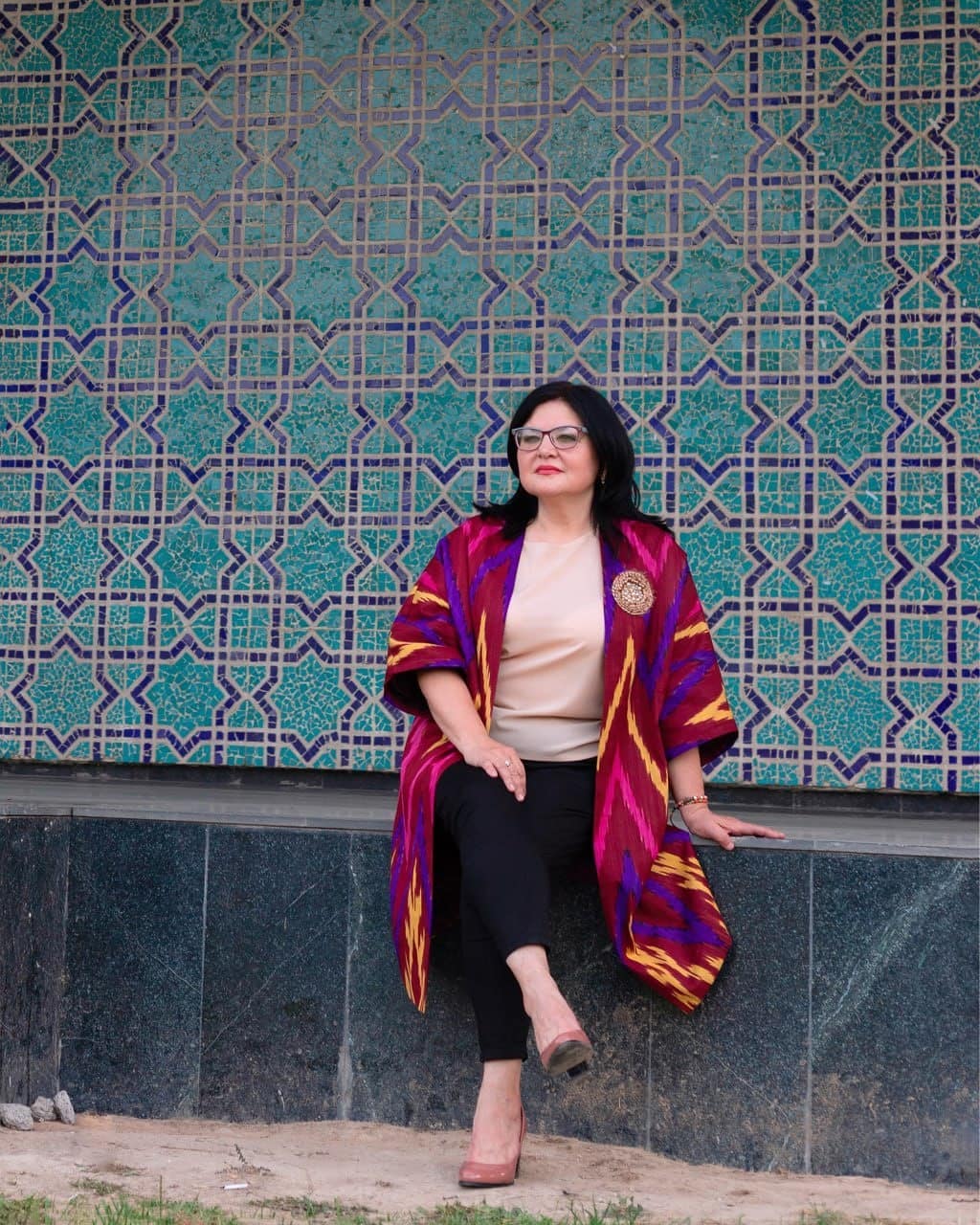
— It took me seven years to give an honest answer to the question: “Why don’t you monetise the project?” I always used to reply: “Because I’m not a professional guide, and I don’t have a licence.” But last year I finally completed guide courses and received a diploma. To be honest, much of what they taught us I had already been doing intuitively myself: walking the routes, calculating the logistics, planning the timing, knowing where to turn and where to stop. Officially, I do not work as a guide now, but if someone invited me again, I would put on my trainers, take my camera and head out once more. And the city would walk with me.
— And beyond Uzbekistan, what inspires you when you travel?
— I started travelling alone only fairly recently, but I have already been to Baikal, India, London and Bhutan. Many people are afraid of solo travel, though fear usually exists only in the mind.
Baikal impressed me with its silence. Bhutan with its sense of inner calm and absence of tourist bustle. I travelled to Europe for work, first for a conference in London, then on to Scotland. I do not chase brands. I invest in experiences.
— What about lesser-known routes within Uzbekistan itself?
— I love rural routes. Take the village of Varganza in Kashkadarya, for example. It has entire pomegranate orchards, although they were badly damaged during the winter of 2022–2023. Or the Arab diaspora communities, where settlers weave unique flat-woven kelim carpets and women still wear traditional dress. It feels like a living museum.
In London, I was struck by the approach to souvenirs. Every museum has its own distinct selection. It is smart marketing: tourists leave not simply with a magnet, but with an impression they want to relive. Here, everything tends to look the same. A great deal gets lost, even though the potential is enormous. We underestimate our own strengths.
From Walking Tours to Mosaic Archaeology
— How did your interest in Tashkent’s mosaics begin?
— It did not happen all at once. One day, I simply realised I had started noticing things that had previously escaped my attention. As we walked through the city, I found myself paying more and more attention to the mosaics decorating building facades. At the time, I was already part of the Facebook community Young Photography of Uzbekistan, where I shared my photographs. They were amateur pictures taken on a phone, but they were sincere.
Then one day I came across a post by Oleg Burnashev. He announced the creation of a new group called Mosaics of Uzbekistan and invited people to share photographs of mosaics discovered during walks around the city. I responded immediately. I already had photographs, so I began posting them in the group. Soon afterwards, Oleg wrote to me personally. He suggested that I contact Valentina Zharskaya, the widow of artist Nikolai Zharsky, and their daughter Tatyana, in case they still had archives preserved at home. Of course, I wrote to them. I had so many questions.
Valentina Alekseyevna turned out to be a very open person. We fell into conversation, and she suggested I meet Yuri Georgievich Miroshnichenko, the chief architect of the Tashgiprogor Institute and a close friend of the Zharsky family.
He told me that after the 1966 earthquake, the Zharsky brothers, Pyotr, Nikolai and later Alexander, arrived in Tashkent. At first, they worked at Tashgiprogor before moving to the DSK-1 housing construction plant. It was there, among construction debris, broken tiles and ceramic fragments, that the idea emerged which would later transform the visual identity of the city. Some saw junk, but they saw material for mosaics.
The Zharsky brothers also created a number of mosaics inspired by the space age. Read more in our feature:
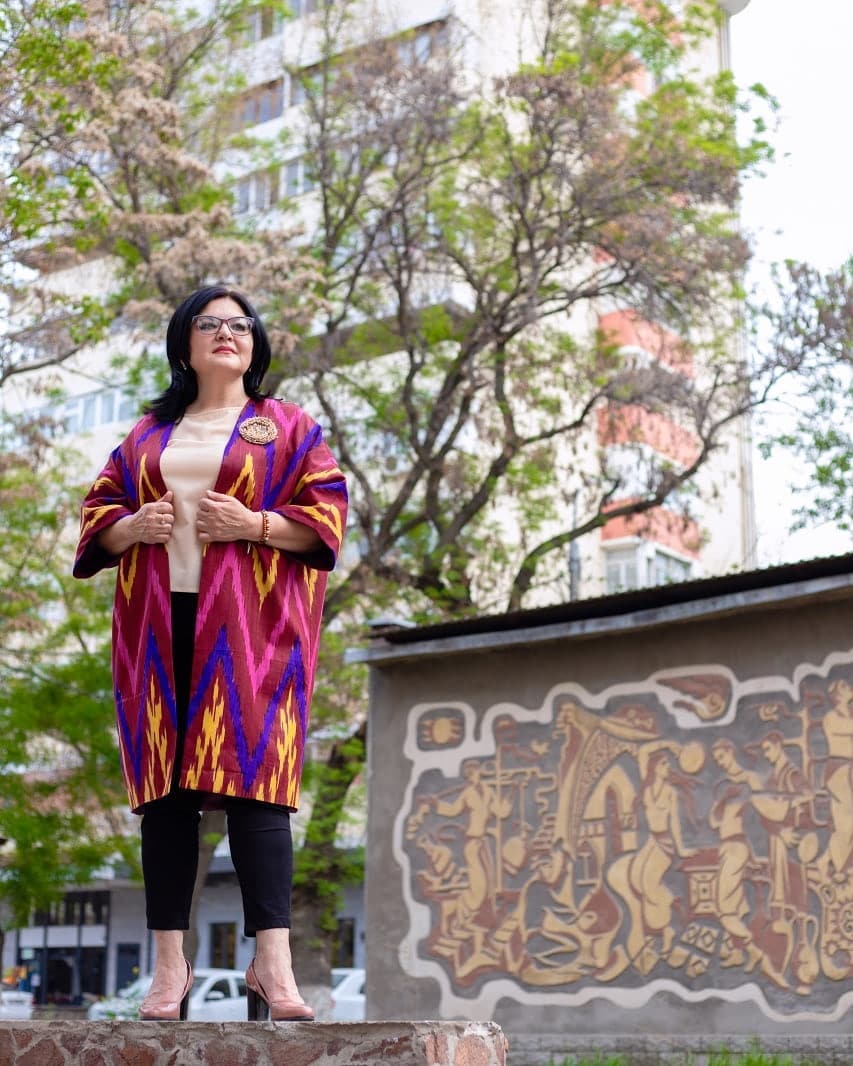
— Pyotr Zharsky created the sketch for the first large-scale mosaic and presented it to Miroshnichenko. The composition was daring: figures in traditional dress, mythological creatures, a red ribbon, ornamental patterns... There was every reason to reject it. But Miroshnichenko decided to speak with the artist personally, and discovered not only a talented professional, but a remarkably fascinating person. Pyotr had studied in Leningrad, lived in France and graduated from the Mukhina School of Art. After that conversation, the sketch was approved. Soon, the first mosaic appeared on Mukimi Street. Bold, vivid and alive.
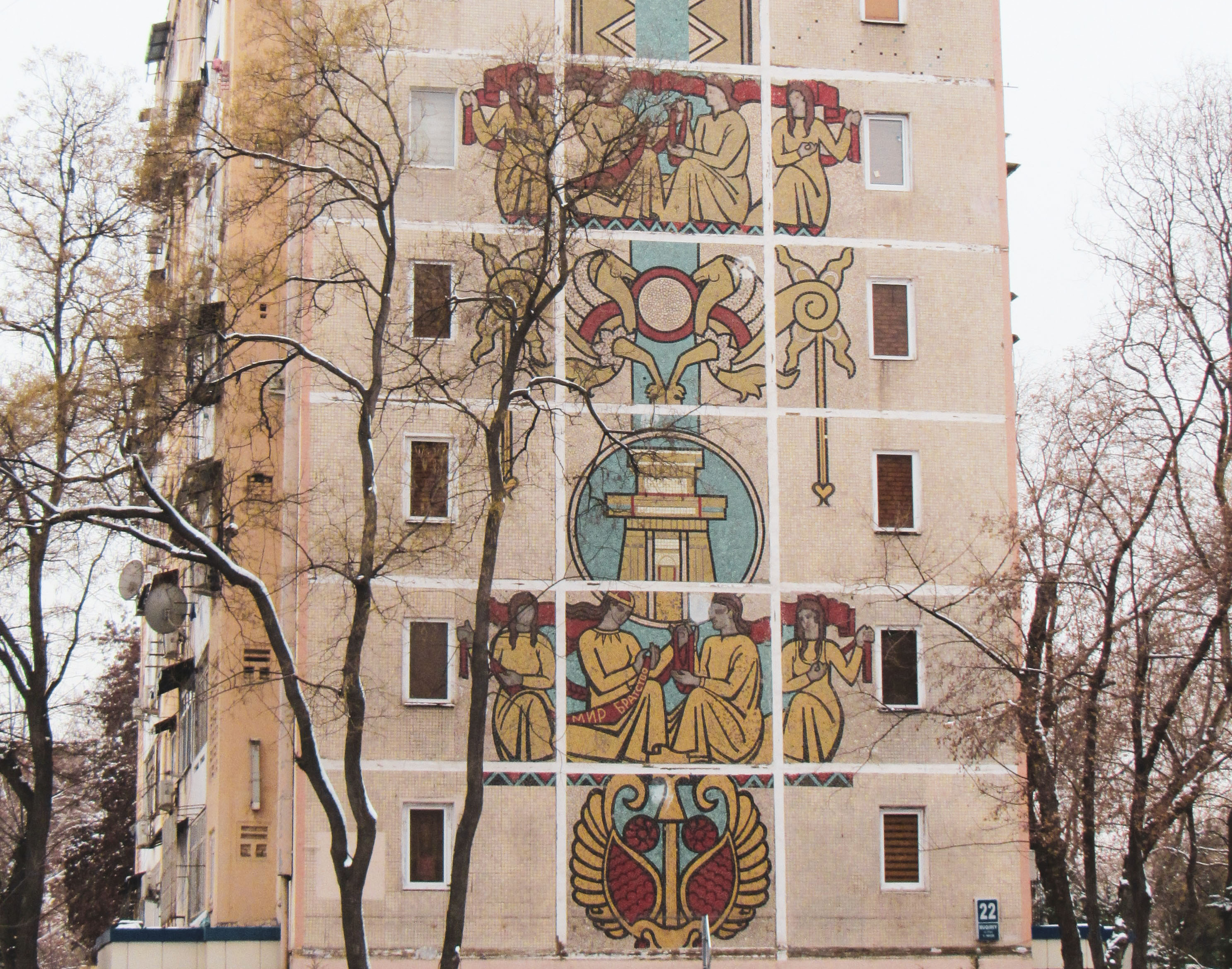 Photo: Fotima Abdurakhmanova
Mosaic on Mukimi Street in Tashkent. Photo: Fotima Abdurakhmanova
No scandal followed. Tashkent embraced it. And with that, an entire era began. From Katartal to the twentieth quarter of Chilanzar, buildings adorned with mosaics began appearing one after another. They became part of the city itself: vibrant, free and full of colour.
At first, it was only residential buildings whose facades bloomed under the artists’ hands. But then I became curious: who created the mosaics on public buildings? Who were the artists behind them? That was how my own search began.
From Photo to a Book
— At what point did the project grow beyond walks and personal interest?
— Everything changed when I discovered the work of Philipp Meuser, a German urbanist deeply interested in the architectural heritage of the Soviet era. He personally knew Nikolai Zharsky, studied housing construction across the post-Soviet world and assembled an extensive archive of photographs, texts and books. For him, architecture was never just concrete and glass. It was a mirror of cultural memory.
It was Philipp who proposed creating a guide to Tashkent’s mosaics aimed at international visitors. But he did not simply need a photographer. He needed someone who could bring these works to life through historical and cultural context. Not just “address, date, author”, but a story: what is depicted, which ritual is being shown, what symbols are hidden within the image.
Take the mosaic on the facade of Uzexpocentre, for example. It portrays an Uzbek wedding. For locals, the meaning is immediately clear, but visitors need that context explained. That is when a mosaic becomes a bridge between cultures. That idea resonated deeply with me, and I got to work.
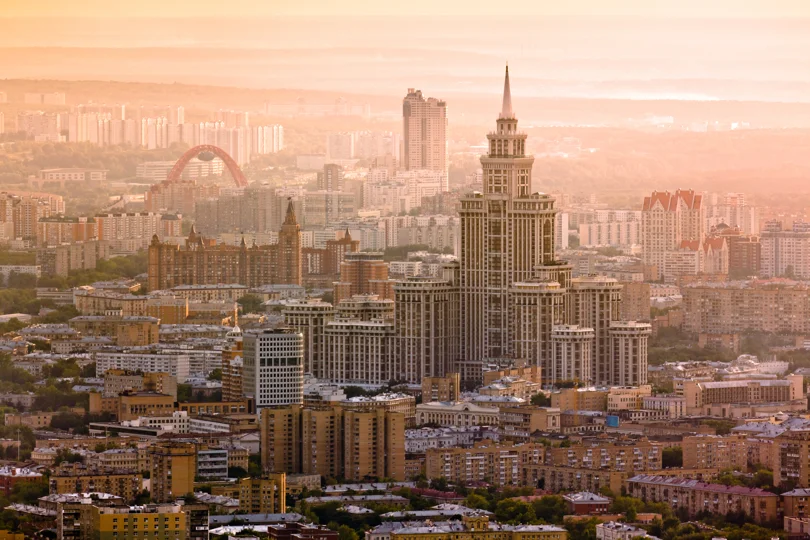
And also, Philip Moiser wrote a column for us about the construction of Soviet cities. Read more:
— Who helped identify the authors of the mosaics?
— Above all, Yuri Miroshnichenko and Valentina Zharskaya. Thanks to their memory and knowledge, I was able to understand which works belonged to Pyotr or Nikolai Zharsky, and which were created by other artists whose names survived only through oral history.
— Did the guidebook project ever come to life?
— In 2019, the project was put on hold due to a lack of resources. But in 2023, Philipp got back in touch. He had completed a book about the Zharsky brothers using the photographs I had taken years earlier. He returned to Tashkent and continued his research, filming and meetings. He said the guidebook would still happen, and that it would include not only mosaics, but also frescoes, sculptures, bas-reliefs and everything else that shapes the visual soul of the city.
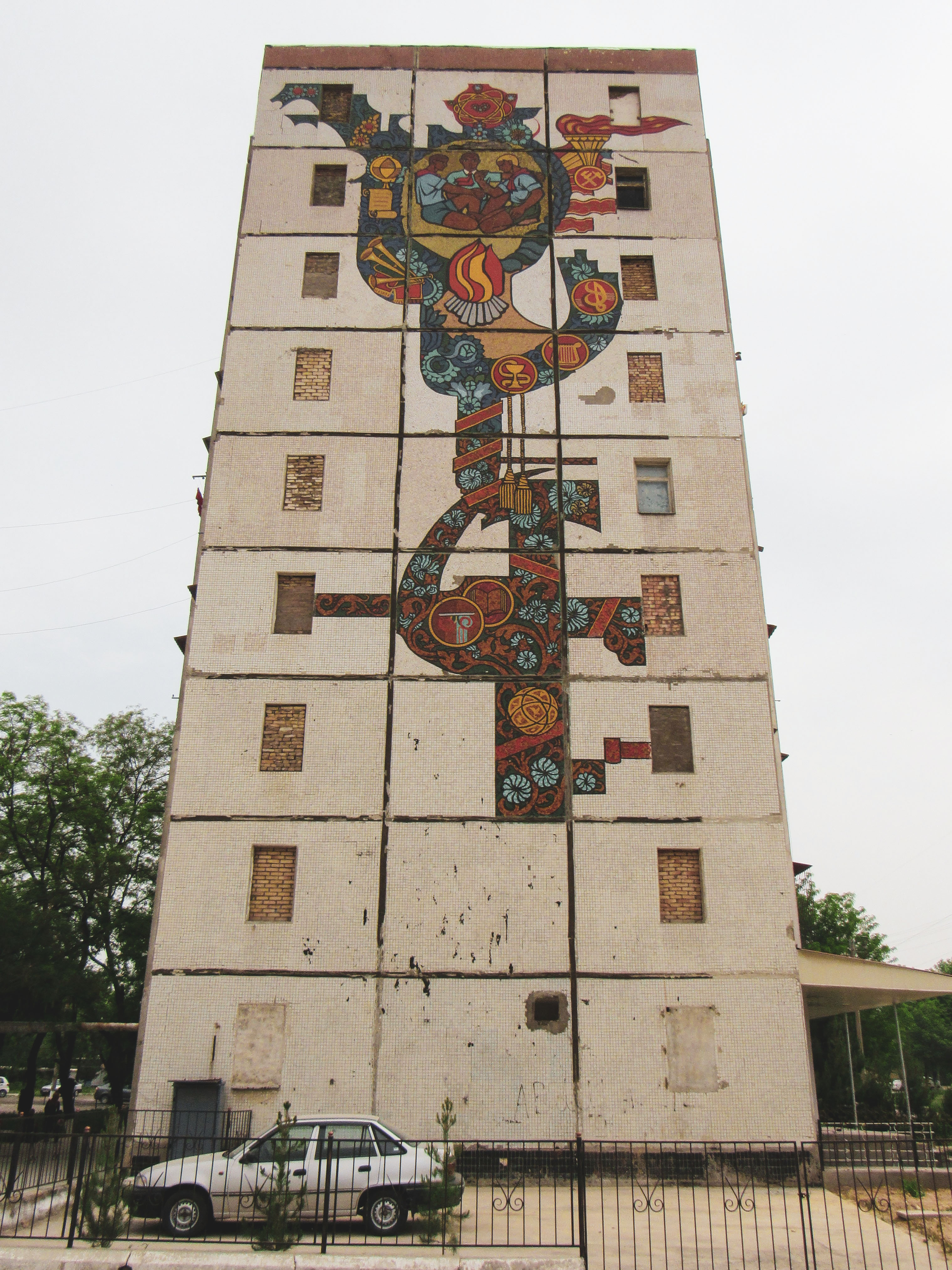
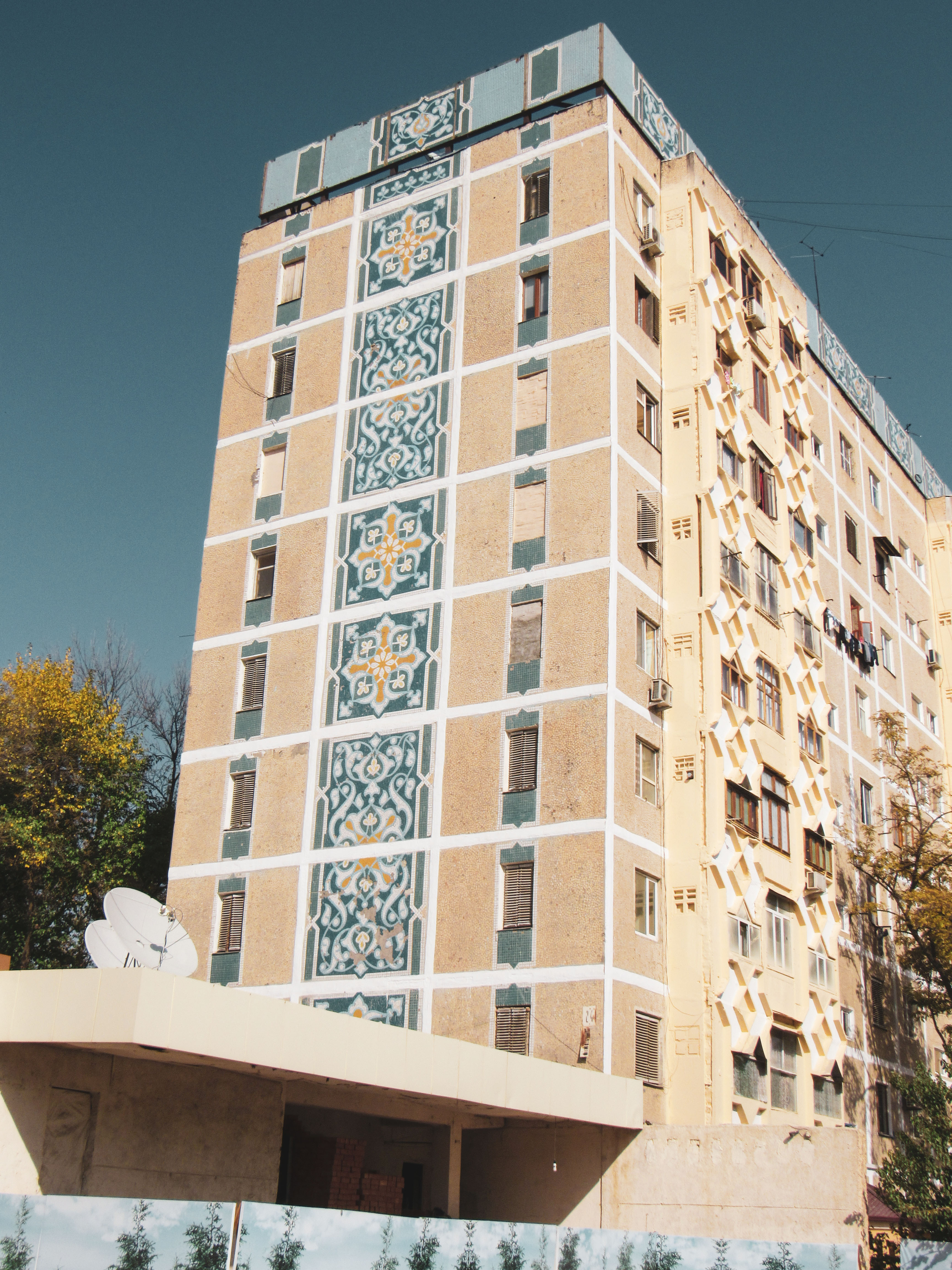
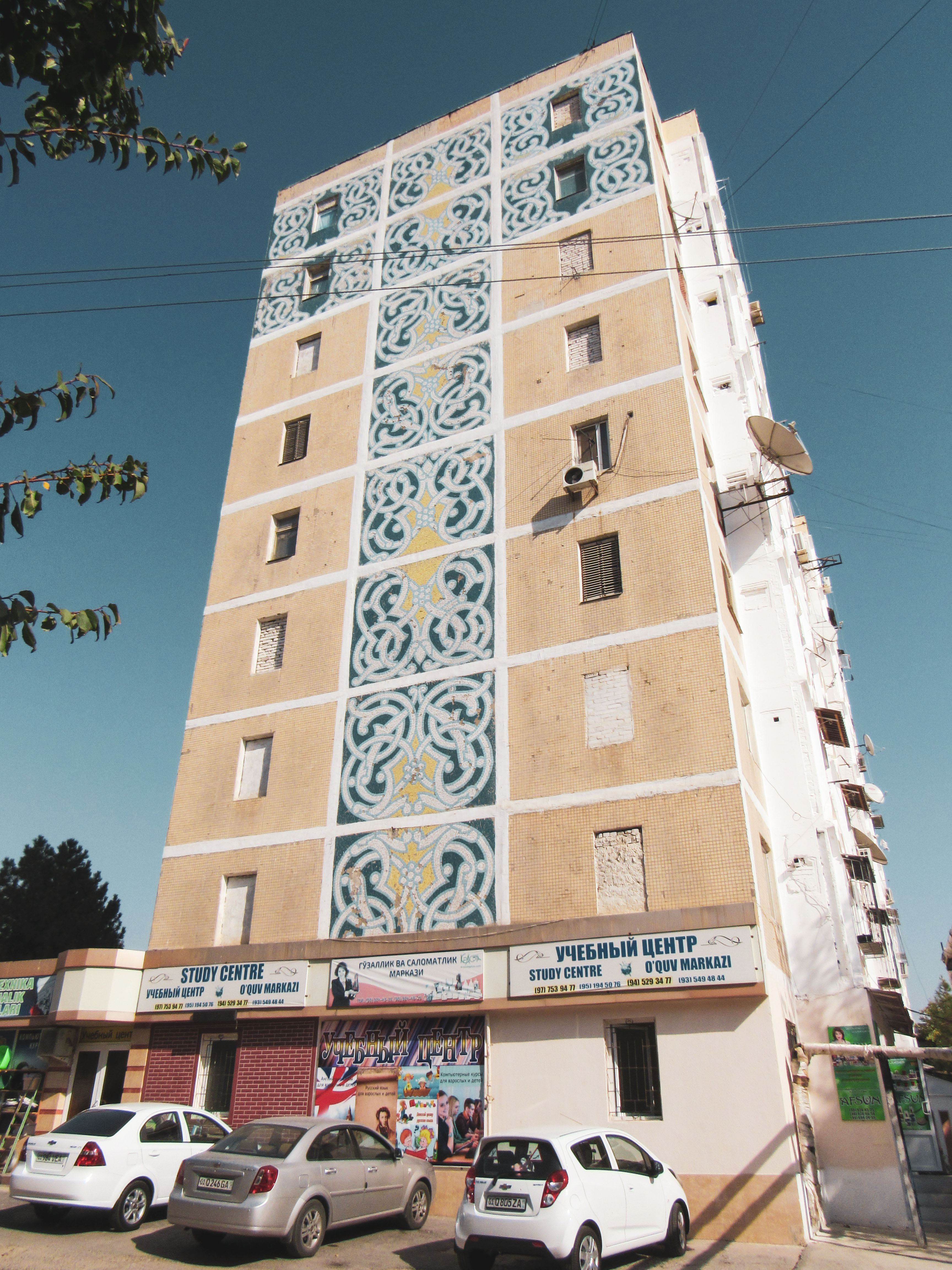
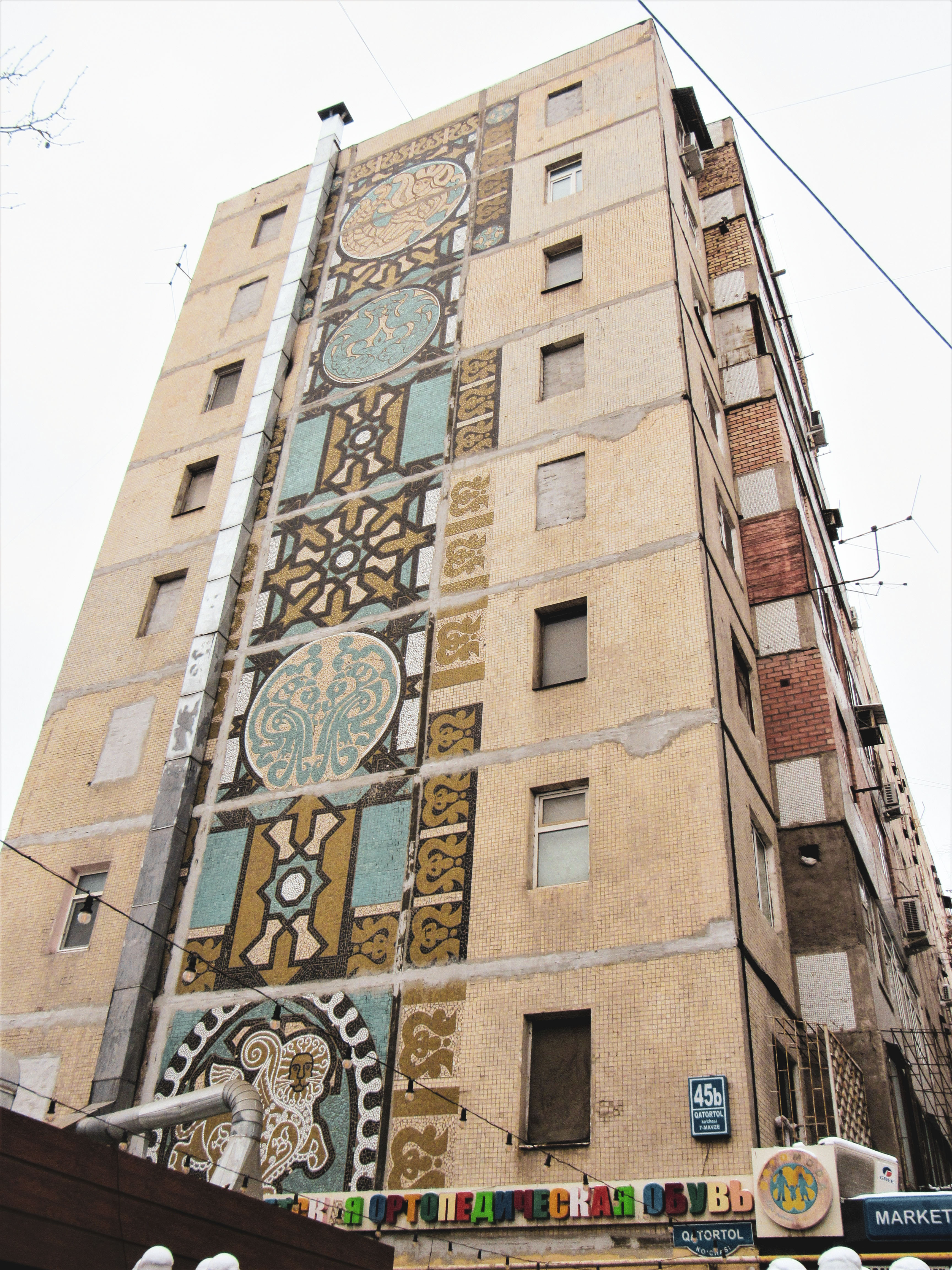
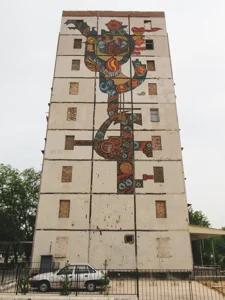
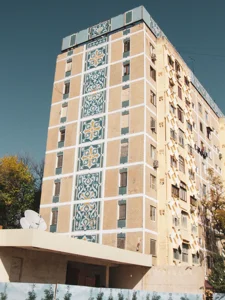
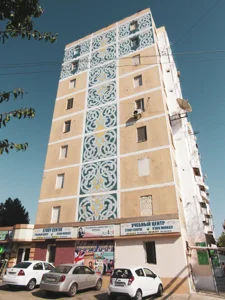
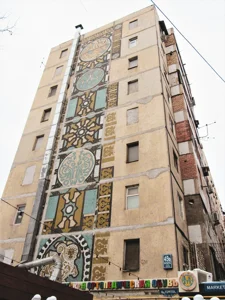
Photographs of Tashkent mosaics for Philip Moizer
After that, there was another interesting encounter. I was approached by journalist Valeria Nayanova, the creator of the YouTube channel Po Matryoshkam. She decided to make a film about Tashkent’s mosaics. I introduced her to Yuri Miroshnichenko, Valentina Zharskaya and Vladimir Burmakin, and they all appeared in the film. It received a strong response both in Uzbekistan and beyond.
For the project, this became a turning point. Utkir Shermanov from the Department of Digital Development saw the film, and that was when the idea emerged to create a website about Tashkent’s mosaics. Together with Alexey Khen, the art director of Age Tashkent, we discussed the structure of the portal. I gathered everything: photographs, names, addresses, sources. Then I received a message from Philipp saying he would come to Tashkent in April for the presentation of his book. That was when I suggested launching the website beforehand, as a double cultural launch. This is not commerce. It is memory, meaning and the city.
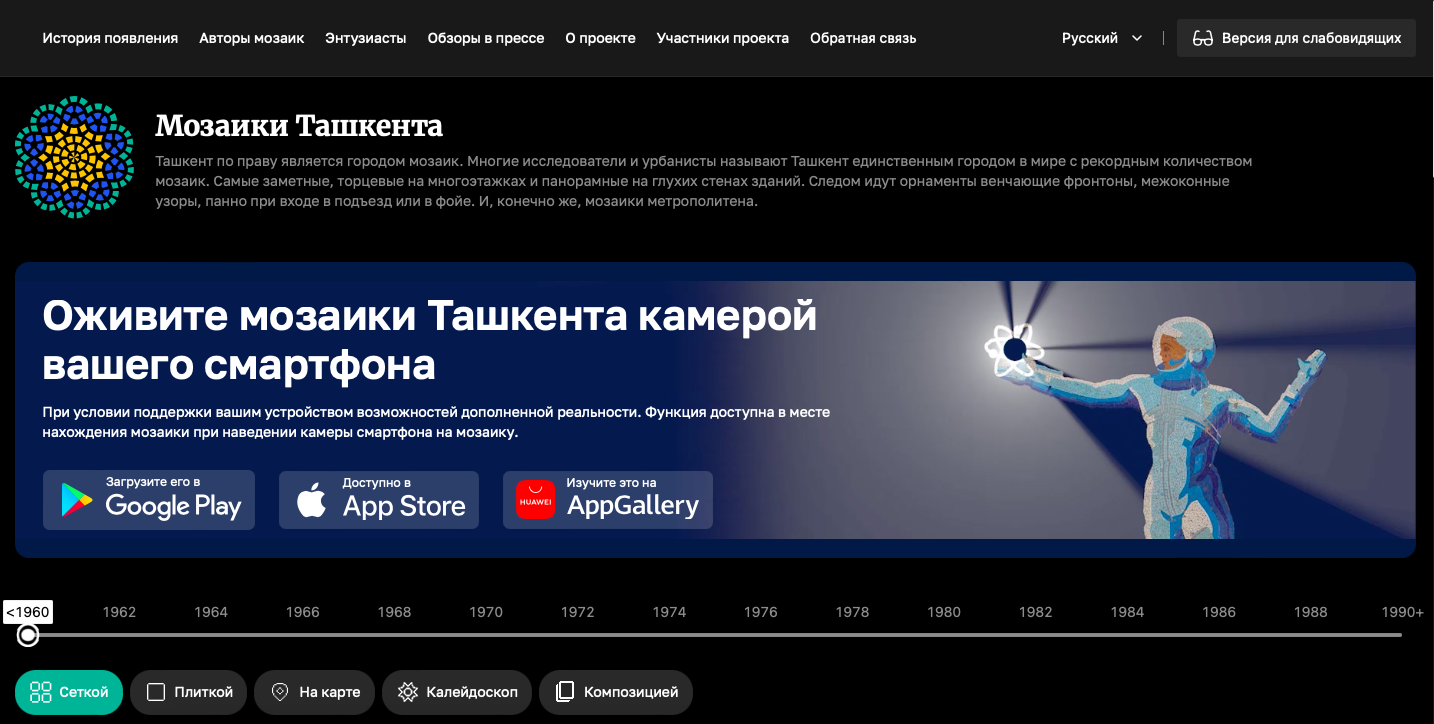 Screenshot
A website dedicated to Tashkent mosaics. Screenshot
When Mosaics Come to Life
— What was the reaction to the launch of the website?
— Very inspiring. We did not just gather mosaics in one place. Some of them literally came to life. Thanks to animation, you can now download a special app, point your phone camera at a mosaic, and it begins to move, breathe and tell its story. It feels like real magic.
— How many sites have you documented?
— To date, the website catalogues 502 mosaics. Sadly, 17 of them have already been lost. But what remains now forms an important layer of visual memory. The main thing is that these works are now systematised, accessible and protected. Once an object is documented, it becomes much harder to destroy. Sponsors also appeared, and that gave us a second wind. One of the most important steps was removing advertising banners from facades adorned with mosaics. It was not easy: commercial interests, contracts, landlords... But the result is there. The banners came down, and the city could finally "breathe" again.
— Has any official protection for mosaics appeared?
— Yes. In autumn 2024, the Directorate for the Construction of New Tashkent issued a document called the Urban Environment Design Code. It clearly states that if a facade contains a mosaic, advertising is prohibited. Violations now carry administrative liability. It was an important step because it meant we had finally been heard.
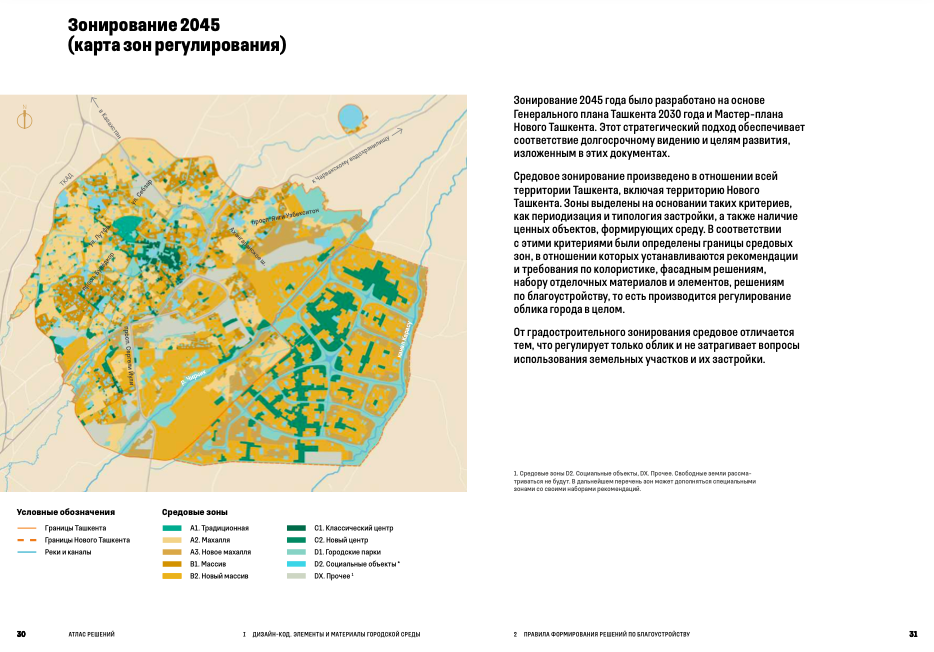 Screenshot
Urban Environment Design Code of Tashkent. Screenshot
We have also teamed up again with Philipp Meuser and decided to publish the guidebook alongside his book. The work is now nearly complete. It will not simply be a map but a cultural journey through Tashkent's mosaics, filled with history, with a voice and with a living view of the city.
New Discoveries, New Names
— Do you still continue searching for and discovering mosaics?
— Yes, and sometimes in completely unexpected ways. One day I received a message from Darya Petrova, a Russian woman whose father, a monumental artist, once worked with Vladimir Burmakin. Her father left Uzbekistan in 1995 and passed away in the early 2000s. Darya sent me photographs of him assembling a mosaic in the courtyard of a kindergarten in Urda. It was a warm and gentle piece created for children. I went there and found the work. A new mosaic, a new name, a new story.
Something similar happened with the Wedding panel on the façade of Uzexpocentre. For a long time, we could not find out who its author was. Then, unexpectedly, a young man contacted me, the grandson of the artist behind the “canvas”, Dilmurad Yusupov. He shared documents and photographs with us, we spoke by phone, and eventually we managed to reconstruct the artist’s biography. It felt like a revelation.
The Wedding panel on the facade of the Uzexpocentre. Video: Shagayu.uz
— So the search for authors is still ongoing?
— It remains one of the main areas of our work. Quite often, we have to revisit attributions that have already become established. Take the mosaic at the entrance to the Textile Institute. It was about to be painted over, but one of the vice-rectors stepped in and saved the panel. The issue sparked a wave of discussion on social media, and soon a representative of the Heritage Protection Agency stated that the author was Irena Lipienė.
But I had my doubts. Lipienė was known for her stained-glass and glass work, yet I had never come across any mosaics attributed to her. In the end, it turned out that the real authors were Alexey Shteyman and Grigory Derviz. The mosaic was created in 1982.
— What about the mosaics that have already been lost?
— At the moment, the website lists 17 lost objects. But not so long ago there were 19. Two works have been returned: sponsors helped restore mosaics that had been painted over as part of the Obod Mahalla programme. They paid for the climbers and the materials, and within two days the images were shining again. Their status on the portal has been updated: they are back with us.
— Which mosaics are still waiting for a chance to return to the city?
— There are works that can still be saved. But it is important to understand that this is not simply an act of goodwill. Even cleaning a wall requires official permission. Everything must be coordinated with the Agency for Cultural Heritage Protection and the Culture Development Foundation. This is not a mere formality. The Foundation supports the project at every stage, providing guidance and assistance. Without it, no responsible decision can be made. And rightly so. A mosaic is not just a decorative pattern; it is part of the city’s cultural code. It deserves to be treated with care.
Why Mosaics Disappear
— Why did mosaics begin to disappear? After all, they are part of the country’s cultural heritage...
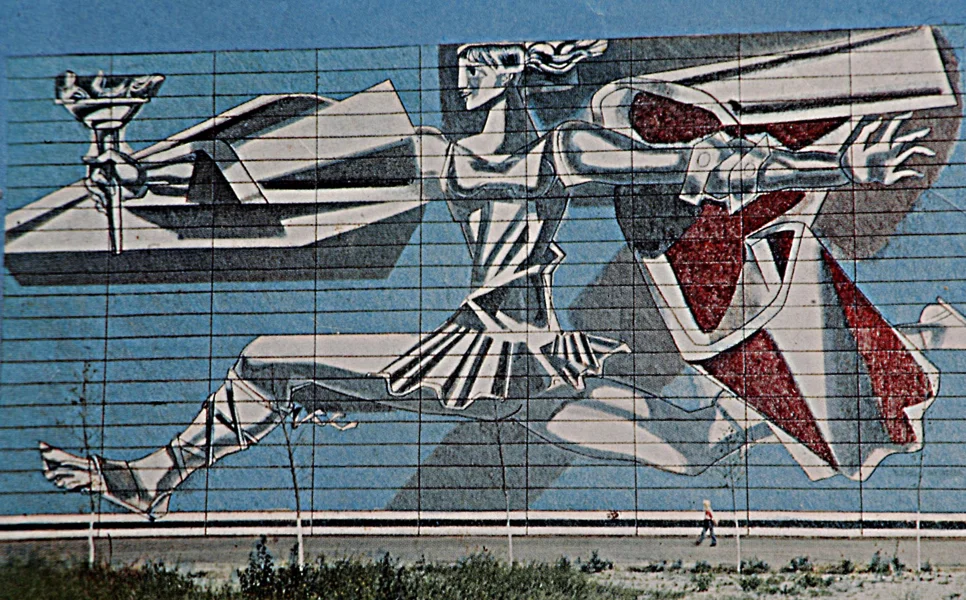
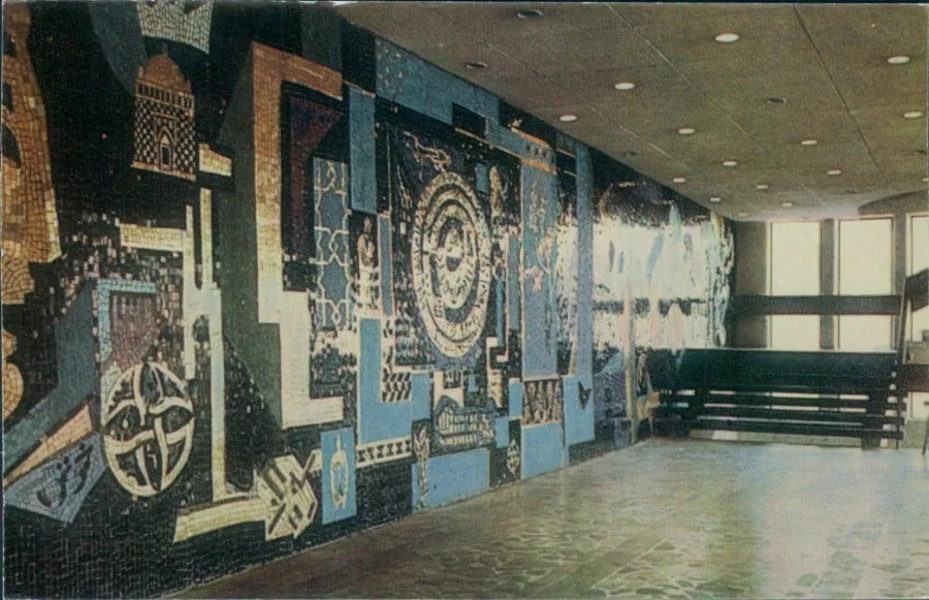
— I do not think anyone set out to destroy them deliberately. It all happened gradually, in an atmosphere of indifference, bureaucracy and a lack of aesthetic awareness. After gaining Independence, a wave of large-scale redevelopment began. Old buildings were demolished to make way for new offices and residential blocks. Often, no one even noticed that there were mosaics on their facades. Take the Trudovye Rezervy sports complex, for example. It was demolished and replaced with a new building, and the mosaic disappeared along with it. Not a single photograph or record of it survives. The same happened to the mosaic in the Dom Znaniy (House of Knowledge). During reconstruction works in the early 2000s, it vanished without a trace. Later, however, the architect Yuri Miroshnichenko said that the panel had survived and was simply concealed behind plasterboard. But another researcher, Boris Chukhovich, wrote that it had been lost. So all we have now is hope.
 Source: Pisma o Tashkente
Panel in the "Trudovye Rezervy" Sports Complex. Mosaic panel Begushchaya Olimpiyka (Running Olympian Girl). Source: Pisma o Tashkente
— Did you try to check this?
— Yes. Last year, during the renovation of the Russian Drama Theater, I accidentally saw a fragment of the old wall through the dismantled cladding, a piece that might be part of that very mosaic. I managed to photograph it. Only one thing remains, to carefully open it up and check.
— What about particularly bright but damaged mosaics?
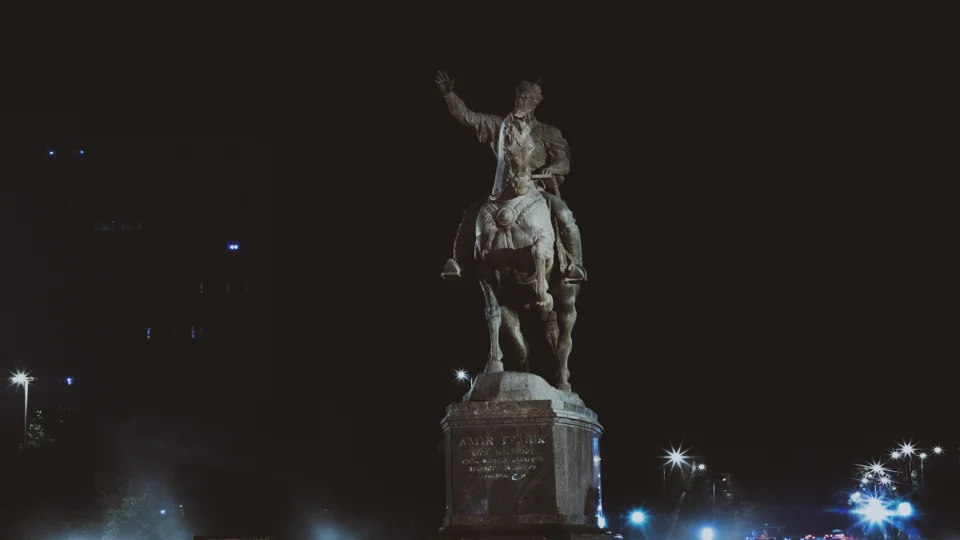
— It is very painful to look at the panel near Amir Timur Square. It is a magnificent smalt composition, symbols of the Amu Darya and Syr Darya, vivid, vibrant colours. But the female figures had exposed parts of the body and these were simply painted over in grey. Technically it could be restored but no one dares to do it. It is too “difficult” a work for an area with strict architectural regulations.
— Is there growing interest in mosaics among the new generation?
— Yes and that is encouraging. Young artists, designers and architects are increasingly paying attention to mosaics. In cafés and hotels decorative panels are appearing. It is becoming part of the city’s visual language.
— What contemporary projects inspire you?
— The Islamic Civilization Center. There mosaic became a key element of the design. The sketches were created by Alisher Alikulov, then produced in China using templates and brought back to Tashkent. The themes are history, spirituality and enlightenment. Most importantly, the decision was made in favour of mosaic despite its complexity and high cost.
— In Soviet times, was everything done by hand?
— Yes. Smalt, dense coloured glass, was brought from Leningrad and the Baltic states. It was broken into pieces, cut, sorted by colour and laid by hand. It was a very labour-intensive process. Today smalt is rarely used. Even Chinese craftsmen used a different type of glass, smooth and uniform. It looks beautiful but in essence it is something completely different.
— What other types of mosaics can be found in Tashkent?
The rarest and most valuable is Florentine mosaic. It was used by Abdumalik Bukharbaev in his works at the television centre, the former “Tata” hotel and at the Novza and Uzbekistanskaya metro stations. It is a jeweller’s technique, jasper, granite, marble, stones fitted edge to edge with no seams. A truly unique work of art.
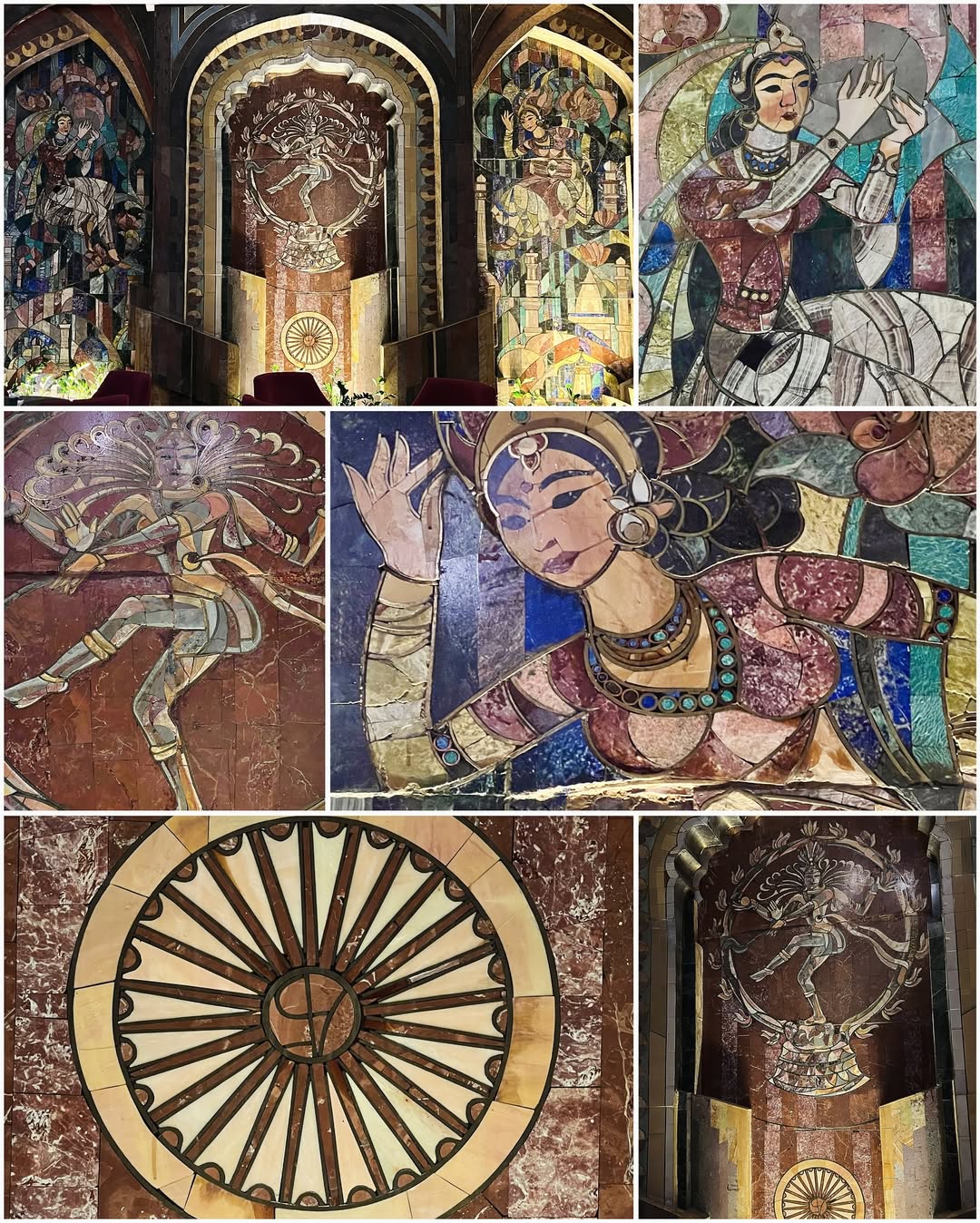
Mosaic panel in the lobby of Le Grande Plaza Hotel (formerly "Tata"). Photo: Fotima Abdurakhmanova
— What about the mosaics with Soviet symbolism? Have they survived?
— They exist, but only a few. And this is not propaganda, but part of visual memory. For example, the mosaic in Karakamysh: a dove of peace, the hammer and sickle. No one touches it. Or the mosaic on a residential block, depicting a worker with a bare torso, and nearby pioneers around a campfire. The symbolism is integrated
softly: flowers, butterflies, a harp. This is already history. In later works on the Vodnik district, Zharskiy depicted scenes from life: weddings, couples, children. Everything is alive, human.
— And are there exceptions?
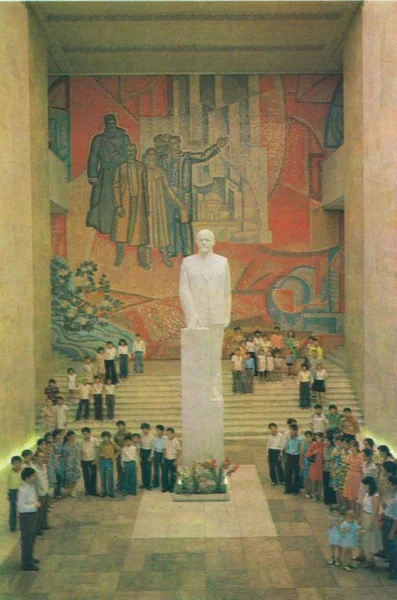
— Of course. The most well-known is the Lenin mosaic in the former museum, now the History Museum. It was painted over with a landscape on top. But according to rumours, it may still survive beneath the layers. That is perhaps the only ideological mosaic in the city. We do not want to erase the past, we want to understand it.
 Source: Pisma o Tashkente
The central hall of the V.I. Lenin Museum in Tashkent. Source: Pisma o Tashkente
— Have there been cases where mosaics were successfully saved?
— Yes. For example, the mosaic by monumental artist Arnold Gan on the newspaper building. When the building was scheduled for reconstruction, we proposed preserving the panel. Different options were discussed, including relocating it to a park. But the mosaic is enormous. It was dismantled overnight, and by morning it had already gone. The Culture Foundation assured us it would be installed in the courtyard behind the former “Tata” hotel, where a cultural centre is being developed. It is still in storage. However, according to some media reports, the mosaic will now be installed at the French Cultural Centre. This is a work that needs space. Perhaps an open-air museum should be created, like Muzeon Park of Arts in Moscow.
— Where could such a space be created?
— Somewhere between old and new Tashkent, closer to the “Yangi O‘zbekiston” park. There is still space there. Let it be not a museum, but a gallery. Like Kok-Tobe Park in Almaty: the mosaic by Moldakhmet Kenbayev, “Girl with a Souvenir” (“Sulushash”), stands in a mountain frame, it does not interfere, but it speaks.
Lost but Not Forgotten
— Are there mosaics you are particularly fighting for?
— Yes. The most important for me right now is Farhad and Shirin. These are two panels on neighbouring façades: Shirin on one, Farhad on the other. They are strong in composition and rich in symbolism. But the Farhad mosaic has been heavily damaged: sun, wind and precipitation have all eroded its surface. It was also assembled by hand at a house-building plant and then mounted directly onto the façade. This technique is no longer used, and the smalt is no longer produced. It was vivid, textured, alive. It cannot be restored in its original form, but the story can be preserved and documented.
I consulted Marina Rostislavovna Borodina, an academic at the Academy of Arts. She proposed a solution: 3D printing the image onto the wall. Yes, it is not a mosaic in the classical sense, more a mural. But if this is the only way to bring Farhad and Shirin back into the urban space, then it is worth trying.
— Are there other mosaics that could still be saved?
— Yes. For example, the mosaic in the Dom Znaniy (House of Knowledge), which I mentioned earlier. According to architect Yuri Miroshnichenko, it was not destroyed but simply covered with plasterboard. All that remains is the decision to check. Or the two mosaics by Abdumalik Bukharbaev in the Dvoretz Druzhbi Narodov; they are intact but hidden behind banners. They do not need restoration, only to be uncovered. There are also the mosaics on the façades of the Uzbekenergo complex. It will most likely be demolished. If we do not save these works in advance, they will simply disappear.
 Source: Pisma o Tashkente
Mosaic in the former Dom Znaniy (House of Knowledge). Source: Pisma o Tashkente
— Were there cases of irreversible losses?
Unfortunately, yes. My favourite mosaic Swans’ Fidelity by Vladimir Burmakin, depicting two white swans, a symbol of purity and tenderness. I included it in a book in 2019. Then the pandemic came, the building was sold, and the new owner erased the mosaic. Not a fragment or an archival photograph remains. Only pain. Around the same time, the driving school with its decorative panel disappeared, and a cultural centre was demolished. Everything vanished silently, without documentation. And that is the most unsettling thing: when there is not even a trace left.
— Have there been cases where mosaics were saved at the last moment?
— Yes, and those cases are encouraging. In one residential complex, the new owners wanted to dismantle a mosaic and relocate it for themselves, inspired by bloggers but without any approvals. I explained that permissions from the Culture Foundation and the Heritage Protection Agency were required. Fortunately, we managed to stop it, the mosaic is still in place, just covered by a screen. This is the Kitob olami building, and it is a true masterpiece. Once the screen is removed, the building could become a landmark. It is both preservation and cultural contribution, and even good PR.
“It Is Not Background, It Is the Voice of the City”
— Have you already presented the project publicly. What was the response?
— The first presentation took place at the Goethe-Institut in Tashkent. The audience was small and specialised. I said straight away: we need more. A press tour, bloggers, activists. They were invited. They were paid. But real engagement never happened. A couple of photographs and blank looks. They did not feel the subject, they were not inside it. And yet all it would have taken was inviting students: architects, designers, artists. This is their professional territory, their future. They are precisely the people who should be seeing this, understanding it and carrying it forward. We need an audience that actually cares. Not people who use mosaics as a pretty backdrop for photographs, but people who genuinely want to know and to preserve. Because mosaics are not simply decoration. They are the voice of the city. And that voice deserves to be heard.

Fotima Abdurakhmonova and the mosaic panel featuring Taras Shevchenko
— Do you engage with contemporary artists?
— Yes, often. I ask them directly: "Why aren't you creating your own work? Why do your renderings repeat old motifs? Where is the visual language of today?" A young man recently wrote to me on Instagram: "I've started making mosaics. I want to depict Samarkand and Khiva. Do you think anyone would care?" I replied: "Do it. Try. The main thing is to show yourself. If you don't speak about yourself, no one will ever know it."
— What kinds of mosaics would you like to see in the future?
— Anything but clichés. Not "hands reaching for the globe", not the abstract "tree of life". Let them address the things that genuinely concern us today: the city, loneliness, technology, migration, ecology, women and the metropolis. What matters is doing it with taste, with thought, with respect for the material. Art must be alive.
— If you could commission a mosaic from the Zharsky brothers, what would you ask for?
— I would ask for something narrative: with people, with a story. That is what I am drawn to. This is why I love Tajik mosaics so much: they almost always include characters, scenes, emotions. They are naive, bright, but full of soul. That sense of humanity is what we often lack. We have many ornamental works, beautiful but often empty. When a mosaic includes a human figure, it comes alive.
— Which mosaic marked the beginning of your personal story?
— "Aquarius." It is on the facade of a former dormitory building, now home to the Association of Accountants and Auditors. I went there for courses. I am trained as an accountant, after all. After class I stepped outside, walked to the crossroads, looked up and saw it. I froze. Took out my phone. Photographed it. That single frame is where everything began: my mosaics, my "steps," my story.
"A Photograph Can Preserve What No Longer Exists"
— Everything starts with a photograph for you. But was there that one specific photograph that changed something?
— I am not sure there was just one, but there were moments when photographs became a starting point. Once, we were walking as a group through the Lisunov district and came across an abandoned building. Inside were teenagers. They unexpectedly offered to show us an "interesting place" and led us to an unfinished swimming pool. Construction had begun in the 1980s but was later abandoned. We climbed over the fence, photographed everything and posted it on social media. Some time later, the pool was restored. Today it is open. I like to think our photographs played a part.
When it became known that the mahallas of Ukchi Olmazor were going to be demolished, I went there almost every day, first with a group and then alone. I photographed crumbling walls, empty windows, traces of former comfort. I knew it needed to be documented. Now I have an entire archive of these streets. They are gone. But memory remains.
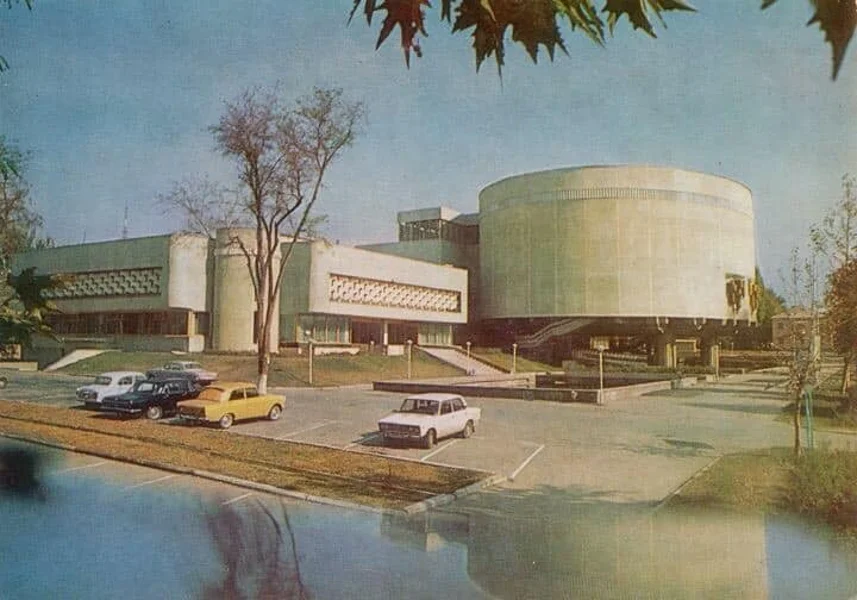
There was another moment: a friend called. "They are demolishing the House of Cinema!" I went there and met film director Rashid Malikov. He took me to the administration, and I was given permission to document everything. I photographed the halls, the corridors and Bahodir Jalal's celebrated fresco. It is gone now. But it survives in a photograph. In the archive. In memory.
 Source: Pisma o Tashkente
House of Cinema building. Source: Pisma o Tashkente
Read our interview with Bahodir Jalol:
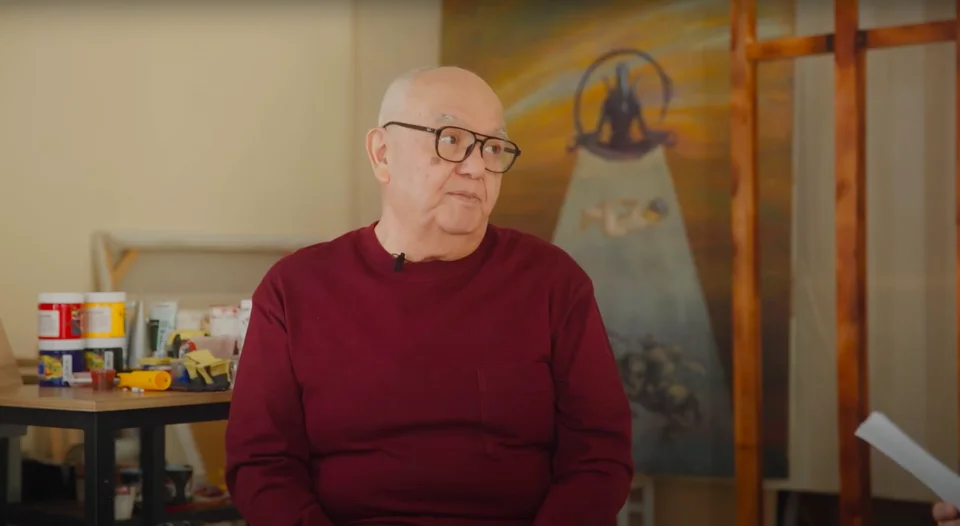
— What is Tashkent to you?
— It is not just my hometown. It is the rhythm I live by. That is why the idea emerged not simply to walk, but to experience the city consciously and to share it. From 2017 to 2025, we took hundreds of steps as part of the Shagayu po Tashkentu (Walking Through Tashkent) project. During that time, the city changed beyond recognition. Sometimes I return to a familiar place and cannot believe my eyes: everything was different just yesterday.
"A City Is Not a Point on a Map, but a Conversation Partner"
— How do you feel about the ongoing reconstruction of Tashkent?
—
I have mixed feelings. On one hand, the renovations make the city tidier and more comfortable: gastronomic streets and tourist attractions appear. On the other hand, there is a real risk of losing authenticity. Local activists often ask: why change the old streets, why touch what is still alive? And I understand them. But if the spirit of a place remains, then it is not in vain. Cafés and guesthouses are opening in former mahallas. Districts are becoming stages where tradition meets modernity. And tourists take away not only photographs but a genuine impression. Development is a journey. And we are on it.
— What do you think of the new urban installations?
— We have a real problem with small architectural forms. There are almost no artistic sculptures in the city. And those that do appear are tasteless, made from fragile materials. Sometimes it seems that one rainstorm would bring everything down. In other countries you find bronze, marble, scenes from everyday life. In Baku, for instance, there is a whole gallery of figures along the embankment: a man with a newspaper, a shoe-shiner... Here, we mostly have mass-produced, meaningless figurines.
— Do you still take photographs yourself?
— Of course. These days mostly on my phone: the technology allows it. But on trips I take a camera. An image taken through a lens carries a different quality of perception altogether. Though the key is not the equipment but the eye: the ability to feel a moment and build a story within the frame.
— Are you still "walking"?
— It has become part of life. I keep a step counter on and try to walk at least ten thousand steps a day. A walk is not simply physical activity: it is a way of being in the city, of seeing it. You walk and you notice: an old manhole cover with a pattern, a Soviet lamp post propped up by a railway sleeper with a date stamped into it. Or two buildings side by side: one high-tech, the other with wooden shutters. It is a chronicle. Layers of time.
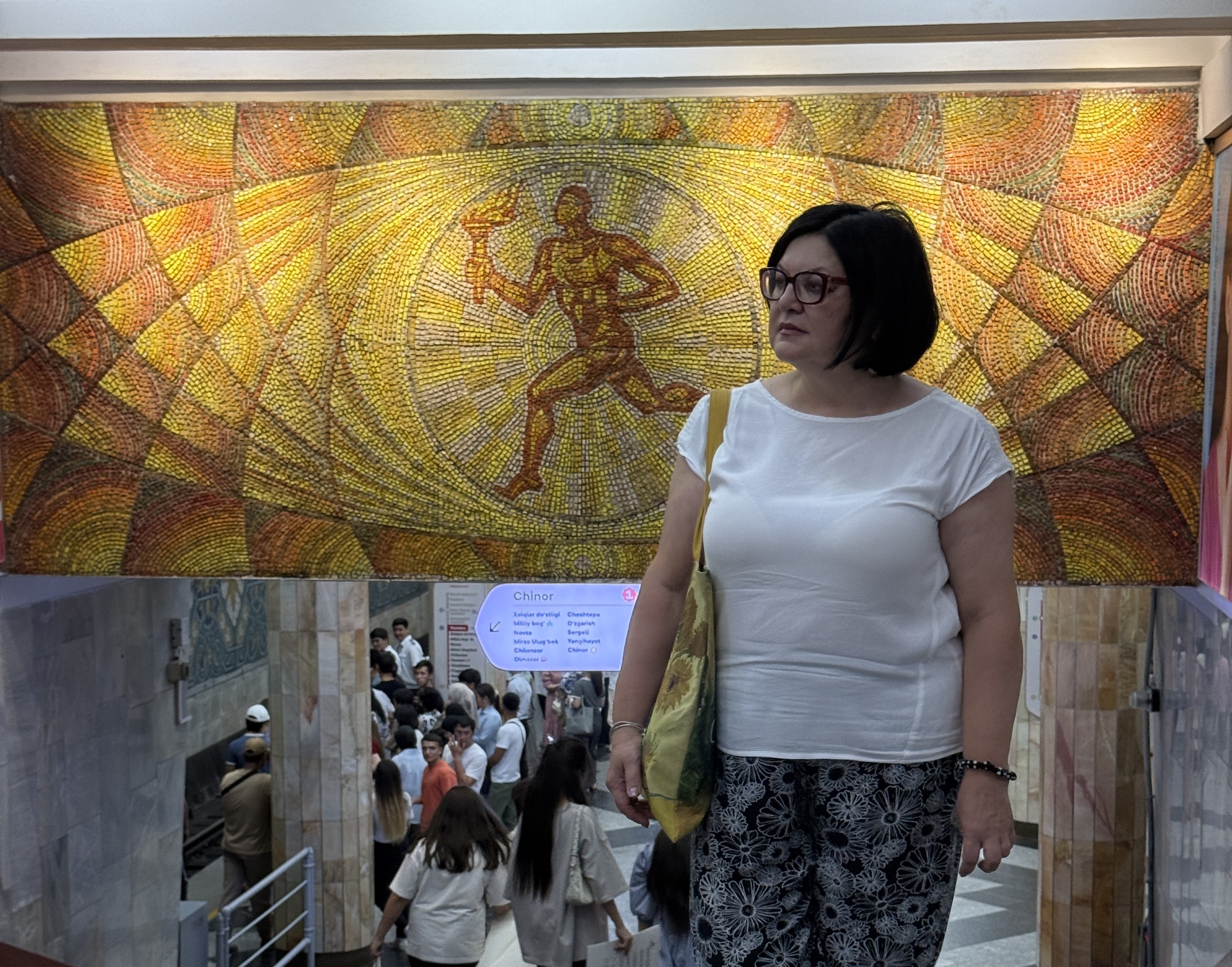 Photo: Fotima Abdurakhmanova
Fotima Abdurakhmanova at Pakhtakor metro station
I also practise plogging: I always carry gloves and a bag and collect litter along the way, bottles and wrappers, especially near schools. The streets are cleaner now, which means it is working. That too is part of culture: respect for yourself, for others, and for the city.
— Have you come to see mosaics differently as well?
— Of course. A mosaic is not simply decoration. It is a text, a language, a gesture. Take Pyotr Zharsky's first mosaic: people, ornaments, animals, all arranged in rhythm. One of the figures holds a ribbon with a finger crossed: that is a symbol, a protective charm. They embedded not only beauty in these buildings but protection. It runs deep. You just have to look.
— What would you say to those who do not yet know their city?
— Learn about it, but above all, fall in love with your city. Without love, understanding is impossible. We often complain and criticise but forget: the city is not someone else. It is us. It is our actions, our traces. So I say: walk. Look. Notice. Breathe the city in. And it will speak to you.


