You can read our previous articles from the series on Tashkent’s mahallas here:
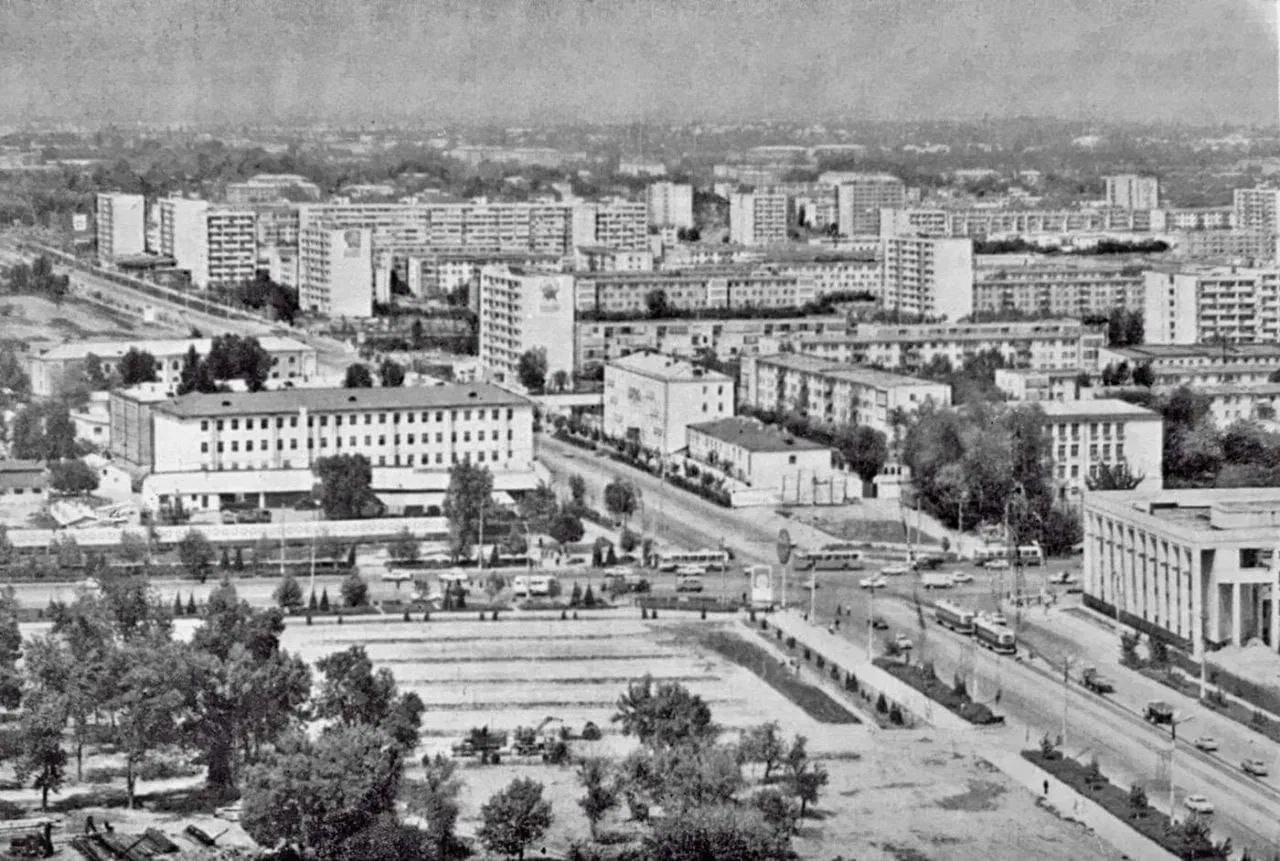
The Square: A Brief History
To begin with, a little history. Today, it is hard to imagine that some one hundred and sixty years ago, even a novice hunter did not need to venture out of town with a gun. One could hunt right in the city centre (though calling it the centre back then would be a stretch).
Here lay an impassable, neglected patch of land—a wasteland that turned into an almost impenetrable quagmire in bad weather. Due to this ‘deplorable’ state of affairs, the young architect N. F. Ulyanov was commissioned in 1882 to draw up a plan for a city square that would become an ornament of the New City. It was intended to be a special part of the city, a place where visiting officials, artists, and families could be invited without hesitation for a leisurely stroll.
According to the developed plan, with the participation of garrison soldiers and the hands of concerned citizens, a wide variety of trees—including many elms and splendid shrubs—were planted as early as 1883. Alleys were laid out for the strolling public, paved, and furnished with charming benches, while an ornate cast-iron fence was erected around the square. Soon, the very game that used to fly in from the city outskirts appeared, which local enthusiasts would sometimes hunt without leaving the urban area.
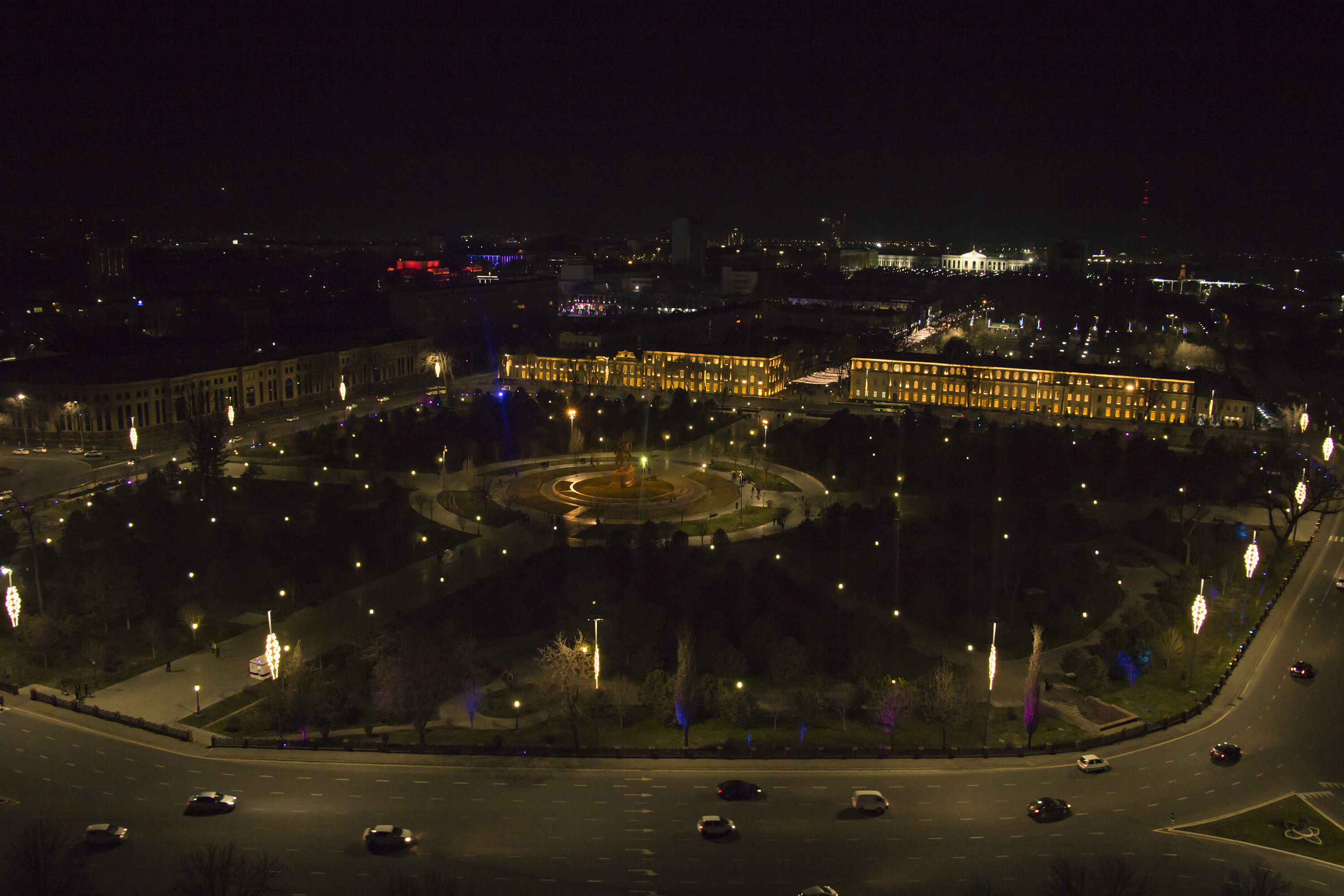 Photo: Kirill Grishin
In the square itself, according to the author’s design, two avenues intersected at a right angle—the modern-day Makhtumkuli Street (Salar Avenue, originally Sobornaya Street) and Amir Temur Avenue, which at that time bore a completely different name: Moskovsky. From these, several others branched off—the radially positioned Kuilyuk and Lagerny Avenues.
Why was it called Lagerny Avenue? Quite simply—in the area of the current Pushkinskaya metro station, there were the so-called ‘summer’ camps of the Tashkent garrison. For the centenary of Alexander Sergeyevich Pushkin’s birth, and at the numerous requests of New City residents, the avenue shed its gloomy name for a new one, in honour of the great Russian poet. Until recently, the name of the architect of our city’s main square was also preserved on the capital’s map. Novo-Ulyanovskaya Street was named precisely after this respected architect and had nothing to do with his namesake, better known, however, under a different surname.
The Heintzelmann Building
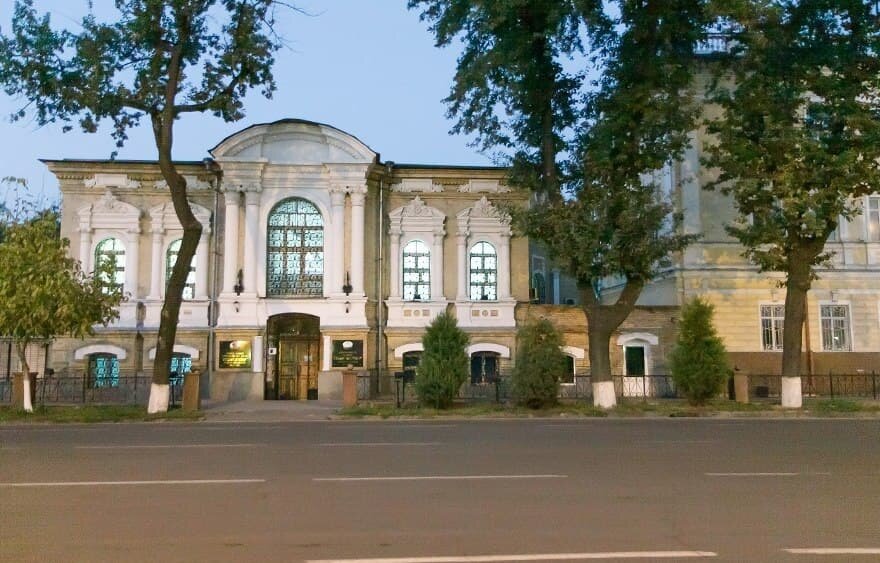
This handsome building stands about one hundred and twenty metres from the Uzbekistan Hotel. It was constructed to the design of the celebrated architect Wilhelm Solomonovich Heintzelmann in 1895. However, it has come down to us in a somewhat truncated form. The fact is that back in the 1970s, to the left of the main building, there was another—a residential wing. Most likely, it housed a service apartment for the bank manager’s family. Alas, by some absurd order, this part was dismantled, and today we can only see a fountain and a pavement in its place.
Equipped with all the (then) necessary security systems against ‘interested parties’, it was not immune to tunnels, one of which was discovered at the beginning of the 20th century. As local newspapers reported, it led from the city garden straight under the money vault—the bank itself. The perpetrators failed in their scheme, a fact of which the local police were justly proud. After 1917, the building retained its original purpose and continues to fulfil its financial and credit functions to this day.
The First Building of the Square
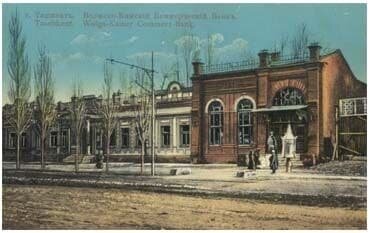
On the site of the current Uzbekistan Hotel once stood one of the first buildings in the New City, belonging to the Volga-Kama Commercial Bank. Its Tashkent branch began operations on 19 July 1893. Its main business was issuing loans to cotton field owners against the cotton harvest, as well as to various manufacturing firms, such as the company ‘Heirs of N. I. Ivanov’ and other trading houses and enterprises.
This banking institution ceased its financial activities in November 1917 after the ‘change of historical era’ in the Turkestan region. After not particularly lengthy deliberation by the new authorities, the building was first repurposed as the administration of republican trade. A few years later, closer to the 1930s, it was rebuilt as the People’s Commissariat (Ministry) of Trade. It survived until the infamous 1966 earthquake, after which it was demolished. Although I have not encountered any information about its catastrophic damage, nor about damage to the shopping arcade once owned by the first-guild merchant Azizkhodja Azizkhodjinov.
The Filatov House
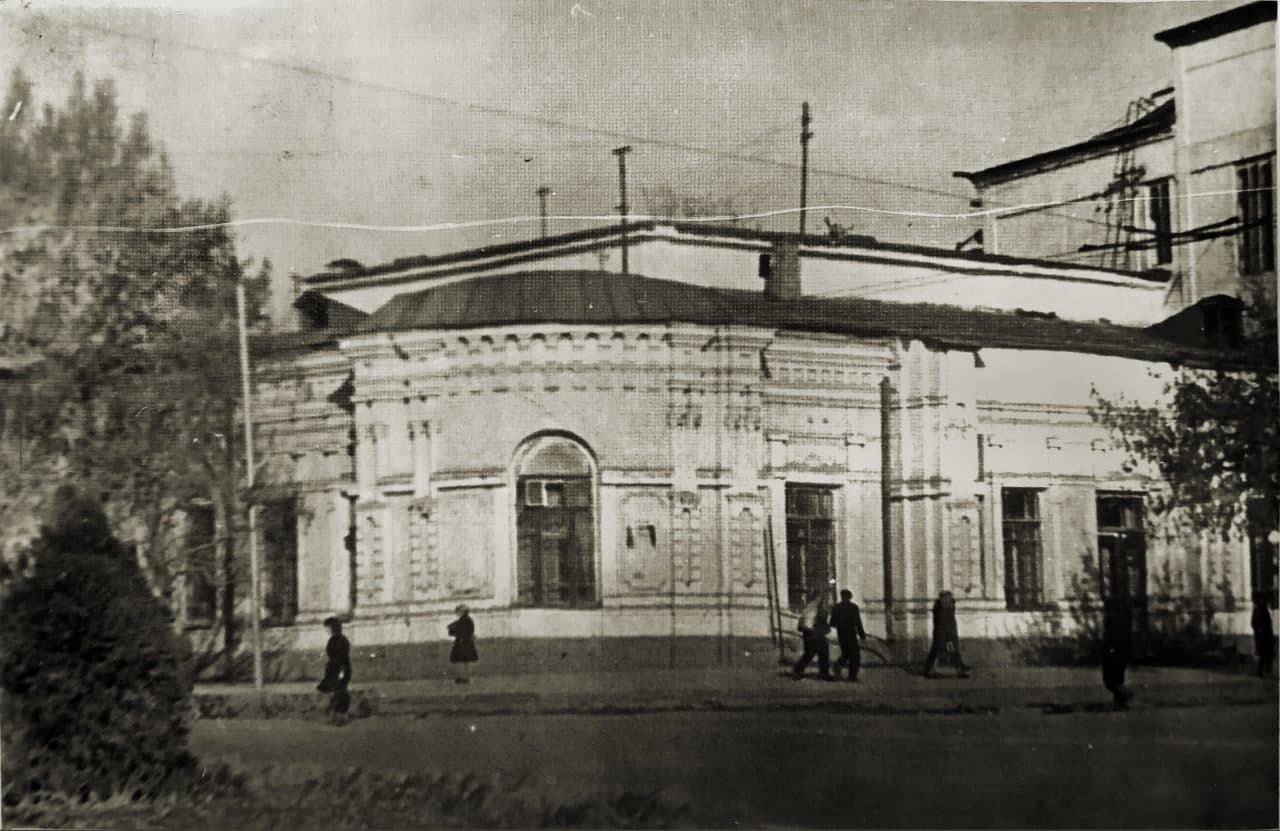
We cross Sobornaya Street (recall, it is also Salar Avenue, and now Makhtumkuli) and approach the house of the merchant Dmitry Lvovich Filatov—a renowned Turkestan winemaker. He owned two houses—one in Samarkand, where his still-operating factory was located, and one in Tashkent, which most likely served as a guesthouse during his visits to the capital of the Turkestan region. As late as 1975, his house housed a post office—to the best of my knowledge, number 175.
Until recently, right next to it stood a much-remodelled building that housed the telephone exchange. But aside from veterans of the communications service, few of our fellow citizens realise that this very building was the birthplace of cable telephony. It was from here that the telephone network first spread across Tashkent, and then throughout the entire Turkestan region. Behind this building was a bus station from which you could even travel to suburban dacha settlements. The city’s oldest telephone exchange building was ‘dismantled’ during the street reconstruction ahead of the construction of the Palace of Forums.
House of Photography
From the Palace of Forums, crossing Kuilyuk Prospekt, we approach the House of Photography, which resembles a mosque. The fact is that shortly before the Great Patriotic War of 1941–1945, our local artist and ethnographer V. Rozvadovsky proposed the idea of building a structure in the city centre that would serve as an exhibition hall. It was constructed to a design by Uzbek architects K. Babievsky and A. Petelin and was opened in 1934.
The first thing that catches the eye upon entering the building is its truly unique carved doors. They were crafted by renowned woodcarving masters, a group led by such professionals as usto Gafuri Khoji Ashur and Yakub Raufi. In the not-so-distant 1980s, the building housed something akin to a museum of the history of Uzbekistan, until it moved to a building located slightly to the south-west – the former Treasury Chamber.
I happened to visit several times for concerts by the non-profit string poetry club ‘Vertikal’. This is an unofficial community of citizens who are fans of performing musical works to guitar accompaniment. What struck me was the exceptional, remarkable acoustics of any of its halls. Its rooms indeed hosted a wide variety of exhibitions; at one point, even the collection of the State Museum of Arts was displayed there. Today, its spaces periodically host all sorts of exhibition events, and the building itself is called the ‘Tashkent House of Photography’ and is part of the Academy of Arts of Uzbekistan.
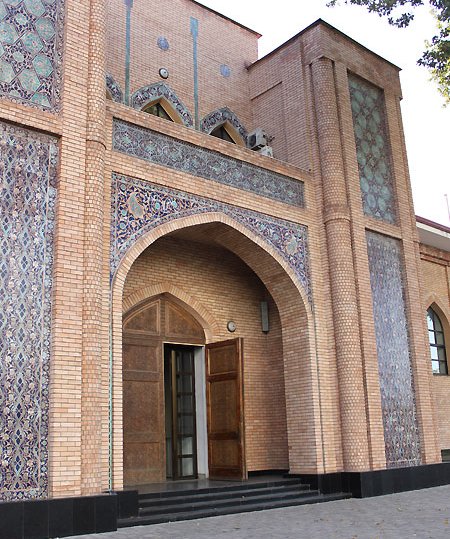 Photo: Natalya Revina
Treasury Chamber
From the House of Photography, we head towards the ‘Kuilyuk kishlak’, as it was once called, as far as the first crossroads in that direction. Here stand three most intriguing buildings from two different eras – the buildings of the Second Women’s Gymnasium, the Treasury Chamber, and a restaurant with the spring-like name ‘Bakhor’.
What makes these structures so famous that we decided to tell you about them? If only because two of them seem to reflect a kind of ‘rivalry’ between two remarkable, famous architectural masters of the early last century. These are Wilhelm Solomonovich Geintselman and Georgy Mikhailovich Svarichevsky, who created many fascinating buildings not only in our city but also far beyond its borders.
A colossal sum for its time – one hundred thousand roubles – was allocated for the construction of the Treasury Chamber. It was built as a two-storey structure with a central polygonal tower, topped by a pyramidal dome with a beautiful metal grille at its peak. Inside, corridors as straight as arrows ‘lead’ to the tower, ending at the entrance vestibule and a handsome marble staircase. It was built one hundred and twenty-four years ago, in 1902.
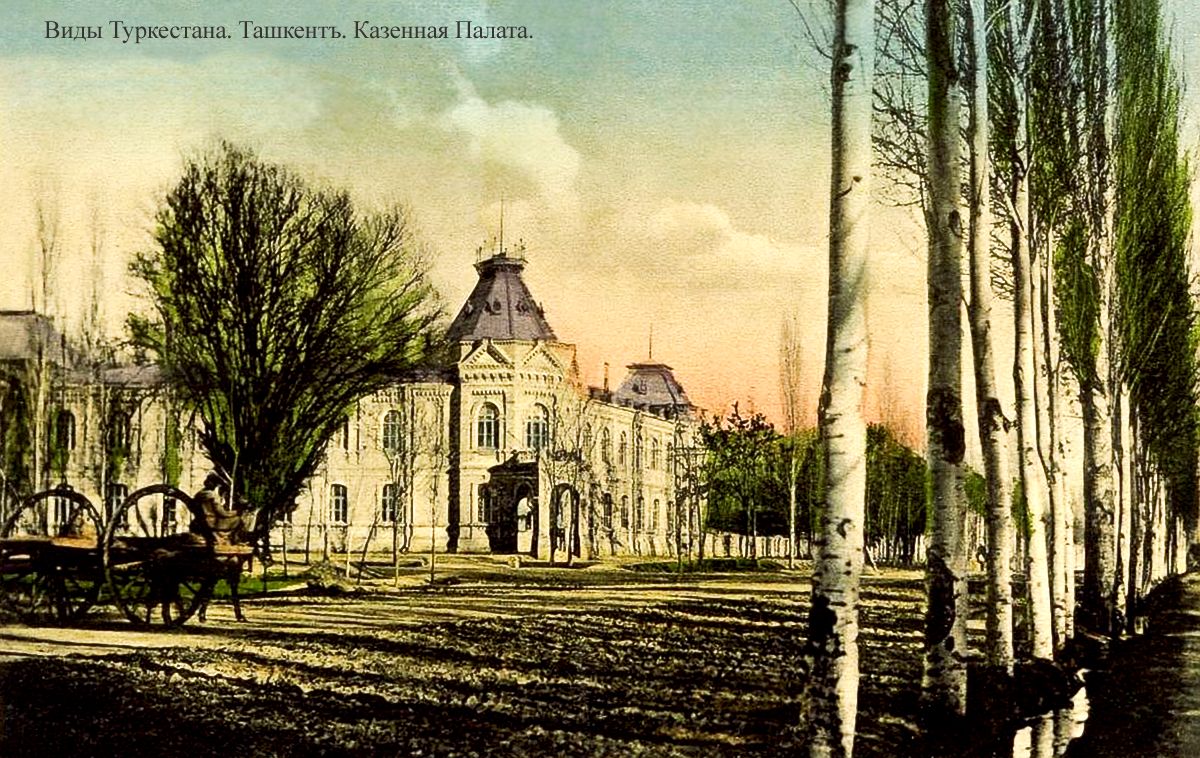
The Treasury Chamber itself, for which this building was constructed, was responsible for overseeing the correctness of financial affairs conducted by state institutions and commercial enterprises – a kind of prototype of the modern audit chamber. All information about taxes and fees that were to be paid passed through it, and therefore it had a fairly substantial staff for its time.
After the historical upheavals of the first quarter of the last century, the building frequently changed hands until it was handed over to the Museum of the History of Uzbekistan. For a long time, antique ‘cannon’ (in the sense of once having fired cast-iron cannonballs) stood in front of it. Now the museum has moved to another, slightly less famous building, and the ancient structure, built to last for centuries, recently belonged to the ‘Soglom avlod uchun’ foundation.
Women’s Gymnasium. The Second
The second building, standing opposite, was constructed a little later – in 1912–1913, to a design by Georgy Mikhailovich Svarichevsky. It simply turned out that by the end of the first decade of the last century, there were so many female gymnasium students in the city that the gymnasium located on the Square no longer had enough space. Therefore, the authorities turned to Georgy Mikhailovich with a request not only to draw up the project but also to oversee the construction work. This was done (I am not afraid to use the word) by the great architect with the greatest pleasure.
Interesting fact – the building was erected on the site of a former… velodrome, located on the edge of the city garden. And such a sporting facility existed practically in the centre of Tashkent. Later, the gymnasium building housed the republic’s well-known aviation technical school, memorable to a fair number of Tashkent residents, and not only to them.
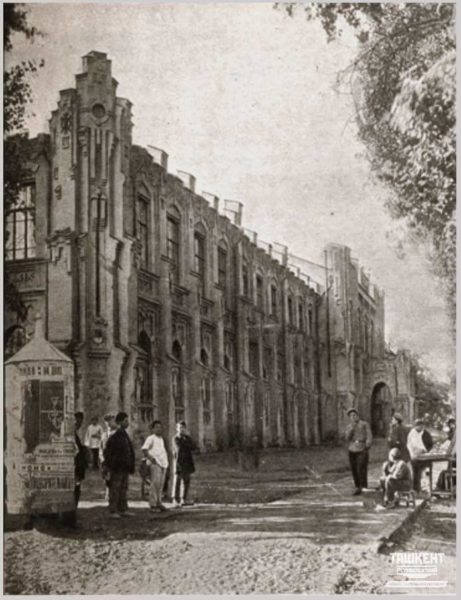
At the beginning of the 2000s, the technical school ceased to exist, and the building was transferred to another educational institution, but this time a higher and international one, which still occupies it today. Incidentally, both buildings underwent reconstruction in the 1930s – a third storey was added to them for some reason, just as was done to the gymnasium buildings that still stand on the Square. The history of the third building, which in my opinion is also an architectural monument, dates back to 1958, when it first opened its doors.
‘Bakhor’ – how much meaning in that sound
The restaurant was designed by the architect V. D. Romanov, originally conceived as a 'public catering' establishment, but with a very comfortable atmosphere. It is, without a doubt, the oldest restaurant in the city, modestly situated a little off the main road. It almost immediately became not only a luxurious dining spot but also a city landmark, built, as it turned out, in a distinctive classical style from the mid-twentieth century.
The restaurant has undergone several renovations, although their authors always tried to preserve both the building's exterior and its stage, which remembers not only the hall's guests but also performances by very famous stars from various theatres and variety celebrities from many different countries around the world. The restaurant's staff have even kept an old piano – a cabinet PETROF – which not everyone who can play such an instrument is allowed to touch…
The restaurant building has been filmed several times in various films dedicated to Tashkent. However, I did not like its modern exterior appearance – but that, again, is my personal opinion.
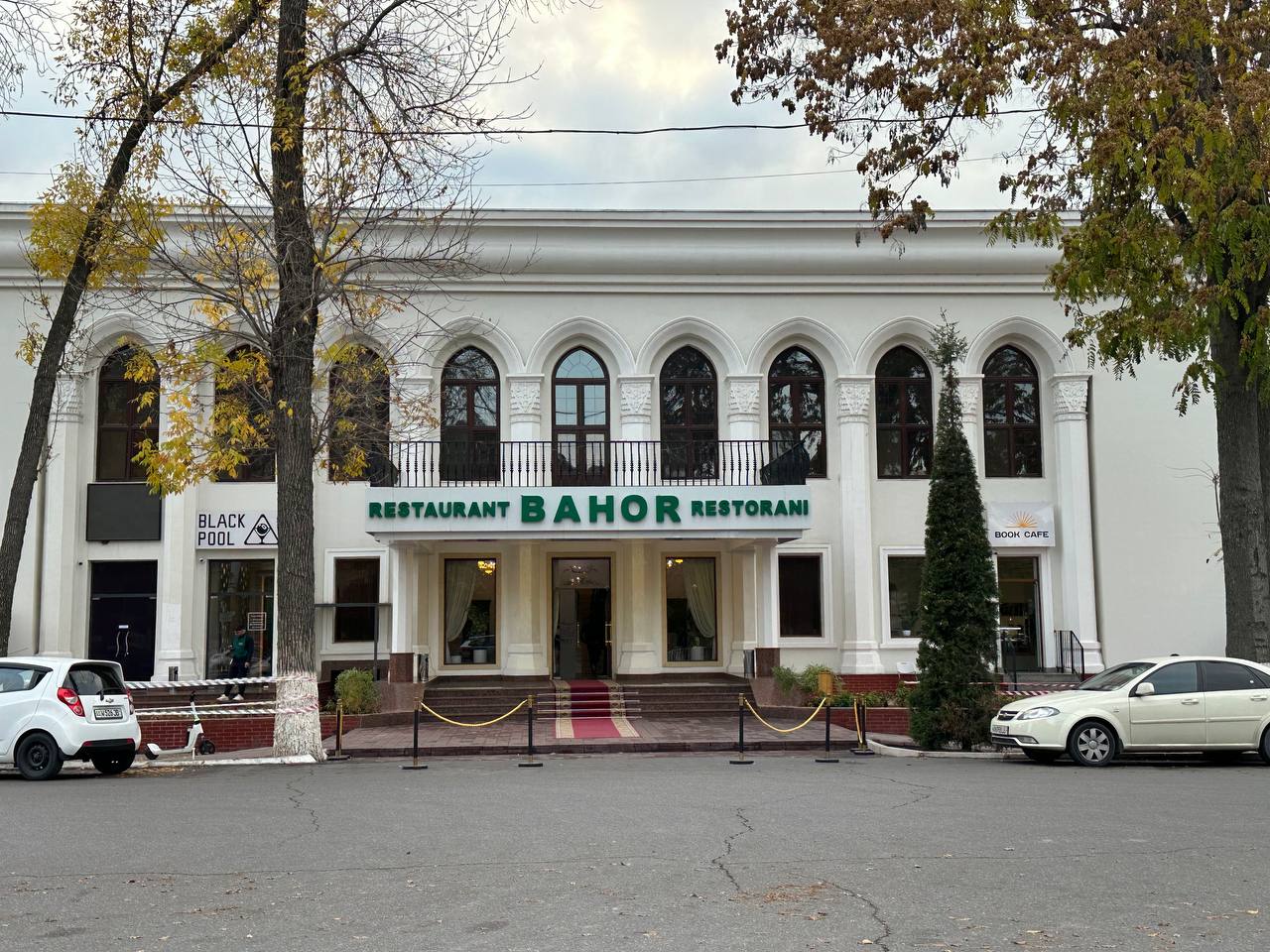 Photo: Sardor Safarov
Bu-Ra-Ti-No
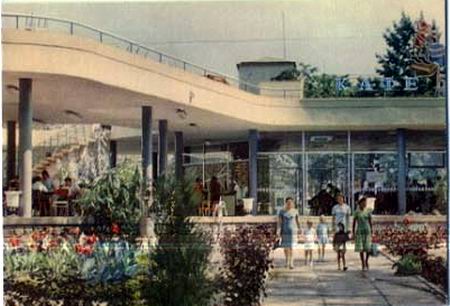
Right next to the House of Photography, until recently, stood a café known to all Tashkent residents and considered a children's café with the beautiful name 'Buratino'. Built in 1965, it was two storeys high, and here you could treat yourself not only to ice cream served in coupe glasses and the most delicious lemonade, but also to 'more substantial' dishes – plov, for example, or shashlik.
Unfortunately, it 'did not fit' into the design of the area next to the new Palace of Forums and was, alas, dismantled. Older Tashkent residents should remember this café – in fact, on its site now stand the second chimes, forming a pair with the first ones, built in 1947. I still cannot understand what the authors of the 'second' chimes project wanted to say by erecting this structure, about which there is nothing to tell.
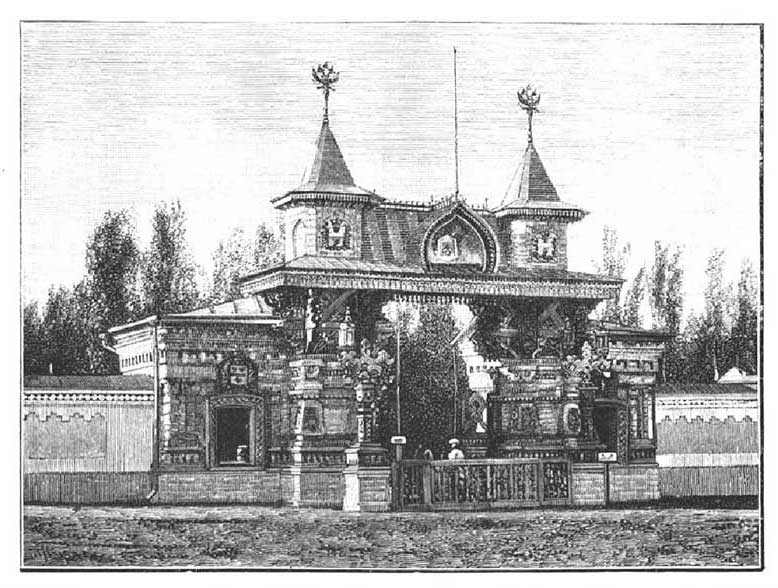
So we will walk past them and stop immediately. Here, to the left of the pavement, were the beautiful entrance gates to the city park, which hosted the first anniversary agricultural and trade-industrial exhibition in 1890. These gates were built in the Byzantine style according to the design of the already well-known Turkestan architect Alexei Leontievich Benois.
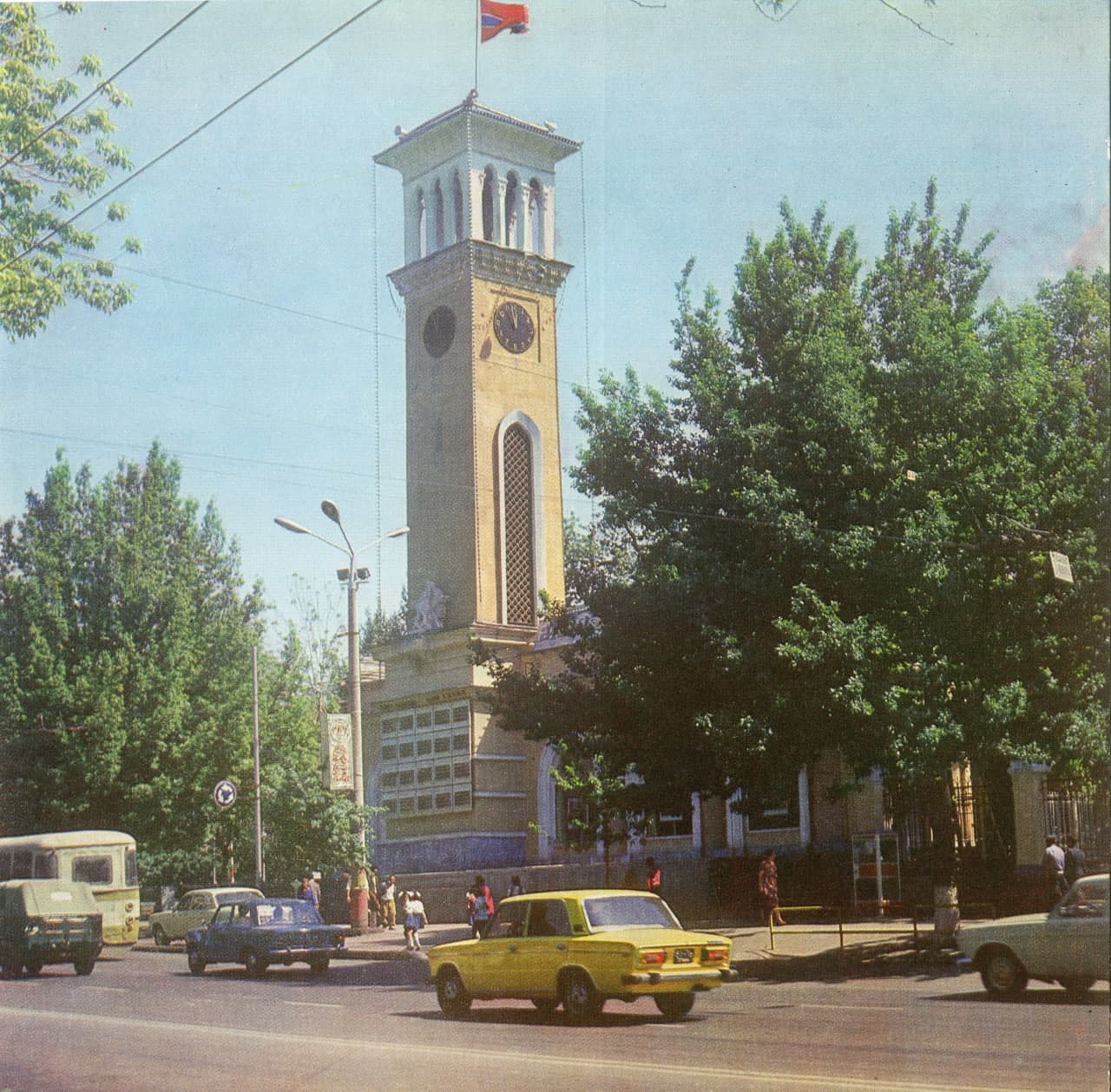
However, they did not survive until the next exhibition, being simply dismantled. And we move on – to the turn onto Moskovsky Prospekt, where now stand those very chimes, gifted to his native city by Sergeant of the Engineering and Technical Service Alexander (Ishiya) Abramovich Eisenstein.
The Chimes. Historical
In the East Prussian city of Allenstein (modern-day Olsztyn), he noticed a tower of the city hall – the city administration – damaged by shells, which sappers were already preparing to blow up along with the clock on it. The sergeant first rushed to the headquarters of his military unit and persuaded the regimental commander to stop the demolition work, and then received permission to dismantle the clock.
Very soon he was given the 'go-ahead' to transport the chimes to Tashkent, provided with a freight car, and Alexander Abramovich personally accompanied the trophy clock to his hometown. For them, in 1947, a tower was built according to the design of architect A. A. Mukhamedshin, on which they still stand today.
Teachers' Seminary
Directly across the street from the chimes is located the rather spacious residential house of Colonel Tartakovsky. It was in this house that the Turkestan Teachers' Seminary – an educational institution for training teachers – began its work in 1881.
Despite its large usable area, this house did not meet the requirements of educational institutions of that time, and therefore it was rebuilt and expanded according to the design of Alexei Leontievich Benois. The building turned out to be quite expressive, although it remained single-storey.
It is worth mentioning an interesting fact – the director of the teachers' seminary for a long time was the famous orientalist scholar Nikolai Petrovich Ostroumov. It so happened in his family's life that one of his daughters – Olga Nikolaevna – became the wife of the city 'mayor' Nikolai Gurievich Mallitsky. Both of them – father-in-law and son-in-law – who did a great deal for both our city and the entire Turkestan region, found their final resting place at the Botkin Cemetery.
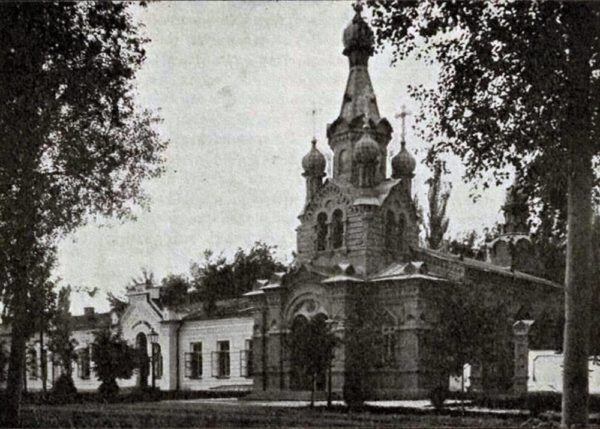
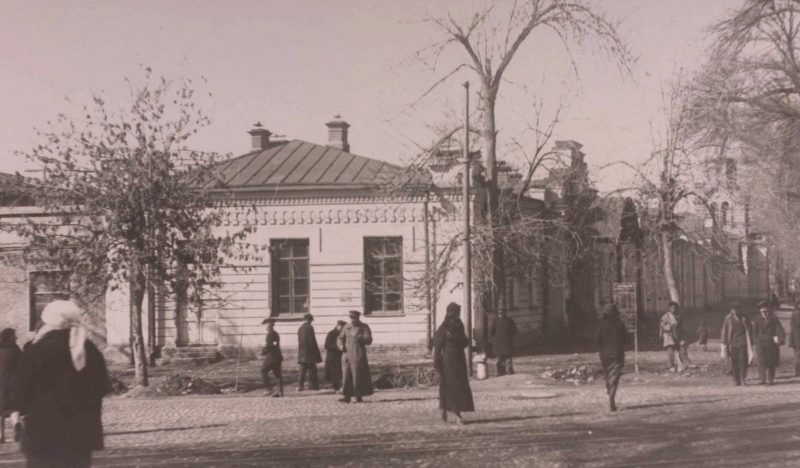 Photo from the archive of architect Polupanov
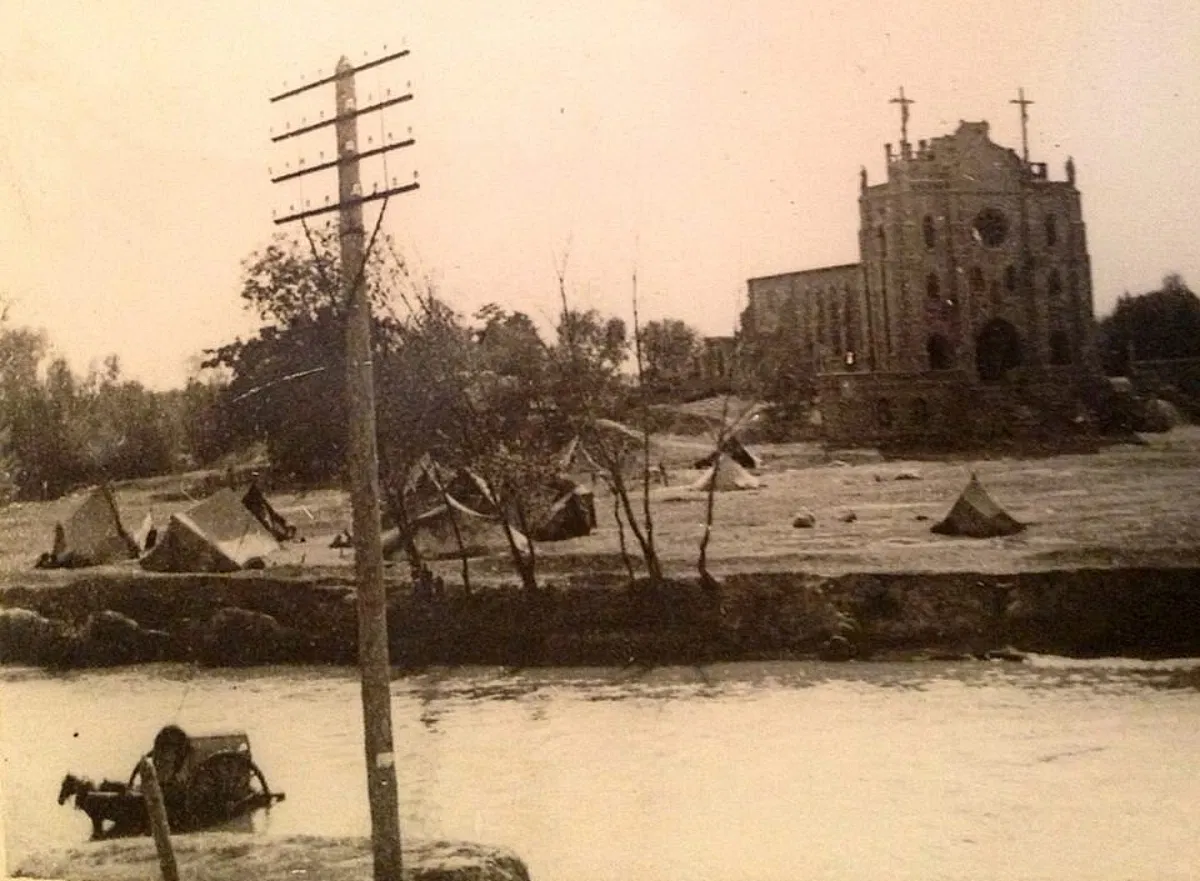
A little later, at the request of the pedagogical council of the teachers' seminary, on 5 May 1896, a five-domed church was founded, consecrated upon completion of construction in the name of the holy blessed Prince Alexander Nevsky. The rite of consecration was performed on 22 November 1897. The church was built under the direction of engineer E. P. Dubrovin, again according to the design of Alexei Leontievich Benois.
The well-known city philanthropist and commerce councillor Nikolai Ivanovich Ivanov took an active part in the construction of this building, so necessary for the seminary at that time. At his own expense, he purchased and donated 'for the needs of the church' fifty thousand pieces of fired brick, as well as church utensils, bells, and an iconostasis worth more than six thousand rubles. The amount of money spent was simply astronomical for those times.
After the revolution, the beautiful structure was dismantled. Only the first floor survived. The teachers' seminary itself was transformed in 1920 into the Regional Uzbek Men's Institute of Education. At various times, this building also served as the city health department, the 'Pribory' (Instruments) salon, and was even abandoned. It was only recently dismantled. As for the surviving part of the church – for a long time it housed a bank money transfer point, and now on its site stands a faceless business complex.
House of Specialists
Here, just to the left of the seminary, there was also a building erected more than seventy years ago, until recently. Long-time residents of the city will surely remember it – for many years it housed the so-called 'voluntary people's patrol', a citizens' association whose members would go out daily to keep order on the city streets.
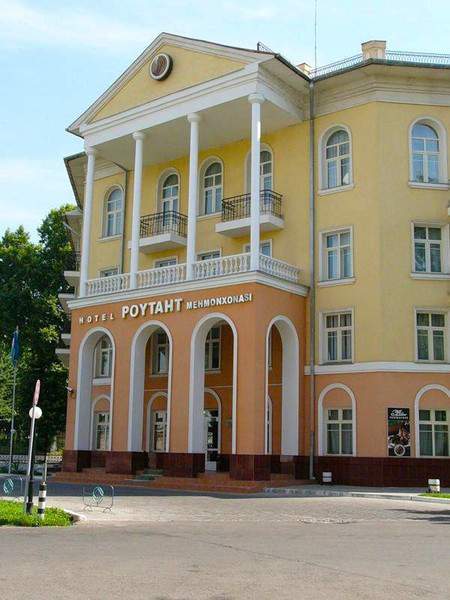
According to the original plan, this was one of several 'specialists' houses' intended to accommodate agronomists, academics, and other professionals deemed essential at the time. Yet I still recall the building's rather unprepossessing appearance, which was later renovated into the 'Poytakht' hotel. But, alas, its time too came, and the not particularly old building was also demolished.
Two grammar schools
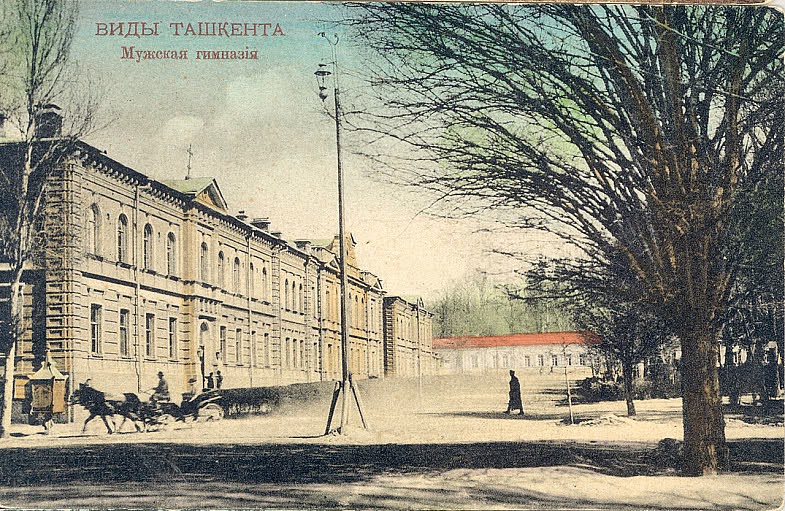
To the right of the former specialists' house stand two three-storey buildings constructed from the famous Turkestan brick.
Many former students – lawyers and motorists alike – may recall with a smile how they studied within these walls, how they spent merry hours in the local cafés near their alma mater. And even they, now venerable retired specialists, let alone today's students, may well be unaware of the secret that 'a great mystery lies herein'.
These two historic buildings, it turns out, are slightly older than the city park and were built under the direction of a military engineer. How much older? Exactly the time it took the designer to develop and approve the project – construction of the boys' grammar school began in 1878 and finished in 1882. Each of the buildings was handed over in stages, and there were meant to be three buildings, not two.
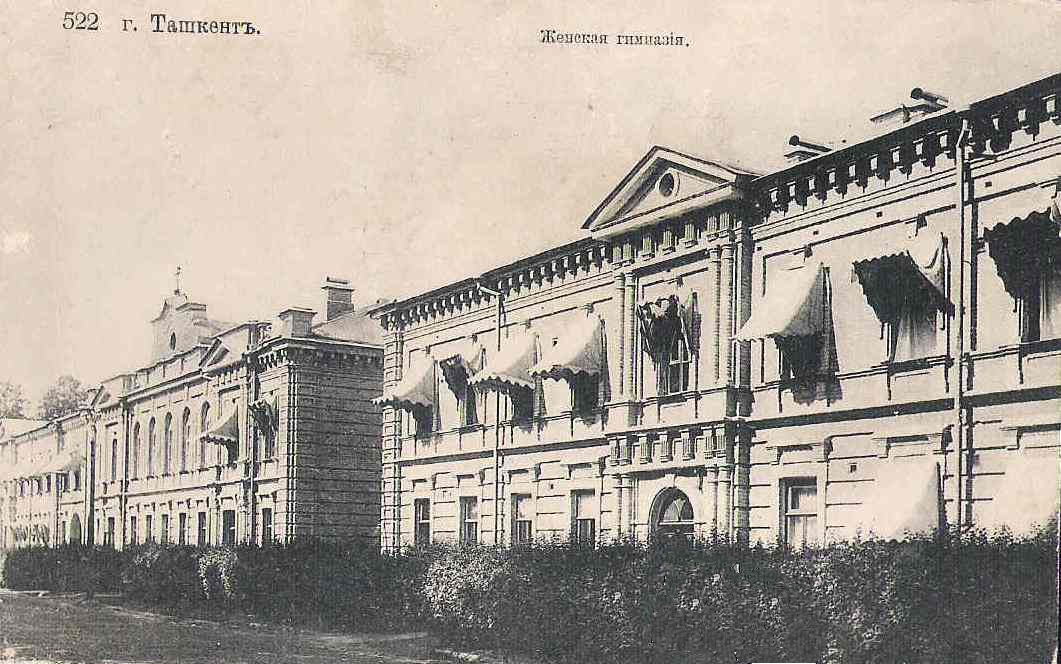
A year later, construction began on the girls' grammar school, also a complex of three academic buildings, which was handed over to students in 1883. Its construction was overseen by Captain Belokha and supervised by civil engineer E. P. Dubrovin, who bore the brunt of the work – he largely managed the construction, carefully consulting the blueprints and even making some adjustments to adapt the buildings to the local terrain.
If you look closely at the buildings, you can see that they seem to be 'cut into' a slight rise, with one appearing higher than the other. Originally, the buildings were two storeys high, and, incidentally, there was another project designed by Georgy Mikhailovich Svarichevsky – another well-known architect of the time. This project envisaged the construction of a so-called 'insertion' that would connect all six buildings.
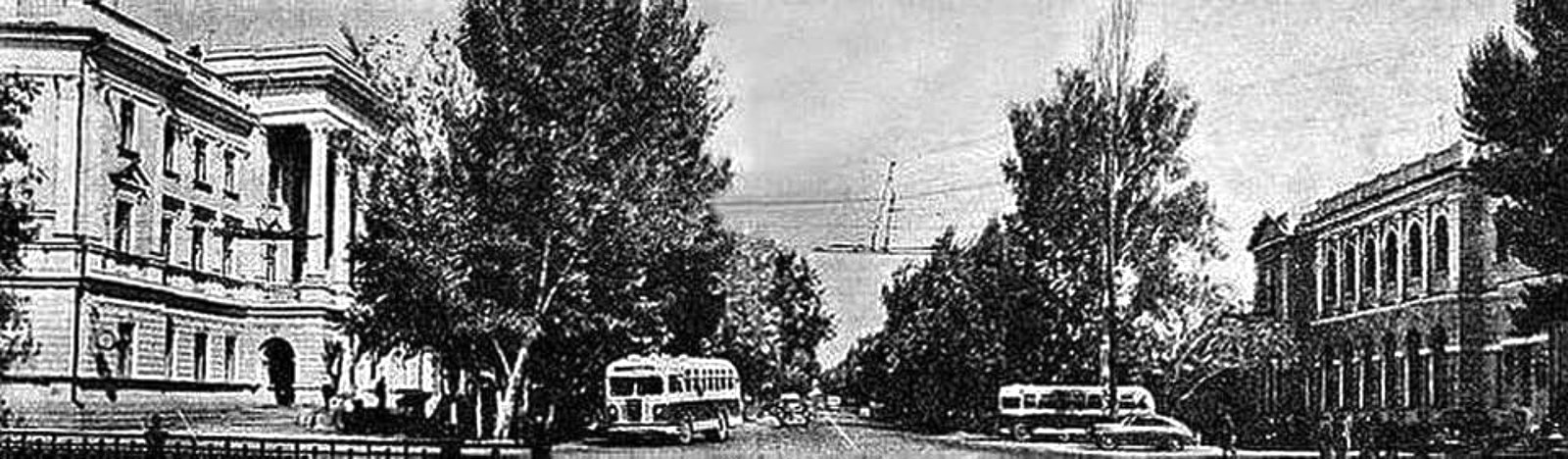
But this project was destined to remain on paper; otherwise, Tashkent's 'Broadway' would simply not exist. Later, in the 1930s, all six buildings were joined together into two separate structures, then an additional storey was added to each – something clearly visible even without binoculars: the 'superstructures' of the third floors and the connecting 'inserts' were built from a different type of brick and with different brickwork. Today, as in their earliest years, the buildings belong to the Tashkent University of Law and fulfil their original purpose – educating young people.
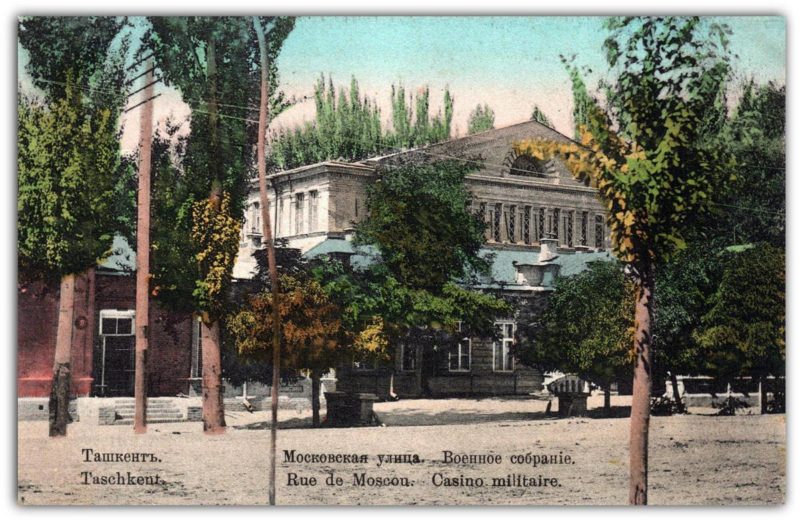
To conclude our tour, we will examine three more fascinating buildings – the so-called 'city party committee', the headquarters of the Turkestan Military District (TurkVO), and the building of the District Officers' House (ODO).
The Writers' City Committee
This 'city committee' was built with funds from the 'Uzbekvino' trust just before the Great Patriotic War, eighty-six years ago. Original in both concept and execution, it now stands empty, unfortunately, although there was recent talk of it being bought by someone for use as a hotel.
Originally intended for the so-called 'party' leaders, it was later transferred to the Writers' Union of our republic. From the early 1990s, it housed a bank, then – for just a few days – a foreign mobile phone company. Before it was built, on this site and the site of the neighbouring educational institution, stood a low building that served as a shelter for soldiers' children.
The shelter (orphanage) itself was later moved elsewhere, and for a time its premises housed a secondary school named after Pestalozzi. Why this particular name is unknown.
Headquarters of the Turkestan Military District (TurkVO)
A headquarters is a headquarters – there is no need to reveal military secrets, even from the last century. It was located between the boys' grammar school and the ODO, was single-storey and charming. From 1917 to 1974 – until the construction of a new building in the area of the modern Institute of Chemistry – this single-storey building was used by the military for its original purpose, and then, after the 1966 earthquake, it was demolished.
Later, a photography studio stood in its place, where we had our pictures taken with our little son. Today, the Timurids Museum occupies the site. And the last building on our route today is the District Officers' House itself.
ODO
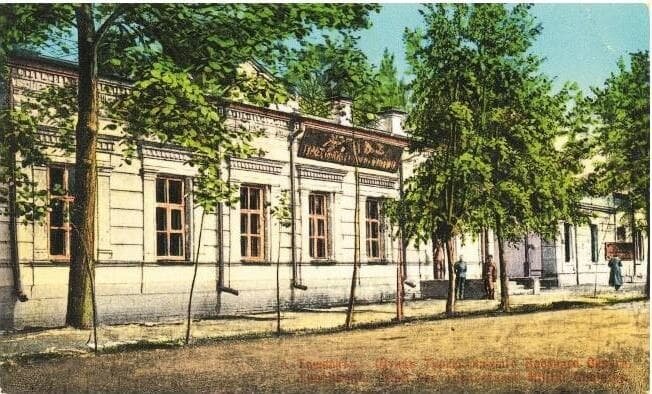
It was built in 1885 as an 'officers' house'. In other words, a military club, complete with an officers' restaurant, a library, and a lecture hall that could also serve as a venue for celebrations and balls. Officers' wives and widows, officers' children, and even the fiancées of young ensigns and lieutenants were permitted entry. Today, it houses the rectorate of our city's University of Law.