Architecture & Urban Environment
The pattern of civilization from ornaments
Evgeny Sklyarevsky's Guide to the Ornamental Heritage of Tashkent.
Introduction to Ornaments
There is an opinion that Tashkent has always been exclusively a trade and craft city, lacking the creations of architects and artists. This is not so: in the ancient settlements of Kanka and Shakhrukhia, located near Tashkent, just like in Afrosiab and Varakhsha, there existed developed forms of material culture, and in Kanka, archaeologists have relatively recently discovered wall paintings.
The flourishing of the art of ornamentation is associated with the advent of Islam and the work of masters of the Persian artistic tradition. Some researchers explain the development of ornamental art by the prohibition on depicting people and animals, but the reality is much more complex and multifaceted. Doctor of Art History Elmira Gyul writes: “It is not the prohibition on depicting the real world, but the need for ideal forms that underlies the ornamental nature of Islamic artistic culture.”.
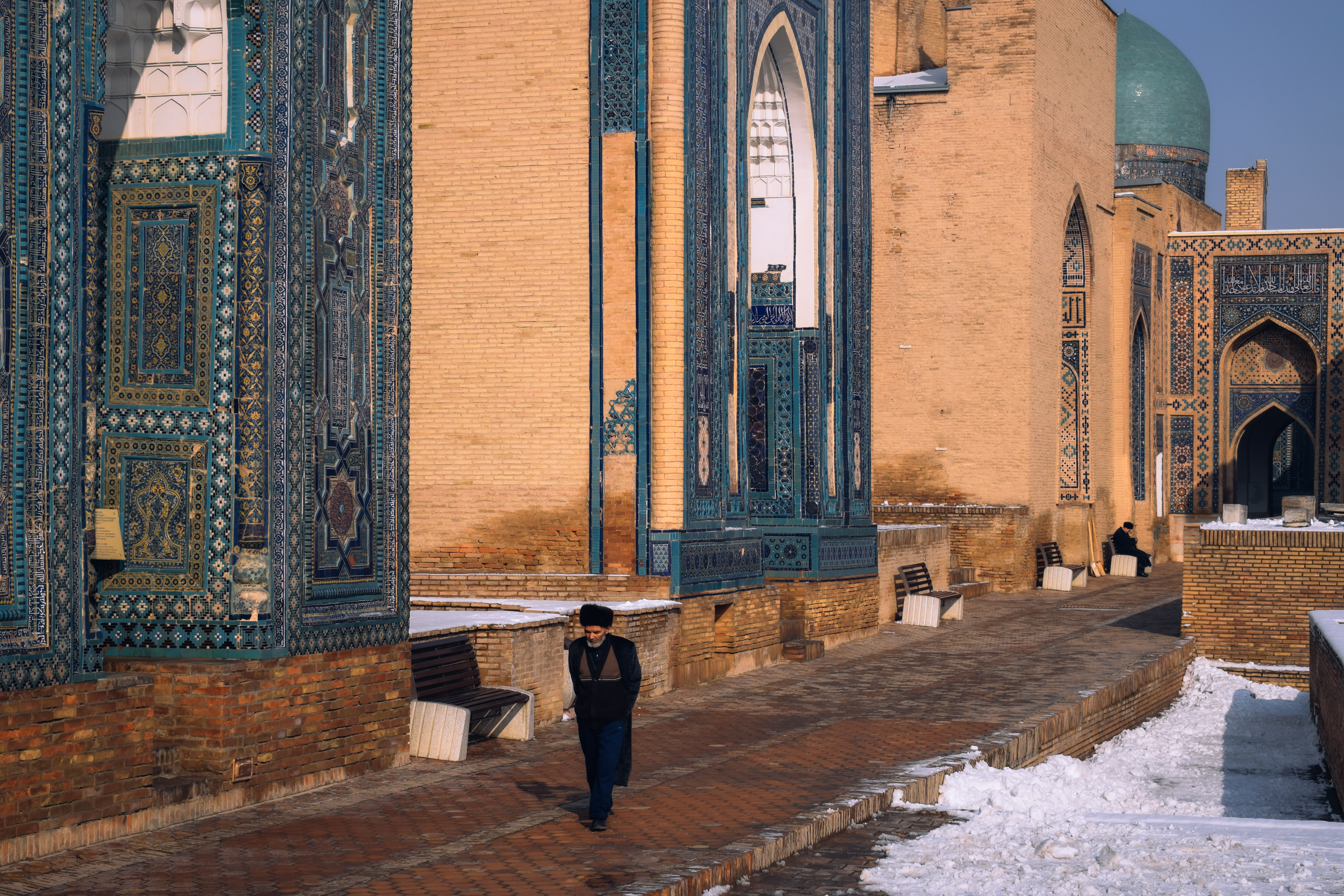 Photo: Ildar Sadikov
Historian Oleg Grabar, in turn, notes:
The specificity of Islamic art is connected with the priority given to abstract, refined ornamentation, which was the most appropriate means for expressing the idea of divine perfection, the beautiful world created by God.
The patterns that covered the walls of buildings and the pages of handwritten books, fabrics and carpets, weapons and utensils, were not only decorations—they carried sacred meanings and were intended for associative interpretation, internal, autocommunicative contemplation, even meditation.
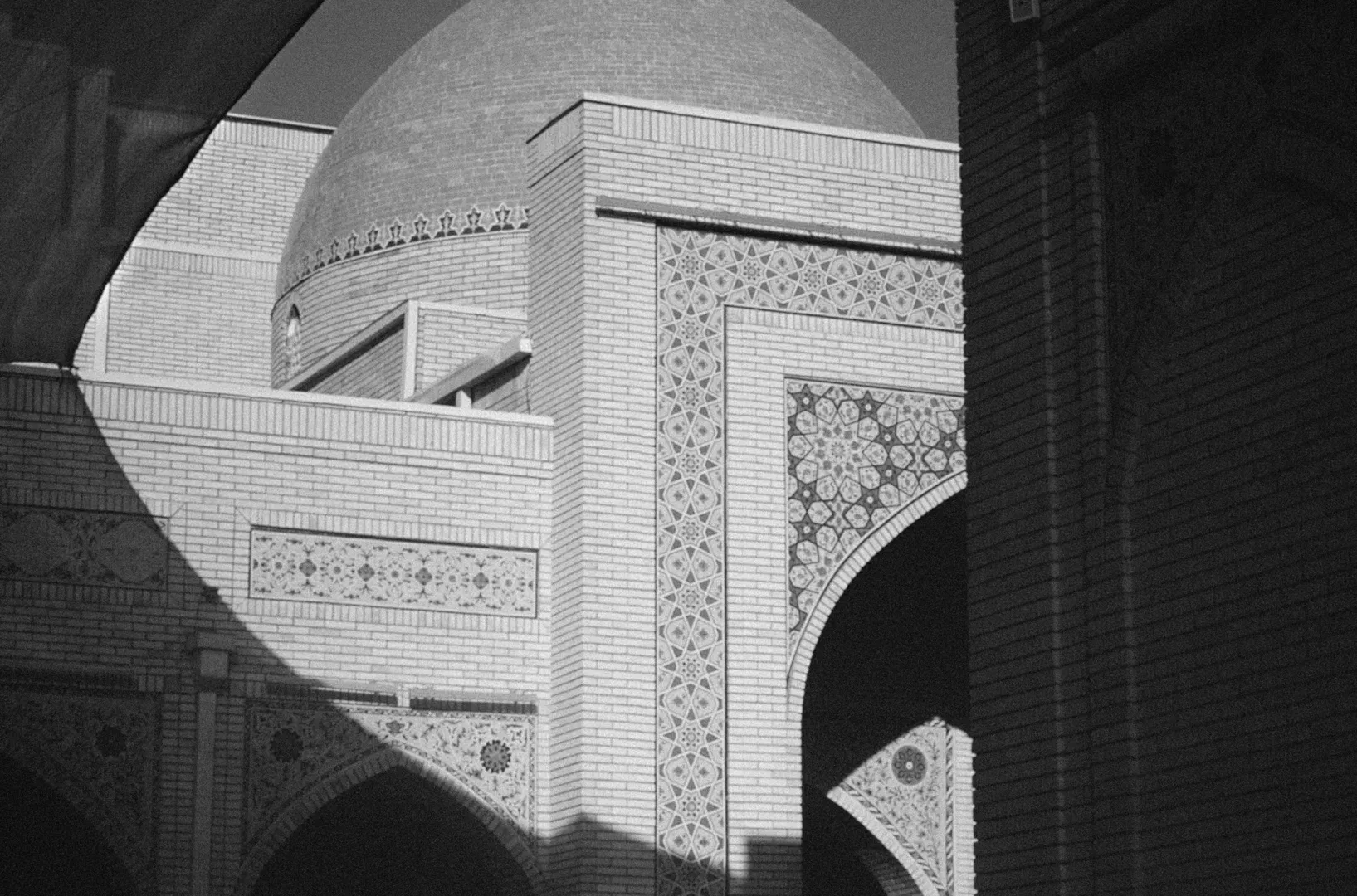
Samples of Islamic ornamentation, which spread from Pakistan to Spain, are not as ancient in Tashkent as they are in Khiva and Samarkand. Most of them were created from old drawings in the 20th century during the reconstruction of historical buildings. Such monuments include the Kukeldash and Barakhan madrasahs, as well as the Yunuskhan mausoleum. Noteworthy examples can also be seen in modern architecture—for example, in the renovated Suzuk-ota complex and the new Minor mosque.
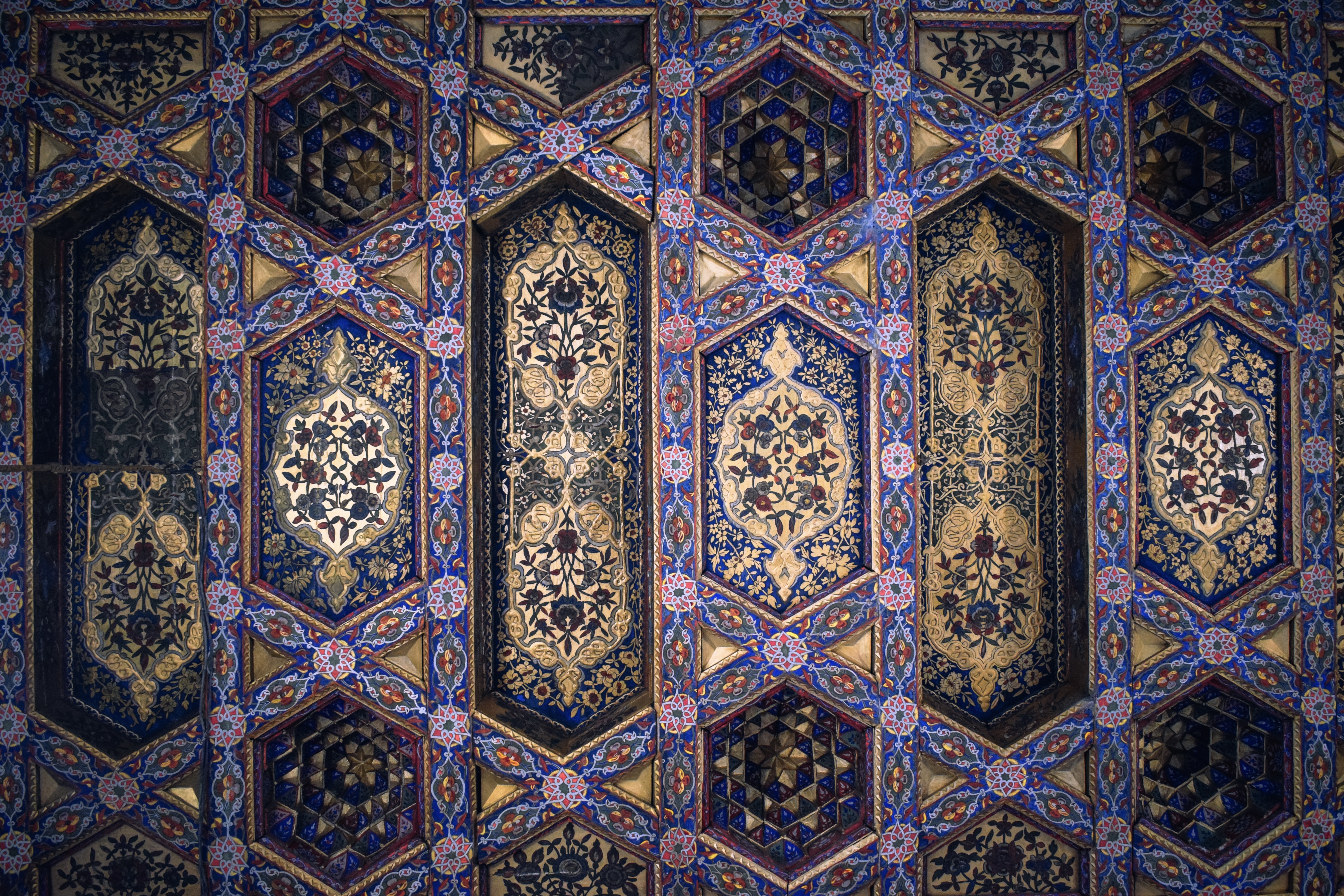 Photo: Ildar Sadikov
And it's not just about ornaments made from fired glazed tiles. In Tashkent, there are remarkable examples of wood carving—in particular, the doors of the Museum of the History of the Timurids and the Sheykhantaur Gates in the Museum of the History of Tashkent. One of the most striking examples of ganch carving—is the decor set against mirrors in the Bukhara Hall of the Navoi State Academic Bolshoi Theatre.
There are also ornaments painted on wood, — for example, in the palace of Grand Duke Nikolai Konstantinovich Romanov and in the Museum of Applied Arts of Uzbekistan.
In Tashkent, you can also see ornaments carved on the granite slabs surrounding the "Courage" monument. However, these are not Islamic ornaments, but folk patterns of the republics that participated in the restoration of the city after the 1966 earthquake.
Folk ornaments also include embroidery on tubeteikas and suzani and patterns on lagans, tables, and book covers.
The art of creating decorative sun protection grilles — panjara and beautiful brickwork, as seen on buildings from the Turkestan period as well as on more modern ones, such as the former "Intourist" — is also part of the ornamental heritage.
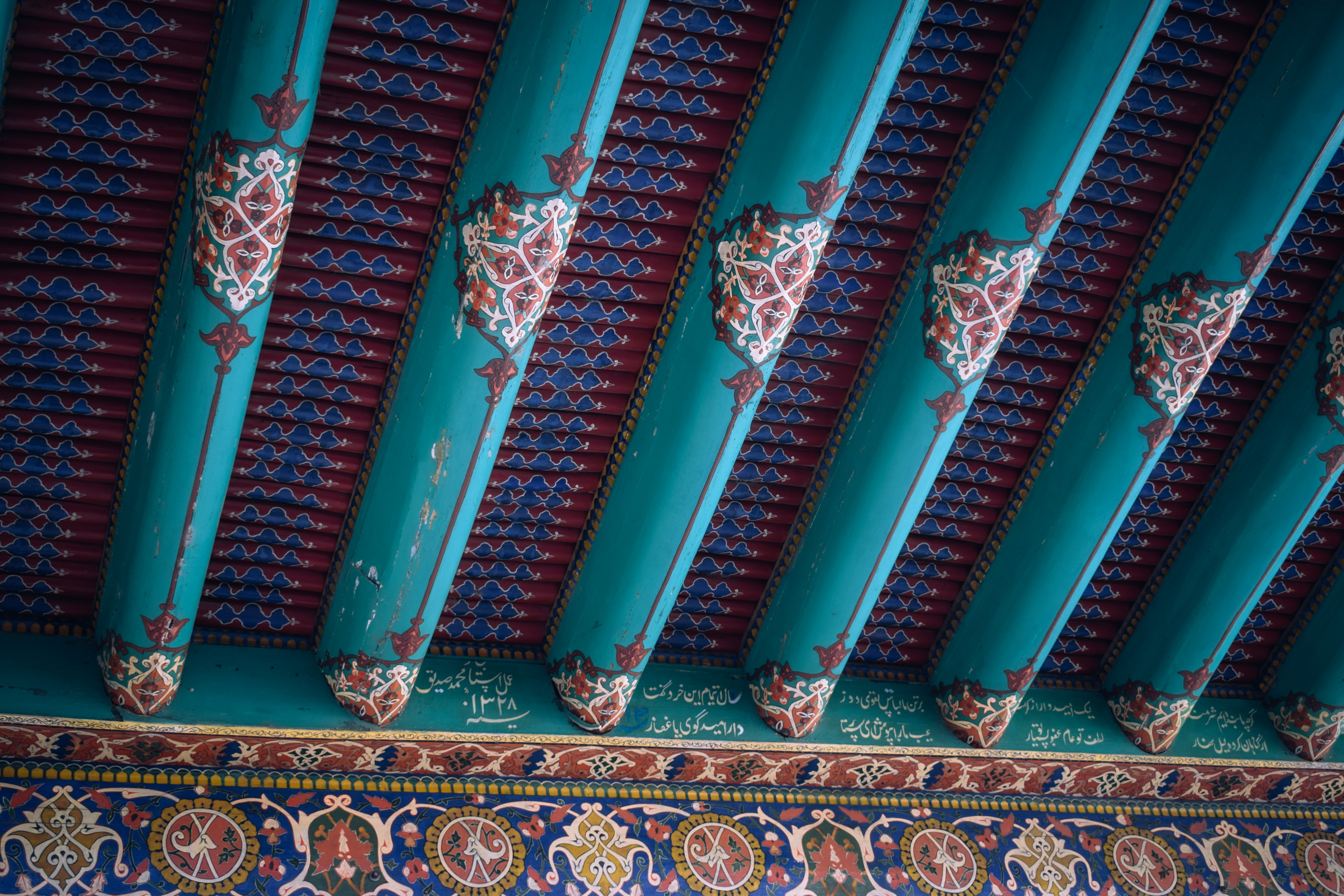 Photo: Ildar Sadikov
And finally, one of the main treasures of the capital — mosaics on buildings, sites of Soviet modernism, and metro stations. It is they that largely shape the unique visual appearance of Tashkent and attract tourists from all over the world.
In the Muslim Eastern artistic tradition, two main types of ornament are distinguished, each having an infinite number of variations: these are islimi, vegetal, and girih — geometric.
Girih symbolizes the divine origin and the absolute perfection of the world created by the Creator through strict geometric precision, while islimi embodies the human, the natural, the living. Islimi — these are curved lines, arcs, waves and spirals, flowers and vines. Girih, on the other hand, combines rectangular and polygonal continuous grid figures and knots, creating a mystically precise rhythm of the pattern.
Both ornaments are strictly mathematically calibrated, and their shapes and compositions are infinitely diverse.
How to Read Islamic Ornament: A GuideHaving discarded, on the advice of experts, the seven introductory paragraphs that discuss the importance and necessity of the article, we proceed to delve into Tashkent ornamentsmag.humodoc.com
Read also
 Architecture & Urban Environment
When Art Becomes Part of the City: ARCHICA 2026 and a New Perspective on Urban Space
Anna Oris
 Architecture & Urban Environment
A Project Does Not Begin With a Façade
Lyubov Safronova
 Architecture & Urban Environment
Master Plan: How to Design a City Before It Is Built
Elena Trubina
Newsletter
A letter from the HD editors
Once a week, we send the best stories, events, and cultural discoveries from Central Asia.