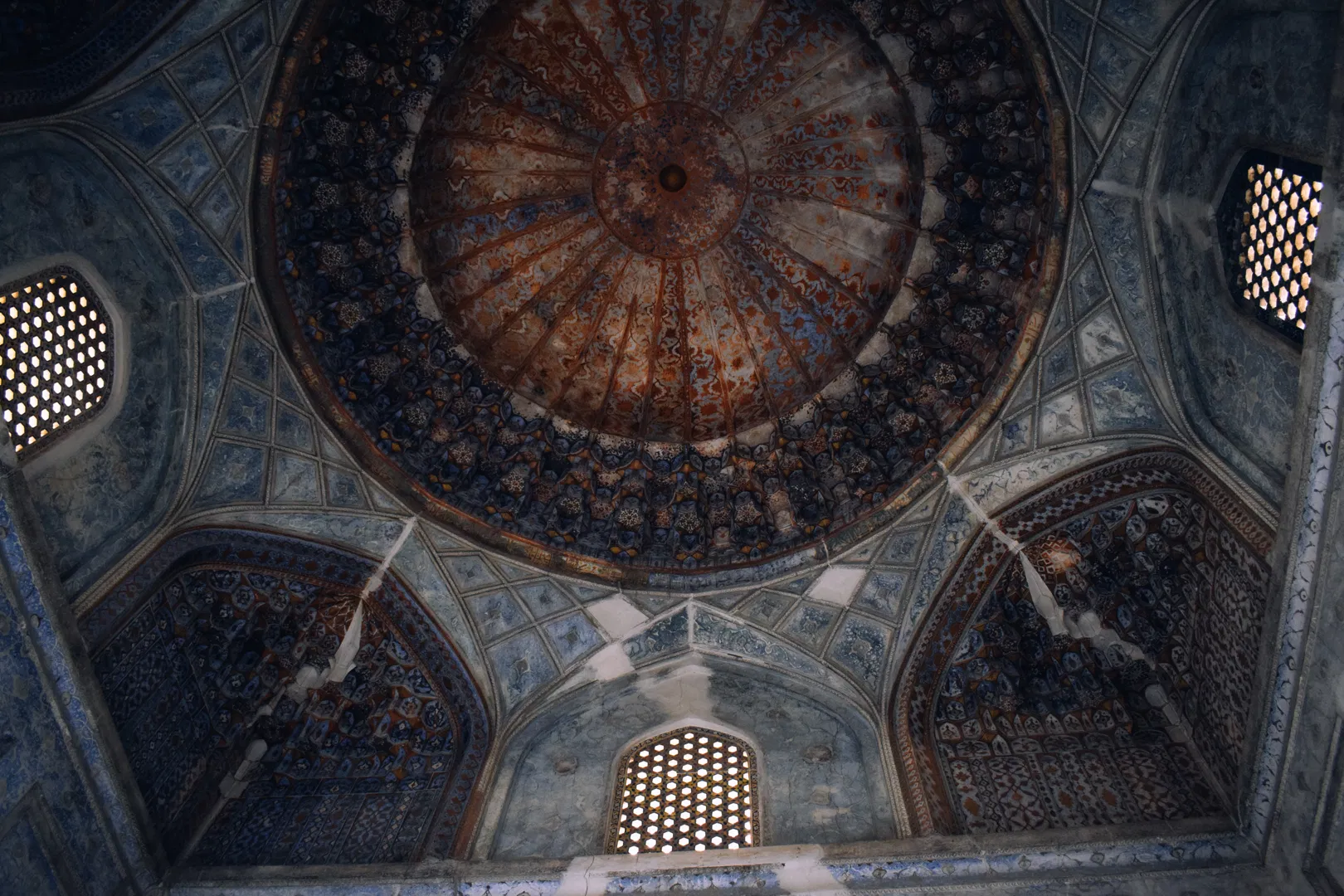
Academician of the Academy of Sciences of Uzbekistan, Doctor of Art History Akbar Khakimov — on how the art of the Islamic world seeks and finds a subtle balance between fidelity to the traditional artistic canon and its creative reinterpretation.
Today, Islam is gaining new facets of influence on the modern world, becoming an important factor in global politics and culture. The beginning of the 21st century was marked by a series of upheavals that changed the global agenda: the tragedy of September 11, 2001, in New York, the emergence of ISIS, a series of terrorist attacks in various countries, protracted conflicts in the Middle East, and waves of Muslim migration to Europe. These events shaped a new political landscape, forcing pragmatic politicians and analysts to seek a positive image of Islam, relying on the concept of an enlightened, peace-loving current of the religion.
Western curators invite viewers to move away from the negative image of Islam formed in the media and to focus on the aesthetic and cultural power of contemporary Islamic civilization, which is fundamentally based on art. The term "Islamic art" is increasingly used not only in relation to classical artifacts but also in the context of the work of contemporary artists from the Muslim world. Their connection to the rich heritage of Islamic culture is emphasized, without which the development of world civilization would be unimaginable.
The bond of time is broken
In fact, Eastern ornamentation and miniature painting have had a tremendous influence on world art, inspiring many European masters of the 20th century. In the works of Henri Matisse (French painter, draftsman, engraver and sculptor. One of the main European artists of the Modernist period — A.Khakimov), Gustav Klimt (Austrian painter, one of the founders of European Art Nouveau), Kazimir Malevich (Russian and Soviet avant-garde artist of Polish origin, teacher, art theorist, philosopher, founder of Suprematism), and Wassily Kandinsky (Russian painter and art theorist, who stood at the origins of abstractionism — all notes by A.Khakimov), one can find echoes of the artistic traditions laid down by the great masters of the Muslim East, such as Kamāl al-Dīn Bihzad (Persian miniature painter who worked in Herat from 1468 to 1506 and is recognized as one of the greatest masters of miniature painting in the entire East — A.K.) and his school. However, for a long time, Islamic art was perceived either as a mystical phenomenon devoid of true artistic value, or as an exclusively regulated form of culture lacking an independent creative beginning.
A turning point in this regard occurred largely thanks to the research of Oleg Grabar, whose works helped establish the term "Islamic art." He emphasizes the key role of Islam in shaping an artistic tradition spanning regions from the Mediterranean to India. However, regarding the contemporary art of the Islamic world, this term requires a more nuanced, differentiated approach.
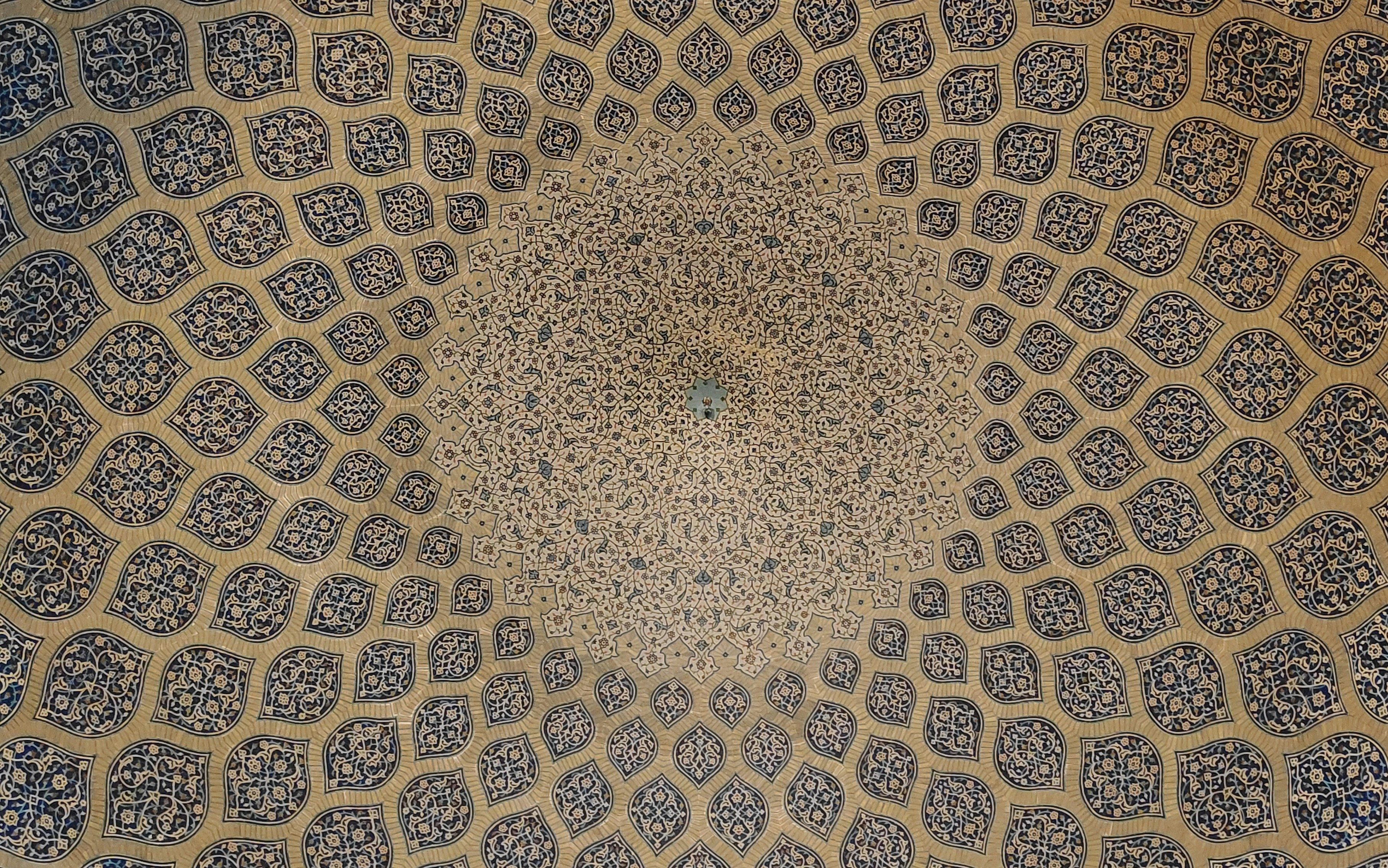 © Farid Jebelli / Unsplash
The dramatic historical processes of the 20th century — the collapse of the USSR, changes in political regimes, global cultural transformations — inevitably influenced the development of art in the post-Soviet republics, Central Asia, Azerbaijan, and a number of regions in Russia, where Islam was under ideological prohibition for many decades. The question arises: does Islamic civilization in these countries persist as a living cultural organism, or has it turned into a museum relic, having lost its connection with contemporary artistic practice?
This problem is particularly acute in the art history of Uzbekistan, but it also remains open in the countries of the Near and Middle East, where the Islamic tradition has not been interrupted. Global changes have influenced the consciousness of artists with Islamic roots: today they work in a new stylistic approach that brings them closer to the postmodern trends of Western art. Although their work retains a memory of the values of Muslim culture, they are no longer bound by the canons, plasticity, and philosophy of classical Islamic art, creating works in the spirit of the global art scene.
When it comes to the classical art of Islam (7th–19th centuries), with its established traditions and canons of visual culture, one primarily recalls intricate patterns and calligraphic ligatures. They were used both in the sacred texts of the Quran and in decorative ornaments, creating the characteristic rhythm of Islamic artistic expression. In the world's largest museums, classical Islamic art — ceramics, metal chasing, textiles, manuscript Qurans, poetic treatises with miniatures adorned with calligraphy and patterns of islimi (a type of ornament based on the combination of tendrils and spirals) and girih (a complex ornament of stylized lines arranged into rectangular and polygonal shapes — A.Kh.) — is traditionally exhibited in separate halls, not mixed with works of contemporary art.
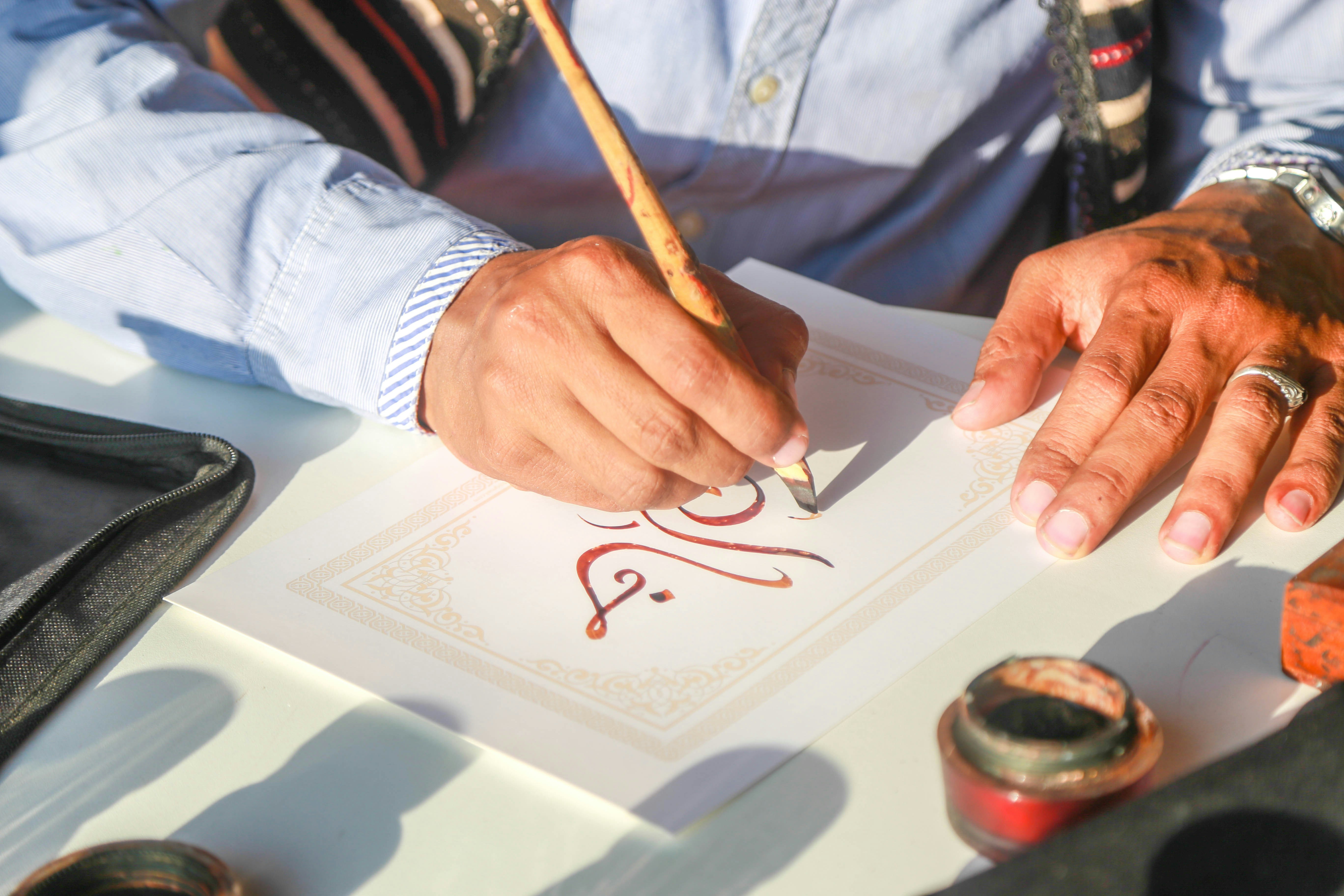 Illustrative photo © Paradigm Visuals / Unsplash
However, this museum tradition began to change. In 2006, the Los Angeles County Museum of Art (LACMA), which holds one of the most significant collections of Islamic art (approximately 1,700 objects), decided to broaden the representation of this field by including contemporary artifacts. Linda Komaroff, curator of the Islamic art department, was the first to acquire a piece of "contemporary" Islamic art for the museum, justifying this step as follows:
No one thinks that European art ended in 1900—its works are simply exhibited in other halls. But the art of the Middle East seems to have "frozen" in 1900 and is not represented anywhere else. My goal is to show it as a continuing tradition.
This approach is also supported by other curators who classify works by contemporary artists from Iran, Algeria, Morocco, Saudi Arabia, Azerbaijan, and other countries within the concept of the "Islamic world" as Islamic art. The basis for this is likely not so much stylistic continuity as the geographic and cultural origin of the authors.
In post-Soviet regions with predominantly Muslim populations, the traditions of Islamic art are most prominently manifested in the ornamental aesthetics of decorative and applied arts. Painting, sculpture, and contemporary art forms show less influence from the Islamic tradition, although over the past two decades, against the backdrop of a revival of religious values, this factor has increasingly found reflection in artistic practice.
But can the art of contemporary masters from the Islamic world be considered an organic continuation of what has been defined as Islamic art over the centuries? This question remains open and requires deeper reflection.
Despite the conceptual differences between classical Islamic art and contemporary art in the Islamic world, Western art curators, especially in Europe and the USA, strive to view modern artists with Islamic roots (Contemporary Art of the Middle East) as an organic part of Islamic art, unifying them under the term Islamic Art Now.
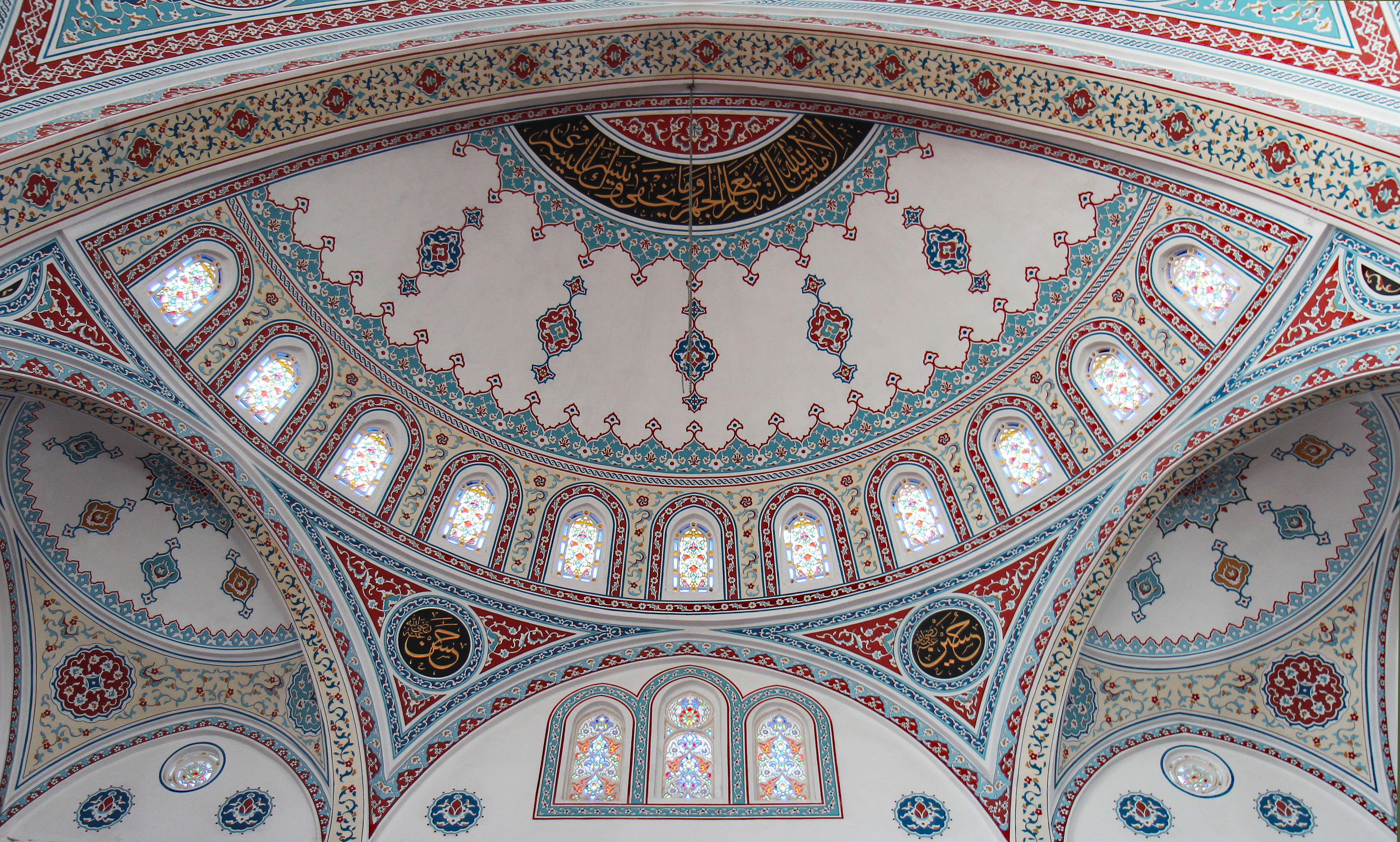 © Alessandro Coiro / Flickr
However, this approach raises the question of the need for a deeper study of contemporary art in regions where Islam is prevalent. Historical and cultural peculiarities, as well as varying levels of social and political influence of Islam in these countries, require a differentiated approach to defining artistic phenomena associated with Islamic tradition.
A more appropriate approach is to use the term "contemporary art of the Islamic world" instead of "contemporary Islamic art", as adopted by Western curators. This term more accurately reflects artistic practices that, on the one hand, maintain a mental and visual connection with classical heritage, but on the other hand, have reinterpreted it, offering new forms of interaction between the past and the present. It encompasses a broad spectrum of artistic culture—from painting, sculpture, and architecture to current art forms such as installations, video art, collages, photo installations, music, theater, and cinematography. Thus, the term "contemporary art of the Islamic world" emphasizes not only the territorial and cultural connection with the Islamic tradition but also the multifaceted nature of artistic processes occurring in these regions today.
One of the main symbols of Islam — the Kaaba — has been reflected for centuries in Eastern miniatures as an embodiment of holiness and an ideal of beauty. In the 20th century, Islamic sacred images continued to inspire European artists, giving rise to unexpected interpretations and associations. Thus, in the philosophy of Kazimir Malevich's "Black Square," a cult artwork of the 20th century, one can see echoes of the form of one of the facets of the Kaaba — the black cube that is the center of the Muslim world.
This idea took an unexpected turn in the early 2000s in Germany, where Islam became not only an important element of Europe's political but also cultural life. In 2005, German artist Gregor Schneider created a 14-meter black cube, a visual double of the Kaaba, and installed it in front of the Hamburg Museum of Art. This project sparked intense debate among art critics, the public, and officials, as it touched on sensitive religious themes. Nevertheless, thanks to the efforts of the director of the Hamburg Museum of Art and the curator of the exhibition "The Black Square. Homage to Malevich," Hubertus Gaßner, it was possible to overcome concerns about potentially offending Europe's Muslims and present the work to a wide audience.
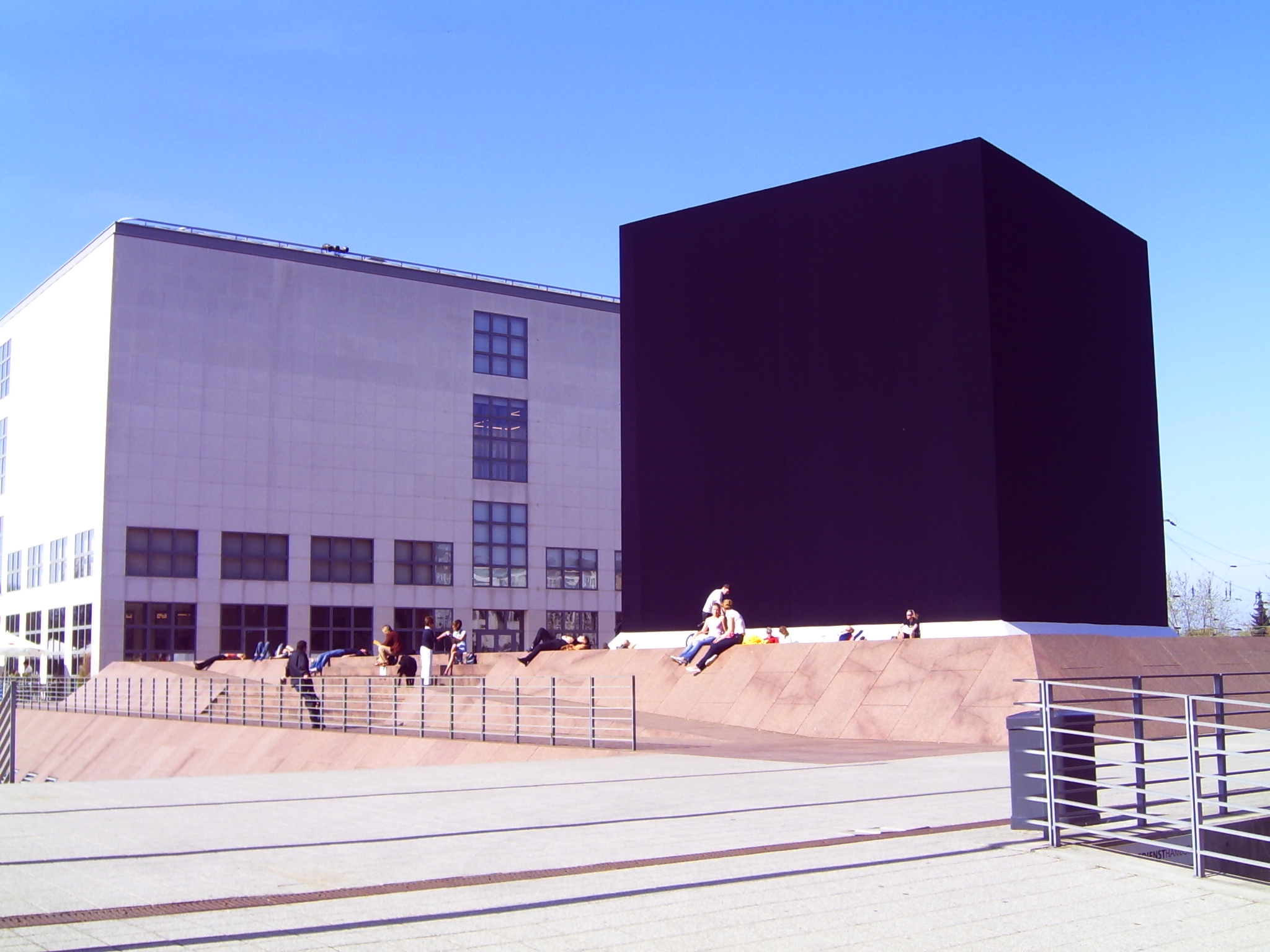 Gregor Schneider, The Cube © Wikimedia Commons
The concerns were not unfounded: the Kaaba is not merely a cult object, but the sacred center of the Islamic universe, a symbol of the cosmogonic unity of the Muslim community. The circumambulation of the Kaaba—tawaf —is an act of worship performed by pilgrims during the Hajj. The movement around the shrine counterclockwise symbolizes entering into harmony with the universal laws. Here, the individual "I" dissolves into the collective consciousness of the ummah (community), becoming part of the common flow of the universe.
This principle of neutralizing individuality in favor of a higher Absolute resonated subconsciously with national painters of Uzbekistan and Tajikistan in the 1980s–1990s. Their work gravitated towards a socially indifferent, lyric-romantic aesthetic, filled with hedonistic motifs. In this context, it is interesting to recall Oswald Spengler, who in his famous work "The Decline of the West" noted that Islam, unlike Western culture, does not perceive the individual "I" as a free force before the divine. According to this concept, any opposition of human will to the will of God is perceived as "masiya" – not a malicious resistance, but a manifestation of dark forces that displace the good principle in a person. Perhaps, it is precisely this historical-cultural discourse that explains the adherence of Uzbek painters to an aesthetic in which personal experience yields to a more generalized, contemplative, and harmonious artistic expression.
Another life of ornament, miniature and calligraphy
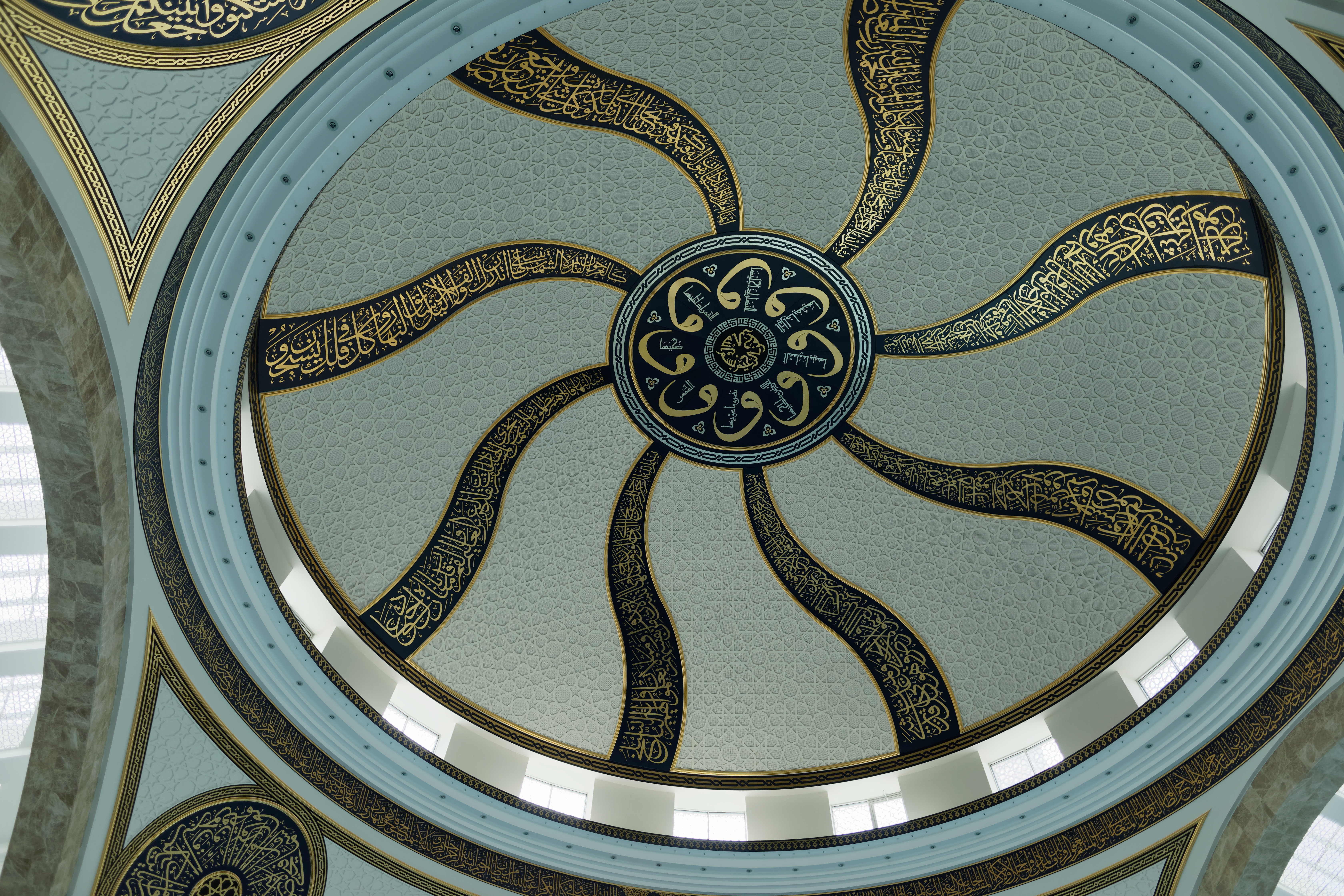
Today, the term "Islamic art" is increasingly applied to works from the contemporary Islamic world, where authors reinterpret the artistic traditions of the Muslim East. In the work of Tashkent artist O. Sharipov, the classical heritage of Islam, embodied in calligraphic inscriptions, becomes the basis for virtuosic, filigree compositions possessing independent artistic value.
In O. Sharipov's experiments with Arabic calligraphy, presented as texts of Quranic sayings on paper and in sculptural compositions, formal renewal of the authentic visual image predominates. To an even greater extent, the processing and adaptation of the language of Arabic epigraphy and the traditions of Muslim miniature without changing their semantic context are characteristic of the masters of traditional applied art of Uzbekistan in the late 1990s and early 2000s.
With the revival of Islamic values in the independent states of Central Asia, particularly in Uzbekistan, inscriptions of a religious and well-wishing nature in the Uzbek language, executed in Arabic script, began to appear in various forms of applied art—metal chasing, wood carving, and ceramics. In Soviet times, such practice, to put it mildly, was not encouraged and often existed under an unofficial ban.
Over time, Arabic calligraphic inscriptions containing Quranic texts and well-wishes, as well as subjects from Eastern miniature painting, began to be actively incorporated into the decoration of wood carving and embossing artisans' works. In 2015, compositions based on classical miniature art from the East of the 15th–17th centuries—the Timurid and Safavid eras—began to be used in suzani embroidery by artisans from Bukhara. The adornment of items with calligraphic inscriptions of religious content was explained by the growth of religious self-awareness and an increased demand for such products among the local population. At the same time, the appearance of Eastern miniature subjects in the works of artisans from Bukhara and Shafirkon was primarily driven by high market demand from foreign buyers—tourists, representatives of international companies, and diplomats.
 © Osman Durak / Flickr
When selecting subjects, local craftsmen, likely lacking deep knowledge of the nuances of iconography from the Timurid and Safavid eras, turn to miniatures from Herat and Tabriz, dating to the period when Shiite rulers came to power, declaring this branch of Islam as the state religion. These miniatures predominantly feature Shiite characters, known as Qizilbash, who were distinguished by their characteristic turbans with vertical red finials.
Thus, in selecting the themes for their miniatures, the masters of Bukhara and Shafirkan, who traditionally identify as Sunnis, were actually guided not by religious memory, but to a greater extent by economic considerations and market demand.
Figurative Art as Ornament
A phantasmagoria, a blending of mytho-epic and folkloric-fairy-tale imagery, sacral-cult symbols and signs, woven into a new ornamental-plastic canvas, became characteristic features of the development of national painting in the 1990s. Figurative images transform, becoming part of the decorative metaphor on the canvas. This same trend clearly manifested itself in modern Uzbek painting of the lyrical-romantic direction, which replaced the socially engaged art of the socialist realism period.
This West-East synthesis may be due to the space for which the work was created—the lobby interior of the InterContinental Hotel in the center of Tashkent, executed in a European style.
The interpretation of the peacock in the works of Gafur Kadyrov has become a symbol of the new hedonistic painting of Uzbekistan. To enhance the decorative expressiveness and metaphorical nature of the image, the artist often depicts peacocks with plumage of an unnatural yellow color. Despite the desire to imbue the motif with symbolic and sacred meaning, his works primarily retain a decorative character, attracting attention through the interplay of color spots. It is this tendency of "desacralization" of zoomorphic images while simultaneously enhancing their decorative resonance that becomes key in the interpretation of figurative motifs in Uzbek painting of the late 1990s to early 2000s.
Among cosmological motifs, the Muslim symbol of the moon is particularly popular, interpreted as an image of lyrical sadness and deep melancholy. Among fruits, the pomegranate appears most frequently, its symbolism dating back to pre-Islamic tradition and manifesting in diverse metaphorical variations.
Contemporary artists are fascinated by the fragmentation of reality into ornamental elements, which outwardly associates with authentic Islamic aesthetics—however, upon closer inspection, this resemblance proves illusory.
Newsletter
A letter from the HD editors
Once a week, we send the best stories, events, and cultural discoveries from Central Asia.