
National Costumes of Baysun: Similarities and Differences
The peoples of Baysun have preserved their traditions for centuries, passing them down from generation to generation. Since ancient times, Tajiks in the region have been engaged in agriculture, crafts and domestic production, skillfully creating textiles, ceramics and jewellery. The Uzbek tribes, traditionally leading a semi-nomadic lifestyle, gradually adopted farming as well, although animal husbandry remained central to their economy and way of life.
Despite these differences, these communities have coexisted for centuries and maintained close economic ties, exchanging not only goods but also cultural traditions. Their interaction contributed to mutual influence, while each community preserved its own identity, reflected both in everyday life and in national dress.
Although in the 19th and early 20th centuries the Baysun Bekdom was part of the Bukhara Emirate, its inhabitants managed to preserve unique ethnic features in their appearance. Traditional costumes, decorated with embroidery and ornamentation, carried the history of the region, reflecting its rich cultural heritage and deep-rooted traditions.
Women’s traditional dress in Baysun can be divided into two types: that of the settled Tajik population and that of Uzbek groups of Dasht-i Kipchak origin, including the Kungrats, Yuzs and others.
Traditional women’s clothing across all ethnic groups in Baysun shared a similar cut, yet differed in details such as the width and length of elements, finishing techniques, fabric quality and the way garments were worn. Each ethnic group added its own distinctive features, creating a harmonious combination of shared forms and local identity.
In everyday life, women in Baysun most often wore dresses made of locally produced cotton and semi-silk fabrics. Striped alacha, janda and other textiles woven by local craftsmen were not merely materials, but part of cultural heritage. As researcher S. Makhkamova notes, several types of alacha existed in Baysun, including norpusti, momoshoyi, kirmizi, mozori and amiri. In the village of Dashnabad, a special fabric called tenglik was woven, distinguished by its unique ornament and texture. Alongside local production, fabrics from Bukhara, Karshi and other cities were also highly valued in Baysun. As O. Sukhareva writes, Karshi textiles, in their finest varieties, were produced for members of the feudal elite and officials, and were exported to Baysun, Gissar, Guzar and Sariosiya, as well as purchased in regional markets by pastoral inhabitants of the surrounding steppe.
Particular importance was given to colour. Young girls preferred bright, vivid tones, especially rich reds symbolising youth and vitality, while older women tended to choose more subdued and darker shades, reflecting maturity and life experience.
In their colour palette and decorative design, dresses worn by Tajik women in Baysun resemble the traditional garments of Tajikistan’s native populations. However, local embroidery is simpler and more restrained. Ornamentation is dominated by floral motifs, including tulips, flowering shrubs, stylised palmettes and abstract rosettes resembling flowers without direct reference to specific plants. This distinctive decorative approach gives Baysun dresses their unique character, combining traditional forms with local artistic interpretation. Today, such festive garments in Baysun are usually worn only during ceremonial occasions and holidays, as a way of honouring ancestral traditions.In contrast to Tajik women, Kungrat women did not traditionally decorate their dresses with embroidery.
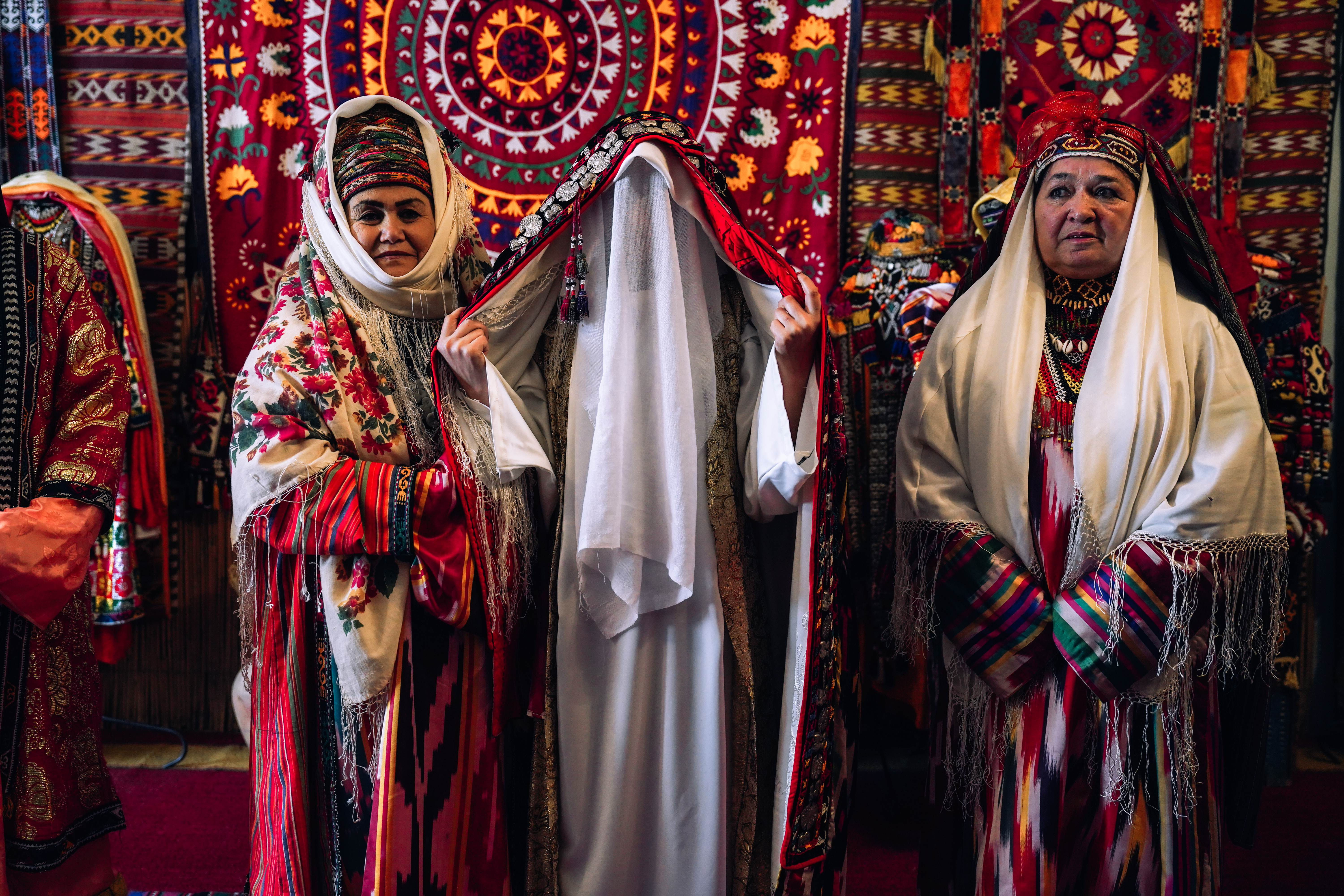 Photo: Ildar Sadikov
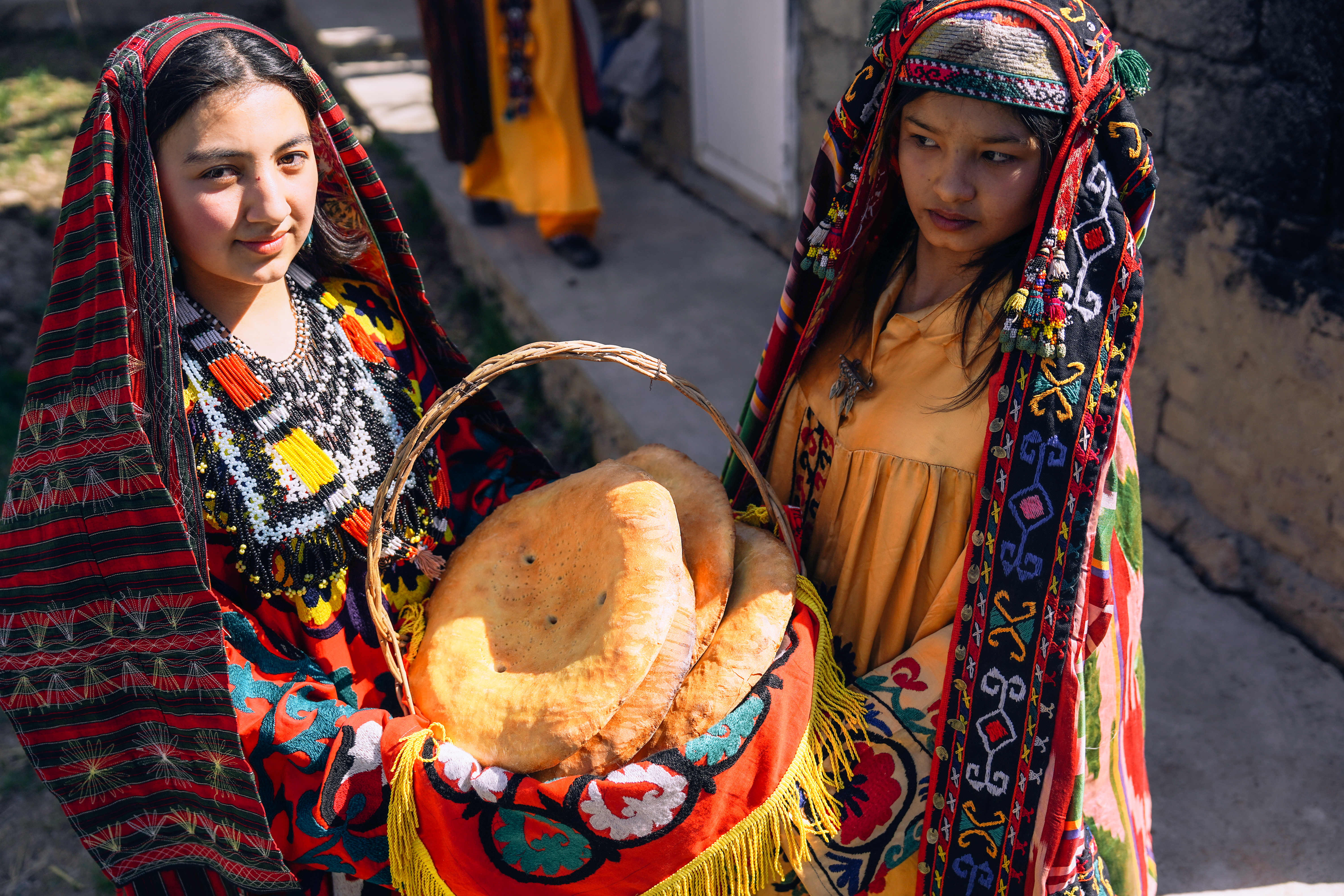 Photo: Ildar Sadikov
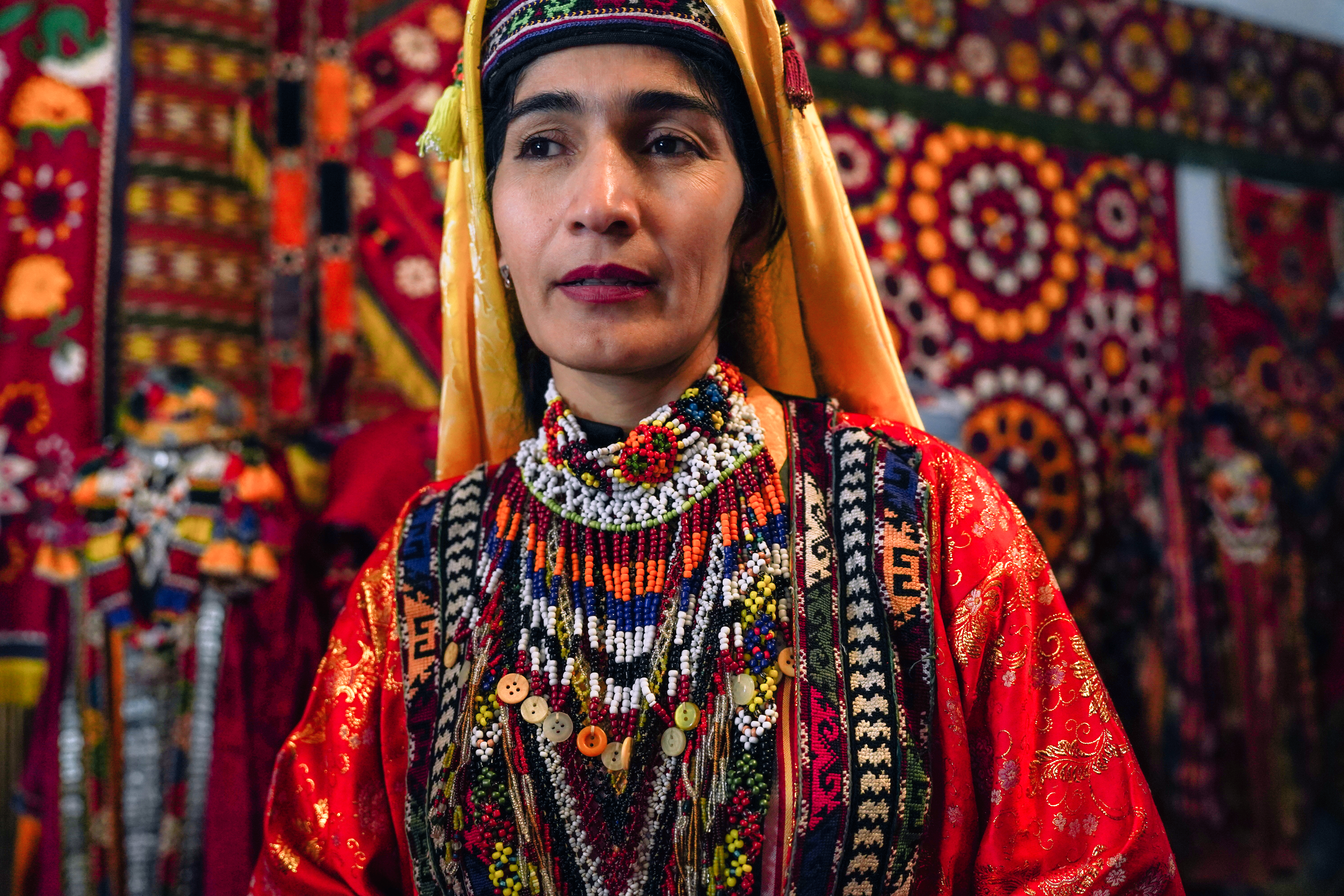 Photo: Ildar Sadikov
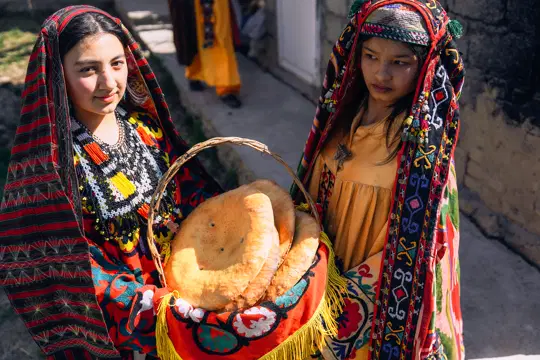
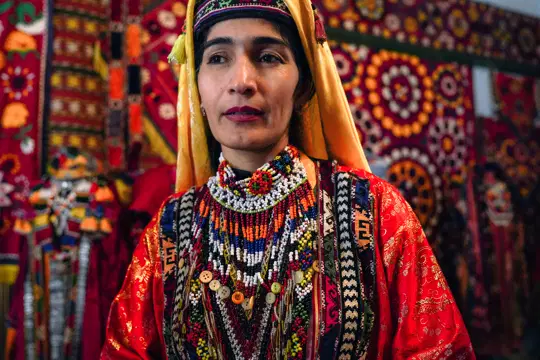
The only decorative element was typically an embroidered trim along the vertical neckline, featuring geometric and zoomorphic motifs characteristic of nomadic cultures. Another decorative form was the sewn-on front panel known as sitorа (“star”), a wide woven or textile strip in black, adorned with silver plaques with embossed ornamentation. Ethnographic studies show that such elements were not limited to Baysun but also found in parts of Tajikistan, Western Pamirs, as well as among south-eastern Turkmen groups and some Kazakh tribes, demonstrating the deep cultural interaction across the region. These details highlight not only the ethnic and cultural ties of Baysun communities, but also emphasise the uniqueness of the region’s traditional women’s costume.
Headwear Traditions of Baysun
A special place in the tradition is occupied by the headwear known as the bosh (literally “head”), which carries both a practical and symbolic role in women’s dress. The turban-like Kungrat bosh differed significantly from similar headwear in other parts of Uzbekistan due to its complex structure, consisting of several elements.
Across Surkhandarya, there were numerous varieties of headwear, differing according to age, social status and tribal affiliation. In Baysun, the most common form of the bosh was a tall cylindrical structure widening towards the top like a crown, lending the woman’s appearance a particular sense of majesty.
The base of this headpiece was a round skullcap known as the kiygich, the front part of which was decorated with embroidered braid made in the iroqi technique using silk or cotton threads. In earlier times, this braid could feature tamga motifs, serving as tribal markers used to identify a woman’s lineage. The second element of the bosh was a rigid frame wrapped in a length of red fabric measuring three to five metres. Over this, multiple scarves were wound in successive layers, sometimes reaching 25–30 pieces, forming a stepped, tiered structure that symbolised wealth and social status.
The final element of this magnificent ensemble was a large shawl and outer cover known as the jelak, draped over the entire headdress. This form of headwear was traditionally worn by married women and is now rarely seen, preserved mainly among older members of the Baysun community. Over time, many of its functions have been lost, yet it remains a living testament to the region’s unique cultural heritage.
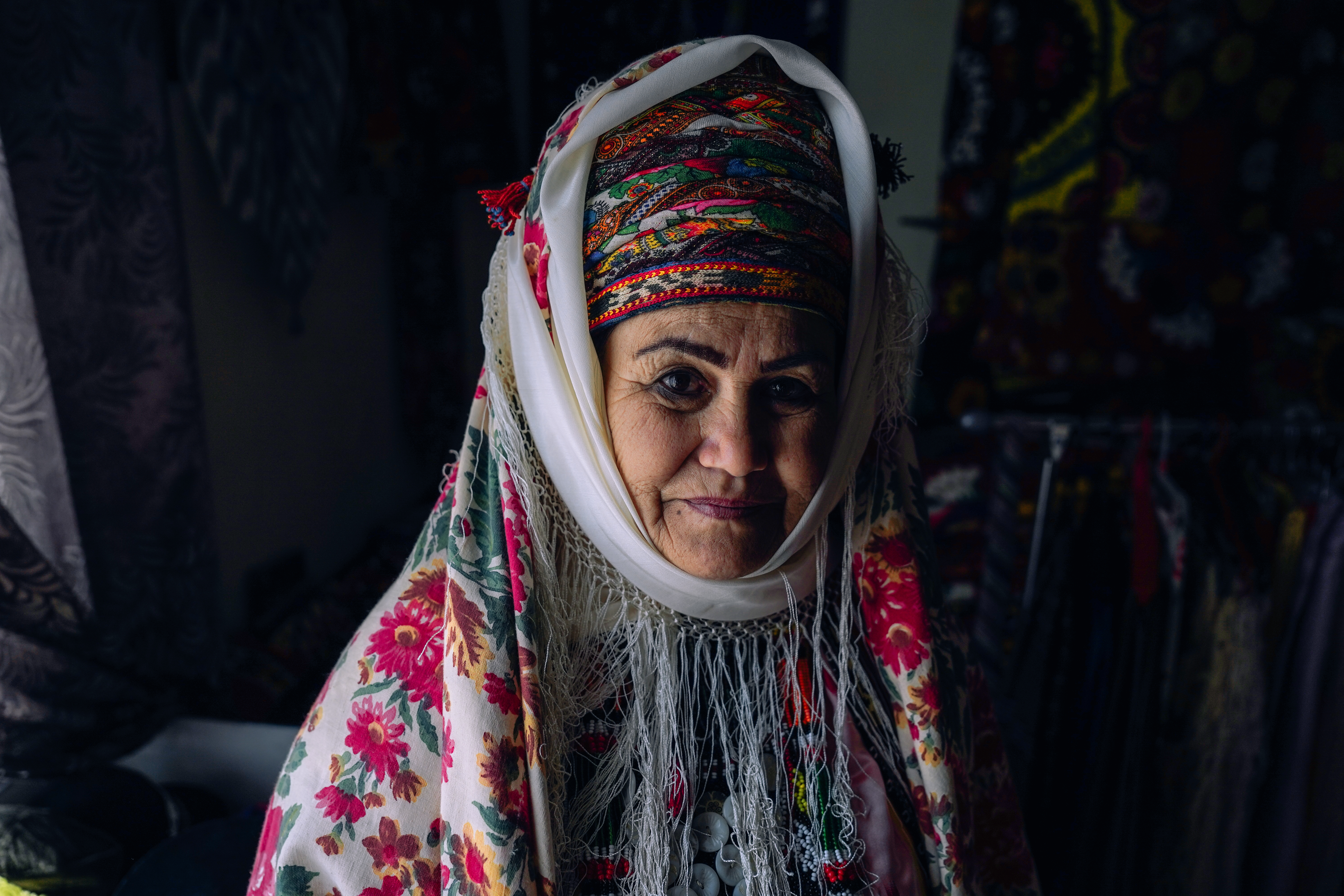 Photo: Ildar Sadikov
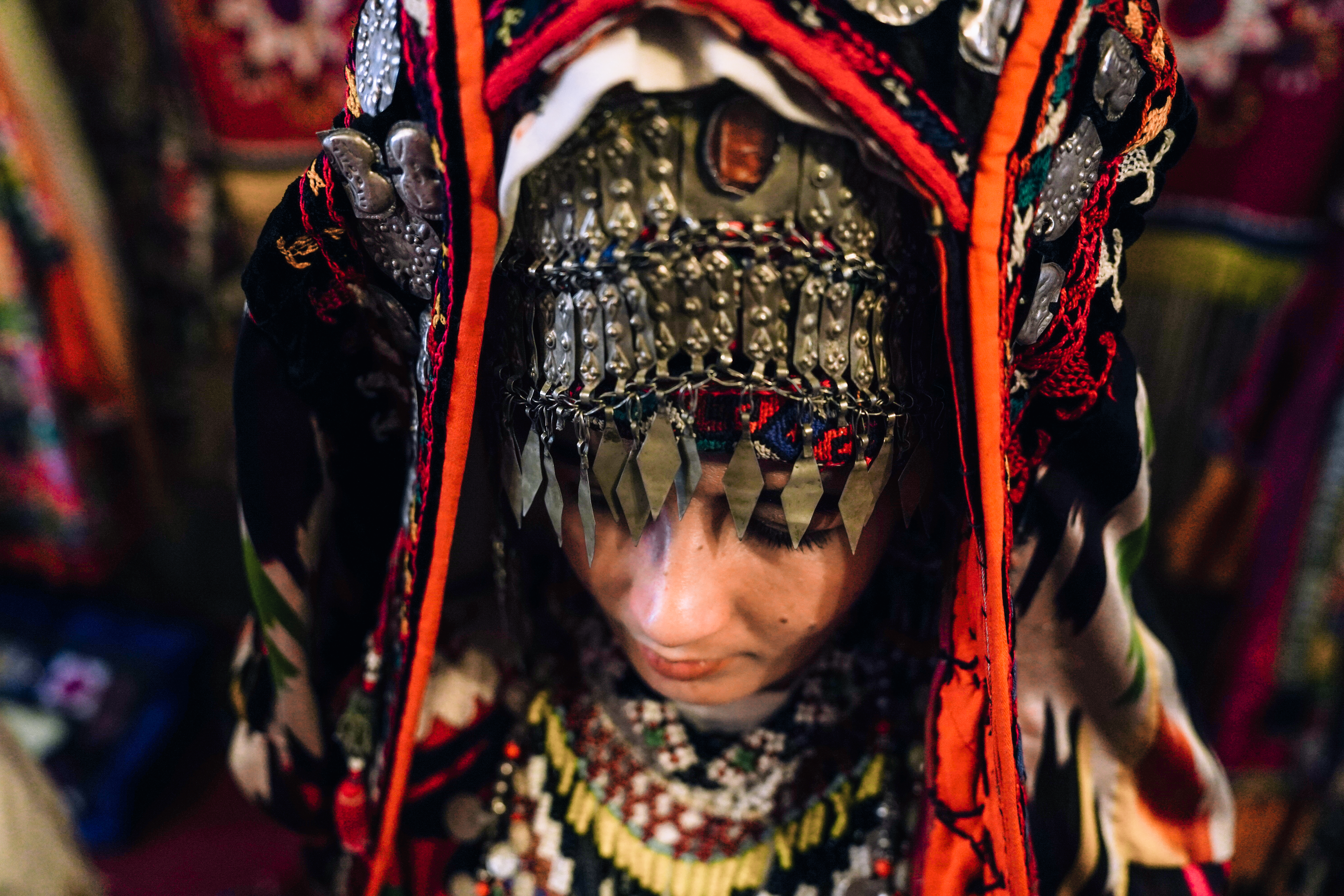 Photo: Ildar Sadikov
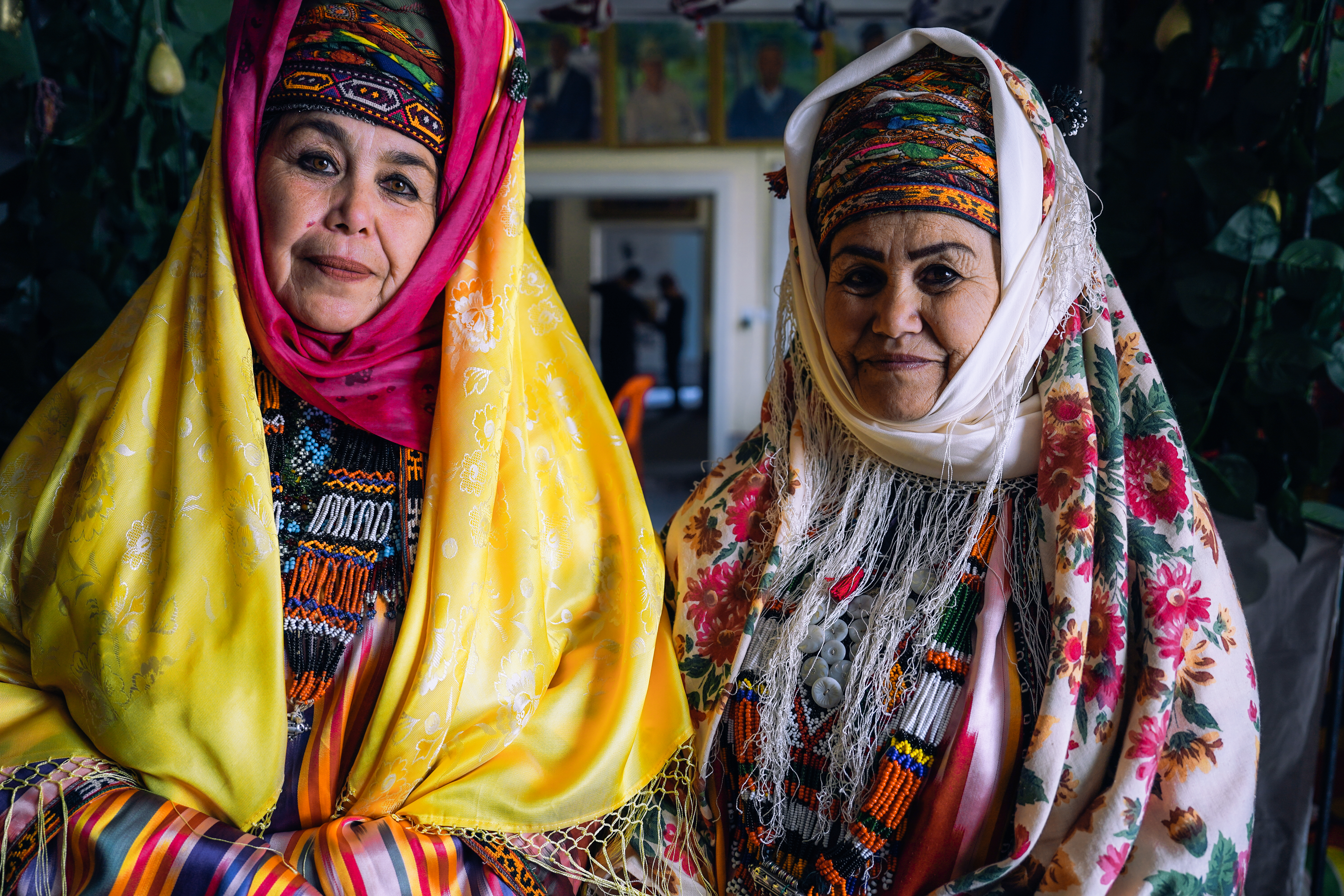 Photo: Ildar Sadikov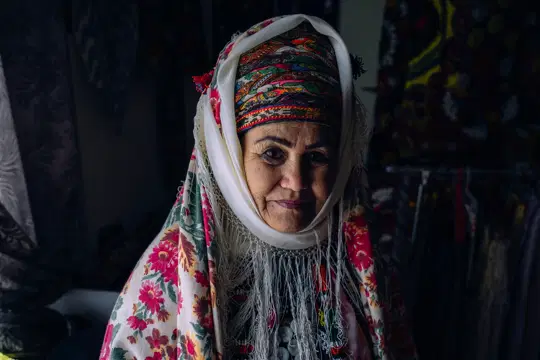
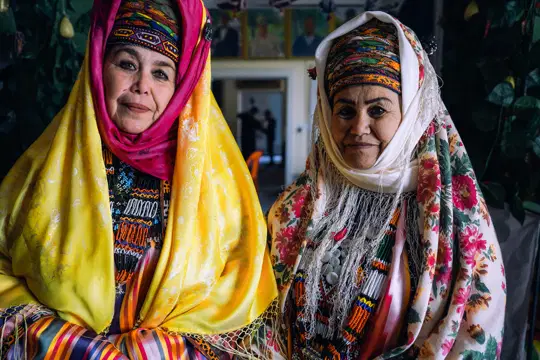
Tajik women’s headwear in the Baysun region was simpler in form compared to the Kungrat bosh. It consisted of a skullcap with or without a braid extension, as well as several scarves tied in various ways. Later, tubeteikas came into use, and from the 1950s onwards a round beaded tubeteika known as girilok duppi became especially widespread. This refined headpiece, decorated with intricate patterns, became not only a traditional element of women’s costume but also a symbol of local craftsmanship.
Jewelry: Symbolism and Meaning
A key element of the national costume was jewellery, which served not only as a rich accessory and aesthetic addition, but also carried deep symbolic meaning. Besides indicating ethnic identity, social status and a woman’s marital position, it fulfilled an apotropaic function, protecting the wearer from evil forces.
Skillfully crafted rings, bracelets, pendants and earrings with traditional motifs were passed down through generations, preserving the spirit of time and the connection with ancestors.
One such piece of jewellery is the forehead-and-temple pendant known as sinchila (sil-sila), which was popular not only among Kungrat women but also among Kazakh women and certain groups of Turkmen women. This refined piece, consisting of chains with pendants adorning the forehead and temples, served both an aesthetic and an apotropaic function. It is believed that it not only emphasised a woman’s status and beauty, but also protected her from the evil eye, lending her appearance a sense of completeness and majestic dignity. In Turkmen tradition, the sinsila was a substantial adornment consisting of large diamond-shaped plates inlaid with carnelian or coloured glass. These decorative elements not only gave the piece its distinctive expressiveness but were also believed to have protective qualities.
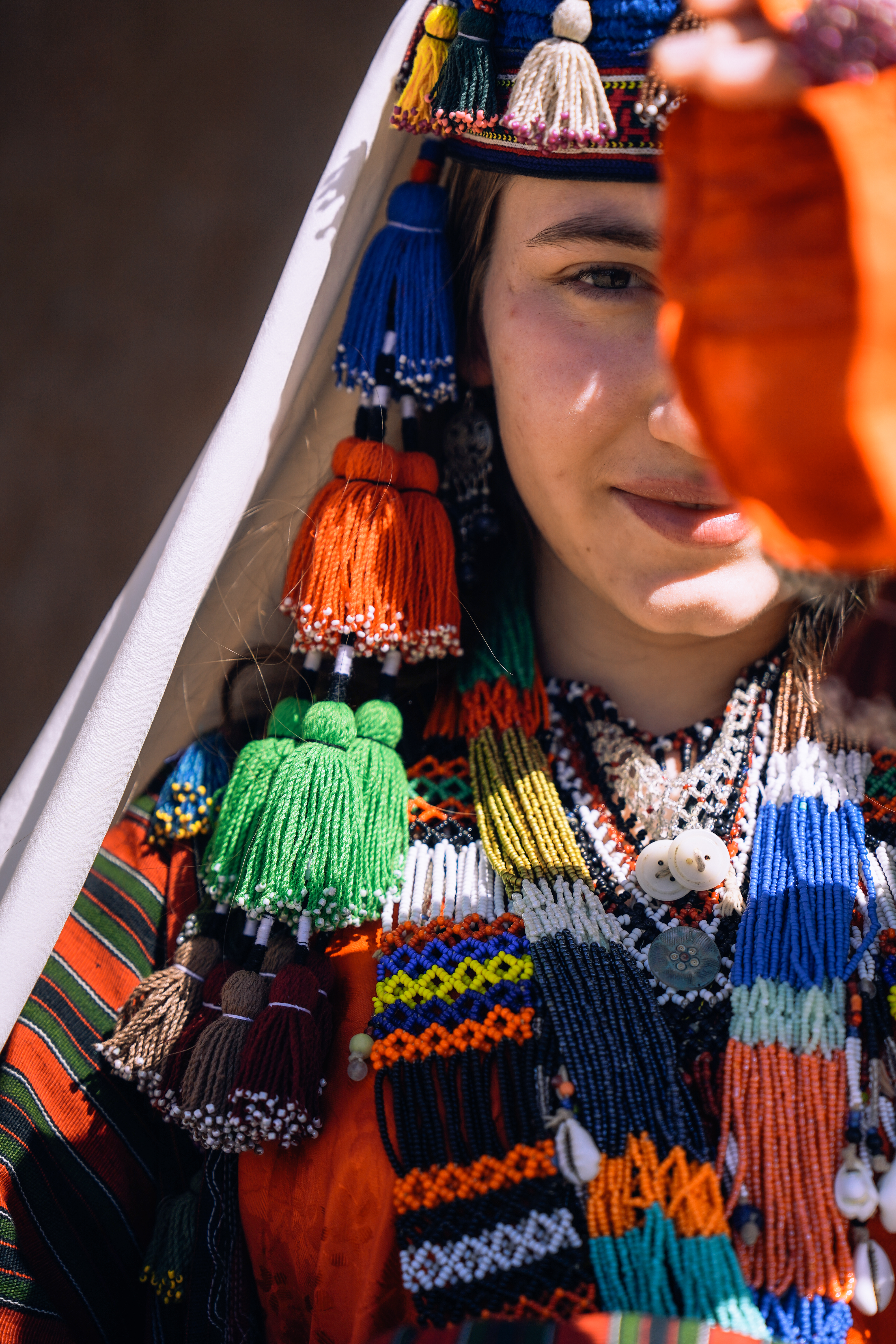 Photo: Ildar Sadikov
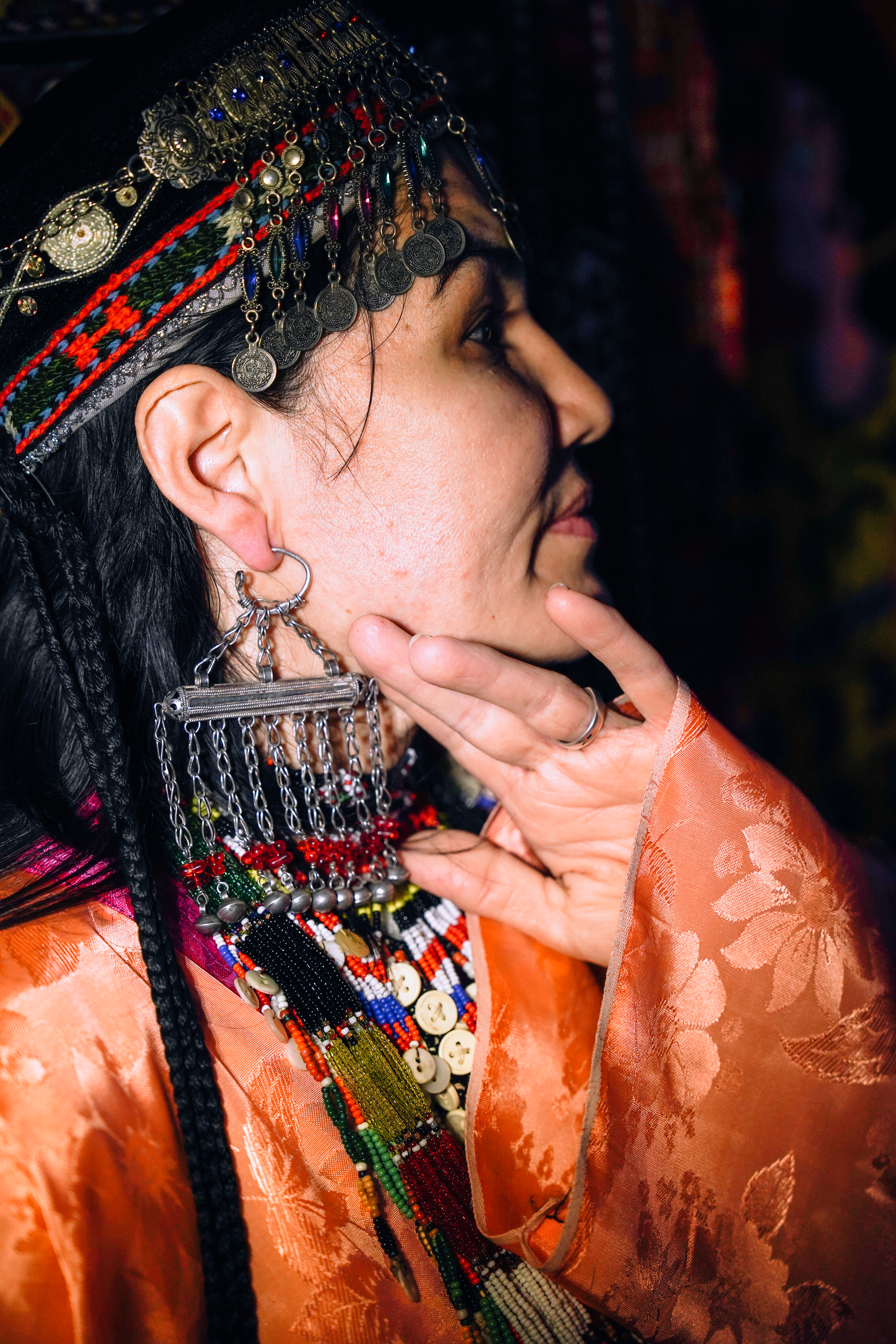 Photo: Ildar Sadikov
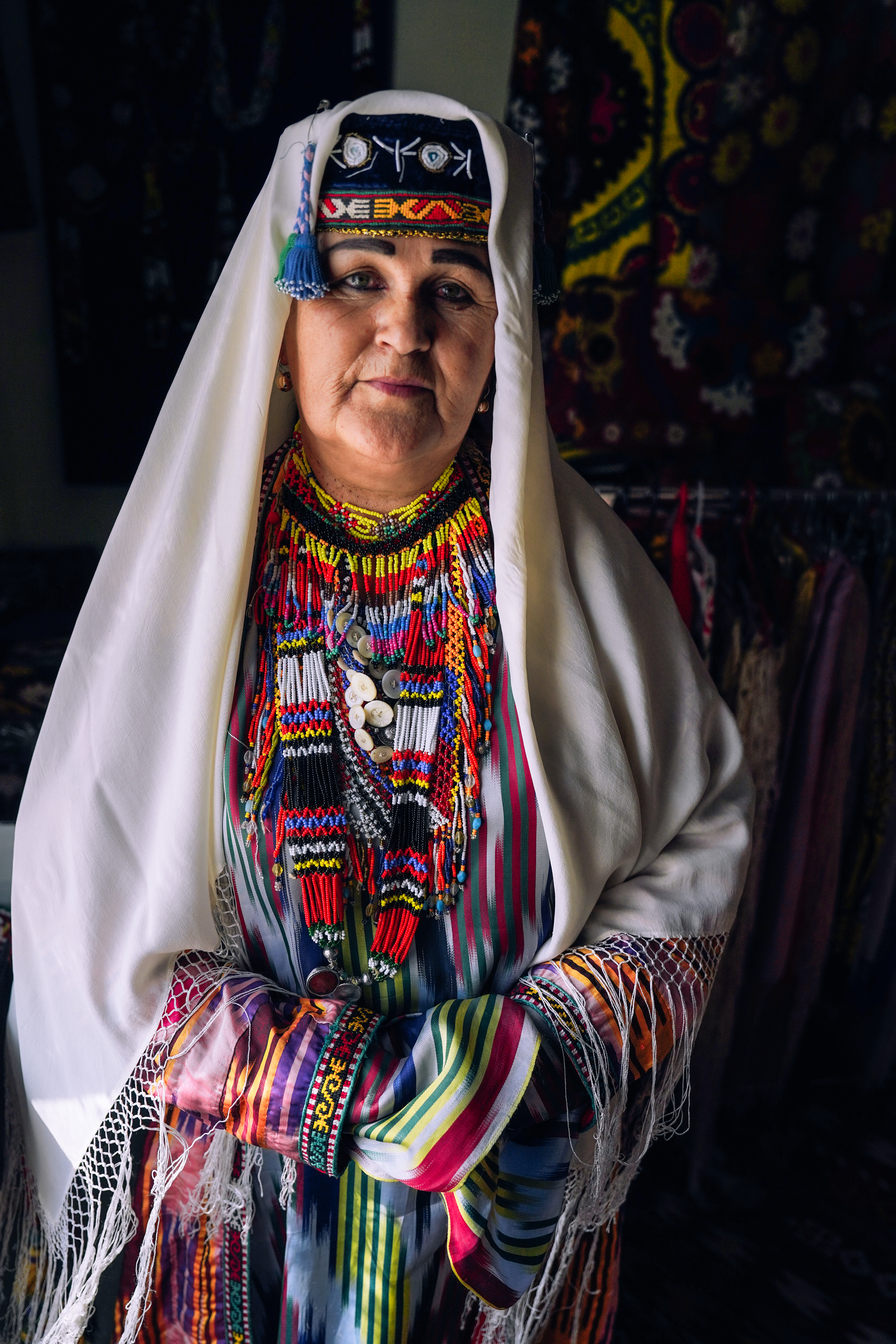 Photo: Ildar Sadikov
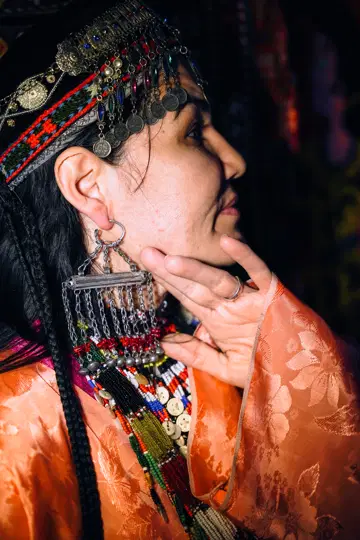
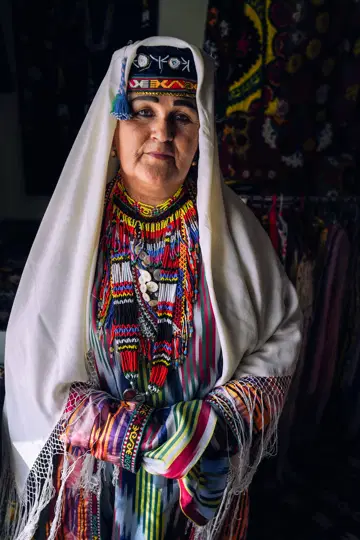
Unlike among Turkmen communities, among semi-nomadic Uzbeks the sinsila appeared in a more modest form: it was rarely decorated with carnelian or was made without decorative inlays altogether. Differences also emerged in wearing traditions. While in most Turkmen tribes the sinsila (or sunsula) formed part of the wardrobe not only of adult women but also of girls aged nine to twelve, among semi-nomadic Uzbeks such a practice was considerably less common. This reflects differing attitudes towards jewellery across ethnocultural traditions: in Turkmen communities such adornments accompanied a woman from an early age, whereas in Uzbek tradition the sinsila remained primarily an attribute of maturity. For the Kungrats, the sinsila was considered a privilege of brides or young married women, symbolising their distinct status within society. In Turkmen tradition the piece was worn even by girls, but for the Kungrats it carried a more defined role, closely associated with marriage and adulthood.
Despite differences in their form and wearing traditions, this jewellery shares a common origin. It reflects cultural ties and shared roots between peoples with nomadic and semi-nomadic ways of life, as well as similar ideas of beauty, social identity, and the protective power of amulets.
The types of chest and neck decorations, such as khapamat, gulband, haikal and tomoklov, were highly diverse. They were most often made of silver and beads, using traditional techniques, many of which have survived to the present day.
A special place among these ornaments is held by the khapamat, a finely woven, net-like piece made of multicoloured beads and complemented by numerous strands of beads. It was traditionally worn by Kungrat women, although its name is of Tajik origin: hafa meaning “sorrow” and band meaning “amulet” or “binder,” which can be interpreted as “that which protects from sorrow.” This naming likely reflects the long coexistence of Iranian-speaking peoples in the region.
Notably, similar beadwork ornaments were also worn by Tajik women in other regions, including Karategin, Darvaz and the upper Zeravshan Valley, where they were known as kashelak or turbofi. Beaded jewellery is not only an expression of ethnic identity but also evidence of the cultural exchange between the peoples who have historically inhabited the territory of what is now the Baysun District. Judging by the adornments depicted on dolls found in the Zeravshan valley and the Iskanderkul lake region, a jewellery type known as hapámat has existed here since ancient times. The dolls show a necklace in the form of a dense band encircling the neck, with pendants of beadwork falling across the chest.
This fact attests to the long-standing historical tradition of beaded jewellery among the peoples of the region. Such pieces may have served not only as purely decorative items but also carried symbolic meanings connected with rituals, beliefs and a woman's social status. The hapámat represents one of the oldest forms of jewellery, passed down from generation to generation and preserving its cultural significance in the Baysun district to this day. This also suggests that such jewellery was widespread not only among nomadic Uzbek tribes but among other peoples of the region as well.
Baysun women were particularly fond of earrings, which came in a wide variety of forms.The most common were hoop earrings with five or seven pendants, known as beshoyok (beshpoya) and yettipoya. Also noteworthy were the uch kuzacha earrings ("three little jugs"), decorated with a pendant of three fused beads resembling miniature vessels. Active trade links and cultural exchange contributed to the spread in Baysun of jewellery characteristic of other regions of Central Asia. Jewellery crafted by Lakai and Tajik artisans was especially valued. Local production, however, remained relatively limited and gradually yielded to imported pieces.
The traditional women's costume of the Baysun district has undergone a complex process of development and, while losing some of its distinctive features over time, has preserved the principal elements of Surkhandarya folk dress that distinguish it from the clothing traditions of other regions of Uzbekistan. This aspect of material culture remains insufficiently studied and continues to offer considerable scope for further ethnographic and historical research.


