Art
After the Empire: What Uzbekistan Tells About Itself Through the Language of Culture
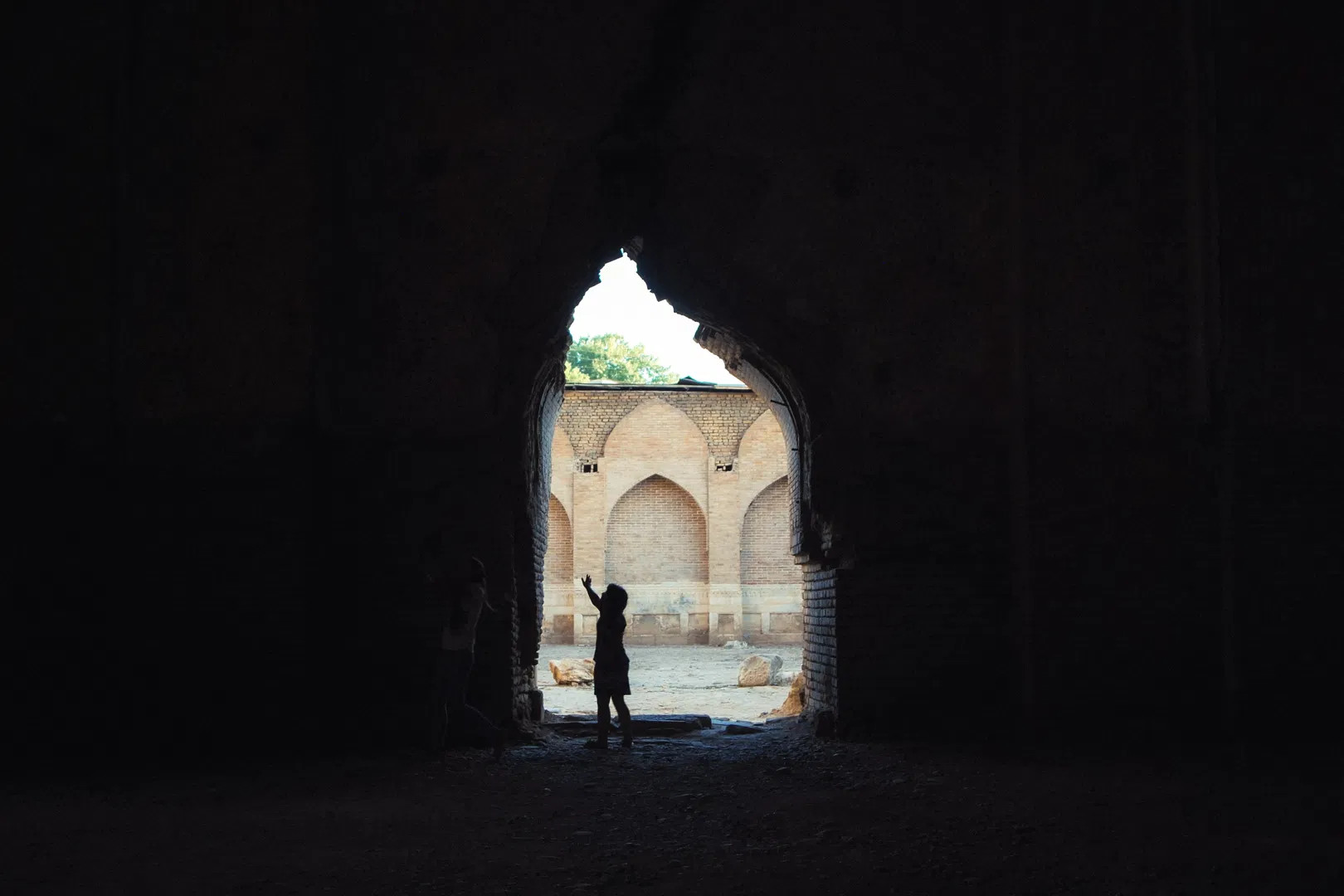
Modern Uzbekistan continues to search for a visual communication language to present itself to the world. We will reflect on the influence of the Soviet-era legacy and Eastern legends on this search, as well as the role of the pavilion at the Exhibition of Achievements of the National Economy (VDNKh) in Moscow, the Jadid movement, and the "Eternal City" in Samarkand in this process.
What exactly is considered national?
Soviet national policy was built on identifying "unique typical characteristics" among the peoples of the Soviet Union, defined through ethnicity. At the state level, these national cultures were positioned as ancient, continuous, supposedly preserved for centuries by the numerous peoples of state formations and territories — and which finally broke free only in the form of socialist nations.
Modern Uzbekistan, like most other countries that were part of the USSR, faces the necessity of reconciling powerful Soviet concepts of national identity with its status as an independent state. This task is complicated by various approaches to defining the concept of a nation.
On one hand, a nation can be viewed as a political community of all citizens of a single country — it is in this context that the word nation is used in the name of the UN (United Nations). On the other hand, a nation can be understood as a distinct ethnic group — this meaning was embedded in the archaic Soviet term "titular nation".
In Uzbekistan, the word "national" (milliy) contains an inherent duality — as if one necessarily must mean the other as well. For example, Milliy Banki means a state institution — but this seemingly implies a connection with the people of Uzbekistan on an ethnic basis. On the other hand, the phrase milliy taomlar creates the impression that shashlik, manti, and pilaf are under state patronage. This conceptual paradox significantly limits the room for free maneuver in the area of Uzbekistan's cultural representation both domestically and abroad.
 Elements of the National Bank's corporate style © Photo: nbu.uz
During the Soviet Union, several stereotypical approaches to solving this problem were developed. Uzbekistan continues to use them, as this system was created together with the republic within the Soviet regime. The policy of the so-called "Center" not only exerted external pressure on cultural life but also defined its internal content — traditions were allowed to exist mainly in an adapted, conditionally modernist spirit.
The first president of Uzbekistan, Islam Karimov, sought to abandon Soviet ideology in favor of a "national" one, but the structure and approaches to the country's cultural representation remained the same.
New cultural projects
In recent years, institutions have emerged that apply new approaches to promoting contemporary culture and art both within the country and on international platforms. This trend fits into the concept of the "Third Renaissance," which shifts the focus away from the figure of the all-powerful "gatherer of lands," Amir Timur, to the educational and peaceful activities of the Jadids.
The most well-known and successful institution implementing such representative projects both abroad and domestically is the Foundation for the Development of Culture and Arts. Since 2021, it has administered the Uzbekistan Pavilion at the Venice Biennales, organized large-scale exhibitions in major European museums, and held representative forums within the country.
The creation of a modern cultural image of Uzbekistan is also being pursued in its own way by the World Society for the Study, Preservation and Promotion of Uzbekistan's Cultural Heritage, the ERIELL company, the Ministry of Ecology, Uzbekistan Airways, the Uzbek Military-Historical Society, various construction companies, and other institutions.
This strategy opens up space for a wide variety of forms of cultural representation. At the same time, the ideology of the various international platforms where Uzbekistan seeks to be present determines the meaning that their creators invest in these images.
Thus, the "Exhibition, Cultural, and Exposition Center of the Republic of Uzbekistan," which opened in 2023 at the revived VDNKh in Moscow, looks as if Uzbekistan still remains one of the numerous republics within the USSR (of course, if it had survived to the present day).
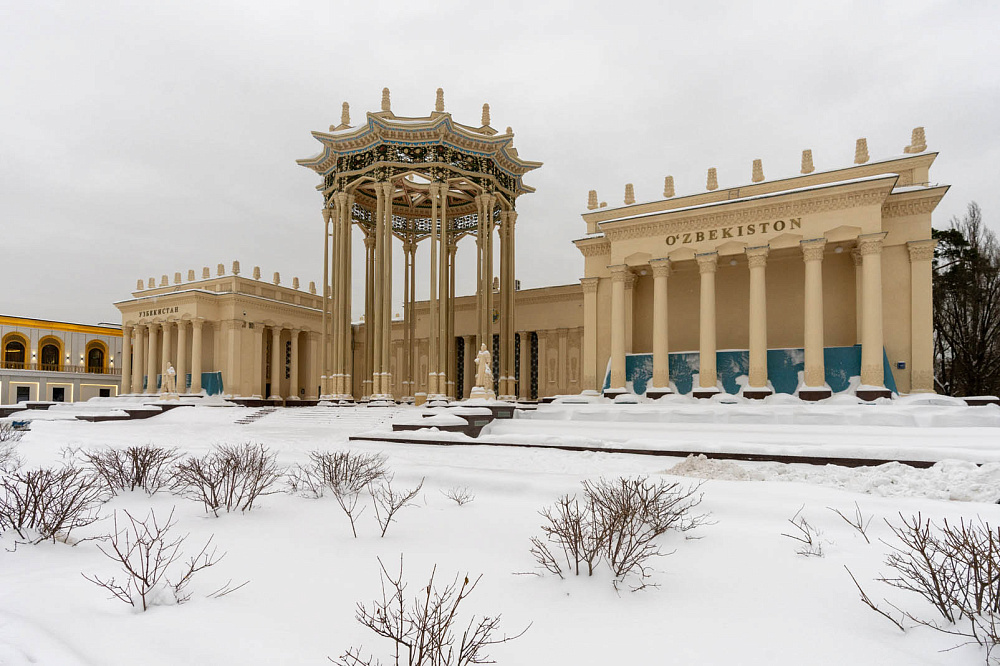 Uzbekistan Pavilion at VDNKh in Moscow © Photo: vdnh.ru
Renovated using modern building materials and overloaded with decorative details, this pompous building resembles a hybrid between 19th-century colonial-style pavilions and oligarchs' mansions. The pavilion is positioned as a "truly authentic corner" of the country, intended to emphasize that "the history of Russia and Uzbekistan has always been permeated by bonds of friendship and partnership." However, the pavilion's aesthetics and content seem to speak of Uzbekistan's readiness to once again play the role of a "younger brother" in an eclectic Eastern fairy tale.
Judging the entire cultural policy of Uzbekistan based on just one such space would be reckless.
An example of a completely different approach is the Uzbekistan Pavilion at the Venice Biennale, conveniently located near the pavilions of China and Italy in the Arsenale di Venezia. Since 2021, it has alternately hosted architectural and art exhibitions dedicated to specific cultural phenomena within the overall theme set by the Biennale's curators.
In 2025, the Uzbekistan pavilion A Matter of Radiance is dedicated to the unique Sun Institute near Parkent, and in a broader context — to Tashkent architectural modernism, which in recent years has become a subject of close scholarly research and the theme of a series of serious publications also presented in the exhibition. It is noteworthy that, as with the VDNKh, the pavilion is dedicated to Soviet heritage, yet it contains neither self-exoticization nor colonial obsequiousness. Research into this complex area has been conducted by genuinely international teams of scholars and curators.
Neo-Orientalism
At the other pole — are projects built on self-exoticization and executed in a neo-orientalist spirit. Neo-orientalism represents a retreat into romanticized imagery, a refusal to discuss modernity in favor of the image of the "fairy-tale East." In his seminal work "Orientalism" (1978), Edward Said criticized the common perceptions of the "Orient" as a passive, irrational, inscrutably mysterious, and wise pole of civilization that resists progress. Said argued that these stereotypes were formed by Western colonizers and scholars.
One of the significant shortcomings of Said's theory is the disregard for the Russian imperial and Soviet experience. Contemporary researchers agree that the USSR both denied and simultaneously continued Russian colonial policy, applying new forms of control. The Soviet idea of a continuous and inevitable history of national identity formation, developed for all the "titular nations" of the Soviet Union, had a long-term impact on Uzbekistan and other countries in the region.
Despite the obvious contradictory nature of historical, linguistic, and ethnographic arguments, this idea has become entrenched in mass consciousness and public discourse.
The favorite figure of speech among modern politicians and public figures are expressions like "cultural code," "genetic code," as well as "national mentality" and appeals to collective "historical memory." It gives the impression that all historical experience, cultural and phenotypic traits, everyday lifestyle, and language can be compressed into a conditional zip archive, stored in the minds of representatives of a certain nation, and passed down from generation to generation.
An example of such an approach is the appropriation of prominent historical figures by modern nations. Thus, the Kievan Prince Vladimir becomes the founder of the Russian state, and the Bukharan ruler Ismail Samani — the progenitor of modern Tajikistan. The 16th-century poet and official Alisher Navoi, who spent almost his entire life in Herat, becomes the father of Uzbek literature, and the extensive epic "Manas," which existed until the mid-20th century exclusively in a variable oral form, is proclaimed the most ancient monument of Kyrgyz literature.
The fragility of such an interpretation of collective identity is felt in the content of the "Ruhnama" — a book authored by the first president of Turkmenistan, Saparmurat Niyazov, in the aesthetics of the main temple of the Russian Armed Forces or the "Alaam-ordo" center of Kyrgyz spirituality, and in the architectural design of the "Eternal City" complex near Samarkand.
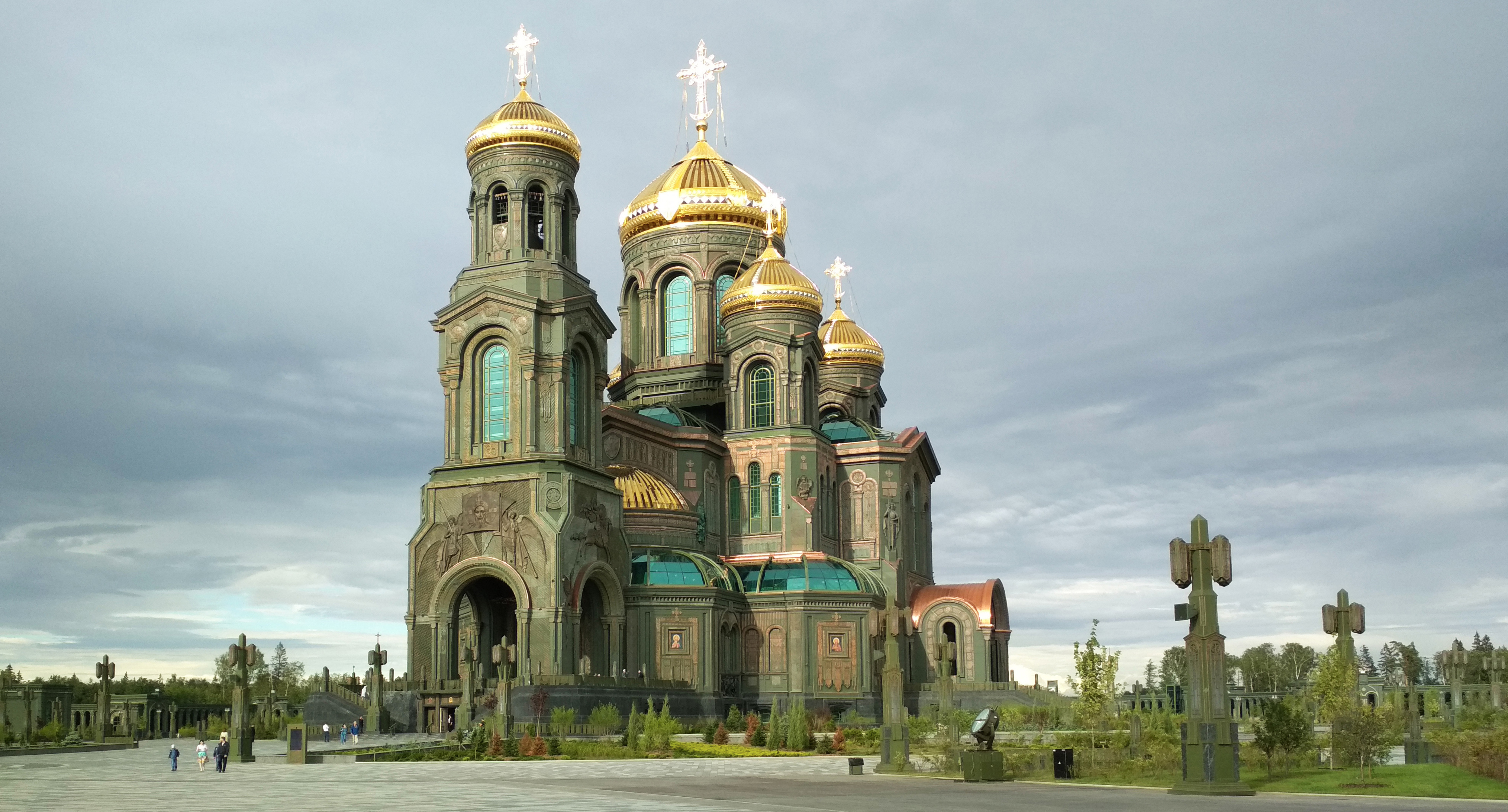 Main Cathedral of the Russian Armed Forces © Photo: Wikimedia Commons
«The Eternal City»
"The Eternal City" is a vivid example of how eclectic Orientalist ideas about the past are embodied through selective and arbitrarily interpreted historical references.
The international art community criticizes this project as a commercial stylization of historical Samarkand, yet it enjoys great popularity among locals as a recreational space. The seclusion of the "Eternal City," its proximity to five-star hotels and the congress hall hosting high-level meetings, provides certain segments of society with privileged access to material goods and the opportunity to partake in an imagined cultural identity.
Stylistically, "The Eternal City" embodies one interpretation of the "New Uzbekistan," which ignores colonial or Soviet heritage. However, in spirit, it is close to the Uzbekistan pavilion at VDNKh. Both projects embody an Orientalist dream of a better life, where the imagined luxury of the "palaces of the East" becomes a modern tourist attraction akin to a theme park with interiors à la Dubai and imitations of historic quarters.
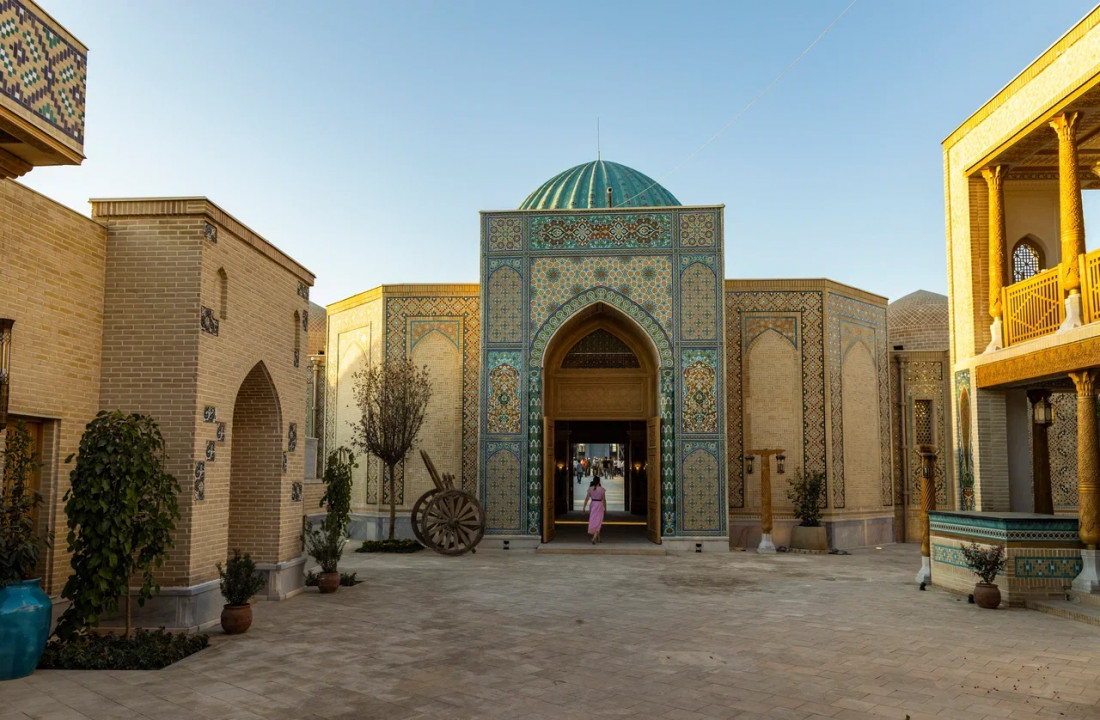 Tourist complex "Eternal City" © Photo: uzbekistan.travel
Ultimately, the success of a country's self-representation is determined by how well it aligns with the expectations of its target audience. However, the very idea of presenting all of a country's cultural heritage, its entire "cultural code," as a single collection of diverse artifacts is questionable. The best projects of this kind are always built on limited but deeply considered material. The task of building a bridge between culture and the public falls to the curator.
Liked the story? Subscribe to us on Instagram and Telegram — there's even more interesting content there.
Newsletter
A letter from the HD editors
Once a week, we send the best stories, events, and cultural discoveries from Central Asia.